Chronicler of empires' follies and forgotten ghosts. I unmask the Middle Kingdom's spectres and its tyrants' vanities. Once a Route Runner — now a bard of truth
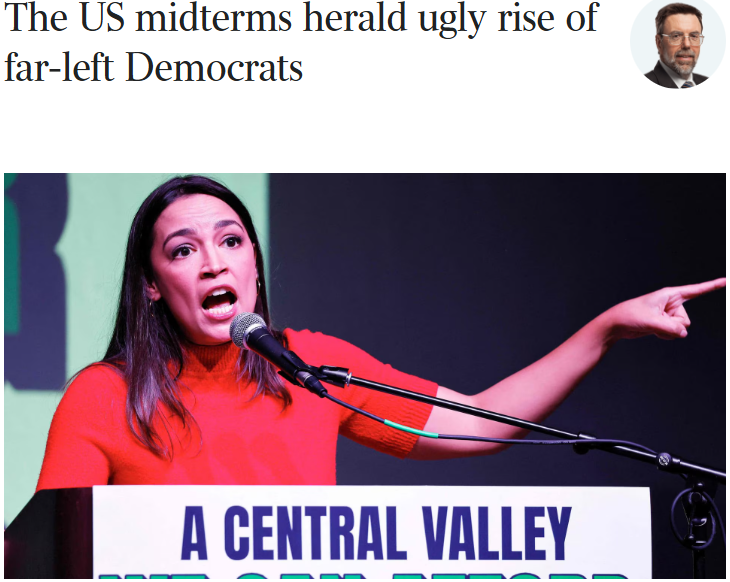
The Democrats, benefiting from Trump’s epic unpopularity, could see a big chunk of their party enact a dismal red-green alliance – Islamic-themed activism focused on Palestine and antisemitism in partnership with ideological leftists. This combination is poisoning Europe and has its nasty counterpart in Australia.
Meanwhile, the Republicans, heading for defeat in the house and trouble in the Senate, are making feeble progress at best towards a viable post-Trump program.
Trump campaigned against a sitting Republican senator, John Cornyn, and helped Ken Paxton unseat Cornyn in the Republican primary. Paxton is the Republican candidate from hell. Trump didn’t care about that. He just wanted a toadying loyalist.
Texas is the second-most populous state in the US. With Florida, it’s the heart of Republican politics, as important to Republicans as California is to Democrats. If Paxton loses to Talarico it will demonstrate yet again that in picking sycophants Trump imposes the very worst candidates on the Republican Party. The road to post-Trump Republican recovery will run away from Trump. When Trump leaves the White House, his backing will surely count much less in primaries.
For Republicans, if they can’t hold Texas and Kansas, they’re in a world of pain.
A #Taiwan comedian joked about Xi Jinping. But #CCP recruited local gangsters to throw paint & feces at his club, & rammed him in a staged car accident. Good that the #Taiwan gov’t cracked this #transnationalrepression case. #China should be condemned!
No mosques torched. No Muslim shops looted. Just French shops, elderly French left in their underwear, and a historic steeple burned. This selective destruction is to destroy French heritage, to undermine Western civilization, and to attack Christian symbols. Not random chaos. Ethnic war.
I went to witness the riots in Paris.
I’m going to tell you the truth: it was only young people from African immigrant backgrounds who came to attack our police officers and firefighters, loot our shops, and destroy everything.
An elderly French couple in their 80s was robbed and left in their underwear in the street.
The steeple of a 150-year-old church was completely burned down.
This is not a social revolt for better education.
It’s a taste of an ethnic war that took place today.
The Killing of Khamenei: A Strategic Mistake We Are Still Paying For
As I have argued from the very beginning, the killing of Ali Khamenei was a grave strategic mistake. Not because Khamenei was a moderate leader, or because there were no legitimate reasons to confront the Iranian regime, but because the decision to eliminate him was based on a fundamental misunderstanding of the regime, how decisions are made in Tehran, and the potential consequences of removing him from power.
1. Empowering the Hardliners and the Revolutionary Guards
Khamenei’s killing paved the way for a more radical leadership and dramatically strengthened the Islamic Revolutionary Guard Corps (IRGC), which has since consolidated its grip on Iran’s centers of power and decision-making processes.
Rather than weakening the regime, his elimination contributed to the emergence of a leadership that is more willing to take significant risks in its confrontation with Israel and the United States.
2. Khamenei as a Restraining Force on Iran’s Nuclear Program
Contrary to the prevailing narrative in Israel, Khamenei himself had long been one of the principal obstacles to a political decision to develop nuclear weapons.
He allowed Iran to advance technologically but refrained from authorizing the critical step toward actual nuclear weaponization.
Claims by Israeli leaders that Iran already possessed nuclear weapons, or that the war prevented Tehran from placing a nuclear warhead on a missile and launching it at Israel, belong more to the realm of science fiction than to serious, intelligence-based assessments.
3. A Radical Ideologue, but a Cautious Leader
Khamenei was no Zionist, no pacifist, and certainly no friend of Israel. He was a deeply conservative Islamist ideologue who viewed Israel as an enemy that needed to be confronted.
Yet despite his radical worldview, he was also an extremely cautious leader when it came to the direct use of Iranian military force, particularly against Israel and the United States.
His fear of a war that could threaten the survival of the Islamic Republic was a central consideration in his decision-making.
Failing to distinguish between ideological radicalism and a willingness to take military risks was a fundamental analytical mistake.
4. Giving New Life to a Regime in Crisis
Even more troubling, Khamenei’s killing gave the Islamic Republic, which had been facing a profound internal crisis following some of the most serious waves of protests in its history, an opportunity to rally around the perception of an external threat.
Rather than accelerating the regime’s collapse, his elimination provided it with a political and ideological lifeline, particularly among its loyal support base.
Those who assumed that eliminating the Supreme Leader would lead to the disintegration of the Iranian political system fundamentally misunderstood the depth and resilience of the institutions and power structures underpinning the Islamic Republic.
5. A Significant Military Achievement, but a Greater Long-Term Nuclear Risk
There is no question that Operation Rising Lion achieved significant operational successes in damaging Iran’s nuclear infrastructure, particularly following the American strike on Fordow.
It is worth remembering that when Israel launched the war, there was no guarantee that the Trump administration would agree to strike the facility.
But operational success does not eliminate the broader strategic question.
The fact that Iran is not currently enriching uranium does not necessarily tell us what its future intentions will be.
On the contrary, with Khamenei gone and the restraints he imposed no longer in place, and as Iran’s leadership draws lessons from the war, the argument that nuclear weapons represent the ultimate insurance policy against another attack may become increasingly persuasive in Tehran.
Destroying capabilities is not the same as eliminating motivation. In some cases, it may actually strengthen it.
6. The Danger That Israel Has Learned Nothing
Perhaps most concerning is the growing impression that Israel has still not drawn the necessary lessons.
Instead of critically examining the assumptions that led to the war, and the gap between military achievements and strategic outcomes, some appear determined to convince the Israeli public once again that another preventive war against Iran is necessary, potentially even before the upcoming Israeli elections.
Yet no convincing answer has been provided to the most fundamental question:
What exactly would another war achieve that the previous one failed to accomplish, and why should we expect a different outcome this time?
The Bottom Line
You can eliminate a leader, destroy nuclear facilities, and severely degrade military capabilities, and still leave Israel in a worse strategic position.
Khamenei’s killing illustrates the dangerous gap between operational success and strategic success.
Instead of confronting a weaker, more restrained, and more deterred Iran, Israel now faces a more radical leadership, a more powerful Revolutionary Guard, and potentially an even stronger motivation to acquire nuclear weapons.
The real tragedy would be if, after everything that has happened, we chose to repeat precisely the same mistake, believing that another round of military force could solve problems that the use of force itself has helped make worse.
#IranWar
Petrol up 30%. Diesel up 60%. The average mortgage rate nearly a full point higher — more than $2,000 extra a year for a typical homebuyer.
Two years on from November 2024 and this is the bill.
Thanks to a self-indulgent tariff fixation built on a profound misunderstanding of international economics, an insouciance about public finances that has widened the deficit, and a reckless military adventure that has choked off global energy supplies, inflation and interest rates are higher than they were then.
Instead of a hands-off approach that would have generated non-inflationary growth from the AI investment boom, this is what we got.
The war that has done so much harm to Americans’ finances is doing far more harm to military capacity and strategic interests.
The president has alienated everyone in the world who could actually be helpful (Israel excepted, perhaps) and emboldened — even embraced — every country that threatens us: China, Russia, North Korea.
A signal achievement has been getting control of the border and removing some of the people who have no legal right to be here.
But even with this proper and overwhelmingly popular policy the administration has managed to harm the country and the GOP’s standing.
The unnecessarily cruel and indiscriminate approach has caught many in its dragnet who shouldn’t be treated that way. It is fundamentally un-American.
The political effect has been to devastate support for the GOP among Hispanics, more than reversing the gains Mr Trump had made with the fastest-growing ethnic population in the country.
Further dismaying is the caesarism of the past two years: the grotesque self-enrichment, the self-satisfying prosecutorial pursuit of political enemies, the endless projects of self-grandiosity — the ballroom, the Kennedy Center and the Memorial Arch.
Not to mention the buffoonish symbolic acts that substitute for actual thought and policy: the Gulf of America, Lake America, New America, the 51st state.
When presidencies fail and parties’ fortunes collapse it is often the result of circumstances beyond their control: an unforeseen global crisis, a recession caused by exogenous economic forces, or the simple sentiment that it is time for a change after a relatively successful period in office.
None of that applies to the looming Republican calamity.
It will be the result of presidential hubris, vanity, recklessness and the wider party’s abdication of accountability.
Instead of seizing an unrivalled opportunity to shift America off the path of progressive endangerment, the GOP risks handing it straight back to the Democrats and their own obsessions.
It’s enough to give anyone a case of Trump derangement syndrome.
When the midterms arrive, who do you hold responsible — the man, or the party that refused to restrain him?
They stole the word “progress”.
Then they made the lie into law.
An idea that once named humanity’s restless drive to better its condition is now a sordid receptacle for toxic mind-sludge. Pause on that. First the state rewrites the dictionary. Then it punishes those who remember the old meaning.
That is the architecture of tyranny: citizens forced to inhabit the state’s fantasy and face objective penalties for the subjective crime of dissent.
This is not progress.
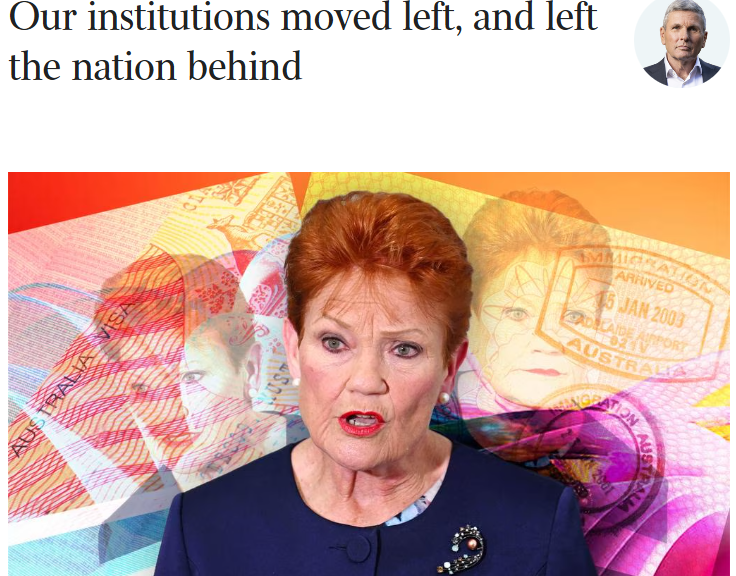
Australia has built an official secular morality, complete with its own priesthood and courts. Its priests wear no collars. They chair commissions, draft codes of conduct and sit on corporate boards. They discover new rights, declare new offences and summon heretics to the star chamber.
The catechism changes with the fashion. The method does not.
The old church named sins, demanded confession and prescribed penance. Its modern counterpart calls the sins “harm”, the confession “conciliation” and the penance “training”.
Each intervention is sold as the next necessary step towards kindness. Each brings the country closer to a place where disagreement itself is the original sin.
Tolerance is the totem of the age — a bumper-sticker of virtue. Buried inside its many meanings is the doublespeak that decides what shall be taboo. It is now considered the height of tolerance to demand silence from the nonconformist.
That re-engineering follows the blueprint Herbert Marcuse set down sixty years ago in Repressive Tolerance. He cautioned his disciples not to be so foolish as to extend the courtesy of free speech to their opponents. Marcuse supplied the justification for silencing dissent.
Antonio Gramsci wrote the operational handbook.
From his cell in Mussolini’s prison he puzzled over why Western workers had failed to rise and cast out the ruling class, as Marx had promised. He pitied them. They were, he decided, victims of false consciousness — brainwashed by church, school and culture into imagining their interests aligned with the state’s.
It never seems to have occurred to him that the workers had simply recognised Marxism for what it was: a programme for a tyranny so total it intended to occupy the mind itself.
When ordinary people would not buy a rotten idea, one eager market remained: Europe’s intellectuals. Gramsci proposed a grinding “war of position” to seize the commanding heights of the bureaucracy, the universities and the press. Once installed, they would scrub the landscape clean of Western values.
The institutions signed up. Yesterday’s extremism became today’s orthodoxy.
If it is progressive to prefer identity over biology, assault free speech, dilute the presumption of innocence, divide society by race, colour and religion, lionise intolerance, peddle fear, despise patriotism, look back in anger at history and find comfort in coercion — then by all means, roll on the revolution.
When the state changes the meaning of a word and then punishes those who remember the old one, what exactly is left of a free country?
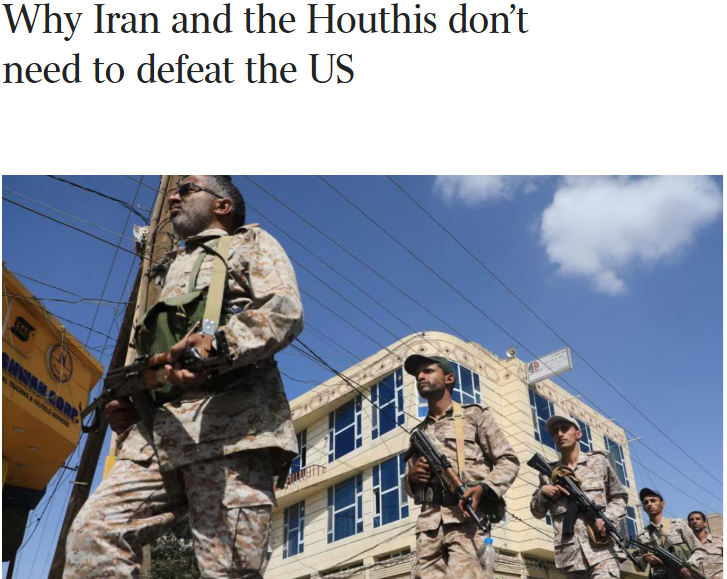
Iran and the Houthis are pursuing a war of endurance rather than annihilation. Their success model can be reduced to five principles: survive; disperse; impose economic costs; stretch the stronger power across several fronts; and wait for the political pressure generated by the accumulating costs to exceed the perceived benefits of continuing the war.
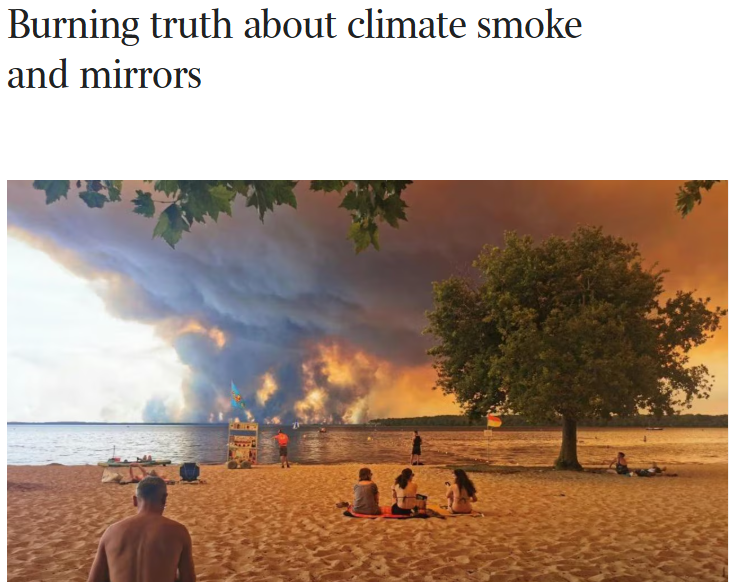
The planet is ablaze, they tell you.
The satellites just logged one of the quietest fire years on record.
Guess which version made the front page.
Climate change is a global claim. It therefore has to be tested against global data. Pointing to horrific fires in one corner of one continent while the planet’s total burnt area keeps falling is not analysis. It is cherrypicking: keep the footage that fits the sermon, bin the rest.
Imagine the reverse. If global burnt area were running 40 per cent above average, would anyone accept “but the Baltics are quiet this year” as a rebuttal? Of course not. Yet that is precisely the logic deployed in the other direction.
How do we end up believing the entire Earth is in unprecedented flames while the long-run record shows less land burning?
Because infernos make the front page. Record-quiet fire years make no news at all. Report only the fires and never the absence of fires, and the public will duly conclude the planet is ablaze — even as the data shows the opposite.
The fixes are prosaic and proven: prescribed burns, fuel clearing, fire-resistant building codes and more firefighting capacity. None of that requires a morality play.
What will not help is the standard prescription of net zero. Even if the entire rich world hit net zero by 2050, at fantastical cost, the temperature difference by century’s end would be too small to measurably change the fire risk facing houses that burned this year.
Telling frightened people their homes went up because of fossil fuels — and that salvation lies in decades of expensive emissions cuts — is not compassion. It is propaganda for extremely costly policies, and a convenient alibi for failed fire policy.
If the cameras pointed at the places that did not burn, would you still call it a planet on fire?
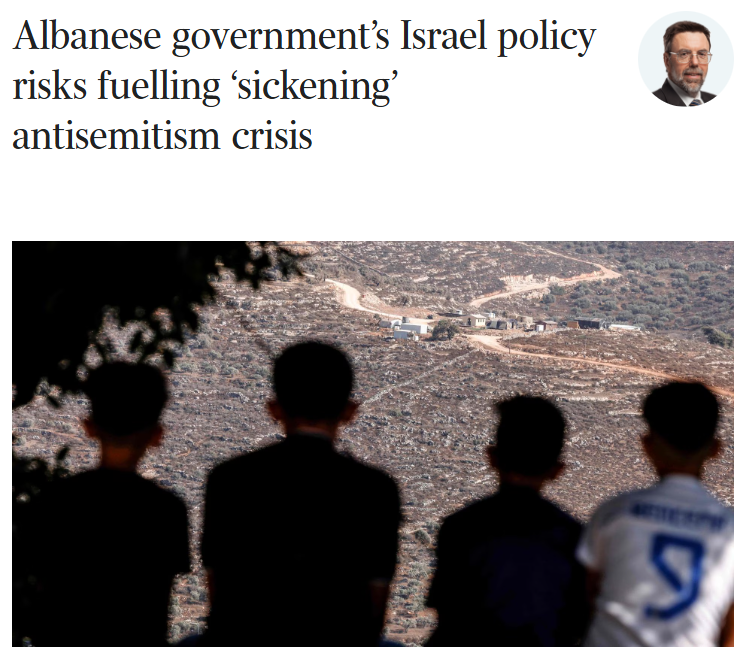
Canberra’s pathetic machinations will not move a single tank in the Middle East.
They will, however, make Australia a nastier and more dangerous country.
The terrorists who butcher Jews always justify the slaughter by pointing to “hostility to Israel”.
The Albanese government unreasonably and irresponsibly fans that hostility.
The only plausible motive is tawdry domestic politics: managing the activist Left inside Labor, which unambiguously hates Israel, and managing the electoral threat from the Greens and their fellow travellers.
How often has Foreign Minister Penny Wong uttered the name of Galit Carbone, the Australian woman Hamas deliberately murdered?
How often has this government spoken of the slaughter in Sudan?
It almost never mentions Chinese human-rights abuses.
An obsession with criticising Israel is a reliable sign of extremism, cynicism or immaturity.
You would hope an Australian government was better than this.
When did selective silence become official Australian foreign policy?
Communist mass murderer Mao Zedong died on this day in 1976.
He presided over a regime of extreme oppression, forced labor, terror, and famine. Historians estimate that 40 to 80 million Chinese were killed as a result of his evil rule.
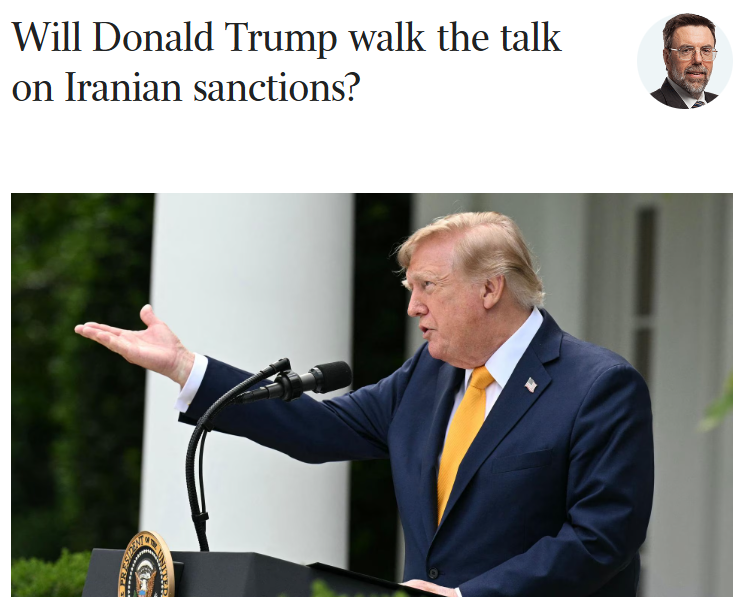
Bessent just delivered the sternest warning Washington can muster.
“Let there be no ambiguity as to the position of the United States. An economic engagement of any kind with this murderous regime will expose those responsible to the full reach of American power.”
Fine words. Shame about the record.
It’s noteworthy that the White House sent Bessent out to say it. He and Marco Rubio are the two cabinet secretaries with actual personal credibility. They pass every Trump loyalty test, yet they almost never speak in that hyperbole-charged MAGA dialect of hallucinatory exaggeration and wish fulfilment.
The plain truth is still this: for all the bellicose bluster, the Trump administration has a feeble record of enforcing secondary sanctions — the ones aimed at third countries that keep trading with Iran.
Sanctions meant to cripple a nation should be rare. They work far better when they are multilateral, not unilateral.
A George W. Bush would have brought a formidable posse of allies with him. Trump instead insults and alienates them, slaps absurd tariffs on their economies, then acts surprised when they are slow to answer his calls for support.
It is an absolute failure to persuade allied opinion — let alone international opinion — to back either the military campaign or now the sanctions campaign.
Trump never abides by a trade deal for more than a few months. He is always reopening it, issuing new threats, imposing new tariffs. Allies and adversaries alike have grown very wary of putting any faith in any arrangement he proposes — including a sanctions arrangement.
His wildly gyrating rhetoric on Iran has finished the job. Near-constant announcements of peace at hand, or the biggest military offensive since the Second World War. Neither has ever eventuated. Washington’s credibility on Iran is wrecked across the board.
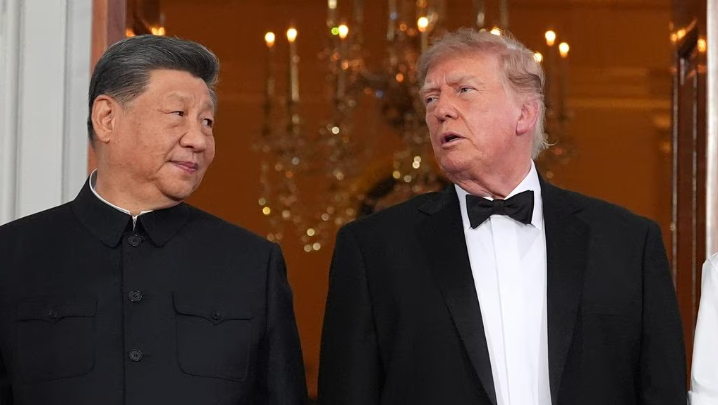
Even more important: for the moment at least, Trump cannot coerce Beijing to do, or refrain from doing, anything.
He imagined a brutal US-China trade war he would quickly win because America is the bigger market. Instead Beijing achieved escalation dominance by cutting off rare earths and critical minerals — the ones it had, with some astute planning, turned into a near-global monopoly.
Many of the weapons used against Iran depend on those Chinese minerals. Since that episode, the threats against China have simply stopped.
So the question is simple.
If America cannot even make China blink over the minerals that go into its own weapons, why would anyone else take these new secondary sanctions seriously?
Trump’s Iran threats are now the surest sign nothing will happen.
The louder he bangs on about an imminent attack, the less chance there is of one.
He’s spent the past six months churning out so many wildly self-contradictory lines on Iran that his words are the least reliable guide to what might actually occur.
Just two weeks ago he vowed that if Iran didn’t strike a deal he’d unleash the greatest military assault since the Second World War.
Iran didn’t. Trump didn’t.
It’s become a reliable rule of thumb: the more Trump talks of striking, the less likely any strike becomes.
The crowd who insist Trump never puts a foot wrong will insist this is all clever negotiating.
Rubbish. For a threat to work as a tactic, the other side has to believe it means something.
The Iranians have worked out that Trump is mainly bluffing about fresh military action.
The two polarised camps — Trump as pure devil versus Trump as the only possible saviour — are both wrong.
He’s a mixed grill, like most leaders.
Trump is now a victim of his own habits.
He’s far more tactical than strategic.
He spotted a tactical opening to decapitate Iran’s leadership and change the place forever.
The decapitation was tactical and it worked.
The permanent change was strategic and it didn’t.
Iran remains an intensely evil regime.
It has tried to assassinate Trump several times.
For two decades it has been the world’s chief state sponsor of terrorism.
It’s on the record for cyber-espionage against civilian infrastructure in the United States.
As artificial intelligence develops, that capability only becomes more lethal.
When a leader’s threats become so transparent that even the world’s most malign regime stops taking them seriously, what exactly is left to restrain it?
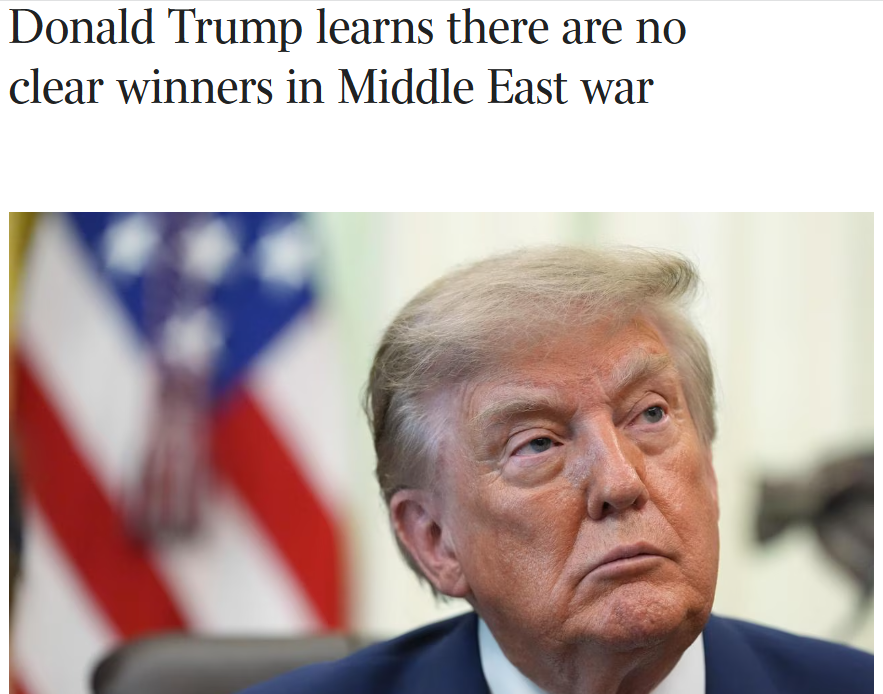
Iran’s more antagonistic than ever — and the world’s energy chokepoint has zero good options left.
The war launched in February has handed Tehran a strategic win it didn’t even have to fight for properly.
Gulf states hate the deal now on the table. It cracks open the Strait of Hormuz and formalises Iranian oversight of every inbound ship. They loathe it.
But Gulf officials will take it over another round of US-Iran military action that risks torching their own energy infrastructure. Pragmatism over principle, every time.
Here’s the real damage: in past crises the Gulf’s spare capacity and oil supplies could offset shortfalls from Iraq, Kuwait, even Iran itself. That buffer now comes with thick caveats. The region’s ability to steady global markets is compromised.
Iran isn’t stopping at the Strait. It wants effective control over the whole show — trade, oil, gas exports — and will dictate the terms under which Gulf countries get to use their own lifeline.
Officials are already resigned to the obvious: any deal leaves Iran’s missile programme and its network of regional militias completely untouched. Those remain the main threats to Gulf security.
The bigger danger isn’t the deal itself. It’s escalation and a drawn-out conflict that shuts down even more energy flows, scares off investors and tourists, and trashes national economies.
Gulf capitals are growing increasingly frustrated at what they see as America’s complete absence of a coherent strategy while the war drags on. Their security and prosperity are being jeopardised by drift.
So they’re already planning workarounds: expanding pipelines to the Red Sea and the Gulf of Oman, and building more storage so they can ship during calm periods and stockpile overseas.
When the world’s energy hub ends up having to route around Iran’s new leverage, who exactly won this war?
Iran didn’t defeat America or Israel.
It just survived the beating — regime intact, leverage mostly intact — and that alone is a bloody nose for the West.
Nuclear sites smashed? Fine.
The knowledge to rebuild them isn’t.
And nobody’s entirely sure where all the enriched material ended up. Classic Iran: take the punches, keep the regime breathing, wait for the other side to get tired or start arguing with itself, then negotiate from a position that still matters.
Trump needed the opposite.
Diplomatic wins. Calmer region. Steady oil. A clean story that American firepower delivers decisive results.
Instead he’s left negotiating with a regime that absorbed the initial assault and still stands, while dealing with an Israeli government that simply ignores Washington the moment its own security calculations say otherwise.
The real loser here may be American influence.
The US remains vastly more powerful than any single player in the region.
But power is not control.
Iran has shown it can endure American military pressure.
Netanyahu has shown Israel will chase its own interests even when they collide with American ones.
And Trump is discovering the hard way that in the Middle East, even a US president doesn’t always get to write the final chapter.
So who’s actually running the endgame now — and how long before everyone pretends this was the plan all along?
21% of young Australians aged 18–24 now say violence is sometimes justified to advance a cause they care about.
That’s the finding from the 2025 McKinnon Index – the annual dashboard of democratic health.
Terrorism does not begin with shootings and arson.
It begins the moment society starts treating violence as a legitimate form of political argument.
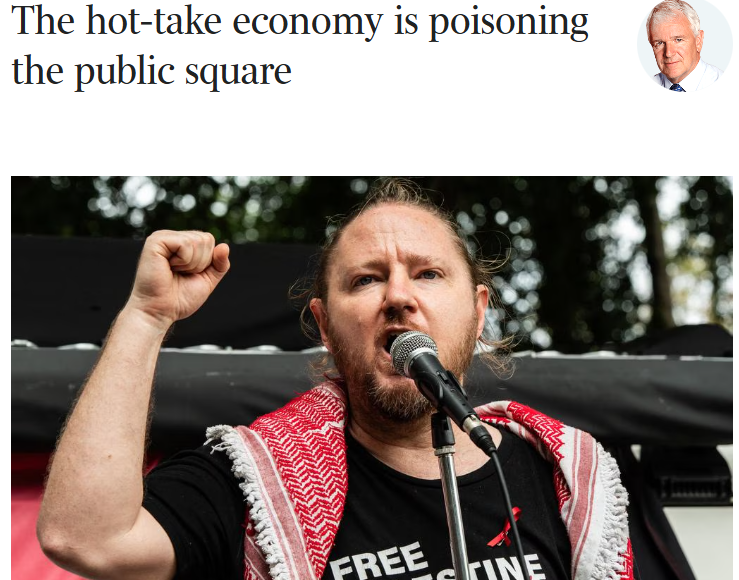
Look at the lines being pushed against “colonialism”, militarism and Israel.
They will be painfully familiar to anyone who watched the pro-Palestinian protests that erupted after Hamas’s attack on southern Israel in October 2023.
Much of this ideological framework draws on old Marxist traditions.
It has simply been reshaped through anti-colonial and “settler colonial” theories into a broad attack on liberal democratic states.
A German think tank, the Institute for Strategic Dialogue, found that after the Hamas attack, far-left groups openly voiced support for terrorist attacks they perceived as anti-imperialist or anti-colonial – even when the terrorists themselves held entirely different ideological convictions.
That is why, for some on the extreme left, a shared hatred of “settler-colonial” societies such as Israel and the United States overrides any concern about Hamas’s violent opposition to homosexuality.
The most obvious trend?
The young are getting younger.
We urgently need better strategies to protect young people from this destructive attraction to political extremism.
Government should look very carefully at the plans for an August 13 “nationwide day of protest” being organised for school students by leftist groups – including Students for Palestine.
How many more percentages of the next generation are we prepared to lose before we decide that “sometimes justified” is already far too many?
🦖The Emperor's New Currency: The Chimera of Renminbi Internationalisation🦖
To read China’s state-backed financial press lately is to subject oneself to a masterclass in collective delusion. We are, they loudly herald, crossing the threshold into a glorious new epoch: the internationalisation of the Renminbi. The purported evidence for this geopolitical triumph? A transient uptick in the exchange rate and a sudden, ostensibly triumphant surge in offshore RMB bond issuance. It is a narrative meticulously crafted to suggest the imminent dethroning of the almighty Dollar. It is also, unequivocally, a spectacular fiction.
Let us dispense with the polite euphemisms. The current deluge of breathless commentary from compromised financial media is so fundamentally detached from economic reality that it demands a thorough forensic dissection. The so-called 'internationalisation' of the yuan is less a grand macroeconomic shift than an elaborate, labyrinthine grift—one wherein the ordinary Chinese citizen, the perennial jiucai (chives waiting to be harvested), foots the bill, while the party elite quietly pocket the change.
The credulous observer—or the ardent nationalist—might understandably point to the sheer volume of offshore RMB debt and ask for an explanation. Last May, Beijing pledged to grease the wheels of cross-border financing. Dutifully, the commentariat churned out panegyrics declaring that a changing world order would inevitably hasten the yuan's global ascendancy. Recently, we have indeed seen a stronger yuan and an explosion in cross-border debt, primarily through bond issuance totalling over 1.4 trillion yuan in the last two years. Furthermore, a fraction of global commodities, including a highly publicised 41% of Sino-Saudi oil trades, are now settled in yuan.
Do these figures herald the twilight of American financial hegemony? Only to those whose understanding of global economics is comfortably outpaced by a primary school leaver. A currency’s global utility is not determined by the sheer volume of debt issued in it, especially when that debt is driven not by global demand, but by domestic distress.
The true catalyst for this bond bonanza is far more prosaic: Chinese debt is staggeringly cheap. And it is cheap because the domestic economy is trapped in a debilitating deflationary spiral. With the populace too anxious to consume and the private sector too battered to borrow, the People’s Bank of China has been forced to slash interest rates to the bone. Thus, institutions are flocking to issue RMB bonds for the same reason one buys a discount toaster: it lacks sophistication, but the price is right.
Enter Hong Kong, the self-anointed hub of offshore yuan, where the vast majority of these 'Dim Sum' bonds are minted. Why Hong Kong? Because the city is awash with idle offshore Renminbi. And how did this ocean of currency accumulate? Through the time-honoured traditions of elite capital flight and systemic money laundering.
Under the guise of legitimate corporate ventures, foreign trade, or the acquisition of opaque financial products, vast sums of yuan are converted to dollars or Hong Kong dollars to be spirited away to safer, Western shores. This ceaseless exodus depletes Hong Kong’s actual dollar reserves, leaving behind a mounting pile of offshore RMB. Financial institutions, faced with this idle, cheap currency, recycle it in the most efficient manner available: issuing debt.
The primary buyers and sellers in this market are an incestuous network of state-linked financial institutions. The funds raised are routinely funnelled into the Belt and Road Initiative or the black hole of mainland local government financing vehicles (LGFVs)—projects legendary for their lack of profitability and their profound susceptibility to graft. Since these infrastructural vanity projects rarely turn a legitimate profit, the debt is simply rolled over. It is an elaborate game of left-hand, right-hand; a vast recycling mechanism designed to cover the tracks of corruption and keep the capital flight machinery humming. The financial exhaust fumes of the elite are simply being repackaged as high finance.
But what of the much-touted 'de-dollarisation'? The faithful swiftly point to US Treasury data showing China’s official holdings of American debt tumbling to historic lows, dropping by tens of billions a month. Furthermore, the proportion of dollars in China's official foreign exchange reserves has purportedly slipped from nearly 79% in 2005 to under 60% today. Surely, this proves a deliberate, sovereign pivot away from the greenback?
This is where statistical sleight of hand reaches its absolute zenith. This narrative conveniently ignores the true custodians of China's dollar wealth: the state-controlled commercial and policy banks. As the Council on Foreign Relations recently and astutely noted, China has not de-dollarised; it has merely moved the dollars out of the official central bank window and into the opaque vaults of state institutions.
The numbers are staggering. State commercial banks hold well over a trillion dollars in foreign exchange assets. Policy banks, whose overseas holdings remain fiercely guarded secrets, likely hold another trillion in dollar-denominated claims. Add the sovereign wealth fund, and these institutions command well over two trillion dollars—eclipsing the official state reserves. They lend in dollars, they invest in dollars, and they hoard dollars. The elites, the very architects of this system, know that the dollar remains the world's premier haven of yield and security.
Thus, the grand façade crumbles. The 'de-dollarisation' is a statistical mirage; the 'internationalisation' of the yuan is little more than the expanding footprint of a state-sanctioned capital flight apparatus, desperately recycling its own waste to keep the geopolitical theatre alive.
It is a uniquely Chinese paradox: a devastating domestic deflationary crisis has been elegantly repackaged by state propagandists as a triumph of global strategy. The nomenklatura quietly amass offshore fortunes in hard American currency, while the ordinary citizens, trapped in a deflating economy, perpetually terrified of unemployment, and fed a steady diet of nationalist hubris, cheer for the 'rise' of their currency.
There is a rather crude, though entirely apt, aphorism favoured by China's current paramount leader: "Do not look at how happily they jump today; beware the settling of accounts tomorrow." As the state apparatus dances joyously to the tune of a synthetic monetary triumph, they would do well to heed their own proverb. When this labyrinthine structure of recycled debt and hidden dollars finally runs out of domestic wealth to strip, the settling of the Renminbi's accounts will be a catastrophic spectacle indeed.
We’re no longer defined by what we achieve, what we’ve lived or who we actually are.
Race, birthplace and the rest of the identity checklist now decide it for us.
Unless you very publicly renounce those markers — ditching the connections and relationships that come with them — you’re assumed to be collusive with the enemy’s outlooks. Or simply with the enemy itself.
Same rule for organisations. And anyone even loosely linked to them.
Fail to attack, in public, the people or causes some peer group has declared the enemy? That group will demand the institution and everyone associated be shunned.
Silence on the leaders, countries or causes your lot despises is treated as complicity. Saying nothing against the opposite is treated the same way.
Don’t publicly wring your hands over climate change impacts? You’re a “climate sceptic” — even if you share the anxiety but simply don’t believe a public proclamation will change a damn thing.
When did refusing to perform the required public denunciation become proof that you’re the enemy?
@japan_nobunaga Singapore has some of the highest-quality, safest tap water in the world (and it’s in Asia).
Pretty sure the list is missing more than just one country.
Trump bombed the Iranians and decapitated their leadership, expecting regime collapse or a more pragmatic bunch ready to cut a deal with Washington.
He thought they would hand over their enriched uranium and scrap the remnants of their nuclear programme in return for sanctions relief and economic recovery.
He was wrong. Fatally wrong.
Iranian behaviour since the war began shows exactly how badly he misread them.
Iran is a fantastically corrupt state, with corruption running through every layer of government. At the same time its leaders are genuine believers in the Shia Islamist vision that drives the revolution. Martyrdom is the pinnacle of virtue in their world. They will enjoy the high life at the expense of their blighted people, but they are still prepared to embrace death themselves.
Before the strikes
Before the war, Iran supported international terror and regional destabilisation but left oil freight traffic in the Strait of Hormuz alone. Its doctrine was grey-zone conflict — nasty enough to hurt, but below the line that would trigger full-scale American military action. It feared US power. That fear kept it in check.
After the pounding
Now Iran has absorbed a massive US military campaign and survived with the regime still in charge. Its economy is wrecked and its society is suffering terribly, yet the ayatollahs remain in control and the Islamic Revolutionary Guard Corps can still enforce order and wage war.
US intelligence clearly overestimated how much even heavy bombing could stop Iran intimidating its neighbours or projecting power. Despite the relentless US air campaign, Iran still has missiles and drones to hit US regional bases and Gulf allies.
Trump has repeatedly declared Iran’s military completely destroyed. The US and Israel have indeed smashed its navy and air force. But Iran can still fire hundreds or thousands of drones and missiles from countless underground facilities — and it has clearly replenished stocks during the ceasefire.
The proxies
Iran’s two most important regional proxies, Hezbollah in Lebanon and the Houthis in Yemen, remain intact. Hezbollah has stopped firing at Israel for now, but Iran will be quietly pleased that Trump has fallen out with Benjamin Netanyahu over the need to suppress attacks on northern Israel.
It now looks as though Iran is ready to deploy the Houthis. They have more operational independence than Hezbollah and took no pleasure in the last US pounding.
The real contest
This is turning into the familiar race between two deadlines: Iran’s capacity to endure versus Donald Trump’s willingness and political ability to keep the military campaign going for weeks or months.
Trump recently mused on social media that the conflict could last a year. One of his more wildly unrealistic pronouncements.
Reality is closing in. Trump will soon need congressional approval to continue the war. That approval will be almost impossible to obtain, even from a notionally Republican Congress. If the conflict is still dragging on in November, the Republicans will infallibly lose the House. A Democrat-controlled Congress will then move quickly to shut it down.
Who cracks first when the political clock starts ticking louder than the military one?
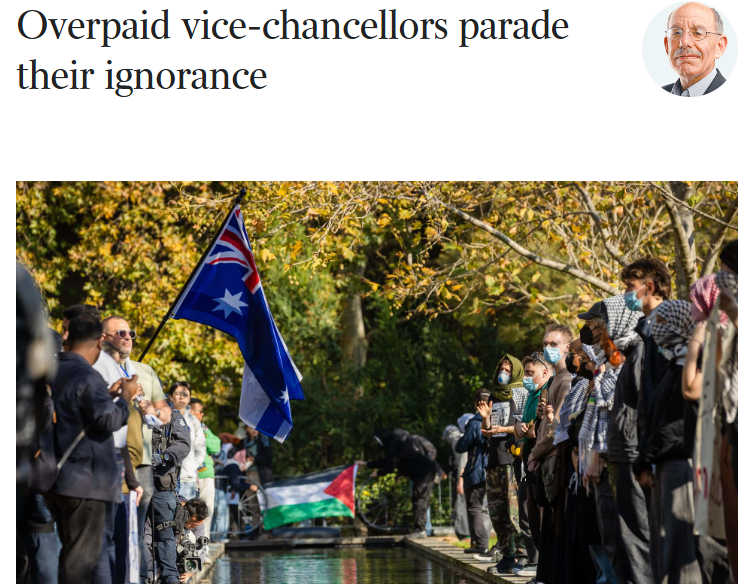
The Go8 report treats academic freedom as something to “balance” against harm and wellbeing.
That is not a defence of the university. It is the managed surrender of its reason for existing.
Wilhelm von Humboldt refounded the modern university on the premise that knowledge advances on an infinite frontier. He did not relax the demands of order. He intensified them. Serious research, teaching and learning can only happen when the institution is free from disruption and *leeres Geschwätz* — empty chatter.
Max Weber was even clearer. The university must remain “the house of the intellect”, not “a nest for fanatical sects”. Once it becomes the latter, open inquiry and intellectual exchange die. The right to take every necessary measure to protect “tranquillitas scholarum” — scholarly peace — is therefore not an optional extra. It is part of academic freedom itself.
The Go8 report shows no grasp of this tradition at all.
Its authors reduce good order to a question of “wellbeing” that must be weighed against academic freedom rather than recognised as its necessary condition. The language is explicit: entrench “the duty to balance academic freedom against actual or potential harm” and strengthen “the duty to foster the wellbeing of staff and students”.
Once you frame scholarly peace as just one interest among others, you have already decided that some level of harassment, intimidation and threat is compatible with the university’s mission. That trivialisation produces trivial remedies. The report’s flagship proposal is a one-word amendment to the Model Code from Robert French’s 2018 review.
Academic freedom also carries duties.
It is not ordinary free speech. The 1915 AAUP declaration stated the point plainly: there are no rights without corresponding duties. Academics must “set forth justly, without suppression or innuendo, the divergent opinions of other investigators”.
Edward Shils’s 1967 report, which shaped the University of Chicago principles, made the distinction sharper still. While cranks and demagogues enjoy freedom of expression, academic freedom has never protected scholars “to make arbitrary assertions without regard to the evidence, methodically and critically assessed”.
If this is what taxpayers are buying with the world’s highest academic salaries, they are paying Rolls-Royce prices for intellectual bankruptcy.
What exactly do the Go8 universities think they are still in the business of doing?