The Minister of Defence, General Christopher Gwabin Musa (Rtd), lied during an interview on News Central that I, JusticeCrack, instructed military officers to remove meat and other items from their meals to make the food appear inadequate.
It is important that I publicly clarify this allegation.
I never told any military officer to remove meat or anything else from their food. What authority do I have to give such an instruction? I am not a General, a Commander, or a Colonel. I have no military background whatsoever. Why would I instruct serving military personnel to do such a thing?
It is also important for the public to know that I never reached out to military officers. Rather, some of them reached out to me to express concerns about their welfare.
In good faith, I made a video to raise awareness so that the military authorities could pay attention to the welfare of the officers and men serving our country. My intention was simply to advocate for better working conditions, improved welfare, and better living conditions for the brave men and women who defend Nigeria.
I am making this statement to set the record straight.
It is deeply painful and, in my view, defamatory to hear the Honourable Minister of Defence make such a statement about me on national television without presenting any evidence. Such a statement has the potential to damage my reputation and misrepresent my intentions before the Nigerian public.
I therefore wish to make it abundantly clear that I, Mark Chidiebere Justice, popularly known as JusticeCrack, never instructed any military officer to remove meat or any other item from their food. My advocacy has always been about accountability, better welfare for our security personnel, and good governance.
This statement is made solely to correct the record and inform the Nigerian public of the true position.
Thank you.
Justice can never be cracked.
Media Framing of Crime Along Ethnic Lines: Divisive.
As an Igbo man, I have endured stereotypes, judgment, and labelling solely based on my ethnic origins. This is not an isolated Igbo experience. Most Nigerians have, at some point, been reduced to their ethnicity rather than recognised for their true character.
I understand the pain of the ordinary Fulani man today, often unfairly judged by the actions of criminals he does not support, has never met, and who are not representative of his people.
Even in America, such unjust labelling fueled the civil rights movement and prompted Martin Luther King Jr. to declare that people should be judged by the content of their character, not the colour of their skin.
Every Nigerian ethnic group is known for its unique traditions, occupations, skills, and strengths. Crime, however, has no ethnicity. A thief is a thief. A terrorist is a terrorist. A kidnapper is a kidnapper. They are bad actors, not representatives of any people. They must be identified, arrested, and punished according to the law.
We must decisively abandon the dangerous practice of blaming entire ethnic groups for the actions of a few criminals. It is unjust, it breeds hatred, and it damages our national unity.
Let us proudly celebrate our diverse cultures, talents, and contributions, rather than falling prey to stereotypes and prejudices that politicians and divisive interests exploit for their gain.
A new Nigeria must emerge—one where no citizen is condemned because of tribe, religion, or birthplace. We can cherish our cultural roots while standing united by justice, mutual respect, and hope for a better future. We are capable of this.
A new Nigeria is within our reach. -PO
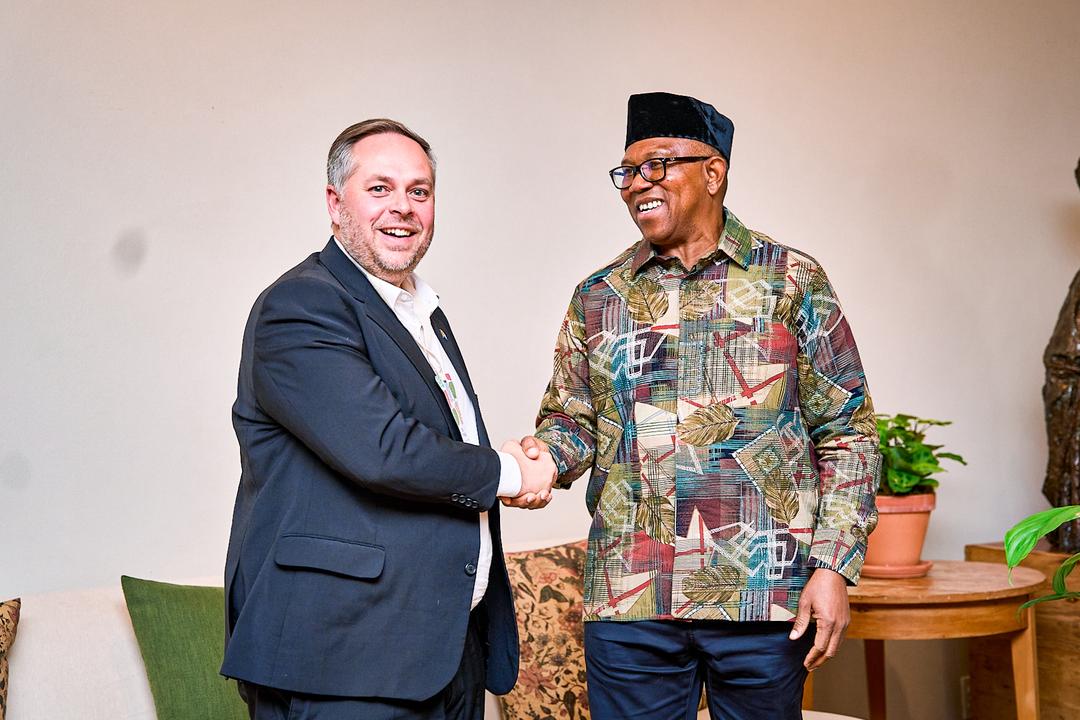
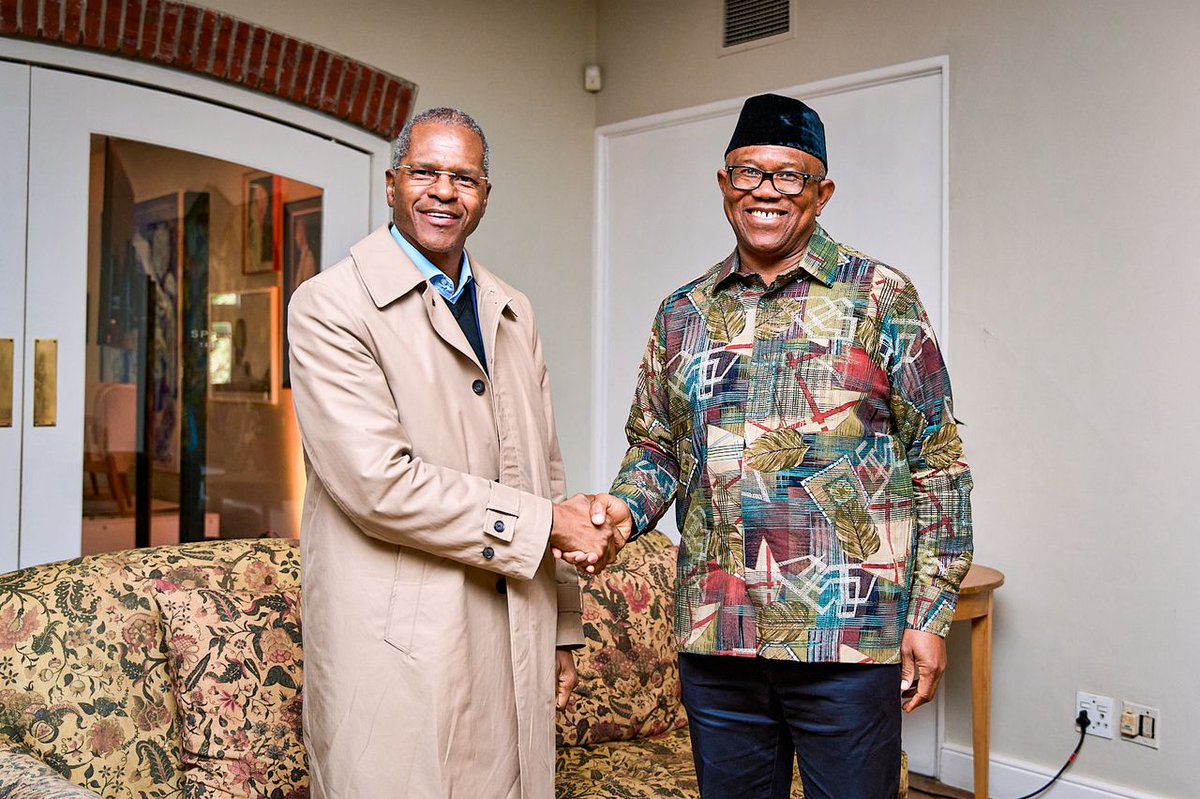
After speaking with Nigerians in Cape Town yesterday, I was able to have meaningful discussions this morning with three South African ministers and political party leaders regarding the ongoing challenges related to immigration, regional collaboration, and fostering peaceful coexistence between our nations.
I had the pleasure of meeting with Mr Leon Schreiber, the South African Minister of Home Affairs and a prominent figure in the Democratic Alliance; Mr Velenkosini Hlabisa, the Minister of Cooperative Governance and Traditional Affairs and leader of the Inkatha Freedom Party (IFP); and Mr Gayton McKenzie, the Minister of Sports, Arts and Culture and leader of the Patriotic Alliance (PA).
Our conversations were productive and candid, focusing on the current challenges that affect both countries—particularly those related to migration, economic strains, youth unemployment, security issues, and the rising tensions faced by African foreigners in South Africa.
I firmly believe that Nigeria and South Africa, both prominent African nations, must enhance dialogue, bolster cooperation, and seek solutions based on justice, mutual respect, and adherence to the rule of law. In challenging times, leaders and citizens alike need to demonstrate responsible leadership, compassion, and restraint.
We collectively stressed the importance of law-abiding behaviour, avoiding violence, resisting hate or provocation, and allowing lawful institutions to address grievances through democratic and constitutional processes, regardless of the challenges we face.
The progress of Africa hinges on our ability to create unity, foster economic inclusivity, invest in our communities, and uphold the dignity of every African, no matter where they live. -PO
Fellow Nigerians, good morning.
I woke up this morning after my church service with a deeply reflective heart, and despite every constraint, I felt compelled to share these thoughts with you.
Many people do not truly understand the silent pains some of us carry daily—the private struggles, emotional burdens, and quiet battles we face while trying to survive and serve sincerely in difficult circumstances.
We now live in an environment that has become increasingly toxic, where the very system that should protect and create opportunities for decent living often works against the people—a society where intimidation, insecurity, endless scrutiny, and discouragement have become normal.
More painful is when some of those you associate with, believing you would find understanding and solidarity among them, become part of the pressure you face. Some who publicly identify with you privately distance themselves or join in unfair criticism.
We live in a society where humility is mistaken for weakness, respect is seen as a lack of courage, and compassion is treated as foolishness—a system where treating people equally is questioned simply because you refuse to worship status, tribe, class, or power.
Personally, I have never looked down on anyone except to uplift them. I have never used privilege, position, or resources to oppress others, intimidate the weak, or make people feel small. To me, leadership has always been about service, sacrifice, and helping others rise.
Let me state clearly: my decision to leave the ADC is not because our highly respected Chairman, Senator David Mark, treated me badly, nor because my leader and elder brother, Alhaji Atiku Abubakar, or any other respected leaders did anything personally wrong to me. I will continue to respect them.
However, the same Nigerian state and its agents that created unnecessary crises and hostility within the Labour Party that forced me to leave now appear to be finding their way into the ADC, with endless court cases, internal battles, suspicion, and division, instead of focusing on deeper national problems and playing politics built more on control and exclusion than on service and nation-building.
Even within spaces where one labours sincerely, one is sometimes treated like an outsider in one’s own home. You and your team become easy targets for every failure, frustration, or misunderstanding, as though honest contribution has become a favour being tolerated rather than appreciated.
And when you choose to leave so that those you are leaving can have peace, and you step out into the cold, you are still maligned and your character is questioned. Despite all your efforts to continue working for a better Nigeria and engaging people with sincerity and goodwill, those who do not wish you well continue to attack your character and question your intentions.
There are moments I ask God in prayer: Why is doing the right thing often misconstrued as wrongdoing in our country? Why is integrity not valued? Why is the prudent management of resources, especially when invested in critical areas like education and healthcare, wrongly labelled as stinginess? Why are humility and obedience to the rule of law often taken to be weakness rather than discipline?
Let me assure all that I am not desperate to be President, Vice President, or Senate President. I am desperate to see a society that can console a mother whose child has been kidnapped or killed while going to school or work. I am desperate to see a Nigeria where people will not live in IDP camps but in their homes. I am desperate for a country where Nigerian citizens do not go to bed hungry, not knowing where their next meal will come from.
Yet, despite everything, I remain resolute. I firmly believe that Nigeria can still become a country with competent leadership based on justice, compassion, and equal opportunity for all.
A new Nigeria is POssible. -PO
Sections 63, 138 of Electoral Act Dangerous Will Sabotage Voting at Polling Level - Igini
Section 63 of the 2026 Electoral Act has reintroduced something very dangerous: a ballot paper used for the 2027 election that does not bear INEC’s official manufacturer and security features may be accepted by the presiding officer. By implication, the presiding officer has been given the discretion to accept ballot papers notwithstanding the absence of the official mark, and to count such ballot papers. What that means is that politicians who have access to INEC’s serial and security features could produce their own ballot papers.
Mike Igini, Former INEC Electoral Commissioner
Standing Up for Democracy
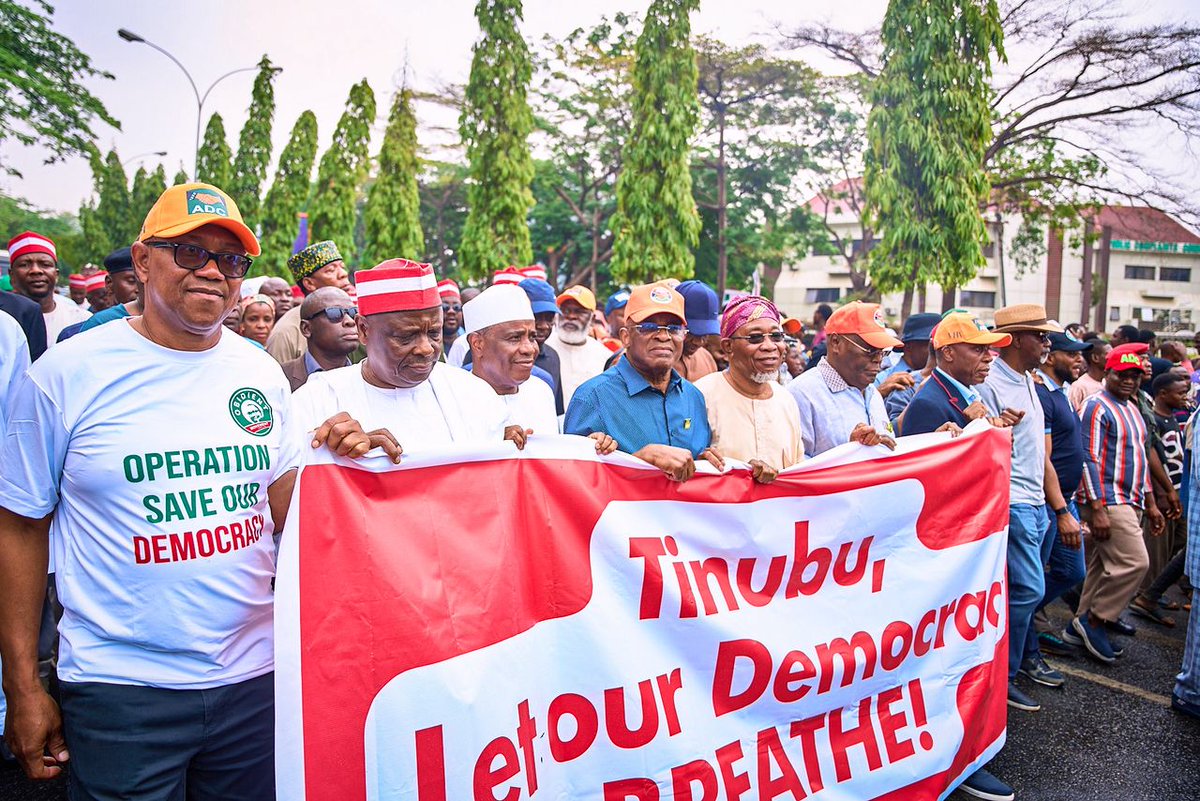
Today, I joined fellow Nigerians, leaders, and members of the African Democratic Congress (ADC) led by National Chairman Sen. David Mark to participate in a peaceful "Save Democracy" protest.
This event was not just an effort to protect our democracy; it was also a moment of reflection on how far we have fallen as a nation. We must resist the suffocation of our democracy by those who once claimed to have sacrificed to defend it, but are now doing everything possible to undermine it and silence opposition.
History will not be kind to those who traded the struggle for democracy for the comfort of power. We will not remain silent, we will not be intimidated, and we will not surrender the future of this nation. The will of the people must prevail—stronger, louder, and impossible to suppress.
A New Nigeria is POssible. -PO
Dr. Martin Luther King, Jr. was assassinated on April 4, 1968 at just 39 years old. James Earl Ray was found guilty but, claimed he was a scapegoat.
After a four-week trial with over 70 witnesses, a Memphis jury in December 1999, unanimously found that “others, including governmental agencies,” participated in a conspiracy to assassinate Dr. King and frame Ray. They awarded the family the token $100 they had requested.
The DOJ explicitly rejected the civil verdict's conspiracy claims as based on "secondhand and thirdhand hearsay and speculation," noting that civil trials use a lower standard of proof. They concluded that James Earl Ray fired the fatal shot.
What do you think?
At this rate, Buhari was a way better democrat!
There are no standards in Nigeria!
At least, Buhari didn’t remove the provision that affirmed forgery as a ground for election result challenge!
The same National Assembly that endorsed a law saying “ you can present a forged document and it will not upturn the results of the election”
The National Assembly just endorsed forgery with removal of the forgery clause and Nigerians are watching!
@akintollgate Is it a Senator that produces Counsellors and Chairmen? I believe it is the responsibility of the people. I don't really understand if it is democracy you are talking about or the strange government of the Wike's.