2 years later, I could add:
6. Grown pastoral transparency and confidence.
7. Helped me escape the tyranny of my own exegetical expertise.
8. Strengthened biblical counseling.
9. Added many new gospel friends and partnerships.
What benefits has 2LCF 1689 added to my life and ministry? Here’s a few:
1. Established an organic “body of divinity.”
2. Strengthened Scripture’s sufficiency.
3. Settled God’s simplicity and impassibility.
4. Harmonized the law with the gospel.
5. Guarded Christian liberty.
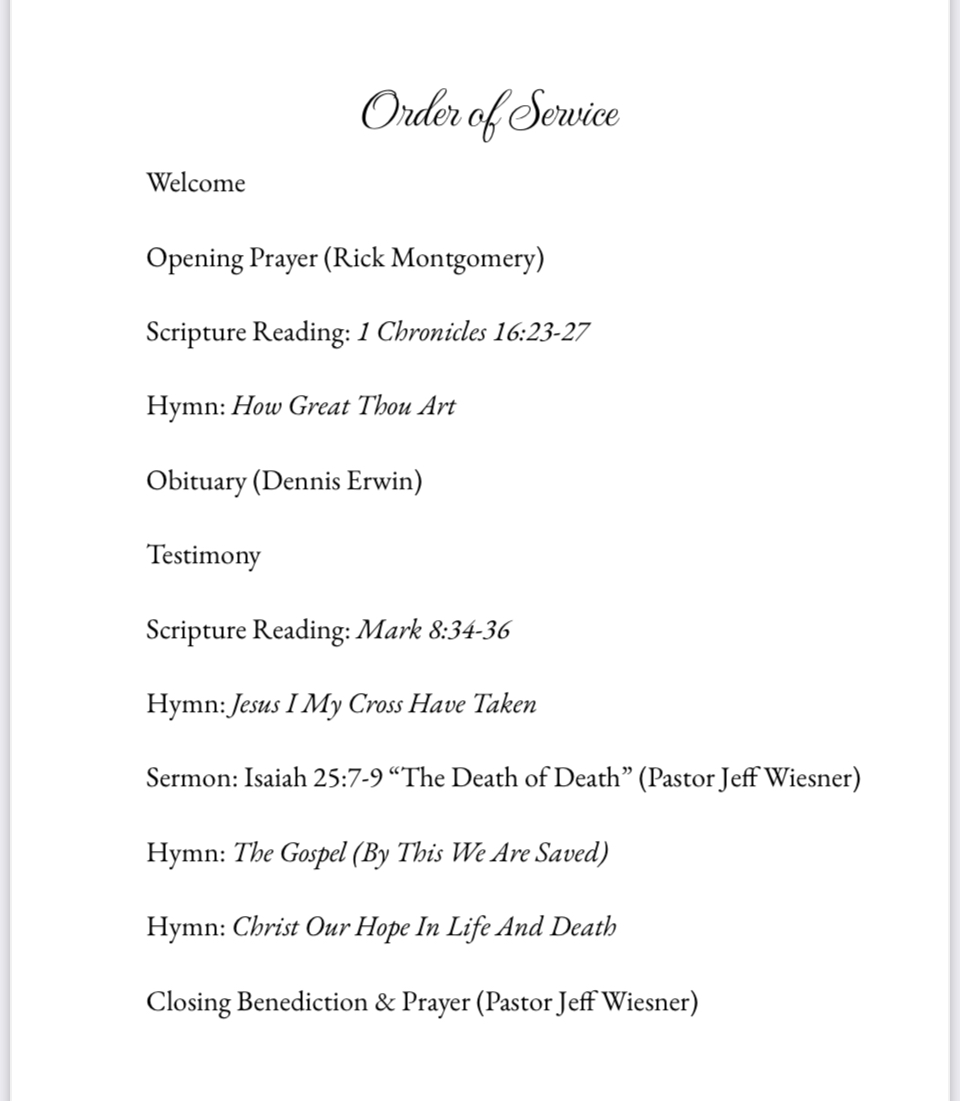
Is this a memorial service?! You better believe it!
Grieving, yes. But not without our hearts set on Christ, our only hope in life and death!
Sing! Sing! Preach! Sing! Sing!
That’s what I’m talking about.
@Stormbreaker3 I sent you all this in agreement that the Scriptures alone have authority over every creed, council, and doctrine of men.
Where we disagree is not in the doctrine of Scripture itself but how biblical doctrine works in interpretation and the role of the whole Church in that task
Biblicist: “My interpretation tests the usefulness of the church’s creeds.”
Confessionalist: “The church’s creeds test the usefulness of my interpretation.”
Both affirm Scriptural authority (norming norm).
The diff is the normed norm: my interpretation or the church’s creeds?
@Stormbreaker3 No orthodox Protestant would recognize your view as articulated here.
It’s thoroughly biblicist (a la the Socinians) and modern.
I suspect you won’t read a recommendation, but you should: https://t.co/VH8Gdg58Vi
4/
The preacher’s job isn’t to make Christ palatable for unregenerate men—“Wasn’t that a nice message!”
No, he must so preach Christ that his message is the stench of death unto death for those who are perishing, and the aroma of life unto life for those being saved.
2 Cor 2:15-16
Therefore, creedal commitments are not only necessary but inevitable for interpretation.
IOW, nobody comes to Scripture a blank slate. We all come with commitments. But are they Scriptural or not?
Creeds/confessions take those commitments from the private to the public realm.
🧵
Is it true that one cannot rightly interpret the Scriptures unless he assumes the authority, unity, infallibility, etc. of Scripture?
Or, can an interpreter who DENIES these doctrines rightly interpret Scripture?
1/
Both these doctrines (Scripture and God) are logically inferred FROM Scripture.
But they are ALSO necessary when coming TO Scripture in the interpretative task, such that w/o them, one cannot right interpret Scripture.
They’re *necessary* creeds.
3/
@Stormbreaker3 I suspect that you and I will continue to talk past each other. I don’t think that you understand my argument.
I’m on to more profitable things. May the Lord bless and keep you!
@Stormbreaker3 You keep illustrating my point.
Not one verse in the Bible explicitly states that Scripture is “sufficient.”
It’s a true belief (credo) inferred from Scripture that you think is a *necessary* belief for interpreting Scripture.
That’s your creed. It’s inevitable. And good.