Help!
I need philanthropists to help Impetus Grants produce the missing data AI needs to ACTUALLY cure diseases of aging.
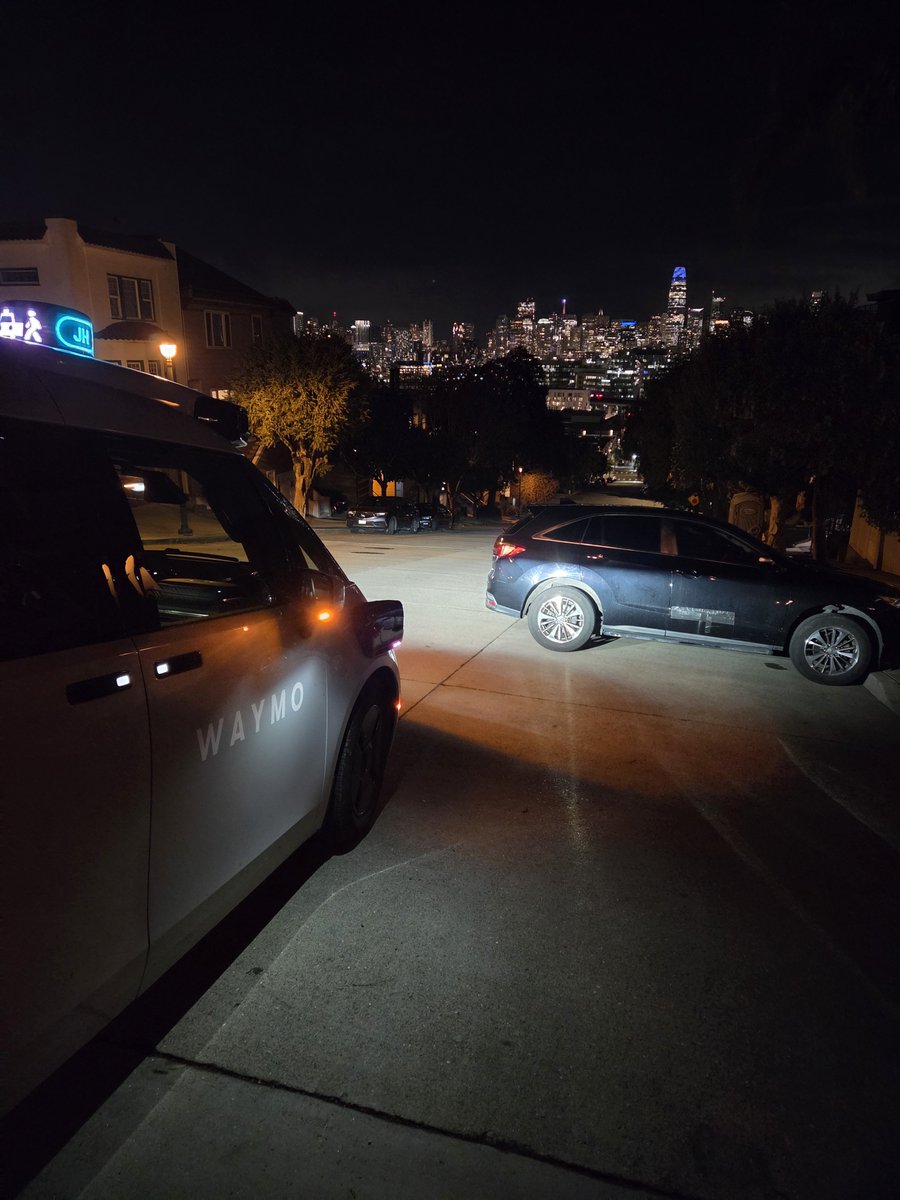
There’s a lot of talk about simulation solving biology. Useful simulations don’t come out of thin air: DeepMind’s latest weather prediction model was trained on weather records dating back to 1959. AlphaFold had decades of PDB. Tesla and Waymo’s driving simulations draw on data collected over tens of millions of miles on real roads.
Building the biological equivalent requires a much stronger data foundation. We need more observations of how diseases with long timelines like Alzheimer’s unfold and respond to treatments. Some of those observations will take years no matter how fast intelligence improves. So I’m directing @impetusgrants to identify longitudinal biosamples we can use for AI-quality data generation, as well as starting necessary new cohorts today.
I started @impetusgrants in 2021 after hearing @patrickc talk about Fast Grants at a conference. If fast grants worked for COVID, why not longevity? COVID was obviously urgent. But far more people die from age-related diseases.
Since then we’ve deployed $34M across 146 projects and supported five clinical trials, with resulting publications 100x representation in Nature/Science/Cell About 60% of the papers we assessed had no National Institute on Aging support identified. Very satisfying to see work we funded a few years ago now bearing fruit: https://t.co/AUflHFtZEA
The next round will fund around 50 projects generating open source data on how diseases of aging develop and respond to treatments. We’ve raised >$9M toward the $15M we need to kick off.
If you’d like to help fund this or know someone who could, please DM me.
(No fancy video of rockets and art deco, all our money goes to longevity research)
@daviddotwalker This is super exciting and very interesting. How does the agent leverage judgment in order to make sure that the next action is the best next action in account? Is this something that you guys help train into agents, or are we looking more from a volumetric strategy?
After the 1973 oil crisis, France launched a massive nuclear expansion. The government coordinated construction, standardized reactor designs, and built multiple reactors at individual sites.
The communities hosting these plants also shared in the economic upside.
Through local tax revenues, construction and operating jobs, and economic activity for surrounding businesses, nuclear plants became long-term economic assets for their communities.
At Fessenheim, for example, the nuclear plant generated €13.3 million in local and regional tax revenue in 2019 alone.
France effectively aligned a national priority with local economic interests.
This seems like one of the most promising paths forward for AI data centers.
Yes, there’s a chance AI helps us cure these diseases within a decade. But AI can’t get there without the right training data, and some of it takes years to collect.
We should start now. @DarioAmodei, are you in?
https://t.co/QtvZXthZIF
You've never really sold a product you've always sold an outcome.
AI will fundamentally change how those outcomes are delivered, and create entirely new ones we haven't yet imagined.
Until the buyer on the other side of the table is an autonomous agent, selling remains a profoundly human endeavor.
One of my favorite lessons from The Prize (Daniel Yergin's book) is that Rockefeller didn't invent the oil industry but rather figured out how to industrialize and scale it.
The real transformation came from an entire ecosystem of technological breakthroughs, infrastructure, distribution, and economics that made oil indispensable.
It feels like Terraform may be building a similar shift: not simply finding new energy resources, but fundamentally changing the economics of producing them.
An interesting idea I heard from a UT economics professor: What if we could have our cake and eat it too? (No pun intended.)
France offers an interesting lesson in how to build nuclear infrastructure at scale.
After the 1973 oil crisis, France launched a massive nuclear expansion. The government coordinated construction, standardized reactor designs, and built multiple reactors at individual sites.
The communities hosting these plants also shared in the economic upside.
Through local tax revenues, construction and operating jobs, and economic activity for surrounding businesses, nuclear plants became long-term economic assets for their communities.
At Fessenheim, for example, the nuclear plant generated €13.3 million in local and regional tax revenue in 2019 alone.
France effectively aligned a national priority with local economic interests.
This seems like one of the most promising paths forward for AI data centers.
We need enormous amounts of computing infrastructure to support the next generation of AI, but the communities hosting these facilities are often being asked to absorb the costs: energy demand, water consumption, land use, and infrastructure strain.
What if we structured these projects so that communities shared directly in the long-term economic upside?
Not just temporary construction jobs, but recurring revenues that could fund schools, lower local taxes, and improve public infrastructure.
The communities enabling the AI revolution should share in its prosperity.
More computing power for the country. More economic opportunity for the communities making it possible.
Re. compute vs bio data collection, path is obvious when you consider EV of marginal spend on either:
If a frontier lab put $50M into collecting data that may be gating, e.g. rich multiomics from real human longitudinal trials, that's ~1 day of compute budget.
Such data takes incompressible time from study initiation.
If pure simulation doesn't need this data, cures delayed 1 day.
If the data guides models to simulate sooner, cures accelerated by months or years.
If the data is strictly necessary, cures accelerated years.
Obvious choice if eg the first AI benefit example in your S-1 is ""profoundly accelerate the rate of progress in biology and medicine, potentially curing diseases that have plagued humanity for millennia ..."
It’s because loving yourself don’t happen overnight.. self-hate is years of internalized programming from external influences... sometimes self-hate is chemical & effects ya mentally/emotionally.. give your growth time— it took me 10 years and I’m still not 100% there. ♥️