“The Torah speaks in human tongue,” the Sages of the Talmud tell us again and again. The Torah, they explain, isn’t speaking to God but to us. And so it employs metaphor and simile and narrative structure. It does not think it is history or science, it does not pretend to be a literal truth.
It literally tells the story of the creation of man *twice*, in Genesis 1 and 2, each time differently and with a different purpose. Even its more straightforward narratives - think Noah’s flood - are that special sort of story that grows with you; it is one tale when you’re five, another when you’re 25 and another still when you’re 65.
The Torah is, by its own sense of itself, not a chronicle of the actual measure and development of life and history, but a window into their meaning and purpose.
The portion of the Torah we will read this Sabbath, called simply, “Names,” is excruciating and beautiful, the beginning of the story of the redemption from slavery through Moses’s great awakening and slow shouldering of responsibility for his people.
And it starts, like so many great beginnings in the Torah, with a list of names.
These are the names of the family of Israel that went down into Egypt, one of the long lineage narratives of Biblical literature.
Why start such a grand and pivotal story with a list of names?
Because names are vital to the Torah’s sense of the world. They are the superpower by which mankind rules the world, by which we discover it. Adam became master of his world when he named it. It is how we know ourselves and our surroundings and the context and meaning of things.
The Torah seems to know that we do not live in the objective world science tries to measure. That world is out there, perhaps, but we do not live in it. We live in a simulation of that world running inside our heads. Naming a thing brings it out of nameless objectivity into meaningful existence, into the lived reality of the simulation.
We name our people and our tribes and our loved ones and ourselves, and thus we know who we are.
And from this naming, the Torah shows us, freedom is born. Shemot begins the tale that will lead Moses to stand before the genocidal tyrant and demand in God’s name, “Let my people go that they may serve me!”
The tyrant refuses, of course, and thus begins his long, bitter downfall.
“Let my people go that they may serve me,” God tells Pharaoh through Moses. Freedom, God says, is service. Freedom isn’t achieved merely with the lifting of the yoke of another’s control. Freedom is attained only when independence gives way to devotion.
In this Sabbath’s reading, then, we have most of the components of the Torah’s understanding of the human: Know who you are, and thus who you are responsible for and answerable to.
Or as our Sages put it in the Mishnah (Ethics of the Fathers 3), “Know where you come from, where you are going, and before whom you are slated to give an accounting.”
Thirty-three names now burn in the collective hearts of the Jewish people, our brothers and sisters locked in Pharaoh’s dungeons who stand on the precipice of their liberation, a negotiated liberation with tyrants who have already catalyzed their eventual downfall.
I will be praying for them this Shabbat, and for dozens more of our brethren trapped in that darkness. And I will do so by naming them, by bringing them into my inner world, making them real and substantive so that I can offer my abject apology, at least until such time as I can do so to their faces.
Freedom begins with a name.
Name them, make them part of your world, so that when they emerge from their dim dungeons, the world that will receive them will be all the larger, so that they will know and feel, if not now then soon, that they are truly and forever redeemed.
Romi Gonen, 23
Emily Damari, 27
Arbel Yehud, 29
Doron Steinbrecher, 31
Ariel Bibas, 5
Kfir Bibas, 2
Shiri Silberman Bibas, 33
Liri Albag, 19
Karina Ariev, 20
Agam Berger, 21
Danielle Gilboa, 20
Naama Levy, 20
Ohad Ben-Ami, 58
Gadi Moshe Moses, 80
Keith Siegel, 65
Ofer Calderon, 54
Eli Sharabi, 52
Itzik Elgarat, 70
Shlomo Mansour, 86
Ohad Yahalomi, 50
Oded Lifshitz, 84
Tsahi Idan, 50
Hisham al-Sayed, 36
Yarden Bibas, 35
Sagui Dekel-Chen, 36
Yair Horn, 46
Omer Wenkert, 23
Sasha Trufanov, 28
Eliya Cohen, 27
Or Levy, 34
Avera Mengistu, 38
Tal Shoham, 39
Omer Shem-Tov, 22
Shabbat shalom.
The amount of suffering that takes place in war is just unthinkable. The amount of healing that will be needed for generations is too great. We must stand for peace and love always. #UkraineRussiaConflict
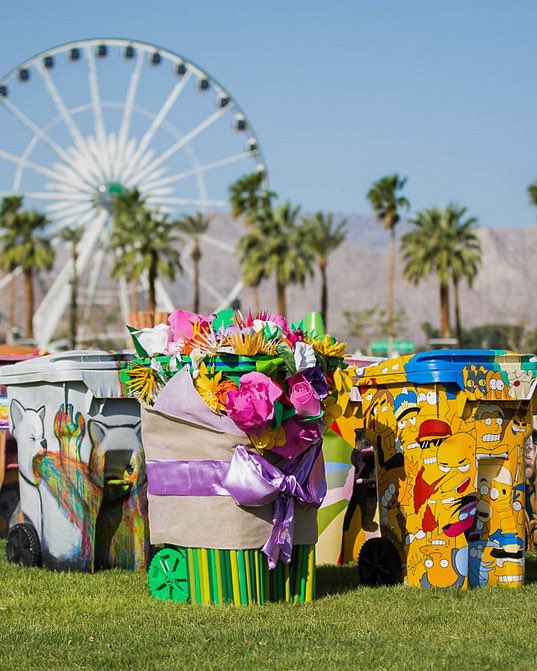
Roll into the desert with your art in hand ♻️
@GLBLInheritance is accepting concepts for the Art of Recycling program now through Feb. 23rd. Design a recycling bin and receive Coachella passes to join your work at the show in April, if selected
https://t.co/dMHJagIu3c