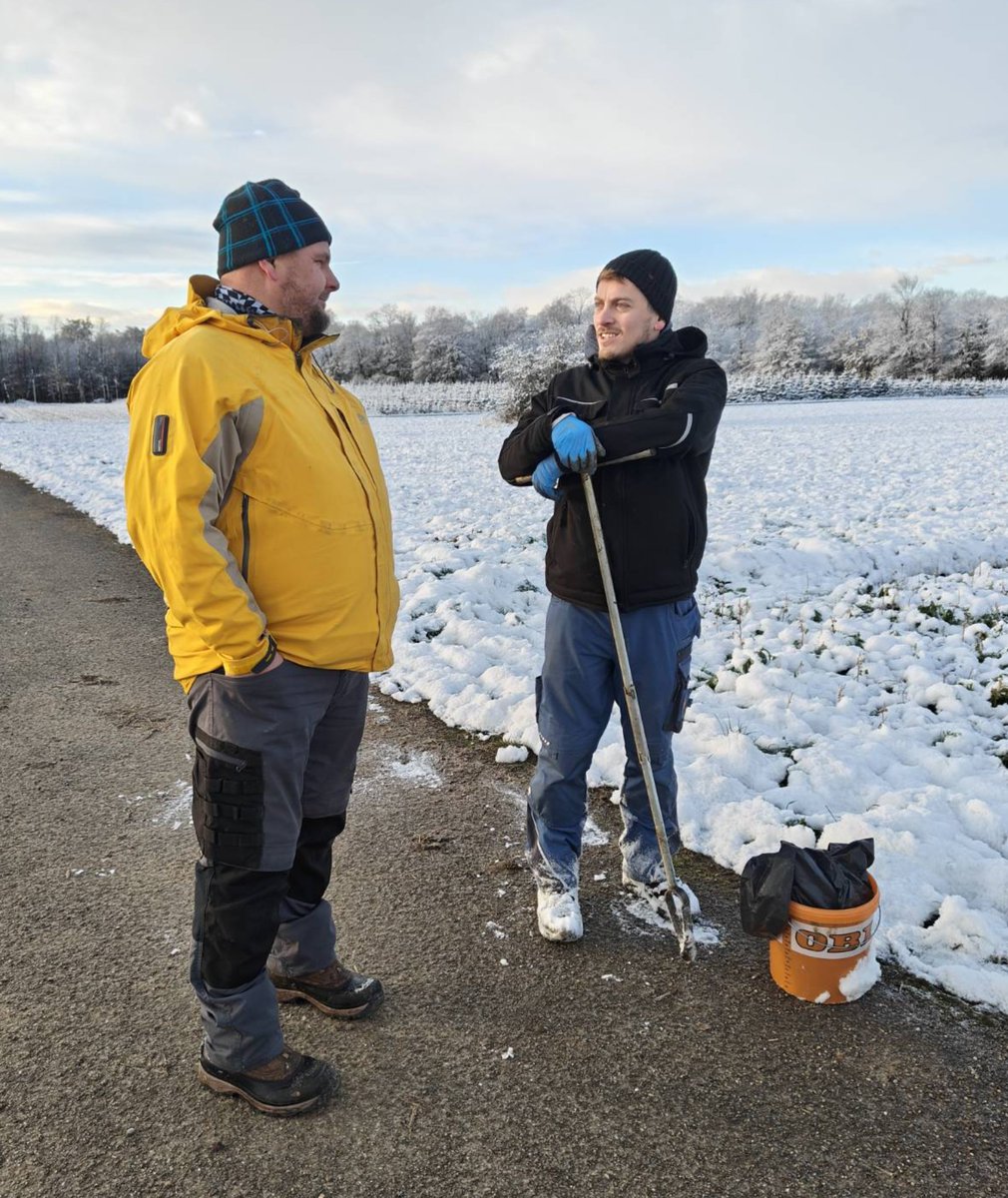
From fieldwork last week to #AGU24 conference next week!
Our CTO @RSteffanides and our Head of Science @JensHammes will be at @theAGU Conference 2024 in Washington D.C. next week.
You can meet them on Monday (Dec 12th) from 08:30-12:20 EST in the Convention Center, Hall B-C (Poster Hall).
Our poster will focus on our CO₂ fluxmeters and how we compared them to current "state of the art" devices. (Poster Code B11L-1475)
We wish you all a safe journey and look forward to meeting you there and having nice and productive conversations.
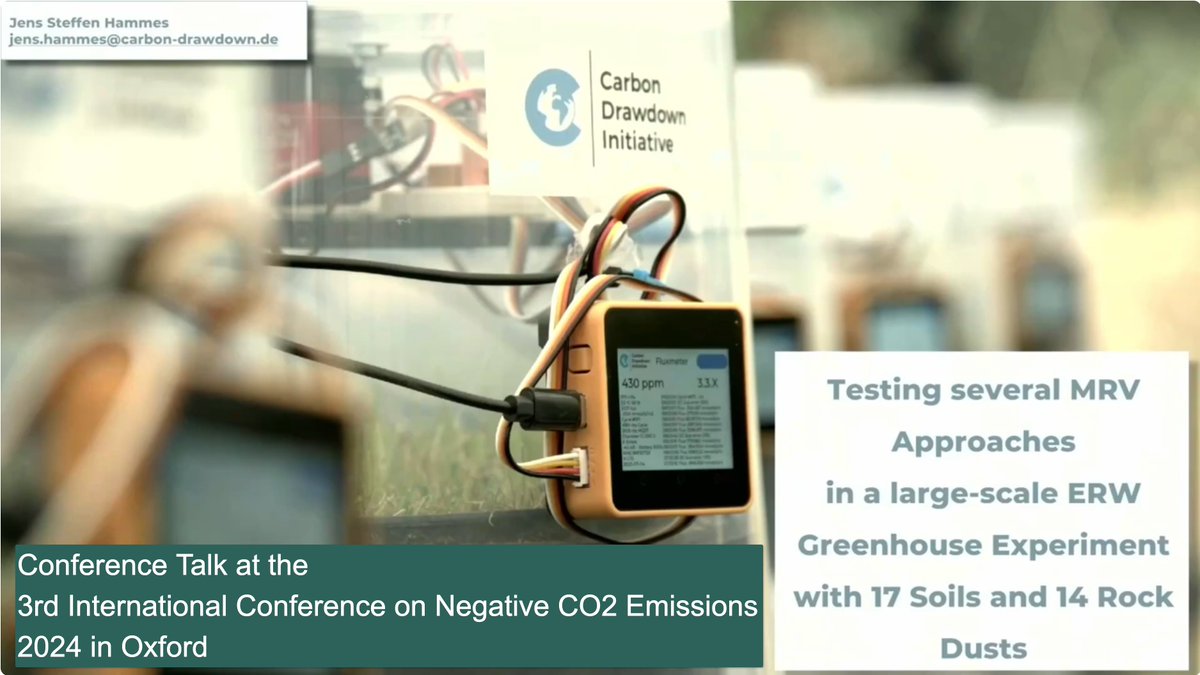
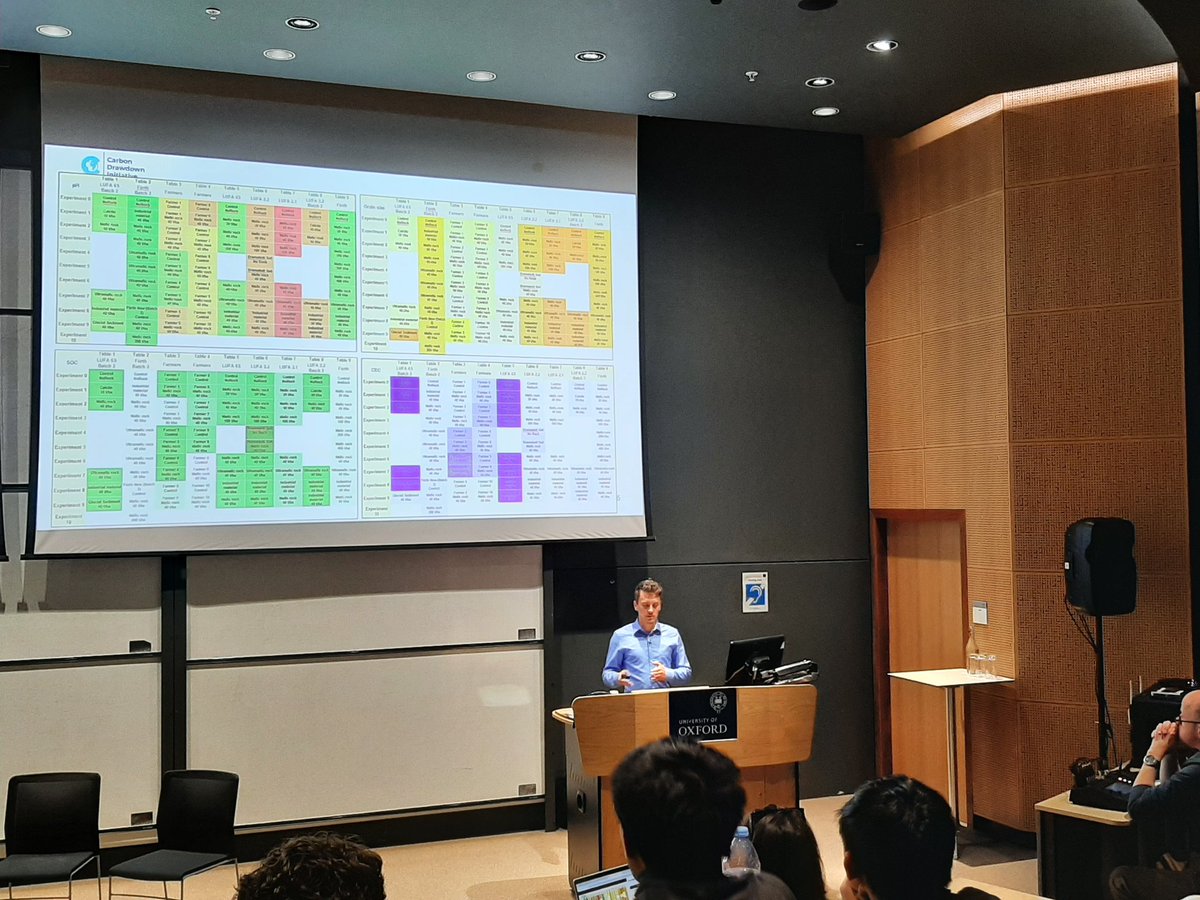
Conference talk: Testing several MRV approaches in a large-scale ERW greenhouse experiment
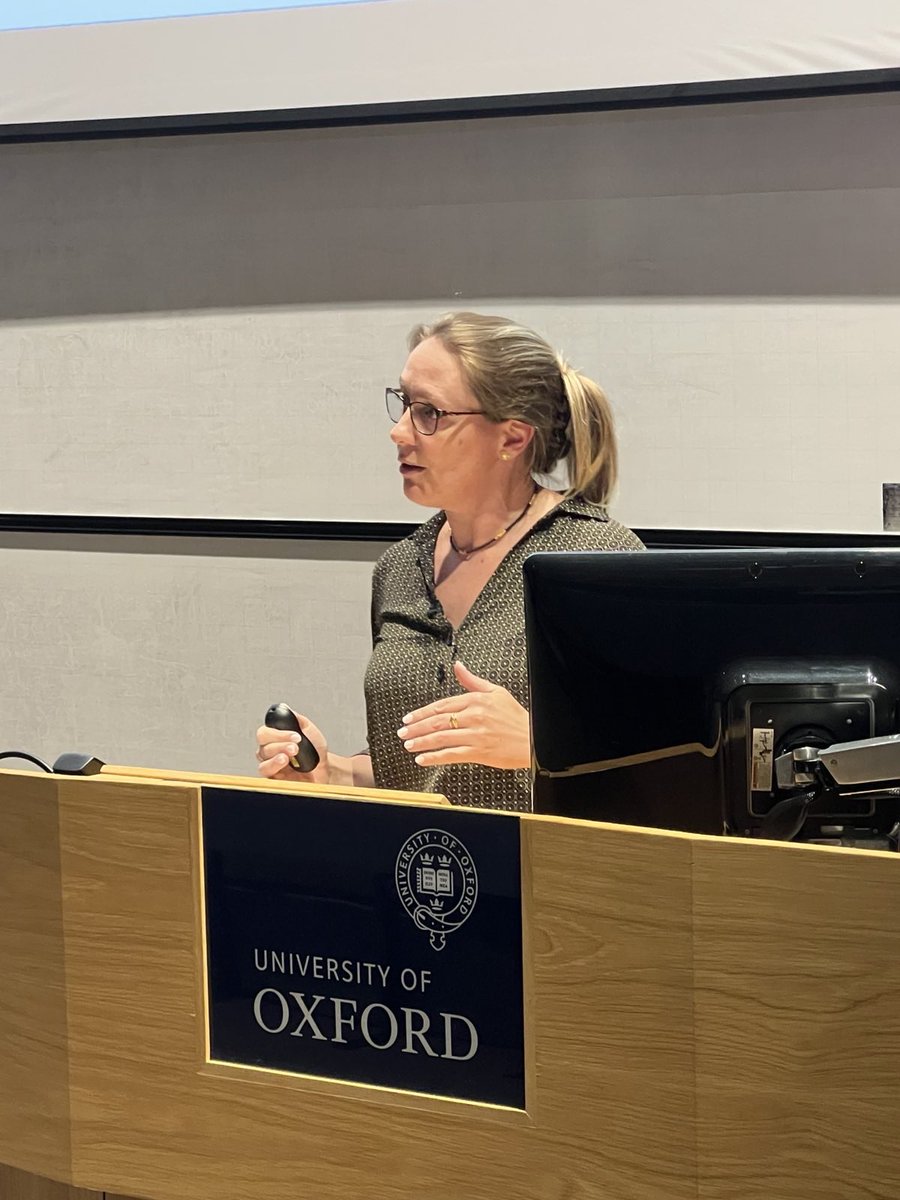
A conference presentation by our head of science, Jens Hammes @jenshammes, at the 3rd International Conference on Negative CO2 Emissions, 2024 in Oxford.
https://t.co/Us2MaT4MUo
Last week we did a deep dive with a camera into our water cistern. Some lab parameters in our irrigation water surveillance were a bit unusual and we needed to check if there is something in the tank that could be the reason. The video looks a bit like the Titanic will show up in any next moment… 😀
Today Sam Davies, the CEO and co-founder of @FluxCarbon, visited the #projectcarbdown greenhouse. Flux is a pioneering Carbon Dioxide Removal (CDR) company unlocking the potential of Enhanced Rock Weathering (ERW) in Africa.
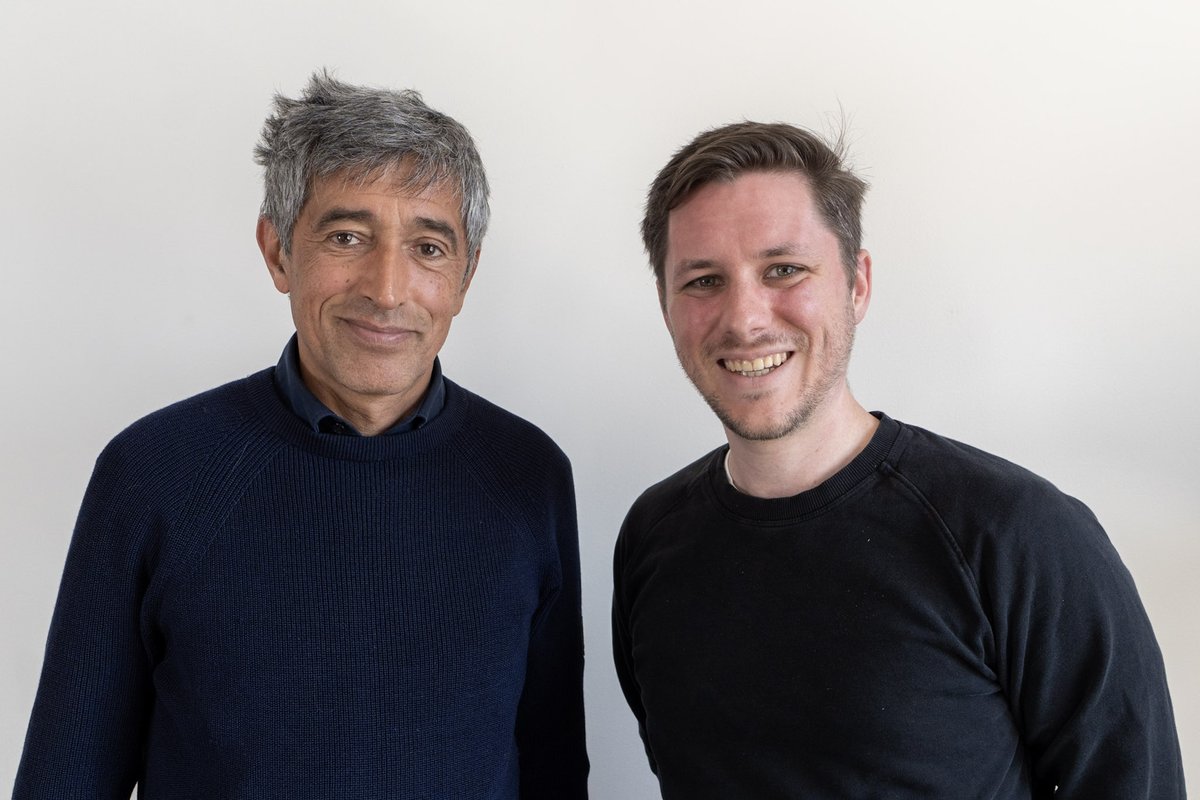
Ranga Yogeshwar kennen bestimmt viele von euch, aus dem TV. Ihr könnt euch denken, wie wir uns gefreut haben, dass er bei Klimanachbarn dabei ist.
Rätsel: Wie viele Tankfüllungen braucht ein Auto, bis der CO₂ Ausstoß so viel wiegt wie das Auto?
https://t.co/0ZTEH5JTGt
(6/6) This research and work on #CDR and the resulting opportunities and possibilities should be publicised as well as the importance of reducing emissions in order to tackle #climatechange for the best possible #future.
What do a Helmholtz mug and a book on climate protection have in common?
Right! Escape from the greenhouse and desk work to presentations and meetings!?
(5/6) It was a very productive exchange with researchers from different institutes and colleagues (SCS GmbH, NeoCarbon , @SeaO2_io , Ucaneo, Project C-CAUSE (Dr. Mar Fernández-Méndez), @Novocarbo , Climate Farmers) who are working on #negativeemissions and a better future!
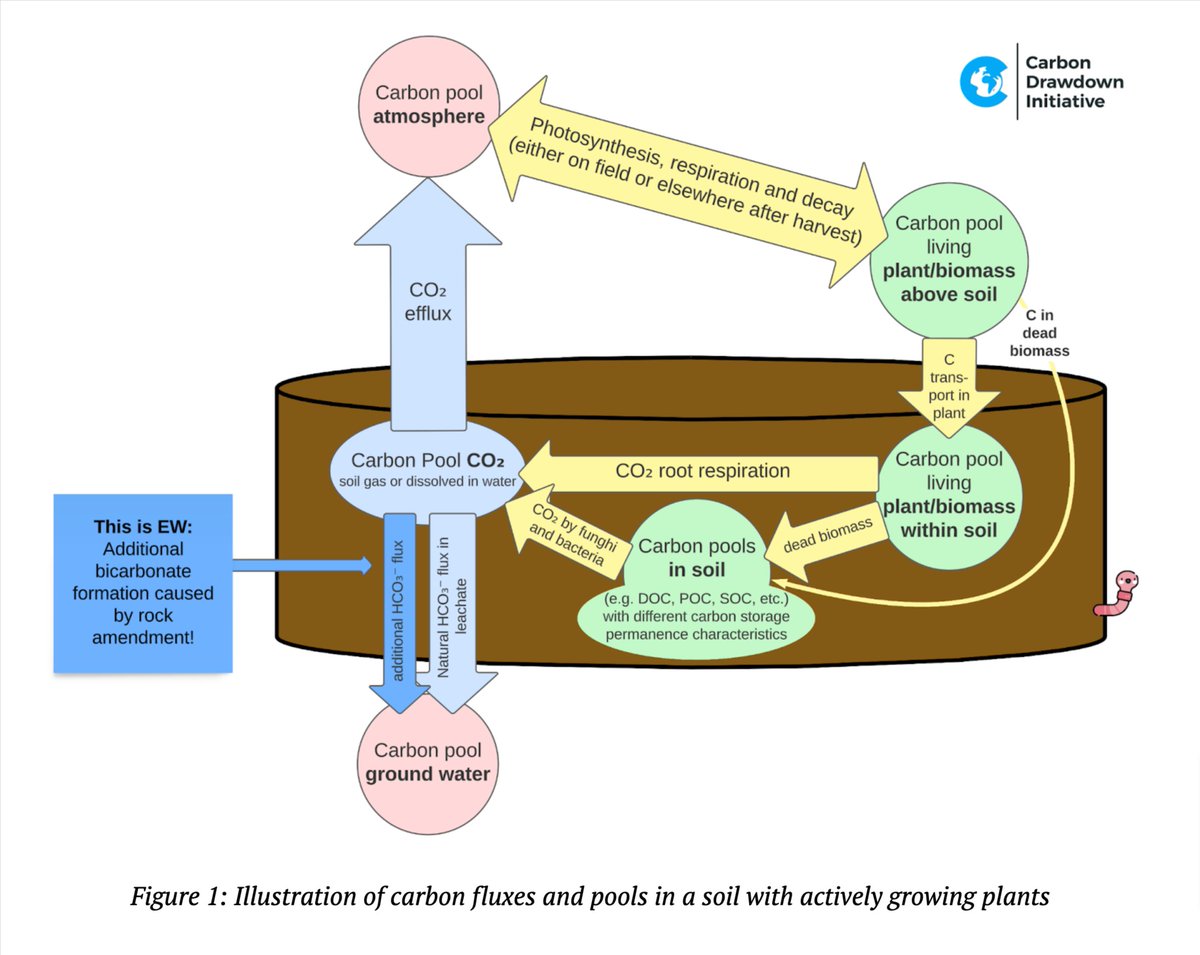
Introducing the “Carbdown Model” of carbon fluxes and pools in the soil
Visualizing how enhanced weathering works in the soil from a "carbon perspective"
Our latest blog article introduces our carbon-focused thought-model of the processes that occur in the soil after adding rock amendments for EW.
The principal idea of enhanced weathering (EW) as a climate solution is to mix rock dusts into the soil to reroute a fraction of the natural carbon cycle through trapping CO2 into the leachate water in the form of bicarbonates which are ultimately stored in the oceans. It is a nature-based method that effectively copies Earth’s time-tested natural method to control its atmospheric CO₂ concentration through natural rock weathering.
However, weathering of added rock dusts in the complex soil environment needs more time and research to be fully understood. This could delay the required large-scale deployment of EW as a climate solution.
In an effort to circumvent the vast complexities of the interactions in the soil, we came up with the hypothesis that the CDR-relevant changes in the carbon cycle could potentially be monitored in a simplified way by looking at the soil “CO2 efflux“ (=CO2 gas fluxes out of the soil) and the CO₂ concentration of soil gas (soil pCO₂). We thereby expect to see EW signals more quickly when monitoring CO2 (gasses move fast and CO₂ sensors are very sensitive) than other, slower monitoring approaches such as solid-phase dissolution measurements or aqueous alkalinity measurements as both need certain amounts of rock dissolution and more time before their CDR signal can be distinguished from the natural background noise.
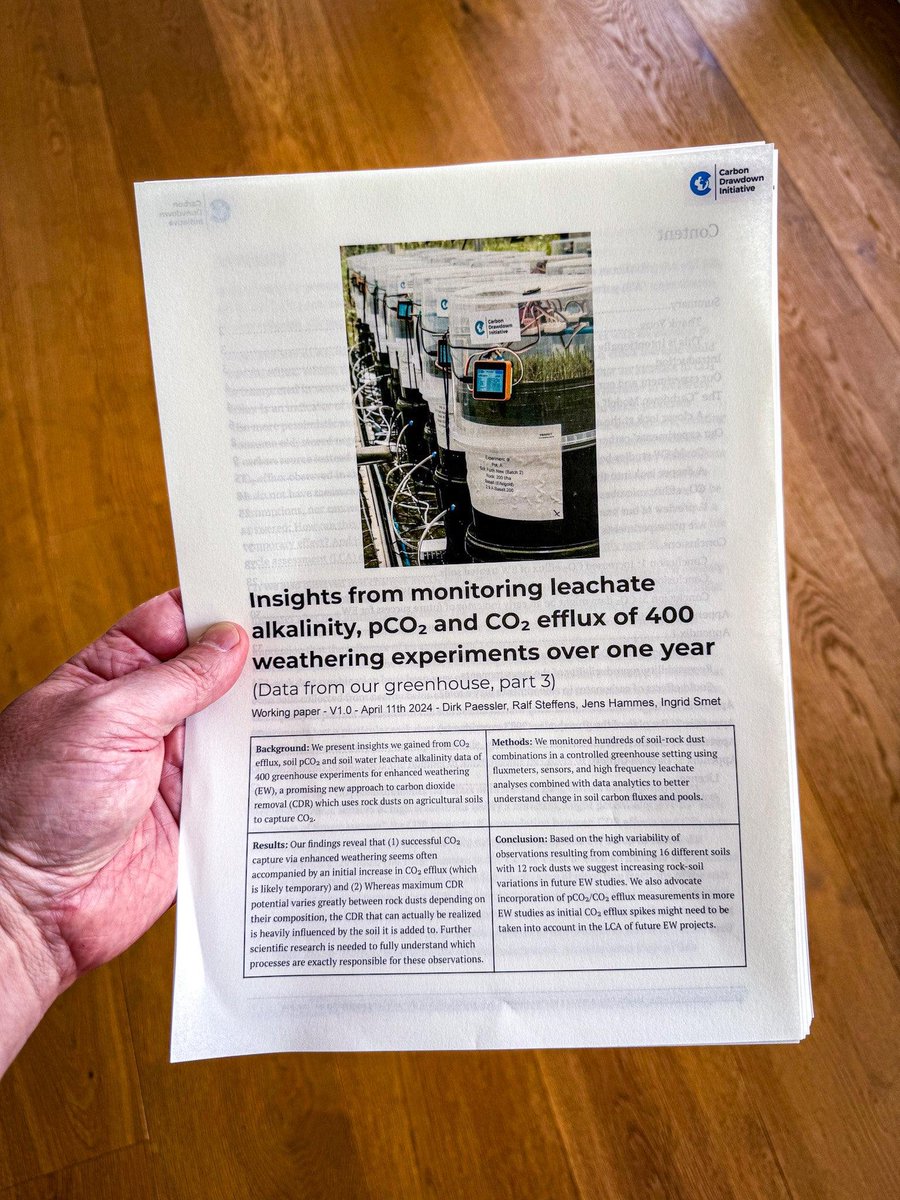
Published: New working paper with insights from our 2023 greenhouse experiment for measurements of enhanced weathering
BACKGROUND
We present insights we gained from CO₂ efflux, soil pCO₂ and soil water leachate alkalinity data of 400 greenhouse experiments for enhanced weathering (EW), a promising new approach to carbon dioxide removal (CDR) which uses rock dusts on agricultural soils to capture CO₂.
METHODS
We monitored hundreds of soil-rock dust combinations in a controlled greenhouse setting using fluxmeters, sensors, and high frequency leachate analyses combined with data analytics to better understand change in soil carbon fluxes and pools.
RESULTS
Our findings reveal that (1) successful CO₂ capture via enhanced weathering seems often accompanied by an initial increase in CO₂ efflux (which is likely temporary) and (2) Whereas maximum CDR potential varies greatly between rock dusts depending on their composition, the CDR that can actually be realized is heavily influenced by the soil it is added to. Further scientific research is needed to fully understand which processes are exactly responsible for these observations.
CONCLUSIONS
Based on the high variability of observations resulting from combining 16 different soils with 12 rock dusts we suggest increasing rock-soil variations in future EW studies. We also advocate incorporation of pCO₂/CO₂ efflux measurements in more EW studies as initial CO₂ efflux spikes might need to be taken into account in the LCA of future EW projects and also because CO₂-based data could provide “early signals for future success” for EW projects.
Three weeks ago, our team extended our greenhouse experiment, integrating 80 new lysimeter experiments aimed at advancing our understanding of the speed of CDR by enhanced weathering. This videoclip by @PatrickNdmr provides a glimpse into the meticulous steps involved - from setup to monitoring - highlighting the dedication behind our research. Stay tuned for more insights and results! #cdr #enhancedweathering
#projectcarbdown Greenhouse experiment extension week, day 2: At the end of the second day we have finished mixing soils and rock dusts and installed the soil pCO2 sensors today. It was dusty… 😬