In 1986, The American Medical Association published an article titled "The Physical Death of Jesus Christ". It details the entire process of Jesus' trial to His death on the cross.
In Luke 22, before Jesus is arrested, it is written that He was in great distress & sweating blood. Although rare, it is recognized as Hematidrosis, caused by high amounts of stress.
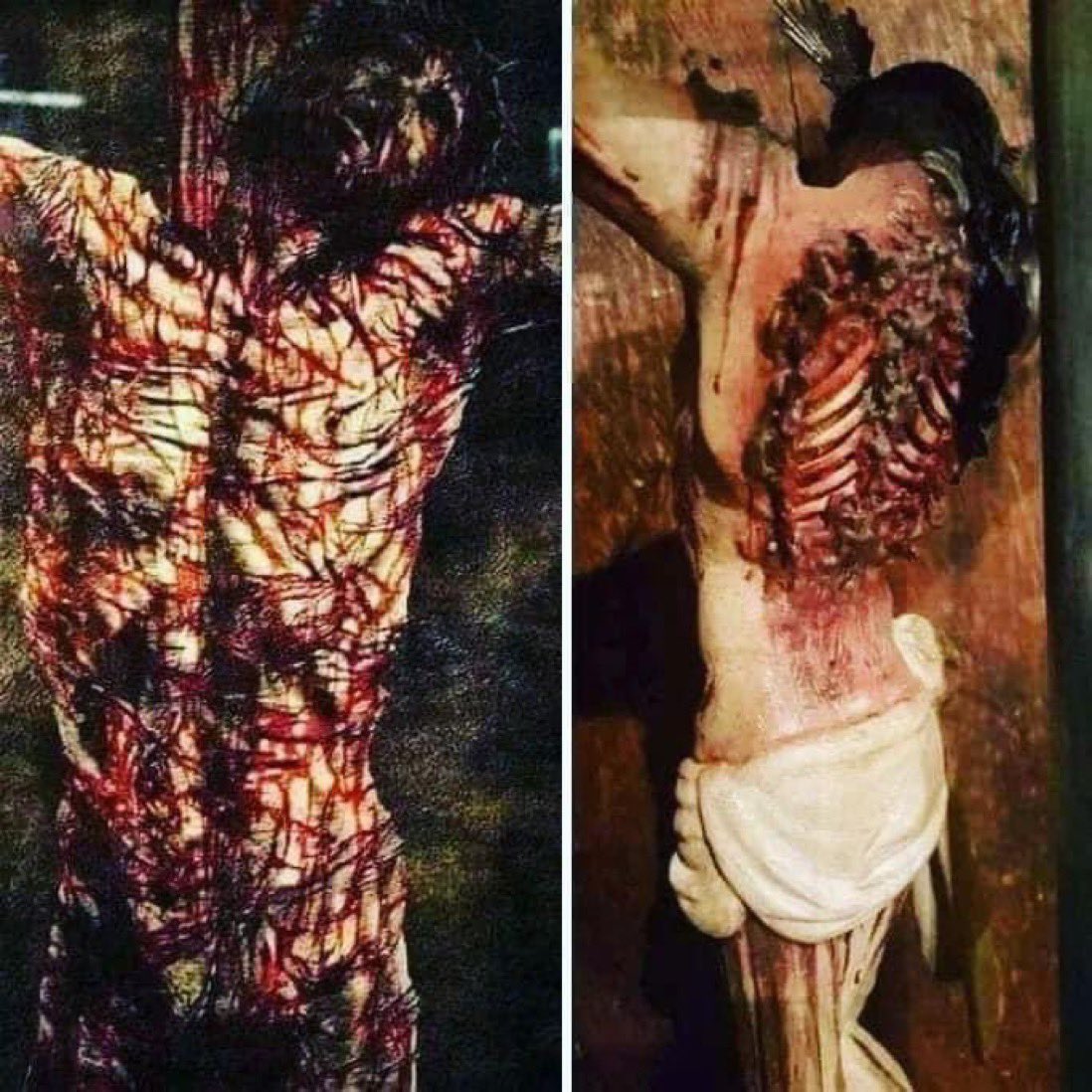
At the time, the crucifixion was considered the worst death for the worst of criminals. But this is not all Jesus faced. He endured whipping so severe that it tore the flesh from His body. He was beaten so horribly that His face was torn & His beard ripped.
A crown of thorns, 2-3 inches long cut deeply into His scalp. The leather whip used to flog Him had tiny iron balls & sharp bones. The balls caused internal injuries while the sharp bones ripped open His flesh. His skeletal muscles, veins, & bowels are exposed, causing major blood loss. Most men do not survive this kind of torture. After Jesus was severely flogged, He was forced to carry His cross while people mocked & spat on Him.
Crucifixion was a process meant to instill excruciating pain, creating a slow & agonizing death. Nails as long as 8 inches were driven into Jesus' wrists & feet. The Roman soldiers knew the tendon in the wrists would tear & break, forcing Jesus to use His back muscles to support Himself to breathe. Imagine the struggle, the pain, the courage...Jesus endured this reality for 3 hours!
The Gospel of John writes that after Jesus' death, a Roman soldier pierced His side with a spear & blood & water came out. Scientists explain that from hypovolemic shock, the rapid heart rate causes fluid to gather in the sack around the lungs & heart. The gathering of fluid in the membrane around the heart is called Pericardial effusion & the lungs, Pleural effusion.
To the world, Christianity is as foolish as it can get. They believe it's for the weak. But when you are confronted by the reality of the cross, it's clearly not a pretty sight. It is brutal & horrific.
This is the weight Jesus carried. The weight of the sins of the world, all so that we can live. God's wrath is fully satisfied in Jesus. This is what it took. Repent & believe! Jesus is “God among us” in the flesh. Jesus is our Savior. Jesus loves you so much, He went through this spiritual and physical punishment for your sins and mine.
Jesus is the LORD, Almighty God, Everlasting Father.
Thank You, Jesus.
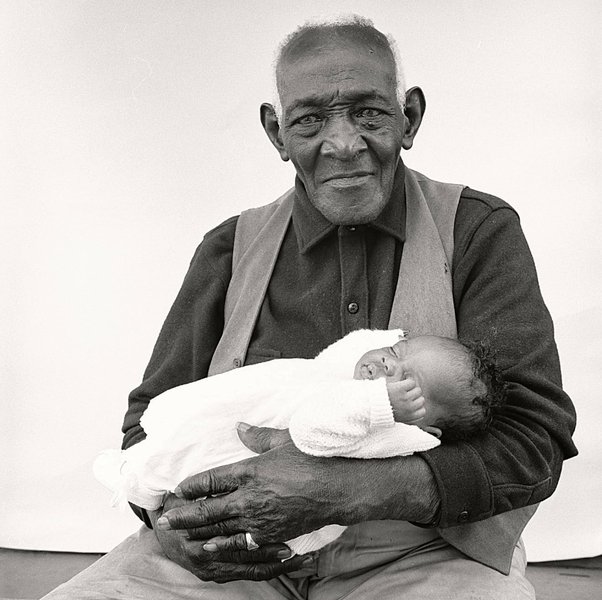
In 1963, the famous photographer Richard Avedon took a picture of a man named William Casby. William Casby, born in 1857, was 106 years old at the time. In his hands, he was holding his great-great-granddaughter, Cherri Stamps-McCray.
The image amazes me because the elderly gentleman holding his descendant so tenderly, was born into slavery more than a century prior. Casby would eventually live until 1970, dying at the age of 113.
His great- and great-grandchildren are alive today, and many of them remember him.
It puts into perspective just how relatively recent slavery existed. Because as faraway and distant as it may feel now. Even in modern-day America, there are people who have active memories of talking to former slaves.
🚀 Exciting news! Launching my new book for new graduates 🎓 and young professionals 💼 on the 25th of November! 📚 ✨
Please RT for those who might be interested.
Let’s spread the knowledge! 🌟
#NewGrads#YoungProfessionals#AskMissK#GRWM#GRWMcorporate
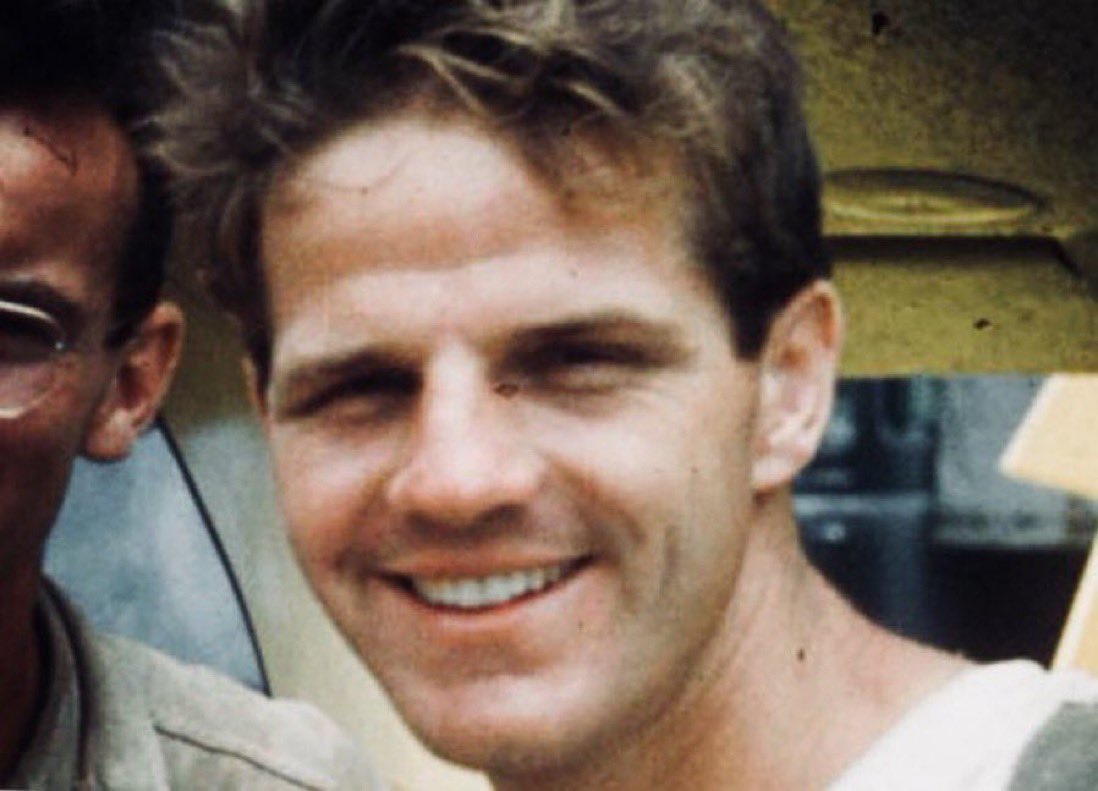
On this day five years ago, John Allen Chau penned his last journal entry before swimming to the shore of North Sentinel Island for the last time. The 26-year-old prepared for almost a decade to take the gospel to the Sentinelese, whose souls he valued more than his own safety.
…He literally bumped into our studio pitchside… Then came to say hi, stayed for a little chat and left giving the nation a ‘Diolch’ 🏴 THAT is how this man rolls… minutes after lifting the World Cup. Gent 👌 #SiyaKolisi
There's a district in Germany called "Fuggerei" (Augsburg) where the rent hasn't been raised since 1520. The residents still pay 88 euros as rent for an entire year.
The Fuggerei is the world's oldest social housing complex still in use. It is a walled enclave within the city of Augsburg, Bavaria. It takes its name from the Fugger family and was founded in 1516 by Jakob Fugger the Younger (known as "Jakob Fugger the Rich") as a place where the needy citizens of Augsburg could be housed. By 1523, 52 houses had been built, and in the coming years, the area expanded with various streets, small squares, and a church. The gates were locked at night, so the Fuggerei was, in its own right, very similar to a small independent medieval town. It is still inhabited today, affording it the status of being the oldest social housing project in the world.
I hold a Ph.D. in theology, which is rarely something I advertise, but it's significant for this statement:
C.S. Lewis's "fiction" has likely done more to open my eyes to the unseen realm than anything that might traditionally be classified as "theology."
Screwtape alone has accomplished this, let alone the Ransom Trilogy.
Photo of Japanese American college students at an internment camp in Sacramento, California, 1942. Photo by Dorothea Lange.
During World War II, around 110,000 to 120,000 individuals of Japanese ancestry were forcibly relocated and incarcerated in internment camps. Approximately 62% of those interned were American citizens. These actions were ordered by President FDR following the attack on Pearl Harbor on December 7, 1941.
Editorials from major newspapers at the time generally supported the internment. The LA Times editorial stated:
"A viper is nonetheless a viper wherever the egg is hatched. So, a Japanese American born of Japanese parents, nurtured upon Japanese traditions, living in a transplanted Japanese atmosphere... notwithstanding his nominal brand of accidental citizenship almost inevitably and with the rarest exceptions grows up to be Japanese, and not American... Thus, while it might cause injustice to a few to treat them all as potential enemies, I cannot escape the conclusion... that such treatment... should be accorded to each and all of them while we are at war with their race."
However, support was not universal. C. Hoiles for the Orange County Register wrote:
"It would seem that convicting people of disloyalty to our country without having specific evidence against them is too foreign to our way of life and too close akin to the kind of government we are fighting... We must realize, as Henry Emerson Fosdick so wisely said, Liberty is always dangerous, but it is the safest thing we have."
So, how detrimental were these internment camps? They were profoundly damaging. The government confiscated their property and restricted their freedom behind barbed wire fences, guarded by soldiers with machine guns. Access to healthcare and nutritious food was limited, leading to a rise in depression and suicide among the detainees. Most of these detainees were American citizens who were unjustly confined for nearly three years or more due to their ethnicity. In total, those imprisoned suffered an estimated loss of $2 to $5 billion worth of property when adjusted for inflation.
A UFC fighter won his first fight, tweeted that he had $7 in his account. The Rock showed up, pretended they were going to a friend's house, then The Rock gave him the keys to his new house