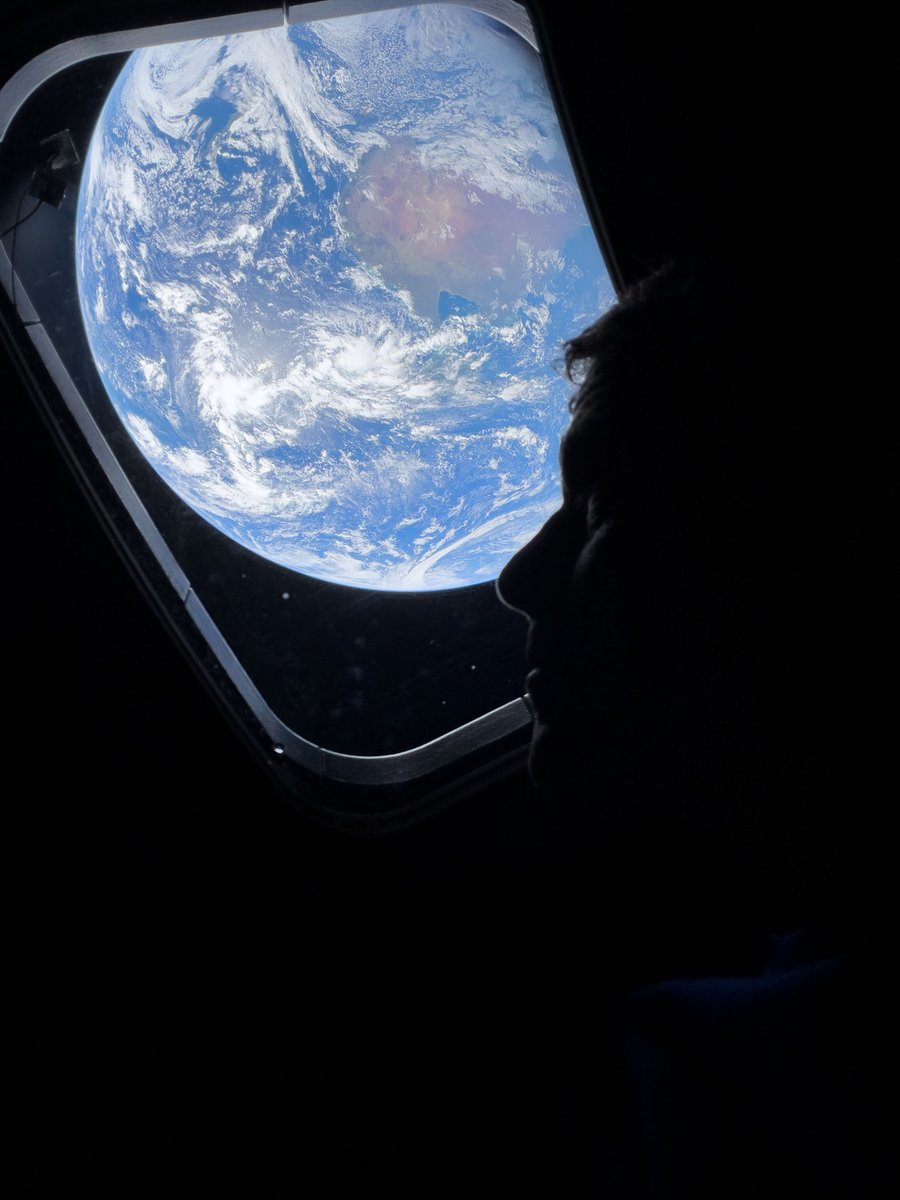
Liftoff.
The Artemis II mission launched from @NASAKennedy at 6:35pm ET (2235 UTC), propelling four astronauts on a journey around the Moon.
Artemis II will pave the way for future Moon landings, as well as the next giant leap — astronauts on Mars.
Why Neuralink is the most important company this decade!
@neuralink is delivering life-changing value to humanity and is at an inflection point as goes from being a technology in the lab to people’s homes this year.
As an investor, we look for transformative innovations — where technology redefines our understanding of what’s possible. Neuralink is not just that life-changing innovation but will deliver uncapped upside potential from here.
Here’s Why 👇
#1 Where Are We Today?
Over the past century, the Brain Machine Interface (BMI) space has evolved from early breakthroughs such as the introduction of electroencephalography (EEG) in 1924 to groundbreaking animal trials like monkeys playing Pong in 2021. This year Neuralink’s N1 implant was successfully implanted in multiple humans residing in their homes.
This is a breakthrough for people with quadriplegia, restoring autonomy by converting neural signals from the motor cortex into digital commands. This allows users to engage with the digital world (move cursors and type through thought alone), communicate via text, email, speech and engage with creative outlets like art and music - ultimately delivering life changing human value.
Noland Arbaugh, the first participant in Neuralink’s clinical trial, now plays video games, live streams, and navigates his laptop—all through the power of his mind. Similarly, Alex, another participant, is designing complex 3D objects using CAD software, unlocking creative potential once thought inaccessible. These stories are not isolated; they are the first chapters in a revolution to restore independence to millions globally.
Reviews from Noland Arbaugh @ModdedQuad, Neuralink’s first participant:
- “(Neuralink) has helped me reconnect with the world, my friends, and my family. It's given me the ability to do things on my own again without needing my family at all hours of the day and night.”
- “The biggest thing with comfort is that I can lie in my bed and use (Neuralink). Any other assistive technology had to have someone else help or have me sit up. Sitting causes stress mentally and on my body which would give me pressure sores or spasms. It lets me live on my own time, not needing to have someone adjust me, etc. throughout the day.”
- “I think it should give a lot of people a lot of hope for what this thing can do for them”
#2 How does it work?
The N1 is the size of a coin, containing a microprocessor, Bluetooth transmitter, rechargeable battery, and ultra-thin wires with 1,024 electrodes distributed across 64 threads. These highly-flexible, ultra-thin threads are key to minimize damage during implantation. The threads of our implant are so fine that they can't be inserted by the human hand. A surgical robot has been designed to reliably and efficiently insert these threads exactly where they need to be.
Once inserted, the electrodes detect neural signals and translate them into digital commands, transmitted via Bluetooth to external devices. Thinking about moving a cursor triggers corresponding neurons in the motor cortex, enabling precise cursor movement on a screen.
#3 Why Now?
This year Neuralink’s patients achieved bandwidth that’s ~50% of a normal human via the N1 implant. It’s poised to meet human level bandwidth next year and the team aims to exceed it by the end of the decade. A quick breakdown on why bandwidth matters. Today’s intelligence operates on three levels:
1⃣ Limbic Intelligence (“thinking fast” – primal needs like safety and survival)
2⃣ Higher-Order Reasoning (“thinking slow” – complex thought and planning)
3⃣ Digital Intelligence (enabled by phones, internet, software)
Our reliance on digital intelligence is undeniable. Forgetting your phone feels like losing a limb. Yet, the bottleneck lies in the bandwidth—the rate at which information flows between biology and technology. Bandwidth is quantified in Bits Per Second (BPS), as popularized by the late Professor Krishna Shenoy:
1⃣ Average human output (no devices): 1 BPS
2⃣ Typing/speaking: ~20 BPS
3⃣ Peak human performance: ~40 BPS
With BMIs (Brain-Machine Interfaces):
- 2017: Achieved ~2-4 BPS
- 2021: Reached 6.56 BPS
- 2024: Neuralink’s N1 reached 9.5 BPS
- 2025: Neuralink targets 40 BPS
- By 2030: Neuralink targets 100 BPS
The advances next year will likely come from two main levers: 1) More electrodes (going from 1024 to 3000) and increased utilization of electrodes (currently N1 utilizes ~10% of the 1024 electrodes and is expected to go as high as 40% next year).
Achieving near-human bandwidth will help dramatically improve the quality of life for people with special abilities.
#4 What's Next?
1⃣ Scaling N1: Neuralink aims for 27 procedures in 2025 and 79 in 2026, expanding the number of users.
2⃣ Vision Restoration: FDA-approved BMI for vision restoration (“Blindsight”) interacts with the visual cortex to restore basic light and shape perception.
3⃣ Speech Restoration: Expanding to auditory cortex applications to restore speech capabilities.
Beyond Restoration:
Replace smartphones: BMIs could surpass traditional devices, becoming high-bandwidth interfaces for AI-human interaction.
Augmentation: Enhancing human cognition, memory, and productivity for 100M+ users.
From restoring autonomy for quadriplegics to enhancing human potential, Neuralink will revolutionize how we interact with machines, each other, and the world. It’s not just catching up to technology by defining the next frontier for humanity.
CC: @altcap@elonmusk@djseo_@chapman_bliss
My mother , the most unbiased, loving, forgiving, caring, and giving, in my life was valued , celebrated, and will always be cherished.
*Valued... because she was my true god next to me in the form of a human.
*Celeberated... because she was my festival. My teacher. My true wellwisher. And my 1st fan. Loved the worst of my work as well.
*Cherished.... because she is just a beautiful memory now.
I have no words to express the pain i feel right now, I'm unable to accept the Void nor come to terms with what has happened. Everything changed in 24 hours.
Every morning, the 1st buzz on my phone would be here text, aound 5.30am Wishing me, "Good morning kanda,,,," . I received her last txt on Friday, 18th October. I didn't see her text the next day when i woke up while at BB. 1st time in so many years. I did send her my morning txt and wanted to cal and enquire if everything was OK. Discussions of BB's Saturday episode took away all time, and just before I went onto the stage, i got a cal saying she was hospitalized. I immediately called my sister who was at th hospital, spoke to th doctors and went on to the stage. A little later, when i was on stage, a message was passed on to my people that she was critical. This helplessness is something I experienced for the first time. Here, I am handling the Saturdays episode ; dealing with several issues, and a fear in mind about my mother.
If I yet sailed through that episode shoot with calm, I owe it to my mother for having taught me how to stay with the job I have accepted amidst all chaos. A principle to be precise.
I rushed to the hospital after the Saturdays episode shoot, and my mother was put on to a ventilator minutes before I reached. I couldn't see my mother while she was still conscious. She did put up a fight before she gave in on Sunday early morning. Everything,,,,, just about everything changed in just a few hours.
I don't know how to undo this. I don't know how to accept this reality, that has hit us. My mother, the one who gave such a tight hug before I left for the shoot, was no more within the next few hours.
It's a hard-hitting truth that will take its own time to penetrate into our minds and hearts.
My mother was a great soul, and I will miss her. I for sure know yesterday, being an auspicious day was nature's and God's choice to take her from this earth.
I thank each and everyone, who turned up to pay respects to her. It was indeed very kind of you all. I thank all those who reached out to me through texts and tweets.
My mother ,,, the most precious pearl of my life is gone. I'm sure she has reached a place filled with peace.
"Rest well, amma,,,
I love you, and i miss you terribly, "
Deepu.
Since your handle is “Whole Mars”, perhaps this lengthy reply is apropos:
Getting the cost per ton to the surface of Mars low enough that humanity has the resources to make life multiplanetary requires a roughly 1000X improvement in rocket & spacecraft technology.
Recent US Mars missions have had a cost per ton of useful load to the surface of Mars of about $1B. Moreover, it has become more, not less, expensive over time!
To build a city on Mars that can grow by itself likely requires at least a million tons of equipment, which would therefore require >$1000 trillion, an obviously impossible number, given that US GDP is only $29T.
However, if rocket technology can be improved by 1000X, then the cost of becoming sustainably multiplanetary would drop to ~$1T, which could be spread out over 40 or more years, so <$25B/year.
At that cost, it becomes possible to make life multiplanetary, ensuring the long-term survival of life as we know it, without materially affecting people’s standard of living on Earth.
Starship is designed to achieve a >1000X improvement over existing systems and, especially after yesterday’s booster catch and precise ocean landing of the ship, I am now convinced that it can work.