Professor. Author. Energy/Animals/Community/Ethnography @NYUEnvrStudies @NYUSociology @NYU_ASI Books: Up to Heaven & Down to Hell | The Global Pigeon. DMs open.
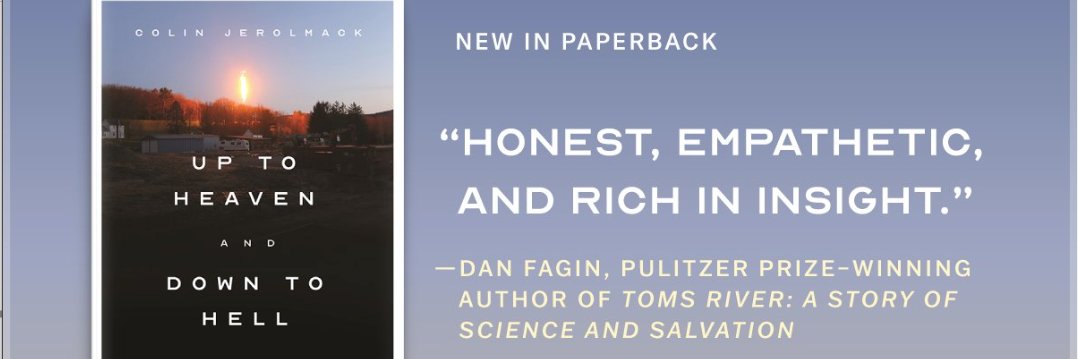
UP TO HEAVEN AND DOWN TO HELL: FRACKING, FREEDOM & COMMUNITY IN AN AMERICAN TOWN is now out in PAPERBACK! Cheaper, updated, and now with class/book club discussion questions.
New in paperback! Up to Heaven and Down to Hell by @jerolmack is a riveting portrait of a rural Pennsylvania town at the center of the #fracking controversy. Find out why Dan Fagin calls it "Honest, empathetic, and rich in insight." https://t.co/oKT8B1adpv #SocTwitter
A beacon of hope for higher ed. that will hopefully inspire other universities to follow. Far more meaningful than capping the number of As an instructor may give in a class.
Wow. Surprised at the breadth of this AI BAN at @BerkeleyLaw.
Higher education—particularly professional schools—should develop AI tools to accelerate learning. Cognitive offloading is a real problem, but mounting evidence shows that the thoughtful redesign of courses and offering personalized AI tools can level the playing field and accelerate learning.
The Berkeley Law policy BANS AI for EVERYTHING except identifying sources.
Brainstorming with AI - BANNED
AI for exam outlining - BANNED
AI grammar check - BANNED
AI translation - BANNED
Difficult to understand the rationale for banning grammar check and translation, which will disproportionately (and unnecessarily) harm first-generation students and nonnative speakers of English.
Faculty may opt out of the Berkeley Law policy, but faculty must then require that students disclose AI use.
The Berkeley Law policy BANS students from uploading course materials into generative AI systems. Sadly, this BANS some of the most useful ways in which law students are using AI tools, including to generate additional practice problems and exams for courses.
The NYU Wild Animal Welfare Program is very proud to share our new report, "Wild Animal Welfare in Local Policies on Human-Wildlife Conflict"!
Cities are home to countless wild animals, and the decisions cities make about waste, infrastructure, parks, and public health shape their lives—often invisibly. Yet, local policy has historically treated them as nuisances or problems to be managed away. This report argues that the welfare of those animals deserves a place in how municipalities approach human-wildlife conflict, and offers a practical roadmap for getting started. It expands the conventional definition of “human-wildlife conflict” to include harms running in both directions. It identifies cities as the right locus for action, since they hold most of the relevant levers and are where most conflict actually happens.
The report offers nine guiding principles—including prevention over reaction and coexistence over control—and a menu of policy options across five mutually reinforcing domains: waste management and food access, humane population management, conflict response and rehabilitation, the built environment, and planning and governance. Drawing on examples from across North America and Europe, it shows that welfare-aligned approaches are already within reach, and that welfare-aligned approaches often align with goals cities are already pursuing—cleaner streets, healthier environments, lower disease risk, and more livable public spaces.
This report is sponsored by the NYU Wild Animal Welfare Program with support from CEAP and the Yale Law, Ethics, & Animals Program.
You can find a PDF of the report along with a video of a recent preview event here: https://t.co/Qh8gsiIAlC
Please read if you have interest, and please share if others might!
@timgill924 X musta made a new algorithm sending your posts to a lot of new unsuspecting users! Fun! I haven’t seen this volume of vitriolic responses to your posts in years!
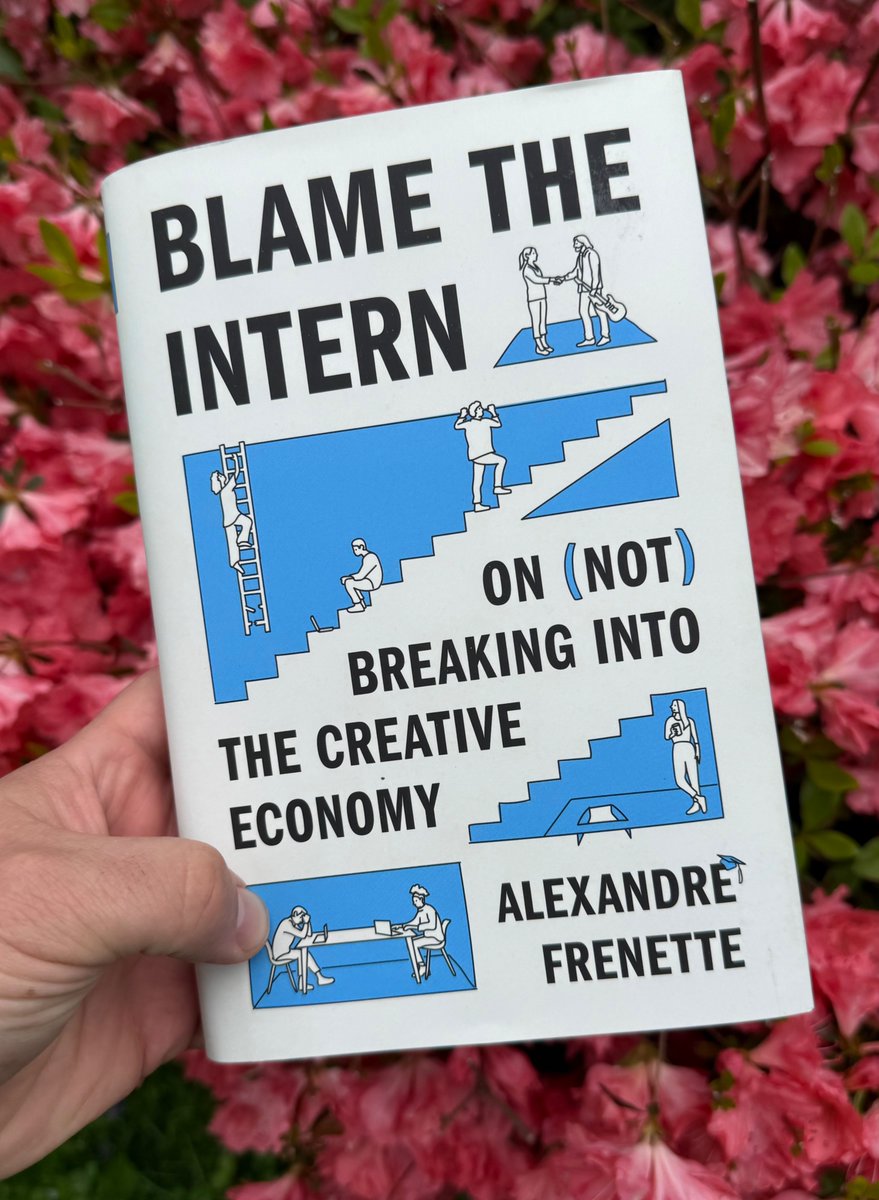
Absolutely thrilled to have just finished reading Alexandre Frenette's new book on internships as the shaky fulcrum between the culture industries and higher education. This banger is rich, expansive, and for anyone who's interested in the arts + higher education!
@BauerOutage As impressed as I was at your no-hitter against @Lancstormers , I was more impressed with how you took the time to speak to my son through the chainlink fence, even as you warmed up between innings, and sign his ball after the game. You made a lifetime memory and lifetime fan.
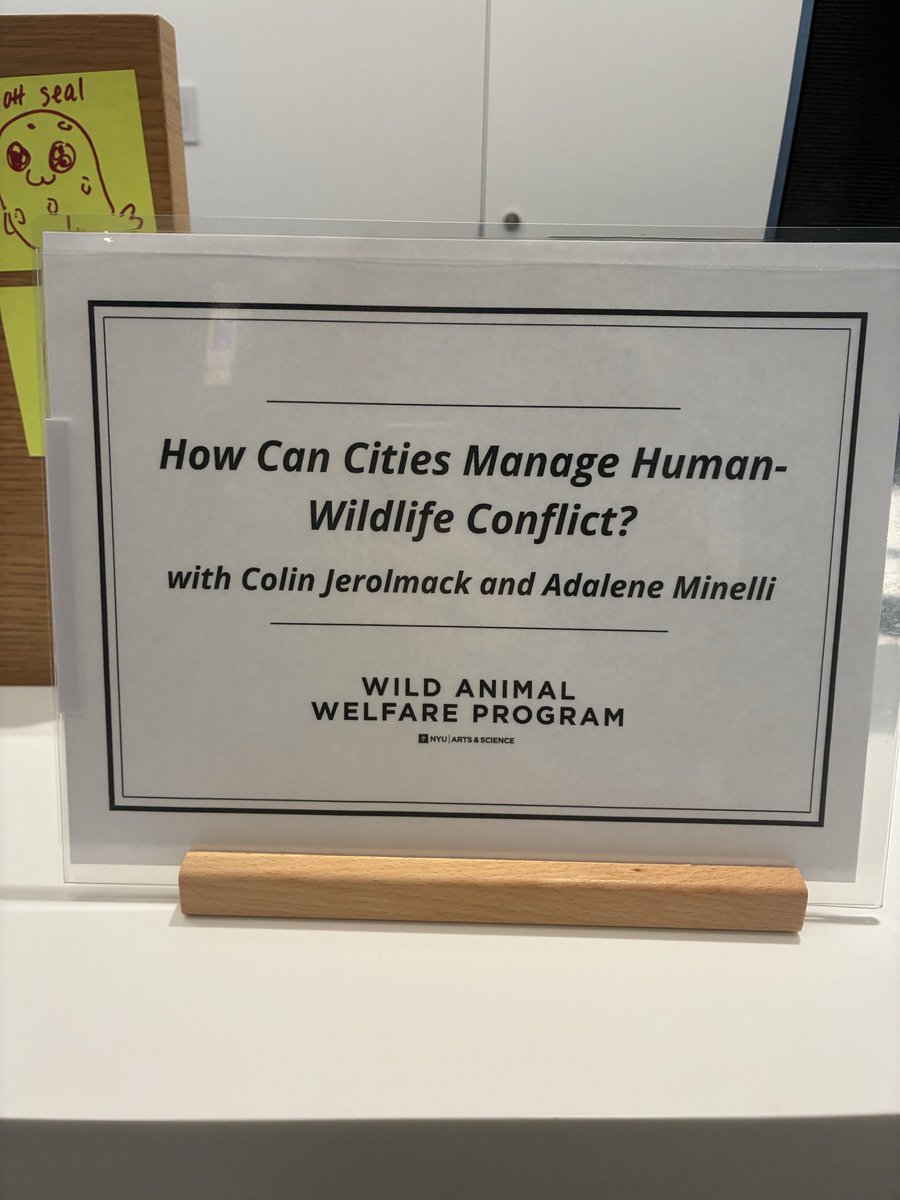
Today at the NYU Wild Animal Welfare Program, Adalene Minelli and Colin Jerolmack are discussing how cities can consider animal welfare when managing human-wildlife conflict :)
@Lancstormers The weather looks bad—what are the chances this game actually goes on as scheduled? We have tix and are trying to figure out if it’s game on