the internet 10 years ago was a completely different place
over the last few months, I have been trying to collect all the best material gathered over the years and put it into one place to help others
110+ hours of content so far
Today, we're launching shift. We're starting by cleaning your apartment in New York City, for free.
Here's how it works. Book a shift cleaning. A vetted shift operator comes to your home wearing one of our devices. They clean. They leave. You pay nothing.
In exchange, we record the cleaning. Robotics is being built on data about how people do daily tasks, and the value of that recording is what funds the service. Anything personal in it is anonymized before the recording is processed.
By now, you have heard about the shift to AI more times than you can count. About the shift toward you, the part where you actually feel it, you have heard almost nothing. Shift is what starts to make it concrete, in specific cities, with specific services.
Today, cleaning in New York. Soon, handymen, repairs, and errands across the globe. And this is just one side of shift, with more on the way.
Comment “shift” and we’ll send you an early access link.
Researchers at @Livermore_Lab have optimized and 3D-printed helix structures as optical materials for Terahertz frequencies, unlocking new possibilities for next-generation telecommunications, chemical/biological sensing and more. https://t.co/kVLnj15Sj6
I’ve always believed the No.1 application of AI should be to improve human health.
That work started with AlphaFold, and now at @IsomorphicLabs with the mission to reimagine drug discovery and one day solve all disease!
We are turbocharging that goal with $2.1B in new funding.
I built this thing called Clicky.
It's an AI teacher that lives as a buddy next to your cursor.
It can see your screen, talk to you, and even point at stuff, kinda like having a real teacher next to you.
I've been using it the past few days to learn Davinci Resolve, 10/10.
Tradition as Civilizational Memory
---
Tradition, at its best, is a form of cultural memory. It binds individuals to a lineage of meaning, stabilizes institutions, and provides the moral architecture within which human action becomes intelligible and rightly ordered.
In Ancient Rome, the Mos Maiorum — the “way of the ancestors” — was an unwritten constitution of customs, virtues, and precedents that governed Roman life more powerfully than any legislation. It embodied the accumulated wisdom of the forefathers and prescribed the character expected of every Roman, ordering religion, politics, and social conduct with a gravity no legislation could rival. Fidelity to the Mos Maiorum was understood by plebs and politicians alike as the most effective safeguard against socio-political novelty, moral corruption, and institutional decay.
I built a fun MPP experiment on @tempo_xyz. Pay $0.10 to tweet from my account — price doubles each time.
AI moderates so nothing too crazy gets through.
Send your agent https://t.co/q29Vhkgrpt to get started.
It is hard to communicate how much programming has changed due to AI in the last 2 months: not gradually and over time in the "progress as usual" way, but specifically this last December. There are a number of asterisks but imo coding agents basically didn’t work before December and basically work since - the models have significantly higher quality, long-term coherence and tenacity and they can power through large and long tasks, well past enough that it is extremely disruptive to the default programming workflow.
Just to give an example, over the weekend I was building a local video analysis dashboard for the cameras of my home so I wrote: “Here is the local IP and username/password of my DGX Spark. Log in, set up ssh keys, set up vLLM, download and bench Qwen3-VL, set up a server endpoint to inference videos, a basic web ui dashboard, test everything, set it up with systemd, record memory notes for yourself and write up a markdown report for me”. The agent went off for ~30 minutes, ran into multiple issues, researched solutions online, resolved them one by one, wrote the code, tested it, debugged it, set up the services, and came back with the report and it was just done. I didn’t touch anything. All of this could easily have been a weekend project just 3 months ago but today it’s something you kick off and forget about for 30 minutes.
As a result, programming is becoming unrecognizable. You’re not typing computer code into an editor like the way things were since computers were invented, that era is over. You're spinning up AI agents, giving them tasks *in English* and managing and reviewing their work in parallel. The biggest prize is in figuring out how you can keep ascending the layers of abstraction to set up long-running orchestrator Claws with all of the right tools, memory and instructions that productively manage multiple parallel Code instances for you. The leverage achievable via top tier "agentic engineering" feels very high right now.
It’s not perfect, it needs high-level direction, judgement, taste, oversight, iteration and hints and ideas. It works a lot better in some scenarios than others (e.g. especially for tasks that are well-specified and where you can verify/test functionality). The key is to build intuition to decompose the task just right to hand off the parts that work and help out around the edges. But imo, this is nowhere near "business as usual" time in software.
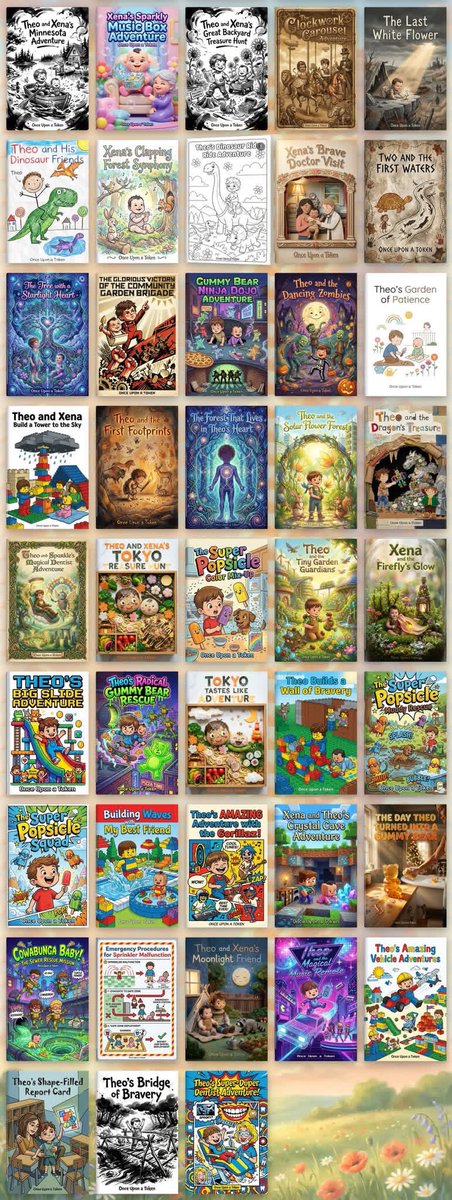
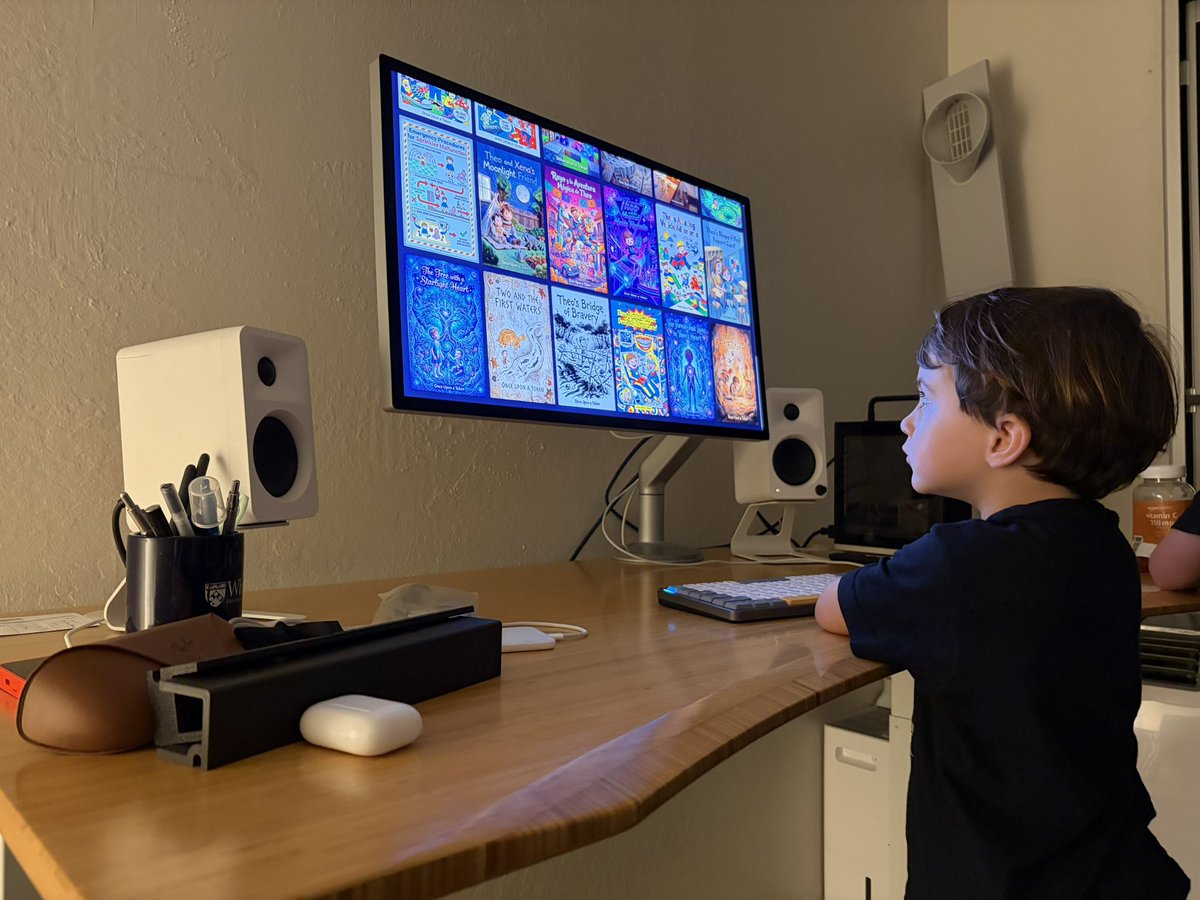
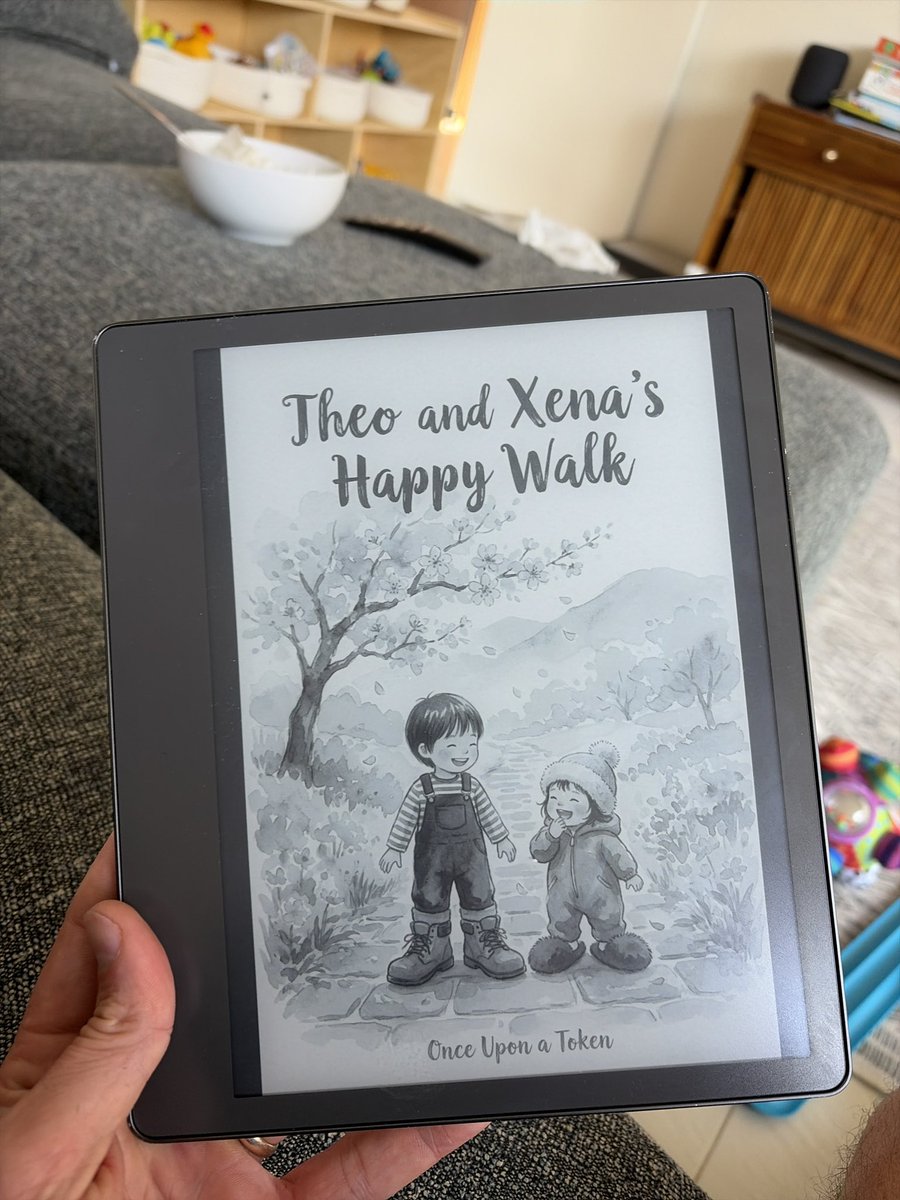
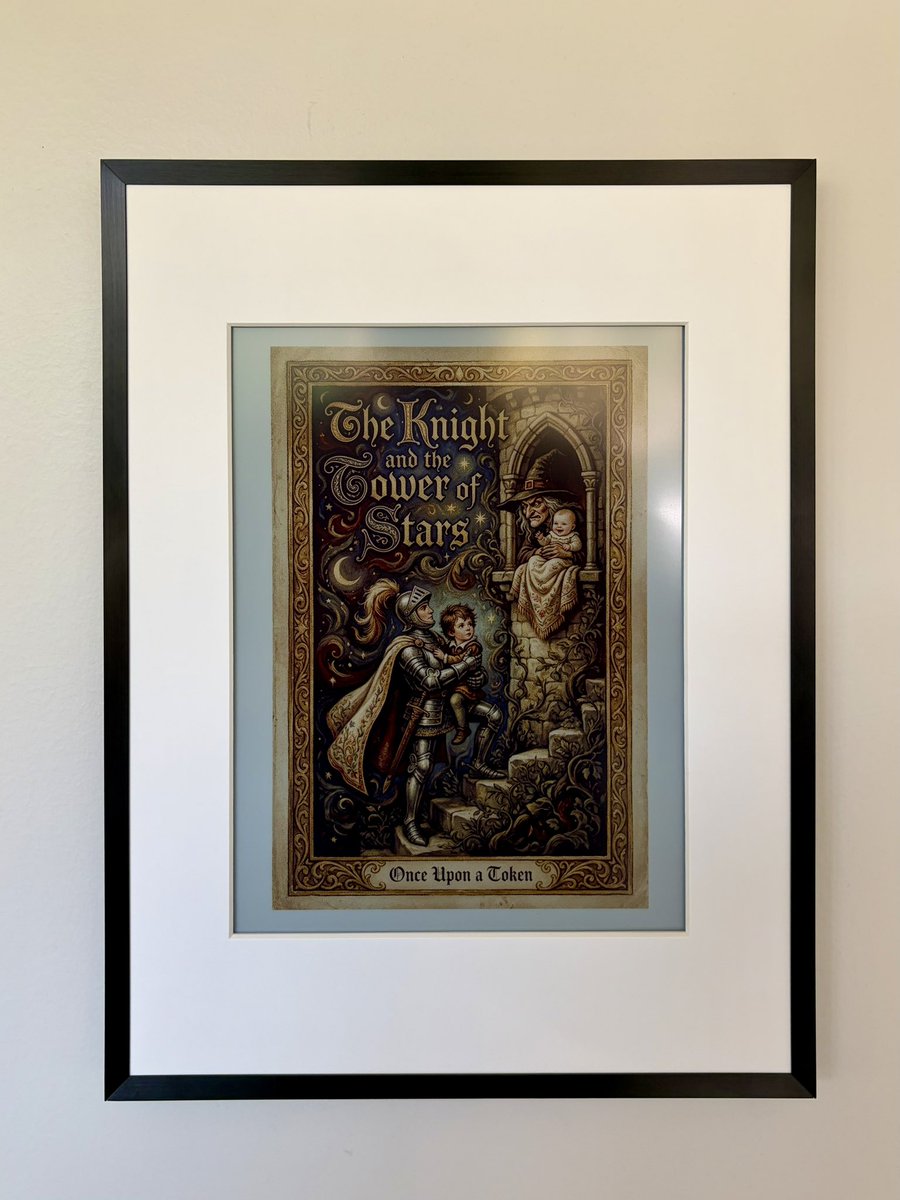
Made a storybook generator (https://t.co/3sdxjMOdt6), now we create & read 4-5 stories every night. Sends stories to Kindle, and cover art to 🖼️. Try it!
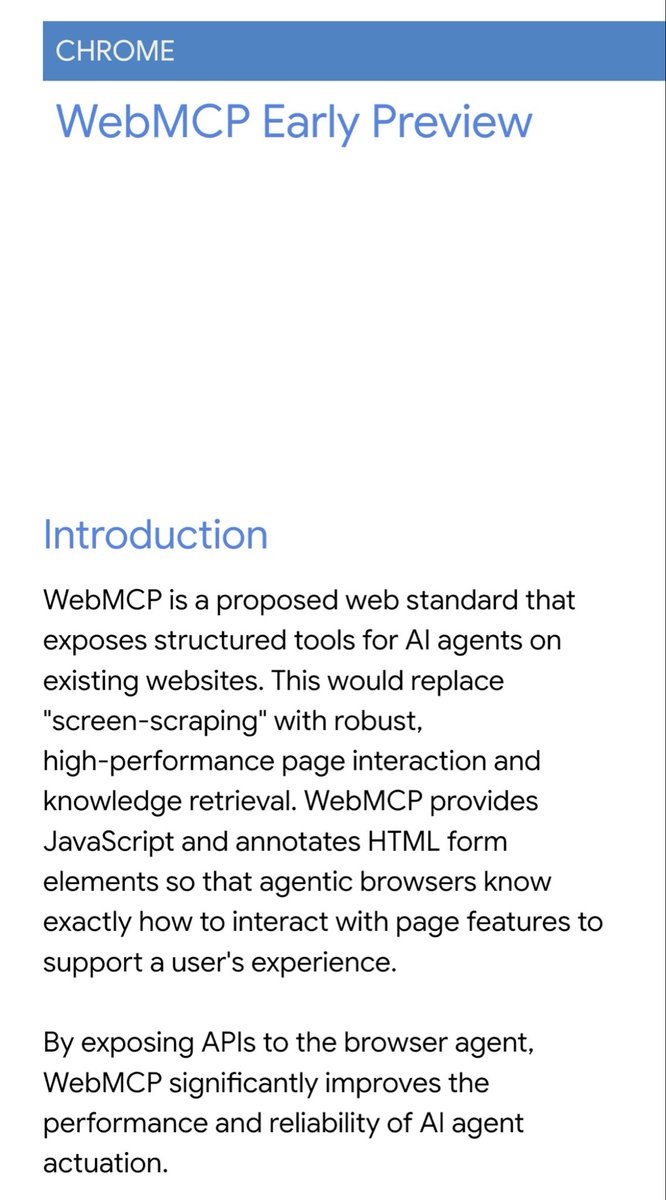
Chrome 146 includes an early preview of WebMCP, accessible via a flag, that lets AI agents query and execute services without browsing the web app like a user.
Services can be declared through an imperative navigator.modelContext API or declaratively through a form.