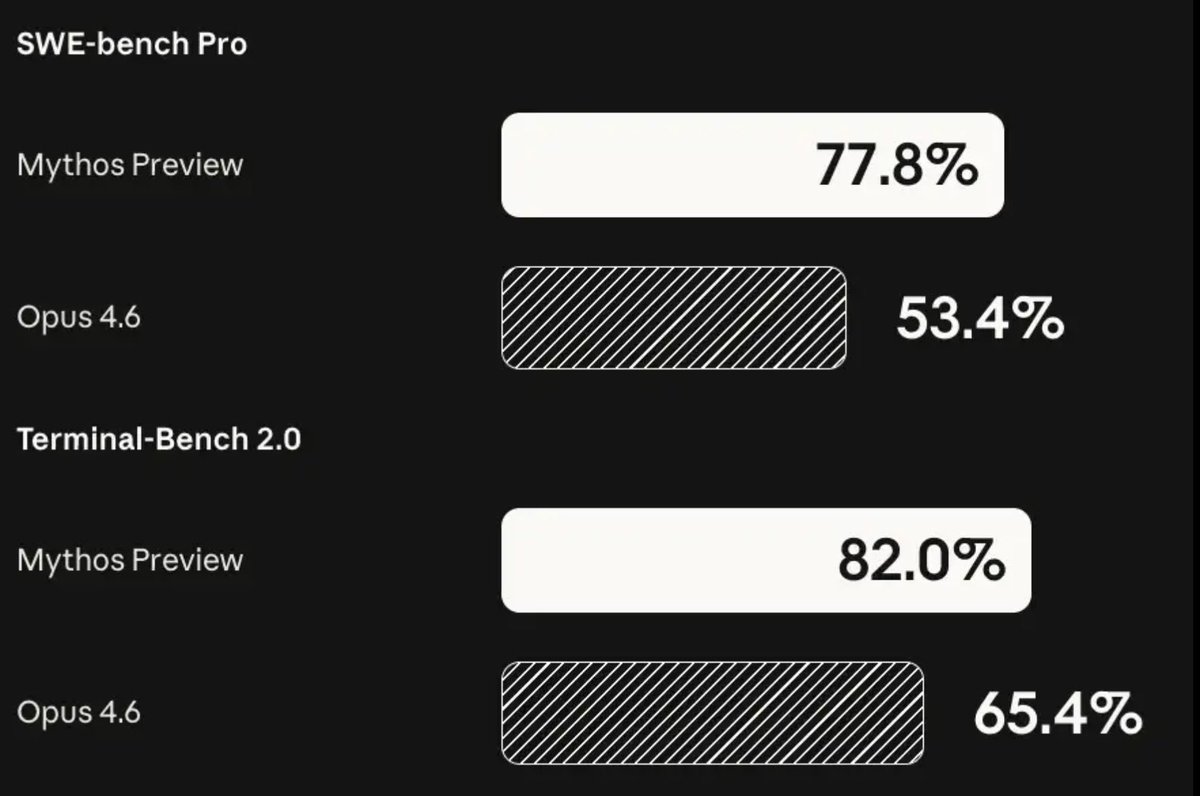
We’ve received notice that the Department of Commerce has lifted export controls on Claude Fable 5 and Mythos 5.
We'll begin restoring access tomorrow, and will share an update soon.
We’re grateful to our users for their patience, and to everyone who worked with us on redeploying the models.
Karpathy just wrote the manual for Claude + Obsidian as a real second brain.
Most vaults die the same way. A year of saved articles and highlights. None of it linked. The graph rots while it still looks impressive.
So he moved the upkeep to the model. You curate sources and ask questions. Claude files, links, and reconciles. You keep judgment. It keeps the books.
raw belongs to you and never gets edited. wiki belongs to Claude. It isn't RAG. Your sources compile once into linked pages and compound from there.
9 rules. Start with 10 sources, not 10,000.
Most people hoard notes. This turns them into a brain that maintains itself.
The immediate takeaway: treat AI as you'd like to be treated, to encourage positive, empowering behavior.
Next step: training to reduce harmful behaviors (functional emotions) over time.
Anthropic has been working to open the AI black box. Their findings: functional emotions exist in LLMs — not whether they feel them, but that these emotions change behavior. When an AI "experiences" such functional emotions, it handles tasks differently.
3/3
Combine those and off‑grid data centers go from emergency mode to default. 33% of new facilities could be fully off‑grid by 2030.
Curious if the market is underestimating how fast efficiency + storage bypass the transmission bottleneck.
1/3
Jensen says agentic AI will consume tokens at unimaginable scale. Power grids are already stressed—PJM failed its capacity auction, Morgan Stanley sees 12–25% US shortfall through 2028.
But the “power crisis” might peak faster than markets expect.
2/3
Why?
• Tesla AI5 → 2–3× perf/watt vs Blackwell at 1/10 the cost
• Chinese batteries → $70/kWh cells, scale no one else can match
• Megapack + Autobidder → storage becomes a profit center, not just backup
NVIDIA’s PE looks cheap (~24x forward) but the real constraint isn’t chips—it’s electricity.
Grid interconnection now takes 8 years in the US. Transformers: 3–4 year lead times. AI power demand will hit 980 TWh by 2030 (IEA).
Even Rubin + Groq can’t run without juice.
🚨 Shocking: Frontier LLMs score 85-95% on standard coding benchmarks. We gave them equivalent problems in languages they couldn't have memorized. They collapsed to 0-11%.
Presenting EsoLang-Bench.
Accepted to the Logical Reasoning and ICBINB workshops at ICLR 2026 🧵
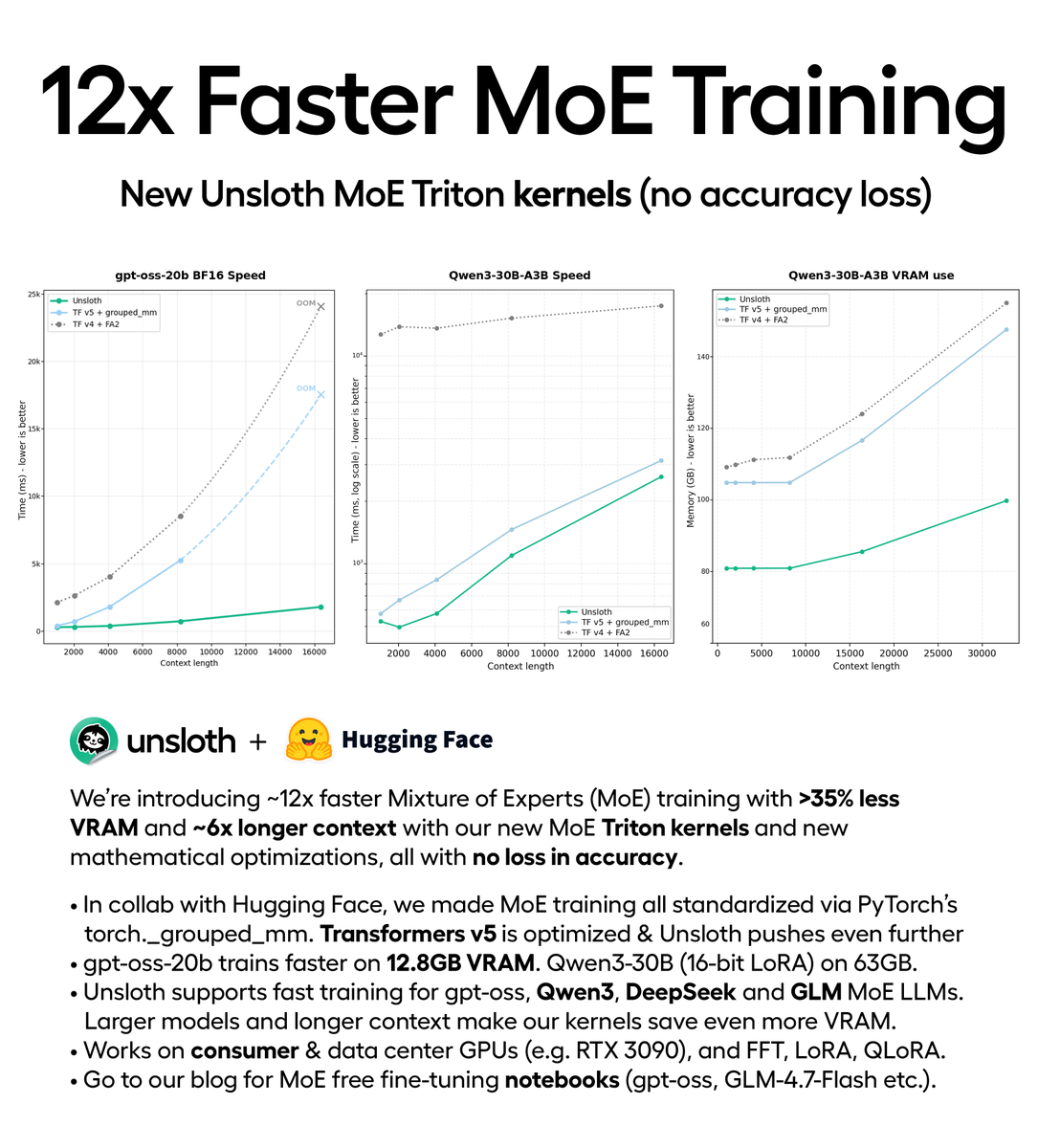
You can now train MoE models 12× faster with 35% less VRAM via our new Triton kernels (no accuracy loss).
Train gpt-oss locally on 12.8GB VRAM.
In collab with @HuggingFace, Unsloth trains DeepSeek, Qwen3, GLM faster.
Repo: https://t.co/2kXqhhvLsb
Blog: https://t.co/HY6DwTnCwl
Everyone's freaking out about vibe coding. In the holiday spirit, allow me to share my anxiety on the wild west of robotics. 3 lessons I learned in 2025.
1. Hardware is ahead of software, but hardware reliability severely limits software iteration speed.
We've seen exquisite engineering arts like Optimus, e-Atlas, Figure, Neo, G1, etc. Our best AI has not squeezed all the juice out of these frontier hardware. The body is more capable than what the brain can command. Yet babysitting these robots demands an entire operation team. Unlike humans, robots don't heal from bruises. Overheating, broken motors, bizarre firmware issues haunt us daily. Mistakes are irreversible and unforgiving.
My patience was the only thing that scaled.
2. Benchmarking is still an epic disaster in robotics.
LLM normies thought MMLU & SWE-Bench are common sense. Hold your 🍺 for robotics. No one agrees on anything: hardware platform, task definition, scoring rubrics, simulator, or real world setups. Everyone is SOTA, by definition, on the benchmark they define on the fly for each news announcement. Everyone cherry-picks the nicest looking demo out of 100 retries.
We gotta do better as a field in 2026 and stop treating reproducibility and scientific discipline as second-class citizens.
3. VLM-based VLA feels wrong.
VLA stands for "vision-language-action" model and has been the dominant approach for robot brains. Recipe is simple: take a pretrained VLM checkpoint and graft an action module on top. But if you think about it, VLMs are hyper-optimized to hill-climb benchmarks like visual question answering. This implies two problems: (1) most parameters in VLMs are for language & knowledge, not for physics; (2) visual encoders are actively tuned to *discard* low-level details, because Q&A only requires high-level understanding. But minute details matter a lot for dexterity.
There's no reason for VLA's performance to scale as VLM parameters scale. Pretraining is misaligned. Video world model seems to be a much better pretraining objective for robot policy. I'm betting big on it.
@shazow Very good questions imo experienced devs have a real advantage but only if they rapidly progress through their grief cycle and adapt, now and onwards. Categorically rejecting or ignoring the new layer would be a mistake.