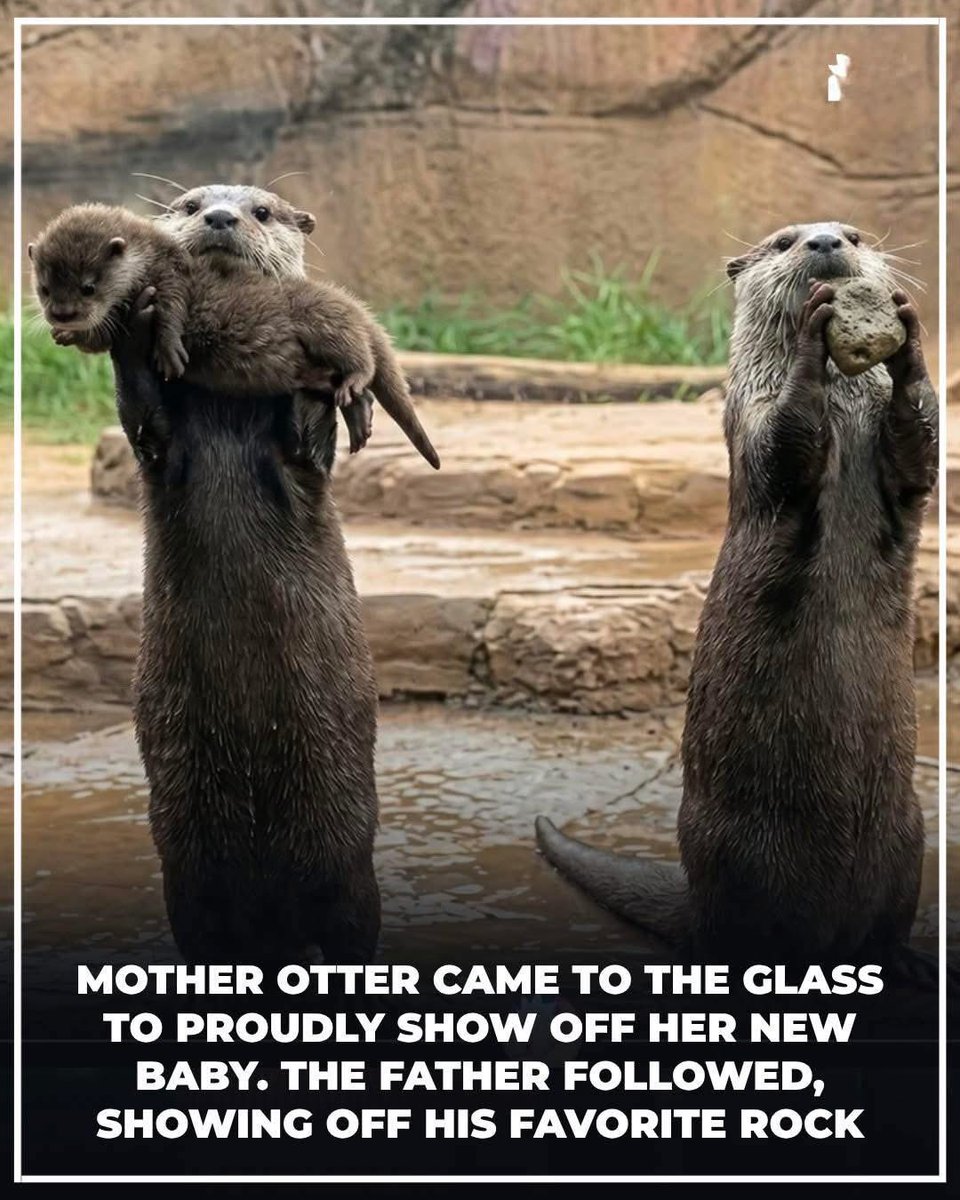
During a talk at the San Diego Zoo, staff brought the otters closer so families could see them.
One otter mom waddled up and proudly showed off her new baby, earning cheers from kids nearby.
Then her partner, who heard all the commotion, wanted his own moment in the spotlight.
So he stepped forward too, not with a pup, but with a smooth little rock held carefully in his paws.
He sat there as if waiting for applause. The keeper joked he was saying, “I brought something too,” noting that otters often grow attached to favorite rocks and carry them like treasures. 🥲❤️
Ten thousand children were sentenced to die in concentration camps during World War II, and the world looked away.
But one ordinary woman walked straight into the mouth of hell and started pulling them out — one by one.
Her name was Diana Budisavljević.
She was an Austrian woman married to a Serbian doctor living in Zagreb, in the Independent State of Croatia — a Nazi puppet regime responsible for some of the most horrific atrocities of the war. While the Ustaše regime systematically murdered Serbs, Jews, and Roma, thousands of innocent children were torn from their parents and left to die in places like Jasenovac and Stara Gradiška from starvation, disease, beatings, and execution.
Most people stayed silent, paralyzed by fear.
Diana Budisavljević could not.
She refused to accept that these children were a lost cause. Without an army, without political power, and without permission, she launched what she simply called “The Action.”
She gathered a small group of trusted volunteers and began a dangerous, high-stakes operation. They begged, borrowed, and scraped together every bit of food and medicine they could find. Using her Austrian background and social connections, Diana navigated the deadly bureaucracy of a genocidal regime. She bribed guards, badgered officials, and forged documents to smuggle children out of the camps.
When she finally gained access inside, the horror was almost unbearable. She saw rooms filled with skeletal toddlers, their eyes hollow, their tiny bodies wasting away. “We must take them all,” she insisted. “Every single one we can carry.”
She didn’t just save their bodies. She fought to save their identities. Diana kept meticulous records — over 12,000 detailed cards with each child’s name, origin, and any information that might help reunite them with surviving family members after the war.
She worked in constant danger, knowing that discovery could mean her own death or the execution of the children she was trying to rescue.
When the war finally ended, the tragedy did not.
The new communist government in Yugoslavia had no interest in a story that highlighted ethnic suffering or the heroism of a woman with “bourgeois” Austrian connections. They confiscated her files, suppressed her story, and forced her into silence.
Diana Budisavljević lived the rest of her life in complete obscurity. She died in 1978 without ever receiving public recognition or thanks for what she had done.
It took decades for the truth to surface. Historians eventually discovered her hidden diaries, and the children she saved — now grandparents — began to speak.
The numbers are staggering: of the roughly 12,000 children who passed through her rescue network, more than 10,000 survived the war because of her intervention.
In a conflict that claimed millions of lives, Diana Budisavljević stands as one of the greatest individual rescuers in human history.
While others claimed they were powerless, she showed that what seems impossible is often just fear wearing a disguise.
She worked quietly, risked everything, and died unknown to most of the world. But she found peace in knowing that ten thousand human beings lived — grew up, fell in love, had families — because one woman refused to look away.
Even when political regimes try to bury the truth for decades, the impact of saving a life cannot be erased.
Today, we have a duty to remember Diana Budisavljević.
Not just because she saved ten thousand children.
But because her story proves that in the darkest night, one determined person can still carry the light.
She didn’t have superpowers. She didn’t have an army. She simply had the courage to act when everyone else stayed silent.
And because she did, ten thousand children got to see freedom.
Her name deserves to be spoken.
Her courage deserves to be honored.
And her example deserves to be followed.