BREAKING NEWS: 3 big announcements from @circle.
1) We have acquired Hashnote, issuer of the world’s largest Tokenized Money Market Fund (USYC);
2) we have entered into a strategic partnership with global trading firm DRW to drive USDC and USDY in crypto and TradFi markets; and
3) we have announced our plans to launch USDC, alongside USYC, on the Canton blockchain network.
https://t.co/hJf463tdkP
Let me break all of this down.
First, we are thrilled to bring the Hashnote team and family into Circle. As one of the leading pioneers of tokenization (USDC is arguably the largest form of regulated tokenized cash in the world), we have seen a rapid shift towards tokenized treasury assets through TMMFs. There is an enormous and immediate opportunity to bring yield-bearing collateral into crypto market structures, and through seamless integration with USDC, enable market participants to convert between USDC and USYC on a 24/7/365 basis. Hashnote has been a pioneer and is the largest issuer of TMMFs in the world today.
As more and more institutions get involved in the digital asset market, we are taking what are common practices in traditional finance and importing those onchain, but with the incredible super powers of global, real-time settlement, programmability and composability. Indeed, one of the holy grails of capital markets is the ability to move between cash and collateral instantly. We are unlocking this with a focus on the well established crypto capital markets.
With DRW, we are expanding on an already strong and nearly 10 year working relationship with DRW subsidiary Cumberland. Don Wilson is a true visionary in markets, and Cumberland continues to be one of the largest and most important global trading firms in crypto. Through this expanded partnership, Cumberland will expand its liquidity and settlement services for USDC and USYC, driving broader institutional adoption in crypto. Additionally, we will work together to bring these onchain innovations into traditional financial markets, where tokenized cash and collateral can unlock enormous value for every financial market participant.
And on this note, Circle is also announcing its planned deployment of native USDC on Canton, the leading public blockchain for fully private and secure financial applications. With over $3.6 trillion in RWA issued and over $1.5 trillion repo/month, Canton is already used and supported by major traditional banks, trading firms, asset managers and exchanges. With USYC already supported on Canton, offering native USDC integration will enable a seamless and 24/7/365 convertibility between collateral and cash for use in TradFi markets onchain.
TLDR – Circle is leading the way in bringing the most important building blocks of money onchain, fostering a more scalable model of global institutional adoption of crypto infrastructure, while also paving the way for onchain money to become the core of traditional financial markets.
Stay tuned for a lot more on all of these fronts!
Jeremy
"How do you balance monetization with keeping things open-source?"
@sharonlourdes (@HQ_xyz) asked @jespeset (@circle) during an insightful panel at OpenFi Bangkok.
🔗Catch the full discussion here: https://t.co/EzyNpIrSUE
Announcement from the Aptos Foundation:
@Circle's USDC and Cross-Chain Transfer Protocol (CCTP), and support within @Stripe crypto products to launch on Aptos Network.
New spotlight delivered by @circle and @zodiamarkets is a must read. Emerging markets are in need of a solution that delivers faster and cheaper access to cross-border payments. See how open money like $USDC can help unlock these possibilities. https://t.co/E3KigUFD8c
Native $USDC is now available on @SuiNetwork - unlocking new opportunities for businesses and builders. Learn more about the benefits of native USDC. https://t.co/1dmWgGBg0B
Today, @circle unveiled its first impact report. Examples in the report demonstrate the power of open-source innovations to transform aid delivery, remittances, and more.
Full report: https://t.co/FqPMo6cfGp https://t.co/LbVQxYoYse
New value add for users of @circle's Programmable Wallets. Another incredible development to help abstract away the complexities while building on-chain. Learn more.
https://t.co/VenmRRpc2y https://t.co/J960lqlMxf
Just announced! Native $USDC and #CCTP are coming soon to @SuiNetwork. #Devs will soon be able to build with the largest regulated dollar-backed stablecoin, and deliver cross-chain experiences.
https://t.co/TozV63plcq
https://t.co/H9zz0qgbY8
Exciting announcement! @circle is moving to New York, the leading global hub for finance and technology. The open money era is here. Read the announcement for full details.
https://t.co/50x9vkaO0N
Big, big news from @circle today. The first stablecoin issuer to comply with MiCA. Excited to see a more inclusive, compliant future for internet finance. https://t.co/P1O3ZEAVGD
It's almost time for EthCC 2024! 🇧🇪 I'll be joining the Circle team in Brussels for an impactful week of events. Reach out if you'd like to meet with the team onsite.
#EthCC2024
One of the first wallets to integrate @circle’s #CCTP, @xdefi_wallet is on a mission to make blockchains and cross-chain activities safer and more simple. Check out this latest spotlight on how XDEFI is using $USDC and CCTP to power their solutions. https://t.co/yJbJhugnbN
I’m more bullish than I have ever been about crypto.
I have been building @Circle for over 11 years, and at no time have I been more optimistic than right now.
I also believe that the overwhelming majority of people have an extremely narrow and limited understanding of what’s unfolding. And that’s super bullish too.
This post explains why I am so optimistic.
My perspective here draws on closely watching internet technology adoption life cycles over the past ~35 years. We’ve seen an unrelenting march of open networks, open protocols and open software, with layer upon layer of infrastructure on the internet that deepens its utility for society and the economy. Each successive wave has transformed major industries, improving utility for people, inverting or transforming unit economics, and opening up radical new possibilities.
The collective contribution of open IP to this ongoing internet revolution actually appears to be accelerating, and crypto seems like it's on the cusp of catapulting society and the economy forward in tremendously powerful new ways.
11+ years ago when Sean and I were thinking about this space, it was totally apparent that crypto represented the next logical layer of infrastructure for the internet. Internet infrastructure had enabled frictionless, nearly free movement of data and seamless ability to connect and deploy software and hardware on a global network, and it was clearly struggling with its own success and weight.
The internet lacked a layer for trust, and without that it was capped in terms of the utility it could provide to the world. There was no way to have fully trusted data, transactions or compute, which led to deepening dependencies on hyper centralized entities (corporate and government).
At the same time, the role of the internet in society was proliferating, and the ability of the internet to play a larger and larger role in how society and the economy were organized was apparent.
And it was right at this moment that Bitcoin burst onto the scene, and a ton of incredibly sharp technologists began to think more deeply about how the fundamentals of crypto could be expanded to provide a more generalized internet infrastructure that could be foundational to society and the economy. Digital tokens, issued on public blockchains, intermediated by smart contracts could unleash a trusted environment on a global scale that would be the foundation of how nearly all of the building blocks of society and the economy could become internet-native.
This is what drew me into this space; I could see clearly then that this would unfold, that these new decentralized internet computers would achieve scale, and that it would ultimately usher in a wave of change that far exceeds the kinds of changes we’ve seen from the internet of information and communications.
In 2013, these ideas were considered insane. Any affiliation with Bitcoin or crypto was viewed as highly fringe, probably illegal, and for most technologists, a largely uninteresting technology development. Back then, the technology was extremely limited, slow, expensive, complex to operate.
Fiduciary institutions – banks, accounting and audit firms, insurance companies, regulators – were extremely hostile and deeply terrified to be associated with anything in this space.
The primary focus of the media was on darknet markets, the silk road, and the winklevoss twins BTC purchases.
But if you actually paid attention to what mostly young and highly creative builders were thinking about and doing, you could see clearly that the bigger vision was going to unfold, though over what exact time-scale it was not clear.
For those of us who have been building and working in this space since 2012 (and many from even earlier!), it’s totally and utterly extraordinary where we are at now. And, as I like to say often, we are truly only in the very early stages of the adoption of crypto in the world, which makes me insanely bullish today, given how far we’ve come in the past decade.
How far have we come? A non-exhaustive list of accomplishments and technical progress.
Public blockchain infrastructure has evolved into its 3rd generation, providing global scale network computers that can handle large scale applications with trusted data, transactions and compute.
There is a massive, thriving and growing competitive and innovative community of dozens of major blockchain network ecosystems, all around the world, that are constantly improving and innovating in the fundamental technology of these networks including in data availability, compute, security, privacy, transaction throughput, and so much more.
We are at the early broadband stage of blockchain networks. Guess what comes next?
We are seeing breakthroughs in security, privacy and scalability based on ZK tech, and now FHE. We can see a world where crypto computing becomes the basis for most significant and important applications.
There are literally tens of thousands of startups all around the world building on top of this infrastructure.
Digital assets have become an accepted part of the emerging global financial system, with virtually every major government in the world setting clear rules for how digital assets can be issued, used and traded.
Bitcoin itself has become one of the largest and most important alternative investment assets on the planet.
The biggest asset management firms in the world are offering products and services built on blockchain technology and offering investments into the underlying digital commodities.
Crypto has become a global political issue, as its importance to national competitiveness becomes clear. Governments around the world are racing to compete with one another to figure this out and ensure that innovation in this space is both responsible but also fostered.
We’re seeing product UX that unlocks consumer-scale usage in ways we’ve not seen before, giving a clearer view of how this will unfold for billions of users in the coming years.
Most of the world's largest payments companies are actively using this technology and exploring how to expand their usage as the benefits of public chains and stablecoins become apparent to everyone.
Stablecoins have exploded in scale and use, crypto clearest killer app, unleashing digital dollars in the world, bringing more people into the future onchain economy, and starting to fulfill the promise of banking the unbanked, lower the costs of remittances, and unlocking more seamless cross-border commerce.
Stablecoins are becoming a legally defined and accepted form of digital money in nearly every major jurisdiction in the world. By the end of 2025, stablecoins will be “legal electronic money” almost everywhere, which sets them up to become a larger and larger portion of the $100T+ market for electronic money.
The infrastructure to build, deploy and operate blockchain apps has advanced massively, with enterprise-grade products and services to help use these networks, with custody infrastructure that scales for end-user controlled self-custody to infrastructure that the world’s largest banks and asset managers can depend on.
Developer tooling, SDKs, and knowledge are proliferating at an accelerating pace. More and more people are becoming “blockchain capable”.
Massive consumer scale companies are bringing online apps that connect to public chains and use digital tokens for a wide array of use cases.
National governments are investing in blockchain infrastructure, ecosystem development and passing laws to provide incentives to companies to build in their regions.
We’re seeing more and more exciting uses of the tech gaining traction every week, from payments to social to gaming to ticketing to enterprise use-cases.
I could go on and on and on, but the scale of all of this right now is truly astounding compared to where we were a decade ago. Like prior waves of open internet infrastructure, this wave is growing, and is coming on stronger every day and every week.
And, like I said earlier, we’re still in the VERY EARLY STAGES in the adoption of crypto. That’s insanely bullish.
What does this look like when digital tokens are a widely understood and legally used form of incentives, governance, and record-keeping all around the world?
What does it look like when a larger and larger portion of finance and commerce constructs are executed and intermediated by smart contracts on public chain infrastructure?
What does it look like when 4th generation blockchain networks support billions of users and millions of applications?
What does it look like when onchain organizations are legally defined and explode and compete for organizing labor and capital and consistently outperform legacy multi-national corporations?
What does it look like when political bodies – cities, states, nations, and new network states – adopt onchain governance and improve how democratic values are expressed in the age of the internet?
What does it look like when 10% of global economic money is stablecoins, and when credit intermediation moves from fractional reserve lending to onchain credit markets built from the ground up on safer, digital cash instruments (e.g. stables), and opens up credit and debt to the long tail of supply and demand in the same way that Amazon did for commerce and AdWords did for advertising?
All of this is achievable over the next 10+ years. The time goes by fast, but when you zoom out and look at what has been accomplished and how that sets us up for the future, it’s hard not to be insanely optimistic right now.
JA
New episode of #TheMoneyMovement you don't want to miss. During Circle Forum Sao Paolo, @jerallaire caught up with BTG Pactual's CEO, Roberto Sallouti, to discuss Brazil, open money, and more. Catch the episode today! https://t.co/LXcDxIKhcp
Exciting update for builders using @solana. @circle's Programmable Wallets and Gas Station now support devs building with the benefits of Solana. Enterprise-grade wallets and the ability to abstract away transaction fees delivers improved UX. https://t.co/9lK4k6sy34
Exciting news: @Circle is launching in Brazil! This strategic expansion marks an opportunity to deliver $USDC to a market that’s leading fintech innovation and adoption. Read the full announcement: https://t.co/tShVjs04Sj
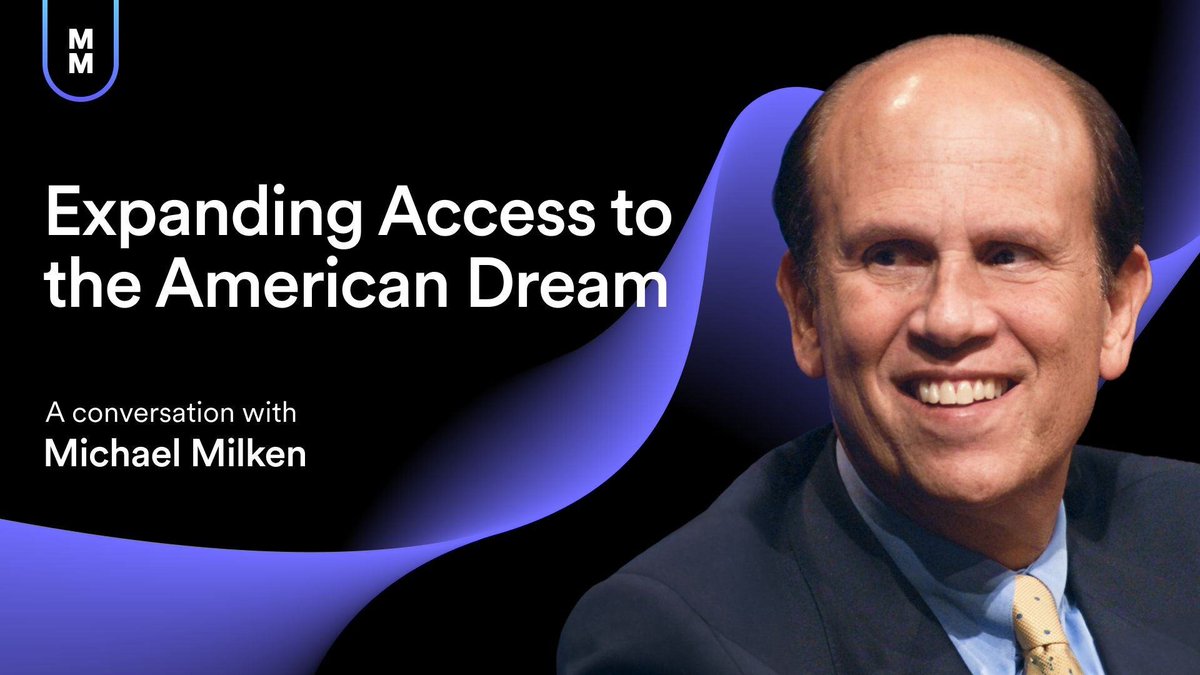
Brand new episode of @circle's #TheMoneyMovement. Can't wait to listen to the conversation and hear insights on a variety of topics between Jeremy Allaire and Mike Milken. https://t.co/yYkDGM64KQ