P.h.D student, Duke University in Sönke Johnsens lab. Interested in animal navigation with a focus on magnetoreception, terrestrial electroreception and vision
Ever wanted to know more about how environmental sources of radio frequency electromagnetic waves impact magnetoreceptive orientation behavior? Check out the new paper! https://t.co/z45t7sO2ln
hear @JesseGranger6 talk at #SICB2021 on the impact of radio-frequency (RF) noise on #magnetoreception, and how that compares to natural sources of RF noise. Can solar storms disturb magnetic orientation behavior? You'll have to watch to find out!
https://t.co/d4BU5utMJu
THREAD Are U stressed? Animation by @BedrinanaLuis shows 1 difficult week in the life of 1 #whale. BLUE DOT is 1 whale trying to feed while dodging heavy vessels traffic @ #Ancud Gulf 3/22/19 to 3/29/19 #shipstrikes#whales Paper @Nature https://t.co/EA2lt0F0l8 @alex_zerbini
@BotanicalLad I've generally put things like that in an 'extra' section at the very bottom, if I have room, to show I'm well rounded but that I understand these aren't relevant to the position. I dont know if that's the best way to do it, but it makes me feel better than just deleting them
Stoked to share the first publication from my PhD! About assessment and winner effects in snapping shrimp.
Read on if you are interested in animal contests, or if like me, you just think snapping shrimp are some of the raddest animals out there!
https://t.co/W0ZuMOchuE
What happens when friends who study low-light vision and magnetoreception get together? Read this paper by Ken Lohmannn, Eric Warrant, and @sonkelab and find out! https://t.co/oq25vg491h
REMINDER: The Enterprise in “Star Trek: The Next Generation” had a deck called Cetacean Ops, where dolphins and whales were crew mates who helped with navigation. It was referenced twice in the show, but never seen! (1/4)
First grad school paper with @sonkelab and Fred Nijhout is out in @NatureComms! We show that there are several lineages of butterflies with ultra-black species and it only took a simple change in morphology to make them that black. https://t.co/ewiUUjOrST
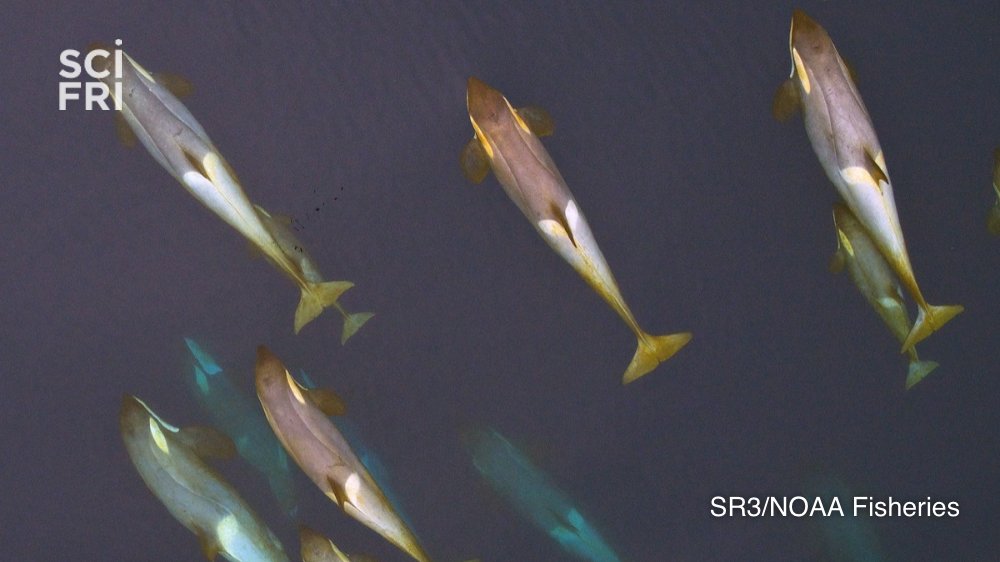
Now, we follow where the whales roam. New research on solar activity and skin molting sheds light on these creatures' migration patterns and health. @JesseGranger6 and Robert Pitman @OregonState tell us more! #SciFriLive
https://t.co/XrYFNqAkRr
When the sun throws a cosmic tantrum, gray whales are 4 times more likely to strand themselves. This connection suggests that the whales might use a magnetic sense to guide their incredible migrations. My latest on a very cool study: https://t.co/aJIwgf7mlt