Situational Awareness was up +439% YTD through June before suffering leveraged losses, per FT.
Leopold Aschenbrenner says the tech sell-off created attractive buying opportunities, with a potential Anthropic IPO serving as a second-half recovery catalyst.
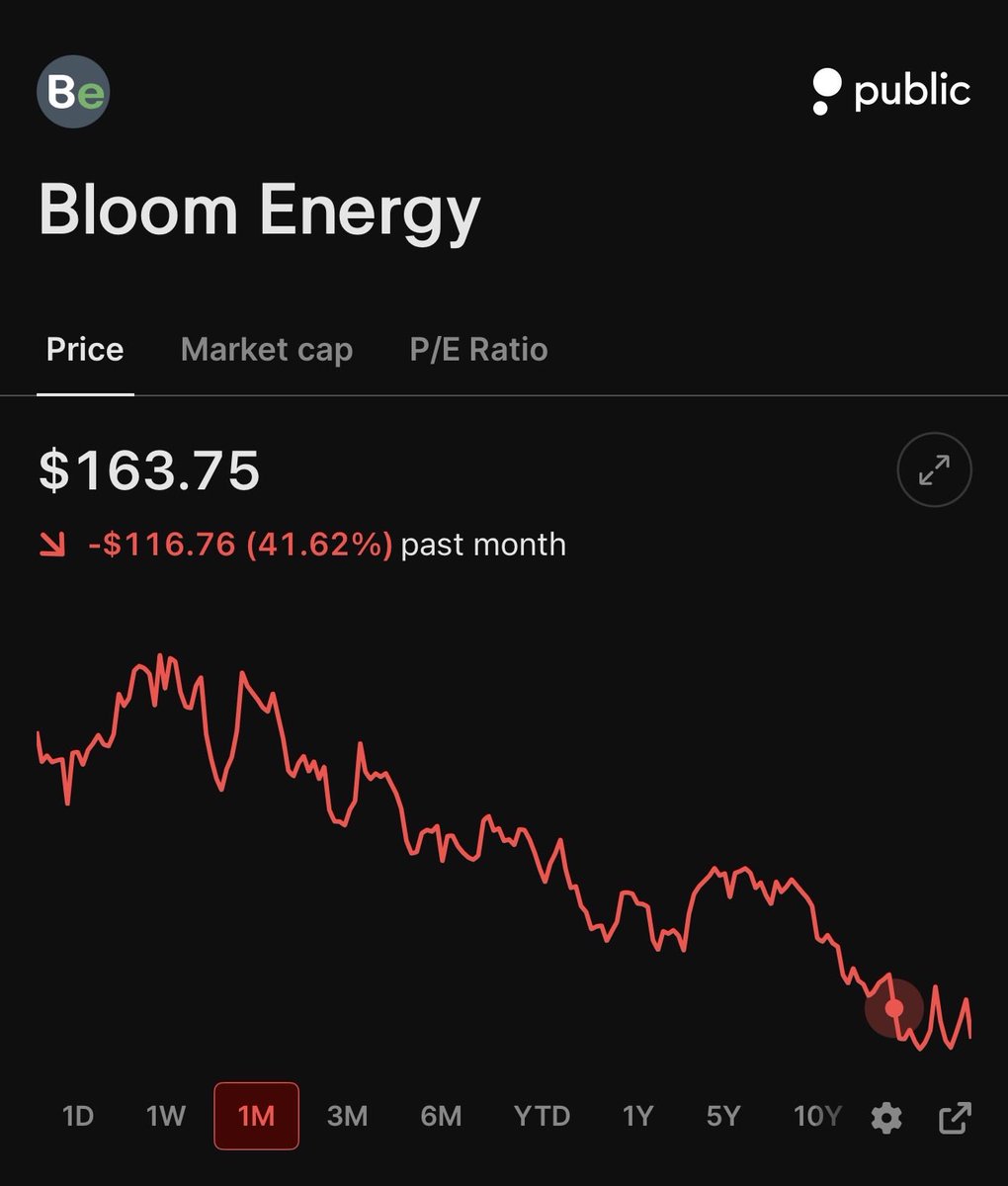
Top holdings were $BE, $NBIS, $CRWV, and many high flying stocks.
Even legendary investors are not immune.
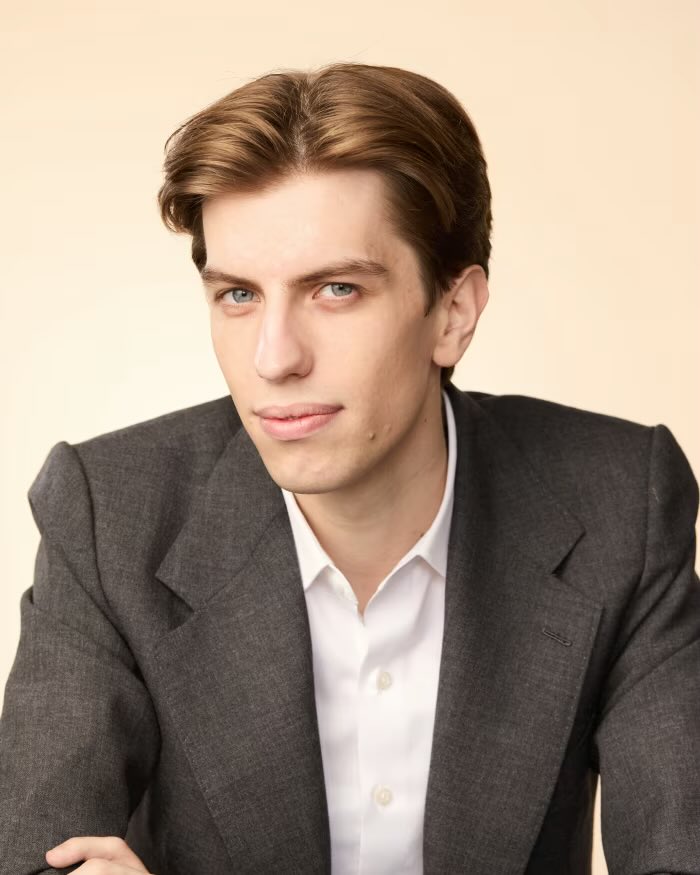
Leopold Aschenbrenner is raising fresh capital to put back into AI compute since his $20 billion fund, Situational Awareness, reached out to investors and lenders after heavy losses in the recent AI stock sell off (Save this).
His fund used leverage to amplify returns, a strategy that boosts gains but also magnifies losses in downturns.
Leopold thesis is that AGI, and eventually superintelligence, is arriving faster than markets expect, fueled by compounding gains in compute, algorithmic efficiency and unhobbling of models into autonomous agents.
The strategy flowing from this is to buy the physical bottlenecks of the AGI buildout, like power, compute, memory, and advanced fabs.
With fresh capital, he's likely to lean into lesser known names tied to the same compute scarcity thesis, particularly neoclouds, which sell scarce GPU cloud capacity directly to AI labs.
Here is a list of companies he is likely to buy or add to his position.
Nebius is a full stack neocloud building its own data centers, and it just locked in up to 1.2 GW of power for a new Pennsylvania AI facility alongside a Nvidia partnership targeting over 5 GW of deployed systems by 2030.
IREN pivoted from bitcoin mining into managed AI cloud services, and landed a roughly $3.4 billion, five year Nvidia infrastructure contract plus a broader deal for up to 5 GW of capacity.
TeraWulf, Cipher Mining, and Hut 8 are power-site conversion plays that signed multi hundred-megawatt AI hosting deals, some backed by Google through Fluidstack.
QumulusAI is a smaller neocloud that just signed a $32 million Blackwell GPU deal.
Beyond neoclouds, industrial names like Vertiv, Comfort Systems, and GE Vernova supply the power and cooling gear data centers need, while ON Semiconductor and Rockwell Automation are quieter plays on AI-driven power chips and factory automation.
Milk Road is tracking this very closely and if you want to know what trades we are making around, you can come join us using the link below for just a dollar.
The Mo factor unwind has worsened post Warsh. This continues to show up in crowded hedge fund positioning into monthend. This is the rolling 4 day rate of change back 25 years of the GS HF VIP index relative to the SPX. The unwinds continue and have gathered pace the last four days.
Lumentum CEO Michael Hurlston says AI's indium phosphide laser shortage will get worse than the memory crunch, and it's why Nvidia backed both $LITE and its biggest rival, Coherent $COHR.
"The numbers of lasers that those kind of customers (telecom) would deploy are in the hundreds, right? Now we're talking about hundreds of millions."
"So, for us to get our fabrication facilities up the curve to go from thousands of wafers to millions of wafers is no small feat."
"You've covered us for a long time. We've now put online five different wafer fabs. There's a different material. This is not CMOS."
"It's called indium phosphide, right? A very complicated name, but it's basically something that can emit light. It's a property, a material that can emit light, and we have five indium phosphide fabs that we're trying to ramp to scale."
"We see a huge shortage, and that's one of the reasons, I think, Nvidia invested in Lumentum and invested in one of our largest competitors, who also has incredible indium phosphide manufacturing capability."
"Between the two of us, I don't think we can service the demand that Nvidia and others are now putting on us to solve this resistance problem in the data center. And so, the shortage of indium phosphide, I think, will become even more acute than what we see from the memory guys."