Wolfers: For nine out of the last 10 presidencies, if you’d said, “How much should we blame the president for what’s going on with the economy right now?” I would have said that the president is just one factor among many.
That’s what I would have said nine out of 10 times. This is the 10th time.
There’s literally no question about the cause of the current oil price spike. It is that we decided to go to war in Iran on an open-ended, ill-defined mission, and we’re not quite sure what to do. The Iranians took over the Strait of Hormuz, and now the global economy is substantially fractured and global energy markets are in disarray. There’s no question about what caused that. We know that because we actually saw things get a little bit better in June during the ceasefire, but those happy days are behind us.
There’s also no question that tariffs are a complete own goal. They’ve led to higher prices paid by Americans. And that, I think, explains why, if you look at the United States compared to our peers in the G7—think of these as other economies that are kind of like, if the U.S. economy had mates, this is who they’d be—comparable large industrialized economies, the United States right now has higher inflation than any of them. We’re number one, but it’s not one of those good number ones.
And let me just add: it really does hurt my heart because we know how not to screw things up. Any economics textbook, anyone who’s taken introductory economics, would know that there are large economic costs to going to war. They would know that starting a global trade war in a chaotic and incoherent fashion is all downside and no upside.
President Obama has a unique way of ROASTING Donald Trump without mentioning him by name, and it drives Trump nuts.
He just did it again, this time in front of every living president.
Watch this. 🔥
@BeschlossDC I was 19, just finished 1st year at uni; working 3 minimum wage jobs 60 hours/wk to pay tuition but having a blast! Was looking forward to voting for Carter in the fall, my first presidential election. Was optimistic-that crook Nixon was gone, no draft, future looked bright!
If, when you say regulation, you mean the dead and clammy hand of the commissar—the gentleman who has never in his life built a single thing, drafting rules to govern a thing he cannot define, to be enforced by men who cannot read them; if you mean the form in triplicate, the impact assessment upon the impact assessment, the compliance officer who breeds, in the warm dark of the org chart, further compliance officers unto the third and fourth generation; if you mean the moat—the deep cold moat that the giant digs around his own castle and christens, with a perfectly straight face, public safety—the drawbridge he hauls up behind himself the very instant he is across, lest any hungrier and hungrier man should follow; if you mean the precautionary principle, which, had it governed our grandfathers, would have banned the wheel pending further study of the hill, and left us yet shivering and raw in the mouth of the cave, blessing its excellent ventilation; if you mean the European disease—that magnificent open-air museum of a continent, which produces in our time precisely two things in great abundance, and they are regulation, and the eloquent and well-footnoted regret of cultivated men explaining at length why they have produced nothing else; if you mean the license required to think, the permission slip for honest arithmetic, the king’s wax stamp pressed upon the forehead of every new idea before it may draw its first breath; if you mean the agency dispatched, with trumpets, to slay a single dragon, which arrives at the cave, surveys the accommodations, and moves in—and spends the ensuing century laying eggs and devouring the very villagers it was sworn to defend; if you mean the startup that perishes not of the market’s honest verdict but of the filing fee, the genius decamping by the next tide to a freer and warmer shore; if you mean the law that arrives, faithful as the swallows, exactly one whole epoch too late—helmeted, plumed, and magnificently armed—to regulate the stagecoach—then certainly, my friends, I am against it.
But—but, my friends—if, when you say regulation, you mean instead the humble steel guardrail upon the mountain road at midnight, the very thing you curse on the easy days and bless on your knees the one night the fog comes down; if you mean the brakes—for it is the brakes, and not the engine alone, that permit a sane man to drive fast and yet arrive alive—and the buttress, without which no cathedral was ever flung so high, but only in spite of which, but because of which; if you mean the meat inspector, who is the single homely reason a man may eat a sausage in this republic without first composing his last will and testament; if you mean the firebreak cut clean through the forest before the dry season of the burning, the smallpox cordon, the buoy that marks the channel, the rule of the road that lets ten thousand strangers hurtle past one another in the dark at fearful speed and arrive, by its quiet grace, every one of them home; if you mean the honest scale and the true weight, the reason a pound is a pound and a dollar a dollar from Natchez to Nome; if you mean the firm and decent wall between the counterfeit voice and the widow’s bank account, between the deepfaked candidate and the ballot box on the eve of the vote, between the loosed and loveless machine and the schoolyard it neither knows nor pities; if you mean the simple plank of law that says the strong shall not, in the gray dawn, feed the weak quietly into the furnace and sell the rising smoke as progress; if you mean, in the end, the one slender thread of trust without which no citizen will ever dare to use the marvelous thing at all—for where there is no rule there is no trust, and where there is no trust there is no commerce, and a miracle that no man dares to touch is no miracle, but only a handsome and expensive ghost—then certainly I am for it.
This is my stand. I will not retreat from it. I will not compromise one inch of it.
Things the recovery industry will not tell you:
1. The drug worked. That is why people use it. Not weakness. Not moral failure.
A neurological event so complete and persuasive that any honest account of addiction has to start there.
The problem is not that the drug fails. The problem is that what it does is unrepeatable, and you will burn your entire life to the ground trying to get back to a place that no longer exists.
2. Shame is not guilt. Guilt says I did something bad. Shame says I am something bad. Guilt is appropriate. Shame is a cell with no windows. Most people use the words interchangeably. That mistake is lethal.
3. You cannot shame someone who has already named the thing you are holding over them. Say it first. Say it in plain light. The weapon drops.
4. Guilt can coexist with self-respect. Shame cannot. You can hold the damage and the dignity at the same time. I know because I live there.
5. Radical honesty does not give you back who you were. It hands you the clean slate of who you always wanted to be. The mask comes off. The cartoon other people drew of you stays on the page.
6. Nobody gets clean on a winning streak.
7. You have to be almost self-delusional in your forgiveness of yourself. (Go watch Chase Hughes)
8. The greatest sin was not the chaos. It was the absence. Being unavailable to the people who needed you.
9. Sustainable recovery starts with one thing: honesty with yourself. If you love an addict and want to help, that is the only door in.
10. I am only an expert on my recovery. Nobody is an expert on anyone else’s.
🚨 ANOTHER MASTERCLASS FROM @3BLUE1BROWN
The compressibility of language isn’t just a math curiosity, it’s the hidden engine behind every LLM you use.
Grant’s new video reframes Shannon’s entropy through one elegant lens:
Prediction IS compression.
→ The better you predict the next word, the fewer bits you need to store it
→ Shannon measured English at ~1 bit per character: astonishingly compressible
→ This is exactly what GPT-style models optimize
→ Intelligence, in this framing, is compression
FUN FACT: Von Neumann told Shannon to name it “entropy” because nobody truly understands it anyway 😄
Decades later, that same concept became the bedrock of modern AI.
Deep-dive resources in the 🧵 ↓
62% of degrees went to women in 2026. 38% went to men. Wow. Yet all the resources, support and encouragement still goes to getting girls and women ahead. When will we reach “equality”? When 100% of degrees go to women?
INSTEAD OF WATCHING AN HOUR OF NETFLIX TONIGHT.
This 60-minute Cambridge lecture by Demis Hassabis will teach you more about the future of AI than most people will learn in the next 5 years.
Bookmark it and give it an hour, no matter what.
🇺🇸BREAKING: Someone placed a $920 million crude oil short at 3:40 AM.
70 minutes later Axios reported the US and Iran were close to a deal.
Oil dropped 12%.
The trade made $125 million in profit.
Minutes after that Iran launched the “Persian Gulf Strait Authority” and oil surged 8%.
$760 million placed before Trump’s last announcement.
$920 million placed before this one.
Every major announcement in this war has been front-run by someone who knew it was coming.
What kind of war is this?
This is more like a trading desk with an army.
Never stop connecting the dots.
Tonight the Boston Bruins are playing the Buffalo Sabres in Buffalo.
Two American teams.
Buffalo always has someone sing both National Anthems before their games.
When the microphone cut out the crowd took over.
This is how our American friends treat us. With respect.
This is what being classy looks like. Canadians can learn something.
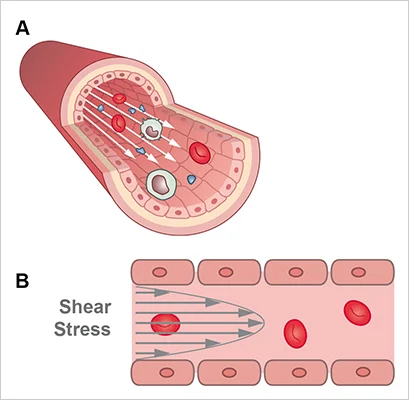
It seems my "silly" question on the nature of plaque deposition in arteries vs veins has sparked quite a debate on X.
Truthfully, there has been some good discussion about the various factors and the interplay between them, and I'm glad to see it.
But, they miss something big.
A Harvard neuroscience professor who teaches at Harvard Summer School said something that completely changed how I think about memory.
She wasn't talking to journalists. She was answering a student question about why smart people still forget everything they study.
Her name is Dr. Tracey Tokuhama-Espinosa, and she has spent decades researching how the brain actually encodes and retrieves information.
Here's what she said: "The ultimate litmus test of learning is using the information in a new context, not just remembering it for a test."
That one sentence exposes why most people's study habits are completely broken.
Here's the actual system she teaches Harvard students to retain what they learn.
The first thing she kills immediately is the myth that you have one learning style. The idea that you're a "visual learner" or an "auditory learner" is not supported by modern neuroscience. Your brain wants to learn through as many senses as possible at once, because each sense creates a separate neural pathway to the same knowledge. More pathways means faster and stronger recall.
The second technique is spaced repetition, but she explains the mechanism in a way most people never hear. Every time you retrieve a memory, you physically thicken the myelin sheath around that neural connection, which makes the electrical signal travel faster. You aren't just reviewing information you are literally rewiring your brain to access it more quickly.
The third technique floored me. She tells students to teach what they just learned to someone else within 24 hours, because teaching forces you to find the gaps in your own understanding before the exam does it for you.
The fourth is what she calls "feed-forward" instead of feedback. When you get something wrong, don't treat it as a failure. Ask only one question: what would I do differently next time? That reframe keeps the brain in a learning state instead of a defensive one.
But the most underrated insight she shared was this: the single biggest factor in long-term retention is whether you can make the material personally meaningful to your own life. Your brain prioritizes storing things that feel relevant and discards things that feel abstract.
The students who remember everything aren't studying harder. They're studying in a way that the brain was actually designed to absorb.