The Journal of General Physiology (JGP) publishes peer-reviewed research in physiological problems at the cellular and molecular level. Est. 1918 - @RockUPress
📣 Deadline for the #CallForPapers on #Myofilaments is approaching! JGP welcomes submissions that focus on #myofilament (https://t.co/sKZ2IUJ0Iy) structure, elasticity, and regulatory networks in muscle function and disease. 👉 https://t.co/5X9DEP4WSO
Céline Marionneau reviews recent literature demonstrating that cardiac Naᵥ1.5 channels are regulated, under both physiological and pathological conditions, by a wide range of post-translational mechanisms. https://t.co/vxKn4h3Gl8
#IonChannels#SodiumChannels#CardiacMuscle
ICYMI: Our #Neuroscience Collection 2026 highlights the variety of neuroscience research published by JGP, including work on Na+, Ca2+, and K+ channels, and mitochondrial biology: https://t.co/A28SGcZp71
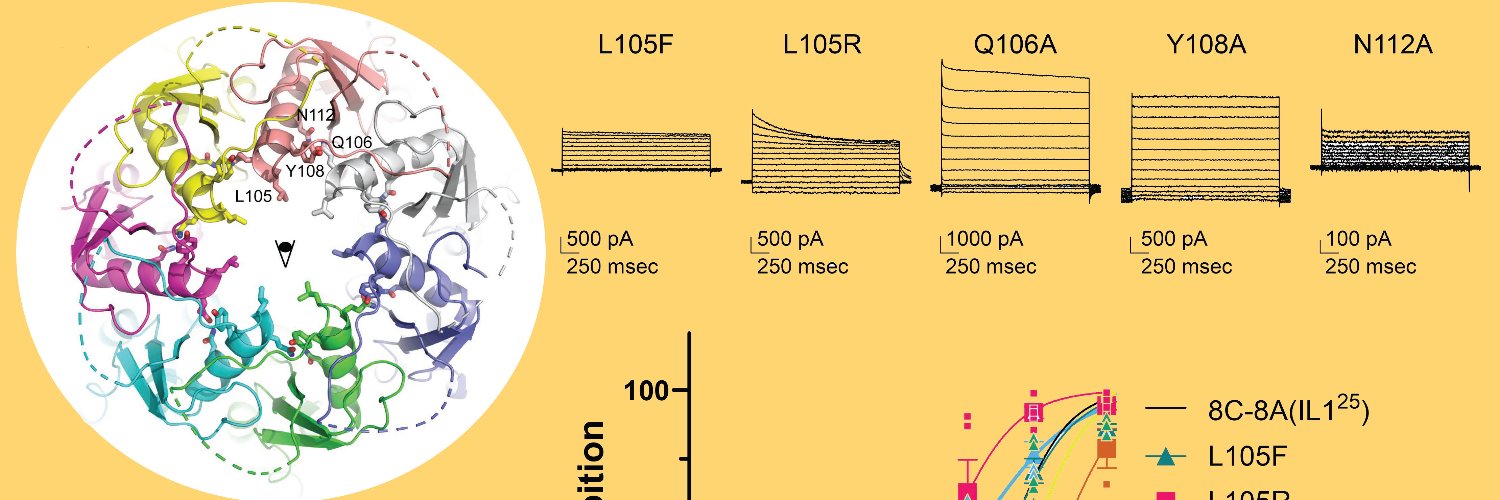
Novel binding mode for negative allosteric #NMDA receptor modulators, from James Lotti, Rasmus Clausen @ucph.bsky.social, Kasper Hansen and colleagues @umontana https://t.co/jfRRy5dQfL
Part of our #Neuroscience 2026 collection: https://t.co/3pCiVoKu8c
#SfN26
Exploring voltage-gated sodium channel conformations & protein-protein interactions using #AlphaFold2. Study by Diego Lopez-Mateos, Kush Narang, & Vladimir Yarov-Yarovoy
@sackyarov@ucd_physiology https://t.co/FnBwlgvEoW
Part of #Neuroscience 2026: https://t.co/T9gAAN8zpA
#SfN26
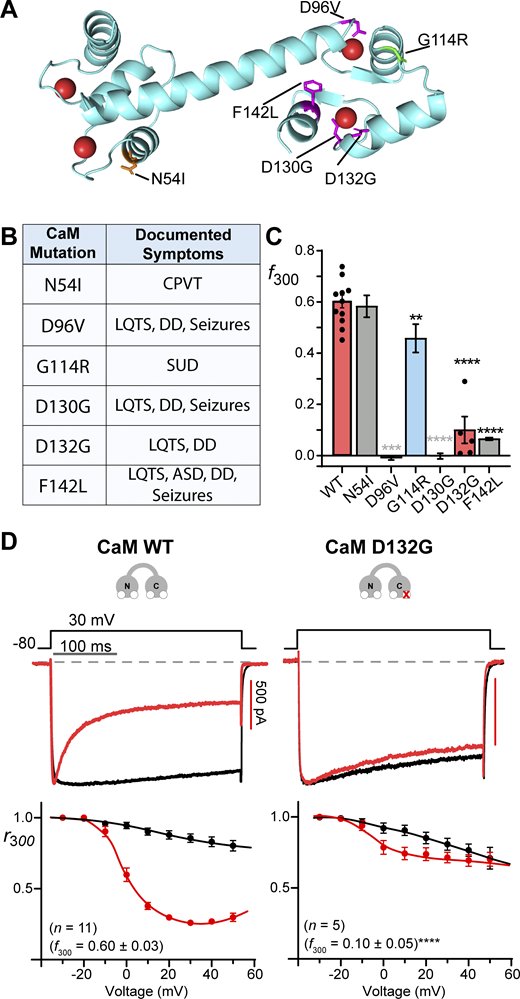
Calmodulinopathy variants impair CaV1.3 and CaV2.1 regulation. Study from John Hussey, Ivy Dick et al @ummedschool: https://t.co/7It957Mg6a
Part of our #Neuroscience 2026 collection: https://t.co/X9qk7rzd8l
#SfN26
Liu, @CesarA_ion, Latorre, Bezanilla et al review the main advances in our understanding of fast sodium channel inactivation since the work of Hodgkin & Huxley to the present era of structural biology https://t.co/4XlndSPv2r
From #Neuroscience 2026: https://t.co/VwhIqscMJI
#SfN26
An #epilepsy associated Kᵥ3.1 potassium channel variant acts via dominant positive effect. Study from Jerome Clatot, Ethan Goldberg @Go3than et al. @ChildrensPhila: https://t.co/yfrKr0ZPBy
Part of our #Neuroscience 2026 collection: https://t.co/AXRPKXE2sD
#SfN26
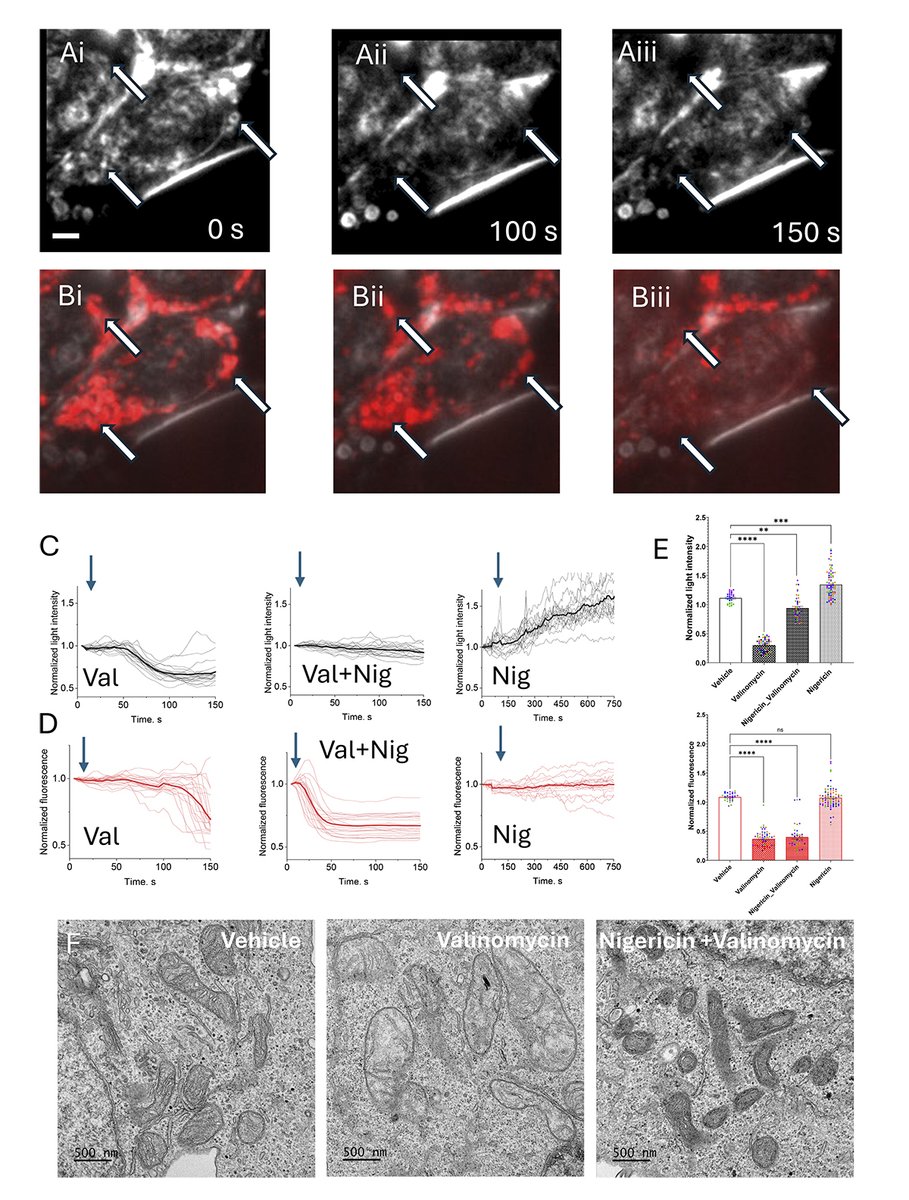
Label-free real-time imaging of mitochondrial matrix volume changes and permeability transition in living cells. New Methods & Approaches from Akosah, Bernardi, Pavlov et al (NYU):
https://t.co/AquV64rxTi
Part of our #Neuroscience 2026 collection: https://t.co/6QHR5wtkv3
#SfN26
Early disruptions in brain capillary blood flow control in a mouse model of #Alzheimers disease. Study from Ashwini Hariharan, Thomas A. Longden and colleagues @UMmedschool: https://t.co/iU8oqYaeUH
Part of our #Neuroscience 2026 collection: https://t.co/C4Fbw1I5iT
#SfN26
Presenting our #Neuroscience Collection 2026 for #SfN26, on topics ranging from the use of AlphaFold2 to study #ionchannels to an examination of altered pericyte function in #Alzheimers Disease. https://t.co/WrSbpMV1du
#CallForPapers 📣 You are invited to submit papers on the topic “What’s Hot in #Myofilament Structure, Elasticity, and Regulatory Networks in Muscle Function and Disease.” Learn more & submit here 👉 https://t.co/Cqi2ykpLC4
Townsend, Thoreson et al. developed mice that selectively express the fluorescent glutamate reporter iGluSnFR3 in rod #photoreceptor cells. They find that rods maintain slow, stochastic release at 20-40 vesicles/s/ribbon under mesopic & photopic conditions https://t.co/vvK315Rw0D
The epithelial Na⁺ channel is a protein that facilitates sodium movement from urine to blood and controls blood pressure. In this Perspective, Lawrence Palmer discusses unanswered questions regarding the function and regulation of this important channel. https://t.co/6qMc3c9J9j
(2/2) @t_stevenson95, @JSRustenhoven et al. @FMHS_UoA show that accumulation of α-synuclein at central nervous system (CNS) borders promotes TNF-mediated inflammation and impairs CNS clearance. https://t.co/GfaNU9AHJG
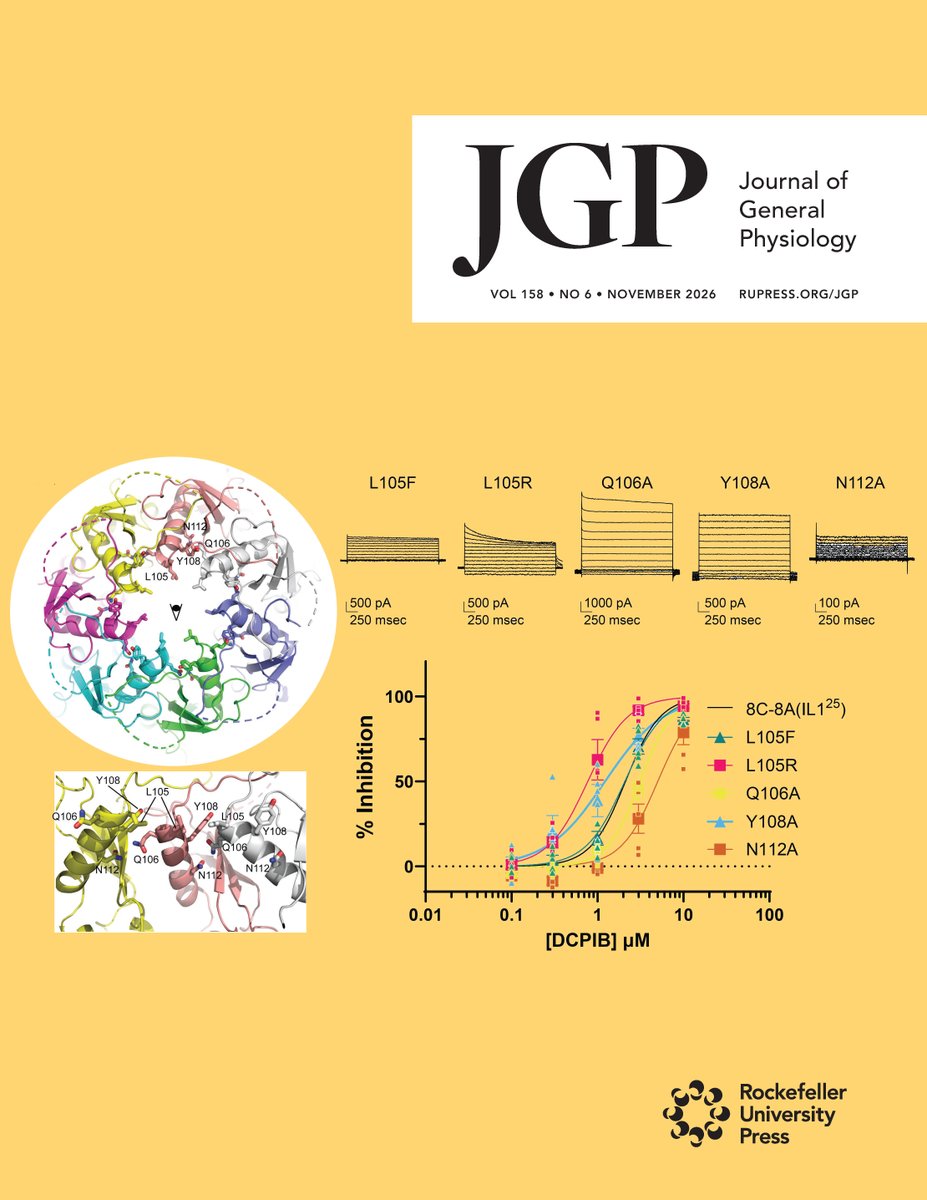
Our November issue is here! https://t.co/pKuoI7d9hw
🔬 Yamada, Karakas, and Denton (https://t.co/ywSlERUaUi) reveal how an extracellular pore motif controls inhibition of VRACs by DCPIB, providing new insights into the molecular basis of drug–channel interactions.