@RobCarpenter This is why carrier vetting has to go past the MC number. Shared addresses, phones and contacts across 'different' carriers are exactly what should get checked before a load is tendered.
@ThomasWasson That percentage setup is the killer. A carrier can't plan trucks around 'somewhere between 25 and 100.' Shippers who share even a rough weekly forecast on flatbed see a lot fewer rejections.
@bkelogistics Detention, usually, and most of it is fixable before the truck is even dispatched. Confirm the freight is actually ready and the dock has the appointment, and a lot of those charges never happen.
@CDLWire@BrokerOpsNotes The setups that stick make it part of close, not a separate task. If the callback number and what happened aren't on the POD screen, the load stays open. It's two lines, and they're the two lines you want when a claim shows up 30 days later.
@FreightWaves Tracks with capacity shrinking month after month. If you're a shipper going into bid season, lock in carriers you trust on your core lanes now. Chasing the lowest number usually puts you right back on the spot market in Q1.
@FreightWaves Inventories building while contract renewals climb is the signal shippers should be watching. If your routing guide is still priced off last spring's spot market, now's the time to revisit it before peak hits.
@bobbyloads Love seeing this. The early factoring hurdle is real for new authorities, so nail the basics: tight carrier vetting, clean paperwork, and shippers who pay on time. Keep going.
@ju1fy This is the right way to test it. Not every load on a lane belongs on rail. Start with freight that has some transit flex, then compare the all-in cost with drayage and dwell, not just linehaul.
@FreightWaves If carriers are already planning for growth next year, shippers should firm up their routing guides and carrier relationships now, not in spring when it tightens. The cheapest rate today doesn't help if nobody covers your load in March.
@bkelogistics With flatbed this tight, I'd plan on at least a week out for year-end steel or lumber, more if it needs tarps or a step deck. Clean details up front (weights, dims, dock hours) help a truck say yes as much as the rate does.
@ChadBoblett Good call. Shippers can help themselves here too: tender early, keep appointment windows honest, and turn trucks fast. Carriers remember who was easy to work with when it gets tight.
@BrokerOpsNotes@CDLWire Agree on keeping both. The load note protects you on that shipment, and the carrier note is what makes the next call easy. A couple minutes after delivery saves a lot of digging later.
@RobCarpenter Worth knowing, and worth knowing its limits: MCS-90 is about public liability, not your cargo. Shippers should check the carrier's cargo coverage and limits before tender, not after a claim.
@bschoenbaechler@FreightWaves Good advice. I'd add: make sure the backup carrier has actually hauled your lane and dock before, not just your paperwork. December is a bad time to find out the backup has never been to your receiver.
@freightcaviar If capacity keeps leaving, the shippers who do best will be the ones carriers want to come back to: quick unloads, honest appointment times, and paying on time. Being easy to work with is going to matter as much as the rate.
@FreightWaves The authority checks out more often than people think. What doesn't is who's on the phone. Call back on a number you found yourself, check for recent ownership or email changes, and a lot of these fall apart before pickup.
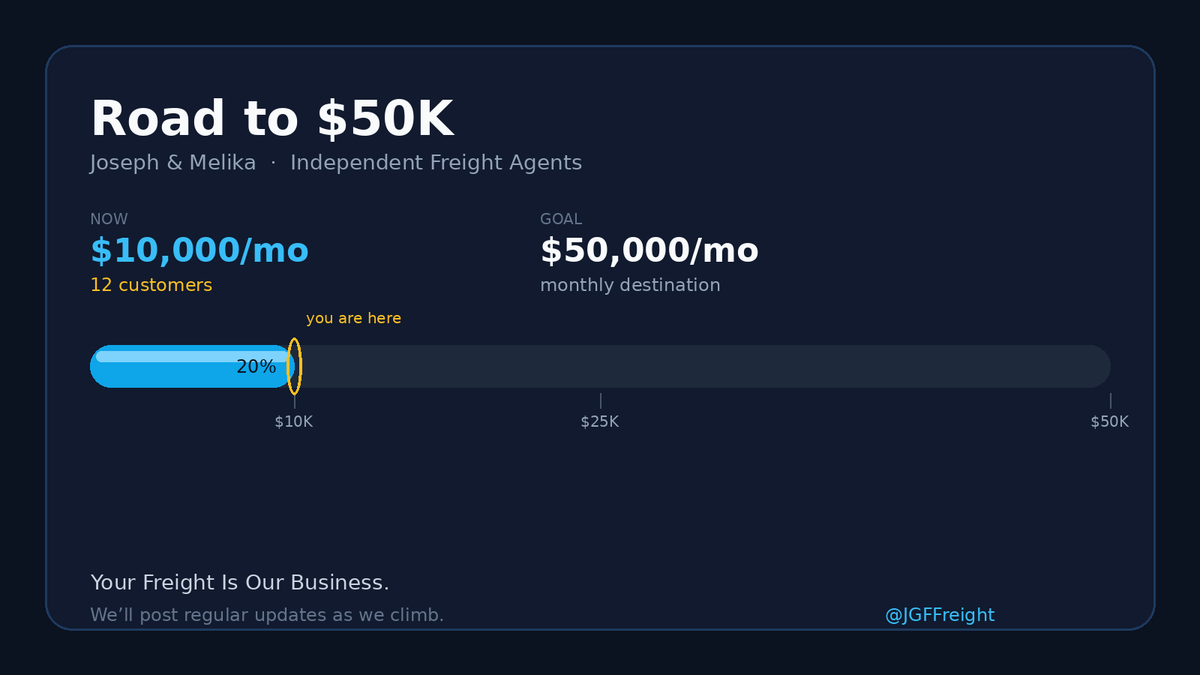
We walked away from one of the biggest brokerages in the country.
No safety net. No corporate cover. Just the two of us, betting everything on one belief: shippers deserve the best outcomes, from quality carriers to transparent pricing.
We know we can deliver that. We're all in.