@joshua_r_eyler @JHUPress @gmbritton Yay! Can't wait to read it. Let me know if you need anything. So much has changed since we spoke about collaborative grading with the SYN program. We've done a lot of learning and revising over the past couple of years.
ECOWORLD designed as a music festival featured 14 student projects and organizations gathered around the theme of climate anxiety, one section of SYN 100 our climate justice project-based course.https://t.co/KaQSERCQVV
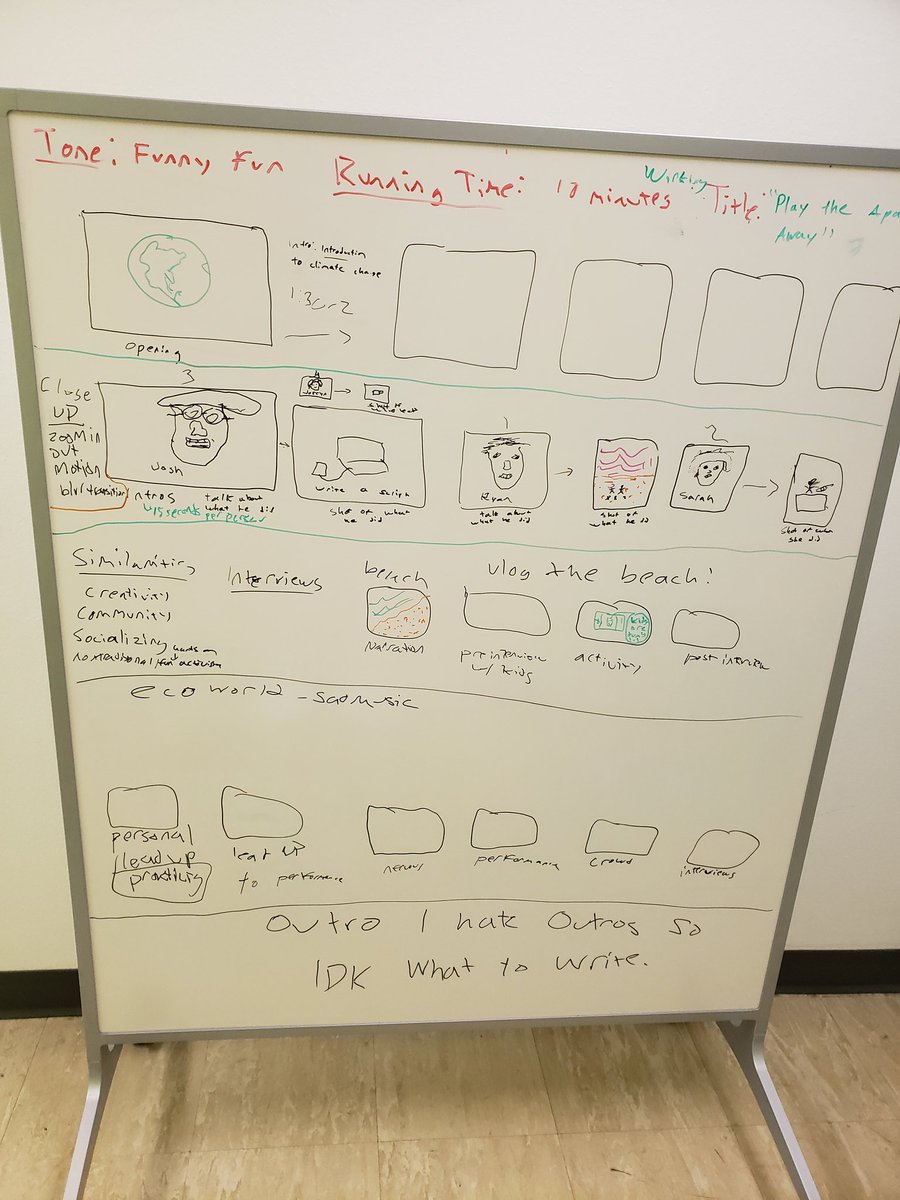
As promised, here is the student final project encouraging viewers to use play and joy to move from apathy to action and activism. Features two other student projects: a board game and ECOWORLD
https://t.co/LeDZAmj4Oc
@joshua_r_eyler
@ayanaeliza
Inspired by learning about the role of play in @joshua_r_eyler "How Humans Learn" and about what brings you joy from @ayanaeliza a group in my climate education course plans to create a short film to encourage their peers to move from apathy to action
ECOWORLD is another student project. Students will host a music festival around climate anxiety and well-being where 8 other student groups will display their projects ranging from a model for sustainable housing, an art piece, and a session on mindfulness
@d_hsu_work @ucsd Seventh College Synthesis Program students take a three-course interdisciplinary climate justice curriculum as part of their GE requirements. Two courses are writing-intensive and one project-based. Throughout curriculum students connect course content w/ major and careers
When an aerospace engineer major shares on an instructor-student panel that she came into the sequence expecting to coast, and then shares how courses "live with her" as she thinks about how to connect climate justice w/ major, you know you're doing something right.
I think we may be on to something w/ this 3-course GE sequence focused around climate justice. Can't wait to find time and headspace to research and write about it.
I'm teaching the PBL course this quarter and revised initial collaborative grading reflection to ask students to share the driving question for their learning for the course.Blown away by the thoughtful responses. #ungrading
@joshua_r_eyler This week we began our third year using collaborative grading to describe the Synthesis Program's approach to alternative grading. The terminology works well in our context. Glad to hear it made the book!
You are invited! Calls are open for the 2022 Roundtable: Engaging students as partners in and for sustainability and social impact. Online (Nov 22-23), free, and open to all. #UNISTARS#SAPRtable22#studentsaspartners@InterJournalSaP
https://t.co/FN5Y9wCnts
@joshua_r_eyler @katiemattaini@siwelwerd@EmiDoesMath@YouTooBio @LindsayMasland We use collaborative grading in our 3-course sequence. The first course uses elements of labor-based contract grading but as students progress through the sequence we shift closer to principles of ungrading.
@joshua_r_eyler @katiemattaini@siwelwerd@EmiDoesMath@YouTooBio @LindsayMasland We've been using the term for two years. A colleague shared that she used co-grading to signal the grading process involves both the student and instructor. We use collaborative grading to emphasize the process of assessment and to signal the dialogue b/w student and instructor
@LindsayMasland @joshua_r_eyler @cairoteacher Ha! Creating the Synthesis has been a pedagogical dream. Fortunate to be in a space where educational innovation is supported.
@joshua_r_eyler @cairoteacher @LindsayMasland One of the TAs plans to interview their peers to find out if and how they see collaborative grading as an anti-racist practice. A student will conduct a parallel inquiry w/ students.
@joshua_r_eyler @cairoteacher @LindsayMasland We've been using our version of collaborative grading for almost two years in the Synthesis Program at UCSD. The Program includes a 3 course sequence where we scaffold students from a version of labor based grading to ungrading over the 3 courses.