🔬 PI-RADS 3, 4, and 5: Understanding Prostate MRI Results
What does a PI-RADS score mean, and how likely is it to indicate prostate cancer?
The Prostate Imaging–Reporting and Data System (PI-RADS) is used to assess suspicious findings on prostate MRI and estimate the likelihood of clinically significant prostate cancer.
🔎 Key Points:
• PI-RADS 3: An uncertain finding. Further evaluation depends on PSA levels, PSA density, and individual risk factors.
• PI-RADS 4: High suspicion of clinically significant prostate cancer. MRI-targeted biopsy is generally recommended.
• PI-RADS 5: Very high suspicion of clinically significant prostate cancer, usually requiring timely biopsy and specialist evaluation.
• Biopsy confirmation: Even a PI-RADS 5 result does not confirm prostate cancer without histopathological examination.
💡 Key Takeaway: PI-RADS helps guide prostate cancer diagnosis and biopsy decisions, but MRI findings must be interpreted alongside PSA levels, clinical risk factors, and biopsy results.
Read more on OncoDaily GU:
https://t.co/ESEITpZpdZ
🧬 El Dr. @JGomezRivas, urólogo de ICUA, destacó en #EMUC26 el valor de los análisis genéticos germinales tempranos para orientar el manejo del #cáncerdepróstata e identificar riesgos hereditarios con implicaciones para toda la familia.
#Urología
🌍 ¡La Urología española, presente en EMUC26!
Del 5 al 8 de noviembre, Bruselas acogió el 18º Congreso Europeo Multidisciplinar de Tumores Urológicos (EMUC26), uno de los principales encuentros internacionales dedicados a los avances en el diagnóstico y tratamiento de los tumores urológicos.
🇪🇸 El congreso contó con una destacada participación de especialistas españoles, entre ellos, el Dr. @JGomezRivas, director de Actividades Científicas de la AEU, que intervino en sesiones centradas en el cáncer de próstata avanzado y la oncología de precisión.
También participaron el Dr. Javier Pérez Ardavín, el Dr. Francesco Sanguedolce y la Dra. Elena Castro, contribuyendo al intercambio científico en diferentes ámbitos de la urooncología.
👏 Desde la AEU, felicitamos a todos los profesionales españoles que han formado parte de esta edición, contribuyendo a dar visibilidad a la Urología española en el ámbito internacional.
#EMUC26 #AEU #Urología #Urooncología #OncologíaDePrecisión
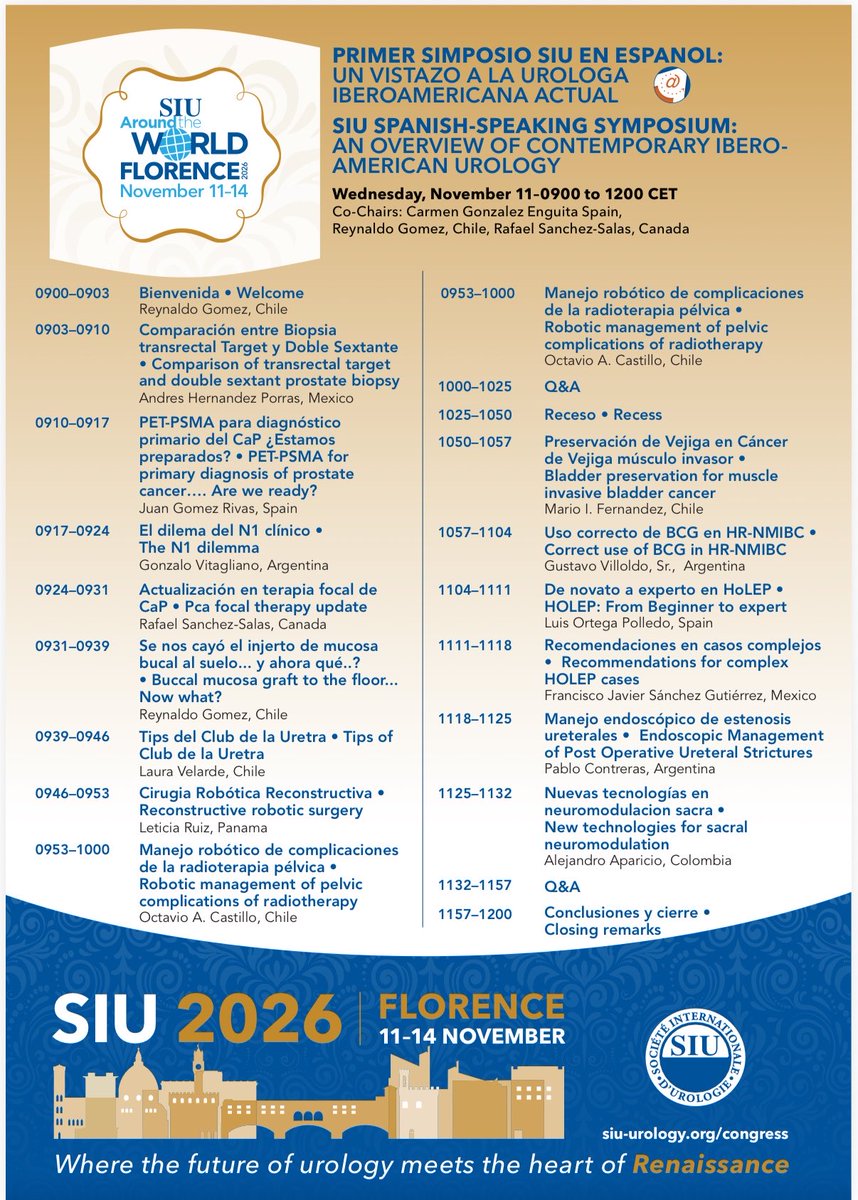
🇮🇹 Delighted to speak at the first Spanish-language symposium at #SIU2026 in Florence!
🎯 HoLEP: from beginner to expert.
📊 Using CUSUM & RA-CUSUM to assess surgical proficiency and mastery.
Moving towards objective, competency-based surgical training!
#HoLEP #Urology @In@InfoAeu@SIU_urology
🎤 «Doctor, me da vergüenza preguntarte…»
Hay dudas sobre nuestra salud que todos podemos tener, pero que no siempre nos atrevemos a plantear. ¡Y ninguna pregunta debería quedarse sin respuesta!
🧔🏻♂️ Los doctores Juan Gómez Rivas(@JGomezRivas ) y Daniel Pérez Fentes (@dperfen ) responden a dos cuestiones que quizá tú también te hayas planteado:
🔸 ¿Cómo puedo saber si tengo un problema de próstata?
🔸 ¿Es normal que un testículo sea más grande que el otro?
💬 Porque hablar de salud masculina también significa resolver dudas, desmontar prejuicios y hacerlo con naturalidad.
¿Y tú? ¿Qué pregunta siempre has querido hacerle a un urólogo?👀 ¡Te leemos en comentarios!
Movember AEU 2026. Salud masculina. Sin rodeos. Sin excusas.
Authors conclude: "HoLEP produces a substantial PSA 'reset' with sustained low postoperative PSA in both benign and low-risk PCa patients."
https://t.co/O2zGzmut9f
🇪🇸 Happy to return as faculty at the 23rd AEU Residents’ Course!
A pleasure to teach male LUTS alongside @JustoQuintas & Gema del Pozo.
A busy week ahead! ✈️
🇪🇸 Madrid — AEU Resident’s course 2026
🇮🇹 Florence — SIU 2026
🇩🇪 Hamburg — EAU TUTs3 faculty
#Urology#AEU#EAU
Un PSA elevado no siempre significa #cáncerdepróstata. La hiperplasia benigna o la prostatitis también pueden elevarlo.
🩺 El @JGomezRivas explica cómo interpretar este resultado.
https://t.co/UgUJ4Ird1S
#Urología
We should move beyond the Phoenix criterion (PSA nadir + 2) for defining recurrence following prostate radiotherapy.
When using the "nadir + 2" threshold, 40% of patients are found to have metastases upon PSMA-PET imaging.
By adopting "nadir + 1" as the new criterion, we could potentially cure nearly 62% of patients.
What happens if we compare prostatectomy versus radiotherapy for prostate cancer using this new cutoff value?
#EMUC26
10 Must-Read Posts in GU Oncology | November 1–7, 2026
The first week of November brought new research across GU oncology, covering clinical trials, molecular findings, diagnostic approaches, and survivorship care.
This week's selection includes updates on:
▫️ PIONEER+: Clinical trial eligibility among 32,585 patients with metastatic hormone-sensitive prostate cancer.
▫️ RMC-COMPASS: Development and internal validation of a prognostic model for SMARCB1-deficient renal medullary carcinoma.
▫️ Long-term survivorship care for adolescents and young adults with testicular cancer.
▫️ FTO-mediated glycolytic metabolism and immune evasion in papillary renal cell carcinoma.
▫️ Clinicopathological characteristics and outcomes of TFE3-rearranged renal cell carcinoma.
▫️ ENERGIZE: Perioperative nivolumab plus chemotherapy did not meet either co-primary endpoint in muscle-invasive bladder cancer.
▫️ AI-based prediction of potential drug combinations for FGFR-altered urothelial carcinoma.
▫️ MRUSuNet: Combining MRI and ultrasound using AI for clinically significant prostate cancer detection.
▫️ Risk of developing bladder cancer following de novo urothelial atypia, including a 5-year incidence of 6.5% in patients with atypia of unknown significance.
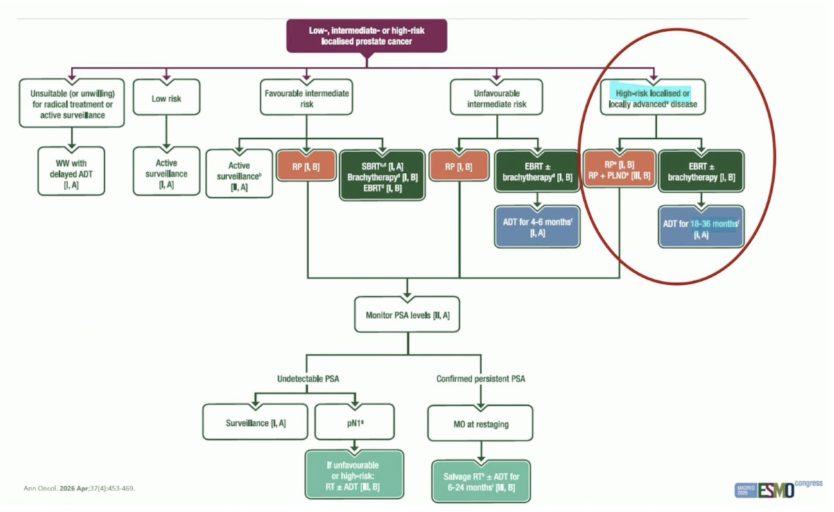
▫️ APCCC 2026: Consensus report on high-risk localized, locally advanced, and biochemically recurrent prostate cancer.
Takeaway: These posts highlight developments in prognostic assessment, molecular research, treatment strategies, diagnostic innovation, and survivorship across GU oncology.
@JGomezRivas@PavlosMsaouel@DanieleRaggi83@VPasoglou@drenriquegrande@RusuMirabela@LauraBukavinaMD@nealshore
https://t.co/DJWcZgn5jS
#OncoDaily #GUOncology
🏃♂️💙 Running together, stronger together!
Not everything is about meetings, research, and publications.
This time, the PIONEER+ team swapped laptops for running shoes to participate in Step Out for Prostate Cancer 💙
Thinking outside the box, sharing experiences, and having fun together also make us a stronger team💪
👟And the best part? Running alongside prostate cancer patients from Europa Uomo, reminding us why we do what we do.
Because behind every research project, there are people. And sometimes, the best way to move science forward is to move forward together!
#PIONEER+ #EuropaUomo #ProstateCancer #Teamwork
@Sevans_axelsson@NICOLETTIRosse1@Uroweb
Uro-oncology is multidisciplinary 👨🏻⚕️👩🏻⚕️🧑🏽⚕️
Great to be part of #EMUC26, sharing perspectives and learning from colleagues across different specialties.
The management of urological cancers is evolving rapidly, with advances in imaging, molecular profiling, systemic therapies, and surgical approaches reshaping clinical practice.
But innovation alone is not enough. The real challenge is integrating these advances into personalized, evidence-based, and patient-centered care.
True multidisciplinarity goes beyond tumor boards. It means challenging perspectives, sharing expertise, and making better decisions together.
#EMUC26 #MultidisciplinaryCare #prostatecancer
@Uroweb@Sevans_axelsson@NICOLETTIRosse1@CMercinelli@BarbaraJereczek
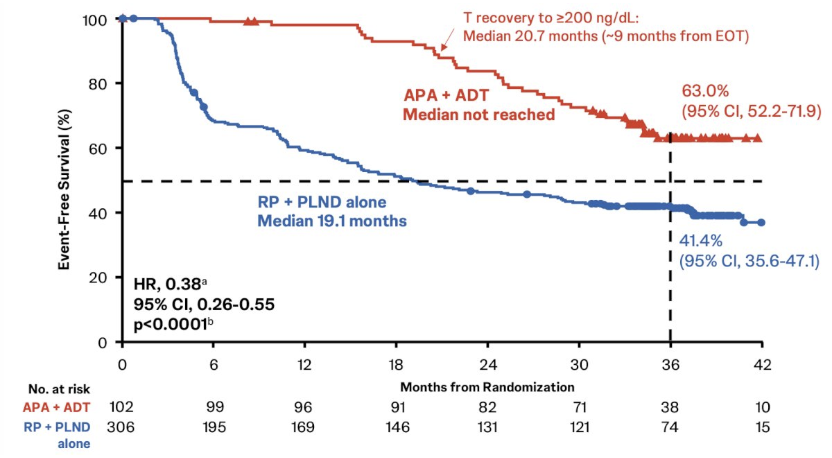
① PROTEUS substudy: perioperative apalutamide plus ADT improves event-free survival before RP
② Non-BRCA2 HRR gene alterations show divergent survival in mCRPC cohort
Today's urology Top 5, Nov 5: https://t.co/UQYtlKusVz
🔬 Do clinical trials truly represent the patients we treat every day?
Excited to share the latest publication developed within the PIONEER+ EAU UroEvidenceHub initiative!
📊 Using real-world data from 32,585 patients with newly diagnosed metastatic hormone-sensitive prostate cancer (mHSPC), we assessed the applicability of 12 landmark randomized controlled trials.
🔎 Key findings:
Up to 55% of real-world patients would have been ineligible for individual pivotal trials.
55–60% met at least one exclusion criterion from the trials evaluated.
Anemia, heart failure, and renal impairment were among the most frequent reasons for exclusion.
Importantly, a substantial proportion of patients receiving trial-tested therapies in routine practice would not have qualified for the trials supporting their use.
💡 The take-home message?
Randomized trials tell us whether treatments work under controlled conditions. Real-world evidence helps us understand how applicable those findings are to the patients sitting in front of us.
We need more inclusive clinical trials, better integration of real-world evidence, and treatment decisions that reflect patient complexity not just disease characteristics.
@GGandaglia@Sevans_axelsson@NICOLETTIRosse1@dr_rajwa@poolik@Uroweb
#ProstateCancer #RealWorldEvidence #PIONEERplus #mHSPC
https://t.co/jvvjeY4qFy
🧠 ¿Puede la IA mejorar los resultados del trasplante renal? @JGomezRivas participa en una revisión publicada en Current Urology sobre el potencial del machine learning para predecir complicaciones, detectar el rechazo y personalizar tratamientos.
🔗 https://t.co/0aLcGPls0p
🔬 What are the key bladder cancer findings from ESMO 2026?
Our latest round-up explores five abstracts spanning muscle-invasive and non-muscle-invasive bladder cancer, with new data on perioperative treatment combinations, circulating tumor DNA (ctDNA), and bladder-preserving strategies.
Discover how these findings could inform treatment approaches, the potential role of emerging biomarkers, and the questions that remain for future research.
🔎 Read the full round-up: https://t.co/DYIQYouLPJ
📍 Explore all our ESMO 2026 coverage: https://t.co/gOYpA2PHhC
@JGomezRivas
#ESMO26 #BladderCancer #Oncology
🚨 FDA Approved Talazoparib Plus Enzalutamide for HRR-Mutated Metastatic Castration-Sensitive Prostate Cancer
On October 26, 2026, the FDA approved talazoparib plus enzalutamide for adults with HRR gene-mutated metastatic androgen pathway modulation-naïve or -sensitive prostate cancer, based on results from the Phase III TALAPRO-3 trial.
Key findings:
▫️ Median rPFS: Not reached with talazoparib plus enzalutamide vs 45.8 months with placebo plus enzalutamide (HR 0.48; 95% CI 0.36–0.65; p<0.0001).
▫️ Overall survival: Data remained immature.
▫️ ESMO 2026: Arun A. Azad presented a separate TALAPRO-3 biomarker analysis (2219RO). Among patients ctDNA-positive at baseline, conversion to ctDNA-negative at Week 5 occurred in 82.1% vs 68.2% of evaluable patients, respectively. Early ctDNA changes were associated with rPFS.
Takeaway: This approval expands treatment options for patients with HRR-mutated metastatic prostate cancer in the androgen pathway modulation-naïve or -sensitive setting, supported by a statistically significant rPFS benefit. Further follow-up is needed to establish the effect on overall survival.
@US_FDA@oncodaily@AzadOncology@neerajaiims@quimmateo@nealshore
https://t.co/WebDI6FAUs
#FDA #ProstateCancer #TALAPRO3 #ESMO26