autonomous robot driving through the field at night. no chemicals. no pesticides. just UV light killing pathogens and pests while everyone sleeps. this is @tricrobotics.
this is what chemical-free pest control looks like at scale.
What’s unfolding in Iran may be the most consequential and underreported story in the world. Free elections there won’t just be a human rights victory. The fall of the Ayatollahs will release tens of millions of people, who come from one of the most creative civilizations in history. Iranian culture has shaped art, science and innovation for centuries. Suppressing it hurts not just Iranians, but humanity as a whole.
Most early stage founders I know are barely hanging on.
No sleep. No social life. Constant anxiety/stress. massive doubt. Incredible lows.
Don't get tricked by social media posts, this path isn't for everyone.
The Slide Every Investor Wants to See...
Investors pass on great opportunities every day simply because founders fail to tell their story clearly. I've seen this happen too many times.
Here's a slide that founders can include in their pitch deck to improve clarity for investors:
1️⃣ Why This Problem?
Don't bore investors with TAM/SAM/SOM charts. Instead, show them the market opportunity & real pain point and what it costs your customers. Make it tangible.
2️⃣ Why This Solution?
Break down your solution and why you chose this specific approach. Be concrete about how you're solving the problem differently.
3️⃣ Why Now?
Markets, tech, and human behavior are constantly shifting. Show investors why your startup's moment is today, not yesterday or tomorrow.
4️⃣ Why You?
What makes you and your team uniquely positioned to win? This isn't about your resume - it's about why you're the right person to bet on.
Remember: How you communicate your startup's story reflects how you'll communicate with customers, team members, and partners. Keep it sharp, keep it clear, and own your narrative.
Any thoughts? opinion?
.
#startups #pitchdeck #founders #investors
My Fellow Countrymen,
The Islamic Republic has reached its end and is in the process of collapsing. Khamenei, like a frightened rat, has gone into hiding underground and has lost control of the situation. What has begun is irreversible. The future is bright, and together, we will pass through this sharp turn in history.
In these difficult days, my heart is with all the defenseless citizens who have been harmed and have fallen victim to Khamenei's warmongering and delusions. For years, I have tried to prevent our homeland from being consumed by the fire of war.
The end of the Islamic Republic is the end of its 46-year war against the Iranian nation.
The regime’s apparatus of repression is falling apart. All it takes now is a nationwide uprising to put an end to this nightmare once and for all.
Now is the time to rise; the time to reclaim Iran. Let us all come forward—from Bandar Abbas to Bandar Anzali, from Shiraz to Isfahan, from Tabriz to Zahedan, from Mashhad to Ahvaz, from Shahr-e Kord to Kermanshah—and bring about the end of this regime.
Do not fear the day after the fall of the Islamic Republic. Iran will not descend into civil war or instability. We have a plan for Iran’s future and its flourishing. We are prepared for the first hundred days after the fall, for the transitional period, and for the establishment of a national and democratic government—by the Iranian people and for the Iranian people.
To the military, law enforcement, security forces, and state employees—many of whom have been sending me messages in recent days—I say: Do not stand against the Iranian people for the sake of a regime whose fall has begun and is inevitable. Do not sacrifice yourselves for a decaying regime. By standing with the people, you can save your lives. Play a historic role in the transition from the Islamic Republic, and take part in building the future of Iran.
A free and flourishing Iran lies ahead of us. May we be together soon.
Long live Iran!
Long live the Iranian nation!
we're investing $30M over the next 30 days 🚀
I'll be co-hosting our new program kicking off in San Francisco, starting January 2025, alongside folks from the a16z SPEEDRUN team -- with speakers, personalized coaching, and a bunch of funding!
Applications now open. Deadline at end of month, Sep 30. And yes, we're focused on brand new startups that are just getting going.
We'll be hosting a variety of speakers and coaches, including folks like:
- Mark Pincus, cofounder of Zynga
- Spencer Rascoff, cofounder of Zillow
- Sean Rad, cofounder of Tinder
- Nikita Bier, cofounder of Gas
- Marc Andreessen and Ben Horowitz
- ... and much more
How it'll work:
- $750K Investment for each startup
- 12-week program from 01/06 to 03/21 with IRL speakers, office hours, personalized coaching, and events
- Demo Day in front of 500+ angels/investors
- Applications are open from August 26th through September 30th, 2024
- Referrals appreciated. If a referred company is selected, we’ll send you custom speedrun swag
What kinds of startups are we looking for?
- b2b/infra startups focused on AI, 3D, game engines, etc
- game studios focused on web3, VR, AI, discord, etc
- gamified/playable apps -- the next gen of Duolingo, Tinder, etc, using fun mechanics to drive engagement
- products at the intersection of gaming and health, defense, and other categories
- smart teams figuring out their next idea!
- ... and in general we're open minded!
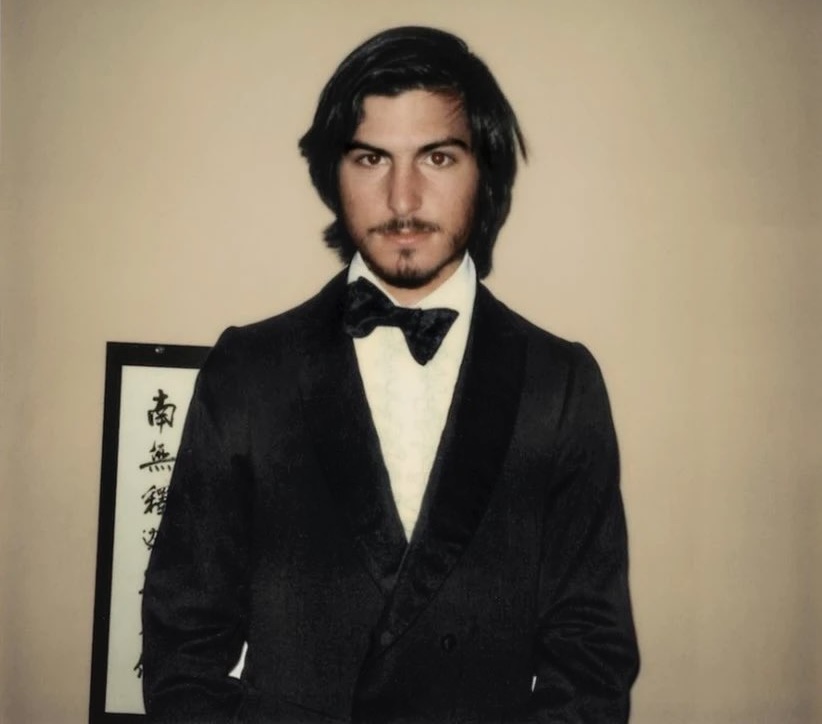
Lessons Steve Jobs wanted to pass on.
Written right before he died.
In his own words:
1. ON BUILDING A REAL COMPANY:
I hate it when people call themselves “entrepreneurs” when what they’re really trying to do is launch a startup and then sell or go public, so they can cash in and move on.
They’re unwilling to do the work it takes to build a real company, which is the hardest work in business.
That’s how you really make a contribution and add to the legacy of those who went before.
You build a company that will still stand for something a generation or two from now.
That’s what Walt Disney did, and Hewlett and Packard, and the people who built Intel.
They created a company to last, not just to make money.
That’s what I want Apple to be.
2. ON TASTE OVER MARKET RESEARCH:
Some people say, “Give the customers what they want.” But that’s not my approach.
Our job is to figure out what they’re going to want before they do.
Henry Ford once said, “If I’d asked customers what they wanted, they would have told me, ‘A faster horse!'"
People don’t know what they want until you show it to them.
That’s why I never rely on market research.
Our task is to read things that are not yet on the page.
3. ON COMBINING IDEAS FROM DIFFERENT FIELDS:
Edwin Land of Polaroid talked about the intersection of the humanities and science.
I like that intersection.
There’s something magical about that place.
There are a lot of people innovating, and that’s not the main distinction of my career.
The reason Apple resonates with people is that there’s a deep current of humanity in our innovation.
I think great artists and great engineers are similar, in that they both have a desire to express themselves.
In fact some of the best people working on the original Mac were poets and musicians on the side.
In the seventies computers became a way for people to express their creativity.
Great artists like Leonardo da Vinci and Michelangelo were also great at science.
Michelangelo knew a lot about how to quarry stone, not just how to be a sculptor.
4. ON KNOWING WHY YOUR CUSTOMERS PAY YOU:
People pay us to integrate things for them, because they don’t have the time to think about this stuff 24/7.
If you have an extreme passion for producing great products, it pushes you to be integrated, to connect your hardware and your software and content management.
You want to break new ground, so you have to do it yourself.
5. ON WHAT HAPPENS WHEN YOU SHIFT THE FOCUS FROM GREAT PRODUCTS TO MORE SALES:
I have my own theory about why decline happens at companies like IBM or Microsoft.
The company does a great job, innovates and becomes a monopoly or close to it in some field, and then the quality of the product becomes less important.
The company starts valuing the great salesmen, because they’re the ones who can move the needle on revenues, not the product engineers and designers.
So the salespeople end up running the company.
John Akers at IBM was a smart, eloquent, fantastic salesperson, but he didn’t know anything about product.
The same thing happened at Xerox.
When the sales guys run the company, the product guys don’t matter so much, and a lot of them just turn off.
6. ON GREAT PRODUCTS BEING THE FOUNDATION OF AN ENDURING COMPANY:
My passion has been to build an enduring company where people were motivated to make great products.
Everything else was secondary.
Sure, it was great to make a profit, because that was what allowed you to make great products.
But the products, not the profits, were the motivation.
Sculley flipped these priorities to where the goal was to make money.
It’s a subtle difference, but it ends up meaning everything: the people you hire, who gets promoted, what you discuss in meetings.
7. ON BEING HONEST AND DIRECT WITH YOUR TEAM:
I don’t think I run roughshod over people, but if something sucks, I tell people to their face.
It’s my job to be honest.
I know what I’m talking about, and I usually turn out to be right.
That’s the culture I tried to create.
We are brutally honest with each other, and anyone can tell me they think I am full of shit and I can tell them the same.
And we’ve had some rip-roaring arguments, where we are yelling at each other, and it’s some of the best times I’ve ever had.
I feel totally comfortable saying “Ron, that store looks like shit” in front of everyone else.
Or I might say “God, we really fucked up the engineering on this” in front of the person that’s responsible.
That’s the ante for being in the room: You’ve got to be able to be super honest.
8. ON KEEPING THE TEAM EXCELLENT
I was hard on people sometimes, probably harder than I needed to be.
I remember the time when Reed (his son) was six years old, coming home, and I had just fired somebody that day, and I imagined what it was like for that person to tell his family and his young son that he had lost his job.
It was hard.
But somebody’s got to do it.
I figured that it was always my job to make sure that the team was excellent, and if I didn’t do it, nobody was going to do it.
9. ON TAKING ADVANTAGE OF THE GREAT WORK THAT WAS CREATED BEFORE YOU:
What drove me?
I think most creative people want to express appreciation for being able to take advantage of the work that’s been done by others before us.
I didn’t invent the language or mathematics I use.
I make little of my own food, none of my own clothes.
Everything I do depends on other members of our species and the shoulders that we stand on.
And a lot of us want to contribute something back to our species and to add something to the flow.
It’s about trying to express something in the only way that most of us know how.
We try to use the talents we do have to express our deep feelings, to show our appreciation of all the contributions that came before us, and to add something to that flow.
That’s what has driven me.
10. ON CONSTANT REFINEMENT AND PERPETUAL MOTION:
You always have to keep pushing to innovate.
Dylan could have sung protest songs forever and probably made a lot of money, but he didn’t.
He had to move on, and when he did, by going electric in 1965, he alienated a lot of people.
His 1966 Europe tour was his greatest. He would come on and do a set of acoustic guitar, and the audiences loved him.
Then he brought out what became The Band, and they would all do an electric set, and the audience sometimes booed.
There was one point where he was about to sing “Like a Rolling Stone” and someone from the audience yells “Judas!”
And Dylan then says, “Play it fucking loud!”
And they did. The Beatles were the same way.
They kept evolving, moving, refining their art.
That’s what I’ve always tried to do—keep moving. Otherwise, as Dylan says, if you’re not busy being born, you’re busy dying.
Excited to share that served as a #BlackAmbition#ExpertEvaluator for the 2024 Prize Competition! 🚀
Founded by Pharrell Williams, @BlackAmbitionpz provides mentorship and access to capital for early-stage startups founded by Black, Hispanic, and HBCU affiliated entrepreneurs.
New Jersey has a long heritage of #innovation which includes Edison, Einstein + Bell Labs.
The #INNOVATE100 shines light on the people that make NJ a robust hub for Tech, Healthcare, Life Sciences + countless other sectors.
Let's honor them! @GovMurphy
https://t.co/a3ippL3svy
Founders who are fundraising pre-seed rounds, we are no longer in 2021.
Either you fall into 2 groups
1. Repeat Founder or have high momentum/hype: Rounds get done in ~2 weeks with 30+ meetings
2. Good team with an interesting idea but early on traction: Rounds can take 2-3 months with 200+ meetings
This is a major shift from 2021, and this reality hasn't fully sunk in yet. We see Founders who are not mentally prepared for the heavy toll. My advice is to raise a smaller round and close quickly. A few months of fundraising will drastically reduce growth & inhibit product momentum.
New Jersey has a long heritage of #innovation which includes Edison, Einstein + Bell Labs.
The #INNOVATE100 shines light on the people that make NJ a robust hub for Tech, Healthcare, Life Sciences + countless other sectors.
Let's honor them! @GovMurphy
https://t.co/a3ippL3svy
Founders -- now more than ever it's critical to really vet your lead investor in addition to their firm.
In the past 12 months I've had 3 portfolio companies get orphaned by Partners leaving their firms (one retired and two went to operating roles).
Not only is this more work for founders to re-establish a relationship with a new Partner in the firm, but given that they didn't initially lead the investment, they're not close enough to have the same level of care as the initial lead investor. This makes securing follow-on financing from the firm tougher.
So founders, in addition to doing reference checks on the firm and even on the Partner as a board member, you should have a very direct conversation with them before potentially leading your round.
Get a coffee or drink with them 1:1 and ask them about their plans for the next 5-10 years, try to dig into firm dynamics with them, and make them commit to you that they'll be with you for the long haul before leading your raise.
While of course unexpected things can happen both personally and professionally, establishing this open line of communication pre-investment can hopefully help you as a founder go into a raise with your eyes wide open about what you can expect from this Partner.
@gshewakr@mahaniok 100%. This is often insincere way of saying "No, I have no real interest unless you land a name lead who I want to sit next to on the cap table." Reserving the right to say no again later.
Entr can counter by asking if diligence is complete, what the round should look like, etc.