“No he vuelto para que ella me cuide. He vuelto porque desde que murió mi padre llevaba casi un año cenando sola”.
Se hizo bastante silencio.
Mi amigo tenía su piso.
Su trabajo.
Y una vida perfectamente montada.
Pero empezó a notar que su madre inventaba cualquier excusa para que fuera a verla.
Que si había que cambiar una bombilla.
Que si el móvil hacía algo raro.
Que si había preparado demasiada comida.
Hasta que entendió que casi nunca necesitaba arreglar nada.
Necesitaba compañía.
Así que alquiló su piso y volvió temporalmente a la habitación en la que había dormido de adolescente.
El de la mesa le dijo:
“Bueno, pero también tendrás que hacer tu vida”.
Y él respondió:
“Claro. Precisamente por eso. Ella también tiene una, y ahora se le ha quedado demasiado vacía”.
Aquella frase me tocó.
Porque nos pasamos media vida celebrando que conseguimos independizarnos de nuestros padres.
Y quizá llega una edad en la que la pregunta deja de ser cuánto los necesitamos nosotros.
Y empieza a ser cuánto nos necesitan ellos.
Desde fuera puedes ver a un hombre de 42 años que ha vuelto a vivir con su madre.
Desde dentro quizá solo hay un hijo intentando conseguir que una mujer que ha compartido la mesa con alguien durante 45 años no tenga que acostumbrarse tan rápido a cenar sola.
Diamond's book "Collapse" should be required reading at all colleges and universities. One terrific example and reason for not abandoning a humanities "classic books" course. I immediately followed "theleahfiles" because of this post. Prof Peter Arenella, UCLA Law, Emeritus
They raped her for hours and not a single one of them was expelled from @Cornell despite the school fully being aware of what took place. Their only punishment was to write an essay. That girl had her life destroyed by these men and this was the “justice” she received. None of them were charged or convicted.
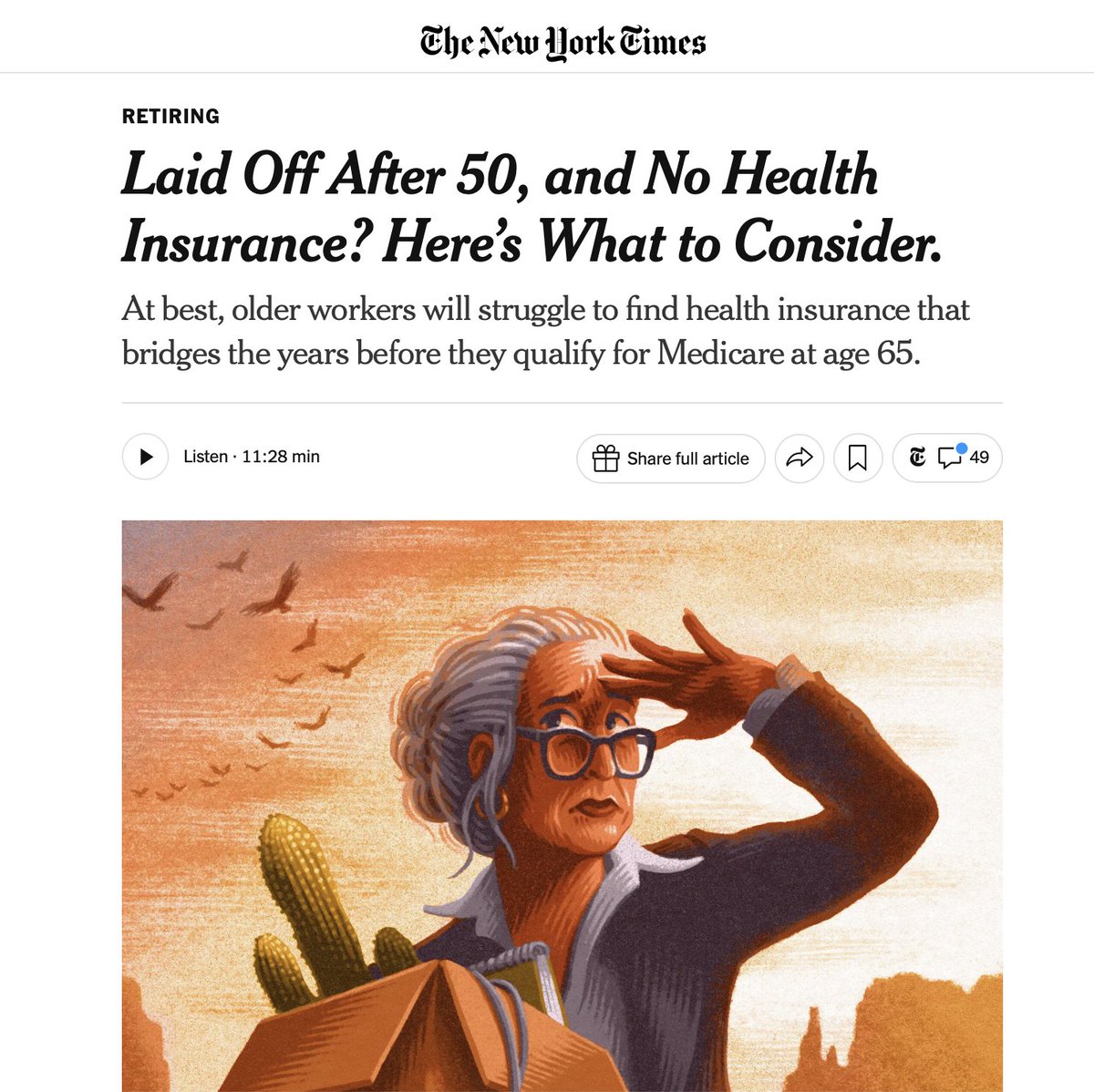
There is something so unbelievably bleak about an article that calmly walks readers through how to navigate being laid off after 50, losing your health insurance, and somehow surviving the years until Medicare. What a broken country.
Jensen Huang told CBS News that AI executives like Dario Amodei and Sam Altman promote doomsday scenarios to escape existing legal liabilities. Huang said the public should read between the lines: AI developers aren’t asking for stricter oversight. They’re lobbying to be exempt from existing laws covering product liability, enforcement of contracts and unauthorised access.
I made the same point when the first security incident was reported.
Jensen said that existing laws already cover computer misuse, damage caused by software and system failures. Promoting fear of existential threats is a deliberate public relations tactic because it helps companies replace corporate liability with laws written specifically for AI and approved by governments. Those laws protect developers from responsibility when their systems fail or cause harm.
Politicians reinforce this protection by invoking competition between countries. Ted Cruz uses the AI race against China to excuse harms before they happen, saying that regulatory delays will leave the United States behind its foreign rivals.
I described this as giving tech companies a get out of jail free card for every harm they cause and every law they break in the name of a so-called race against China.
Cruz said if there are going to be killer robots, he wants American killer robots. That treats the prospect of harm as acceptable provided America produces the technology first. By presenting AI development as an urgent national security priority, politicians give tech companies permission to bypass safety standards, disregard environmental damage and avoid legal accountability.
Huang’s statements deserve scepticism because he has his own commercial interests. However, his assessment of executives’ motives is accurate. Tech developers and politicians manufacture fears of existential threats and competition over national security to replace normal legal liability with specially written regulations that protect their power.
@FPWellman China doesn’t need the data centers (which are based on 1980’s technology). They have upgraded so the real question is why corporations here have not?