First - this is more my area of expertise - it is frankly pretty extreme to claim that theoretical arguments can do anything convincing on this issue. The theoretical channels for government investment to be complementary to private investment are so ample that any argument to the contrary could not possibly stand on its own. More on that at the end.
The well-identified empirical evidence lines up against Bryan's view pretty decisively.
The strongest quasi‑experimental studies all show that public R&D dollars crowd in private effort.
Regression‑discontinuity at NIH paylines finds a US$10 m grant shock yields about three extra corporate patents with no loss of business R&D [1]. Shift‑share instruments linking post‑9/11 defense budgets to industry exposure show every public dollar induces 40‑60 cents of additional private R&D and raises total‑factor productivity [2]. Event‑study evidence from sudden university‑level cuts reverses these gains: publications fall 15 % and VC‑backed start‑ups 30 % [3]. A richer SR&ED tax credit for Canadian SMEs boosts their R&D by 17 % and spills over into patent citations [4]. Scientist‑level NIH lotteries confirm grants lift later publications and citations by roughly a quarter [5]. Across designs and contexts, the sign is always positive and the magnitudes large—directly contradicting claims of systematic crowd‑out.
What's wrong with your evidence? Kealey‑type papers err in both identification and theory. Their headline correlations use aggregate time‑series where governments boost subsidies precisely when private investment slumps, creating spurious negative signs [6,7]. Damrich, Kealey & Ricketts merely embed those raw aggregates in a stylised contribution‑good model that assumes knowledge is fully appropriable and ignores spillovers, so any public share mechanically lowers measured productivity [8]. Once exogenous variation is isolated—as in the five studies above—the relationship flips, and the omitted spillovers emerge as large and positive. Descriptive regressions that confound cause and effect cannot overturn the causal evidence that well‑designed public funding unlocks socially valuable, privately under‑supplied innovation.
There are SO MANY ways of understanding theoretically why the facts would be like this. Romer’s endogenous‑growth framework treats ideas as non‑rival but only partially excludable, so inventors capture just a slice of their social surplus [10], while Aghion‑Howitt’s creative‑destruction model adds business‑stealing, further depressing private incentives [11]. Jones‑Williams calibrate spillovers, duplication and congestion and still find laissez‑faire R&D at barely a third of the optimum [12]. Grossman‑Helpman’s quality‑ladder model layers cross‑sectoral input‑output spillovers, another benefit absent from Caplan’s crowd‑out narrative [13]. Liang & Mu show that when research lines are complements, decentralized scientists cluster on topics that leave high‑return yet neglected areas that only public funding can unlock [14].
[1] @pierre_azoulay , Graff Zivin, J., Li, D. & Sampat, B. (2019) ‘Public R&D and Private Patenting: Evidence from NIH Funding’, Review of Economic Studies 86(1): 117‑152.|
[2] Moretti, E., Steinwender, C. & Van Reenen, J. (2024) ‘The Economic Spillovers of Defence Research’, Review of Economics & Statistics 106(2): 235‑256.
[3] Babina, T., He, J., Howell, S. et al. (2023) ‘Cutting the Innovation Engine’, Quarterly Journal of Economics 138(4): 2201‑2260.
[4] Agrawal, A., Rosell, C. & Simcoe, T. (2020) ‘Tax Credits and Small‑Firm R&D: Evidence from Canada’, American Economic Journal: Economic Policy 12(3): 1‑30.
[5] Jacob, B. & Lefgren, L. (2011) ‘The Impact of Research Funding on Scientific Output’, Journal of Public Economics 95(9‑10): 1168‑1177.
[6] Kealey, T. (1996) The Economic Laws of Scientific Research. Springer.
[7] Kealey, T. & Ricketts, M. (2014) ‘Modelling Science as a Contribution Good’, Research Policy 43(6): 1014‑1024.
[8] Damrich, S., Kealey, T. & Ricketts, M. (2022) ‘Crowding In and Crowding Out within a Contribution‑Good Model of Research’, Research Policy 51(1): 104400.
[10] Romer, P. M. (1990) ‘Endogenous Technological Change’, Journal of Political Economy 98(5): S71‑S102.
[11] Aghion, P. & Howitt, P. (1992) ‘A Model of Growth through Creative Destruction’, Econometrica 60(2): 323‑351.
[12] Jones, C. I. & Williams, J. C. (1998) ‘Measuring the Social Return to R&D’, Quarterly Journal of Economics 113(4): 1119‑1135.
[13] Grossman, G. M. & Helpman, E. (1991) ‘Quality Ladders in the Theory of Growth’, Journal of Political Economy 99(3): 433‑449.
[14] [9] Liang, J. & Mu, X. (2020) ‘Complementary Information and Learning Traps’, Quarterly Journal of Economics 135(4): 1929‑1984.
@Jabaluck Largely agree with this interpretation of the figure and Mendelian randomization (which is related to how they got their causal estimates) has a pretty good track record. But note that IQ isn't one of the traits used and that most of the effects are quite small.
@EM_RESUS MS-II learner. I see a wide complex tachycardia ~120bpm. Left axis deviation with prolonged R waves - LBBB. ST elevations in V3-V6 look concerning but they are discordant, don't meet modified sgarbossa. Concordant ST elevations in leads I and aVL most concerning for Lateral MI.
@VPrasadMDMPH I'm very surprised to hear this is your view. The historical evidence is that before the FDA required efficacy testing RCTs were extremely rare and most drugs went to market with no idea whether they worked. At least in the current equilibrium there are trials to interpret.
SIMULTANEOUS PUBLICATION ALERT!🚨
As I mentioned in my talk, a comprehensive review answering most frequently asked questions on surrogate endpoints in oncology has been simultaneously published in @eClinicalMed today with our @myESMO MCBS session.
OPEN ACCESS. https://t.co/EKg5r55IK6
Thanks to all my coauthors for putting a lot of effort into this and to @Claudia_Editor for inviting this review and getting it published simultaneously with our MCBS session.
What if I told you that I co-founded a startup in 1987 that obtained world-wide rights to GLP1 as a metabolic Rx, collaborated with Pfizer to show key activities, & abandoned it in 1990 when Pfizer lost interest? I tell the previously untold tale in an open access paper now up in Perspectives in Biology and Medicine. Enjoy! https://t.co/NQ2odsdry3
@VincentRK @AaronGoodman33 As a student I hear this all the time, but don't really understand. What has changed? Why have the trials gotten more expensive on a per patient basis?
@Stones__@NephJC Or until the authors - or someone else - publishes and validates an alternative model for rare diseases using the data from this registry! New data is always cause for updating our models I think 🧐.
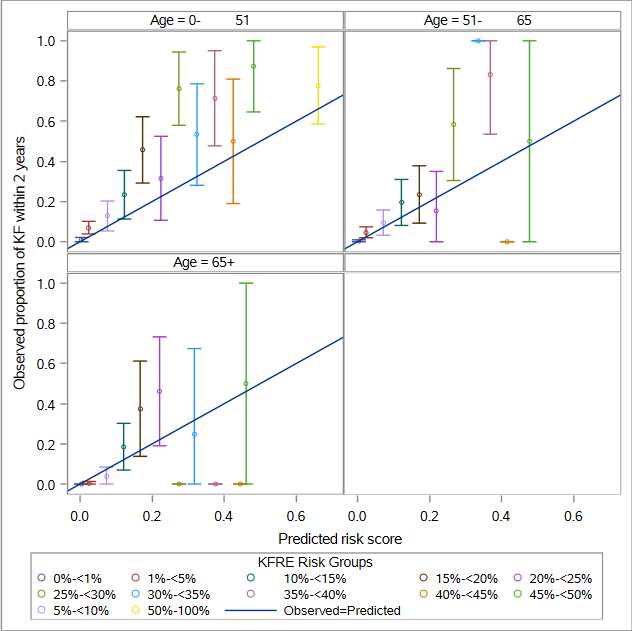
@Stones__@NephJC Well here are the graphs for each age in the supplement I think the overall pattern still holds even if the p-value wasn't significant. Beware the p-value of a subgroup analysis! I would have liked to have seen more detail in the methods and more calibration parameters. #nephjc
@AnnaGaddy @NephJC And opens the door for so much new research too. The database can be a source for prediction models, power calculations, and an exemplar for other similar databases. If there's anyone in the chat looking for an enterprising medical student for such a project 👀 #nephjc
@hswapnil@NephJC We can see this in the comparing the number of death events in table 3 as well I bet the double the number of deaths in the control cohort aren't all from CKD. #nephjc
@kidney_boy@NephJC And by having those two points estimated they can estimate the GFR slope during trials for each of these diseases. This should lead to great power calculations. That means costs of trials can be more accurately estimated. Funders: