Why do ecological systems typically develop from fast- to slow-growing species? Why do species tend to appear one by one instead of all at once? We found that this developmental path is most likely to emerge as species minimize environmental resistance to enhance their survival.
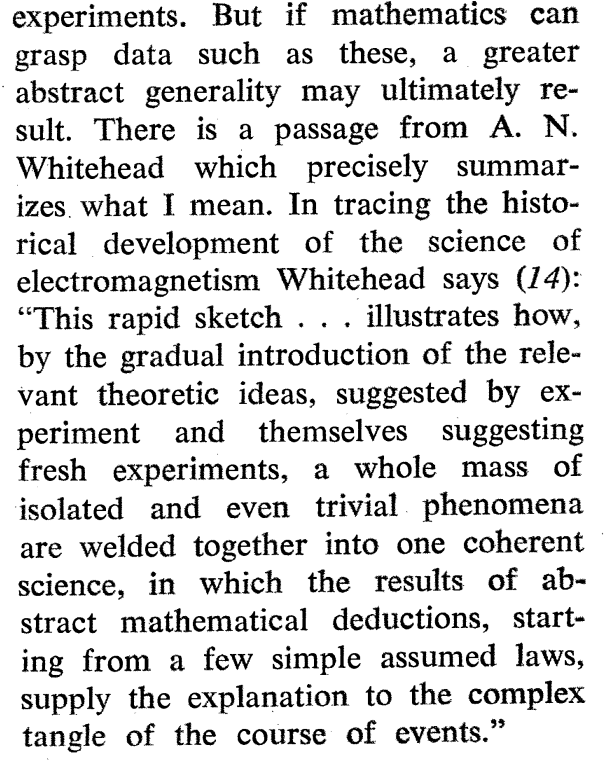
"Equilibria annihilate history. It is the nature of an equilibrium point that all paths [] lead to it (at least locally), so that the particular history of change is irrelevant and, once the system is at equilibrium, there is no trace of historical information"
Hey #dataviz tweeters, I've noticed a lot of really pleasing circle-pack-along-an-axis plots lately, especially in interactive news or "pop" data vis.
Do we have a good way to replicate these in #RStats or #Shiny? ggbeeswarm gets close, but not quite
#datavisualization#R
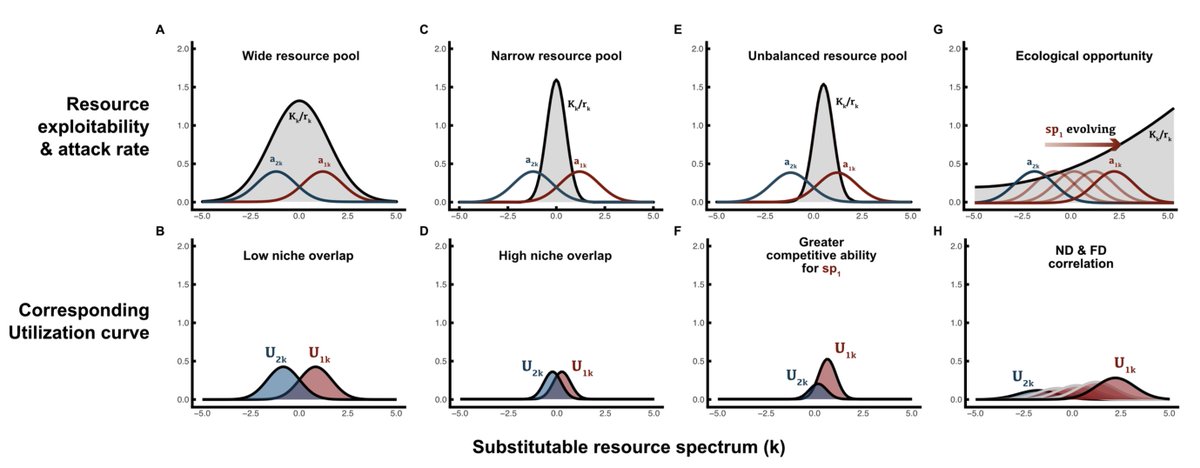
"we better clarify what competition is fundamentally: [...] how rates of consumption affect the amount of time a renewable resource is made unavailable to future consumers" 💯
Excited to share a new preprint w/ @gerlame!
Here we demystify MacArthur’s consumer resource model and share insights its provided to our mechanistic understanding and biological intuition of how competition and coexistence operate.
https://t.co/hNEVuKUtmQ
R.I.P. Daniel Dennett 1942-2024
"There is no such thing as philosophy-free science; there is only science whose philosophical baggage is taken on board without examination."
—Daniel Dennett, 1995
The path of complexity: It's been a long journey but the presses are now running to offer a small curated venue for weird papers that could scare disciplinary journals.
https://t.co/nEGdplXnx7
Very excited to share work for my first PhD chapter on variation in leaf carbon economics, energy balance and heat tolerance traits in a common garden!
https://t.co/WTkuXQ3T7r
We're running some fun experiments and are curious what your expectations are:
How many generations in the past do you think yeast "remember" environmental change?
"If an event results from the joint operation of a number of causative chains, and if these causes “interact” [...], it becomes conceptually impossible to assign quantitative values to the causes of that individual event."
Levins & Lewontin, 'The Dialectical Biologist' Ch 4







![DrYohanJohn's tweet photo. "If an event results from the joint operation of a number of causative chains, and if these causes “interact” [...], it becomes conceptually impossible to assign quantitative values to the causes of that individual event."
Levins & Lewontin, 'The Dialectical Biologist' Ch 4 https://t.co/c20ZnWyzbz](https://pbs.twimg.com/media/F2tde8pbgAAN_H0.png)