‼️Multimodal T2I models generate "reasoning" for image generation—but this often doesn't help produce better images! Can we fix this?
Our reward-weighted post-training enables fully automatic joint text-image generation, boosting prompt alignment and knowledge-based generation.
Work with Will Sheffield, Amy Zhang, @a_stadt, @jessyjli, and @kanishkamisra!
📄Paper: https://t.co/yuKYkywZnB
💻 Experiment code, sense-labeled dialogue stimuli, and human preference annotations: https://t.co/lc5jEeoTFT
8/8
“We’re friends”
“We’re just friends”
One tiny word can change how a conversation continues. LLMs pick up on this 👀
We show this through human-LLM comparisons, generation experiments, and mech interp methods.
1/n
Taken together, this further highlights the effect of looking at follow-up behavior of models as a result of finer-grained changes to their contextual input, in a manner that supports the study of subtle but linguistically interesting words like just and only!
7/n
‼️Multimodal T2I models generate "reasoning" for image generation—but this often doesn't help produce better images! Can we fix this?
Our reward-weighted post-training enables fully automatic joint text-image generation, boosting prompt alignment and knowledge-based generation.
Key findings:
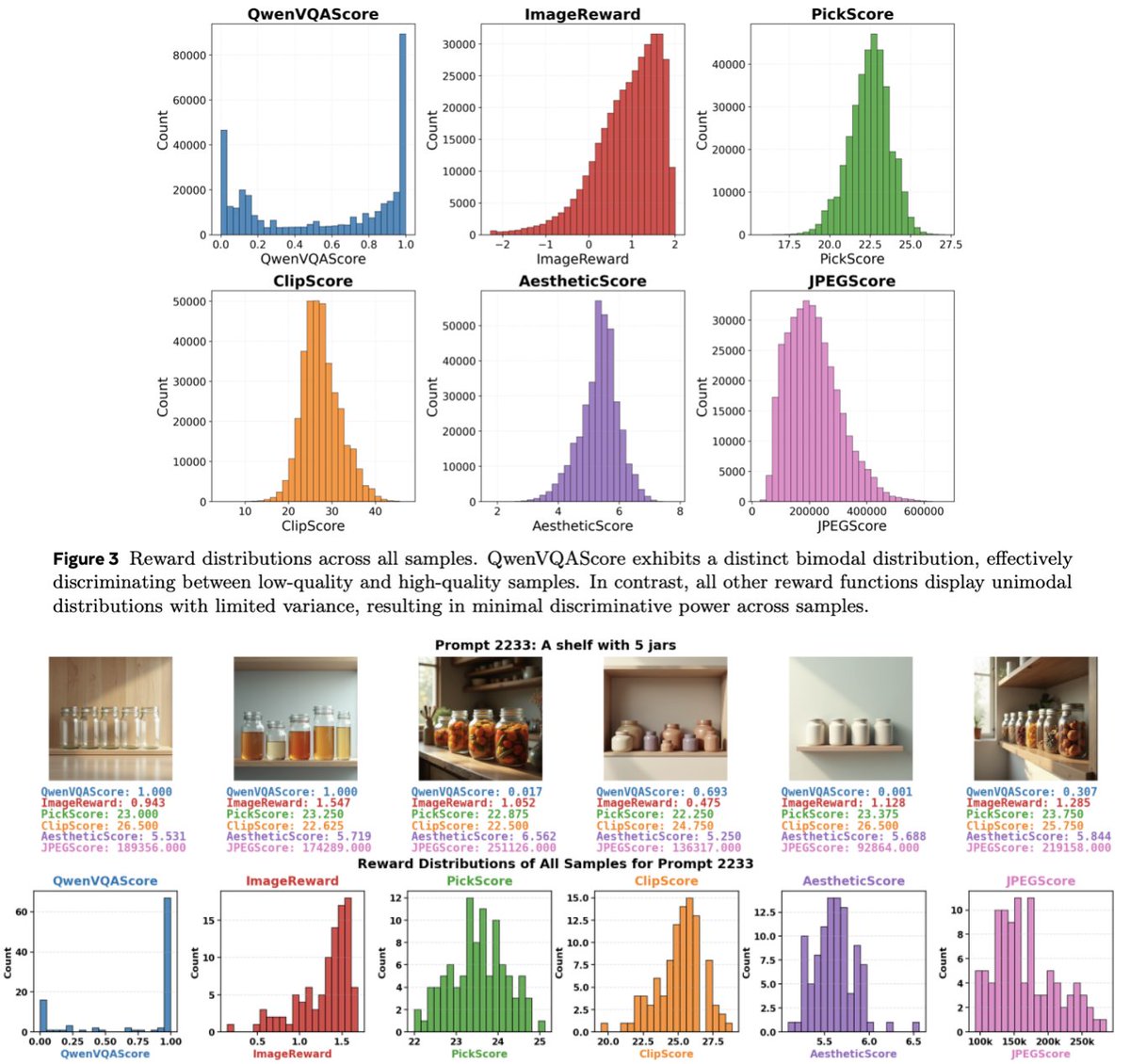
→ VQAScore (an eval metric) + Qwen2.5-VL is a better reward than existing T2I reward models
→ For training data, weakness-targeted prompts beat both general image captions and benchmark-specific prompts
→ Reward-weighting both modalities jointly is best
2/n