Human thought is thought to be systematic.
Do reasoning models have systematicity of thought?
With @LakeBrenden , we study this question in our new preprint now on arxiv.
Excited about new work from my CCN keynote (38m): https://t.co/men7qMp7Om
We often choose between Bayesian and neural net models of behavior. But what if there's a spectrum, and combining makes better predictions? Introducing BBT w @akjagadish@jiang_gy
https://t.co/9JkcvOO2mX
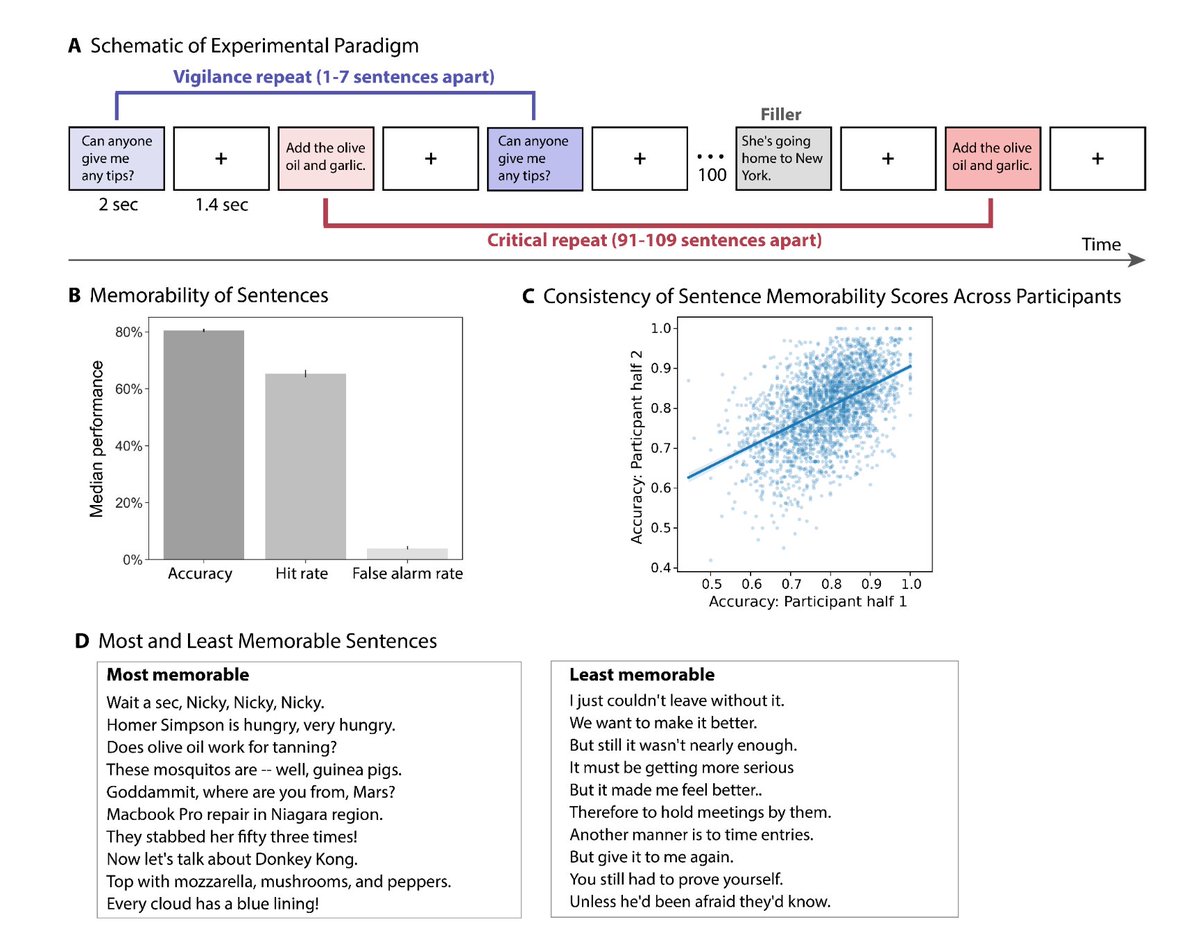
What makes some sentences more memorable than others? Our new paper gathers memorability norms for 2500 sentences using a recognition paradigm, building on past work in visual and word memorability.
@GretaTuckute@bj_mdn@ev_fedorenko
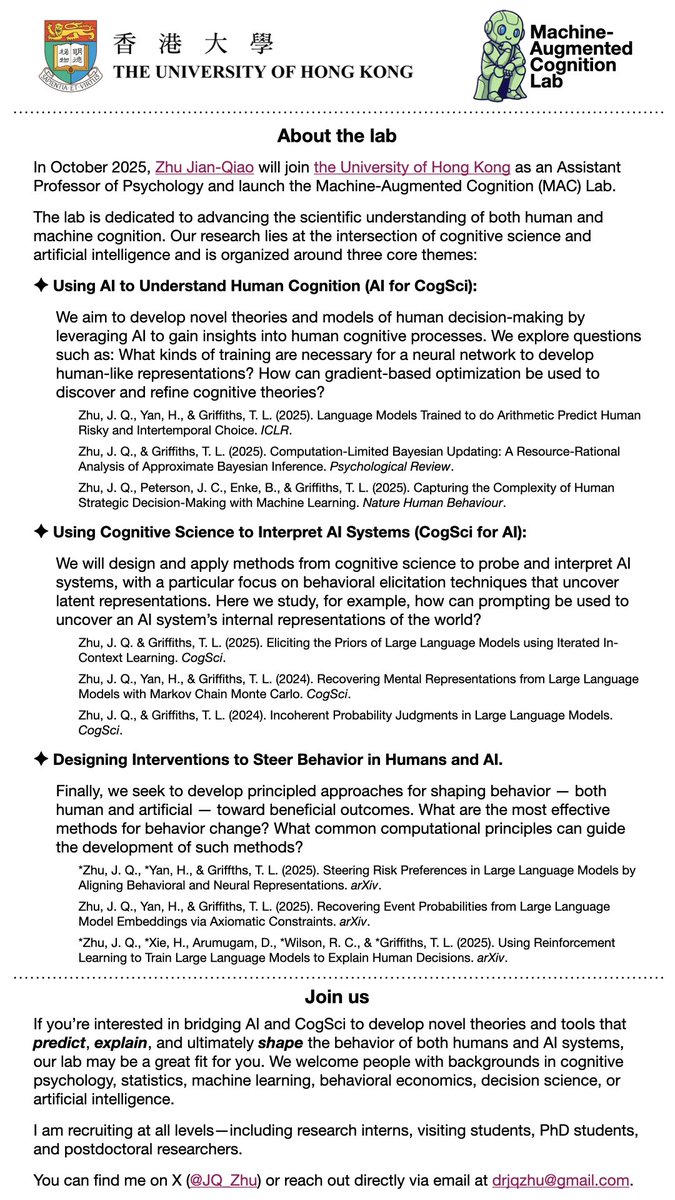
I'll be joining the University of Hong Kong (at Asia's World City) as an Assistant Professor of Psychology this October, where I’ll be starting my own lab on machine-augmented cognition.
The lab aims to bridge AI and Cognitive Science to develop new theories and tools that can predict, explain, and ultimately shape the behavior of both humans and AI systems.
I'll be recruiting at all levels (PhDs, postdocs, interns, visiting students). Please feel free to DM if you're interested in joining.
I'm joining Princeton as an Associate Professor of Computer Science and Psychology this fall! Princeton is ambitiously investing in AI and Natural & Artificial Minds, and I'm excited for my lab to contribute. Recruiting postdocs and Ph.D. students in CS and Psychology — join us!
🔆 I'm hiring! 🔆
There are two open positions:
1. Summer research position (best for master's or graduate student); focus on computational social cognition.
2. Postdoc (currently interviewing!); focus on computational social cognition and AI safety.
https://t.co/Fe3PfbTkns
I'm proud of our group's presentations at #CogSci2024 – come check them out!
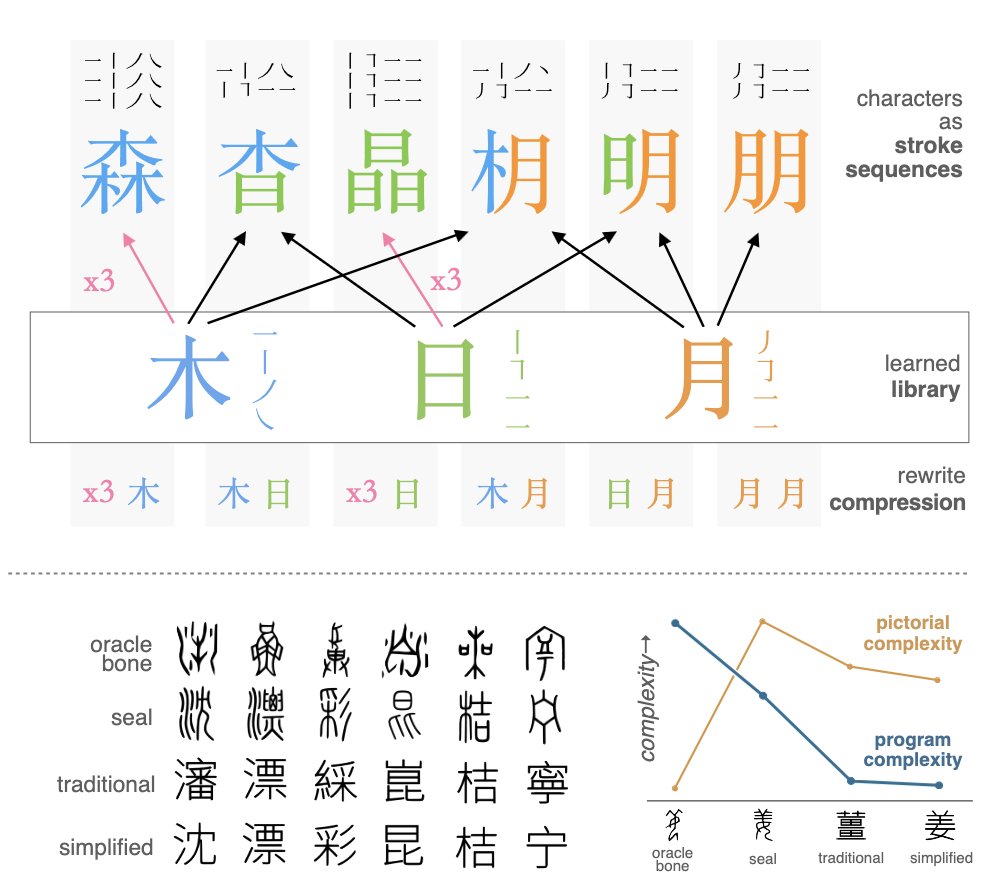
1: Today 10:30am–noon in J.F. Stall: "Finding structure in logographic writing with library learning" led by @jiang_gy. This work won the Sayan Gul award for best undergraduate student paper!
@WenhuChen happy to share a battery of multimodal few-shot reasoning tasks we designed: https://t.co/d705nfMbAZ. We studied the multimodal in-context learning problem from a word learning perspective.
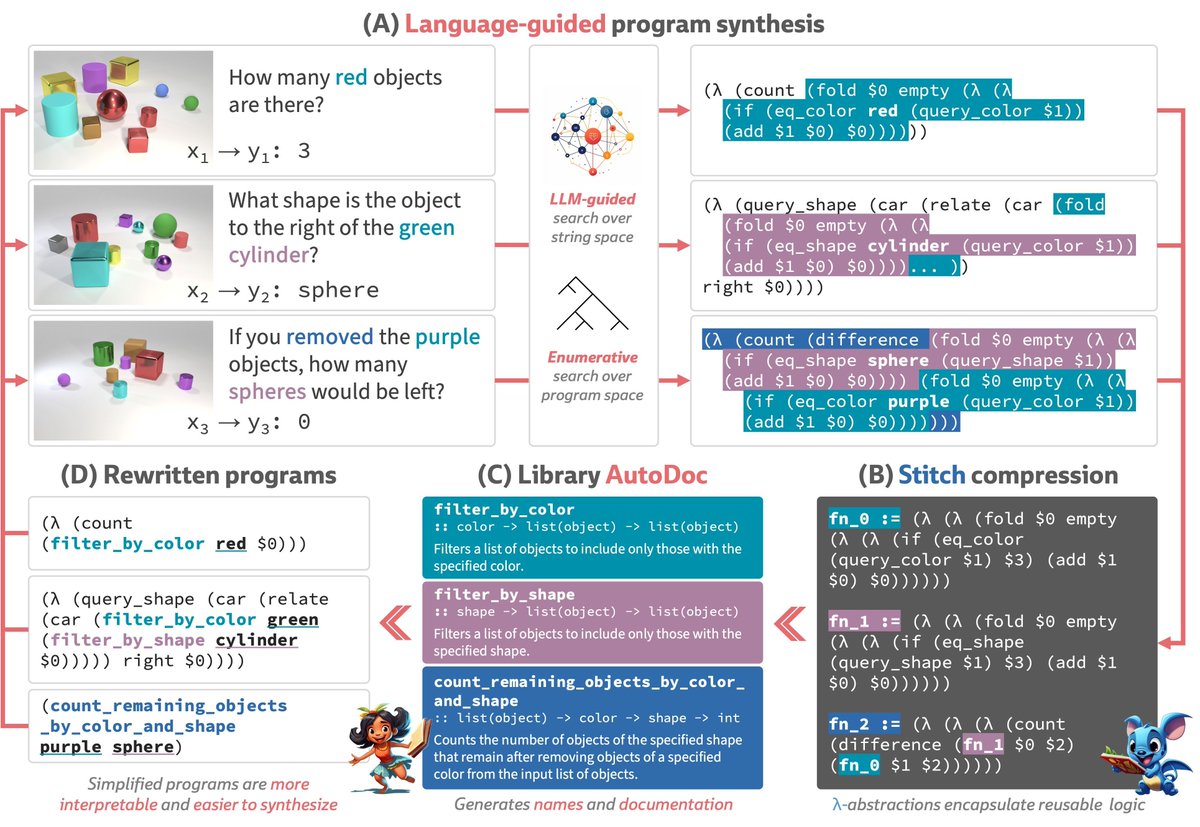
What if we equipped LLMs with cutting-edge code refactoring tools? 🤖🛠
Presenting LILO: Library Induction with Language Observations
📝 https://t.co/y0LiAMxoMq
💻 https://t.co/oBoVWrcLvi
+ Lio Wong, @mattlbowers, @theo_olausson, Muxin Liu, Josh Tenenbaum & @jacobandreas️
🧵⬇️
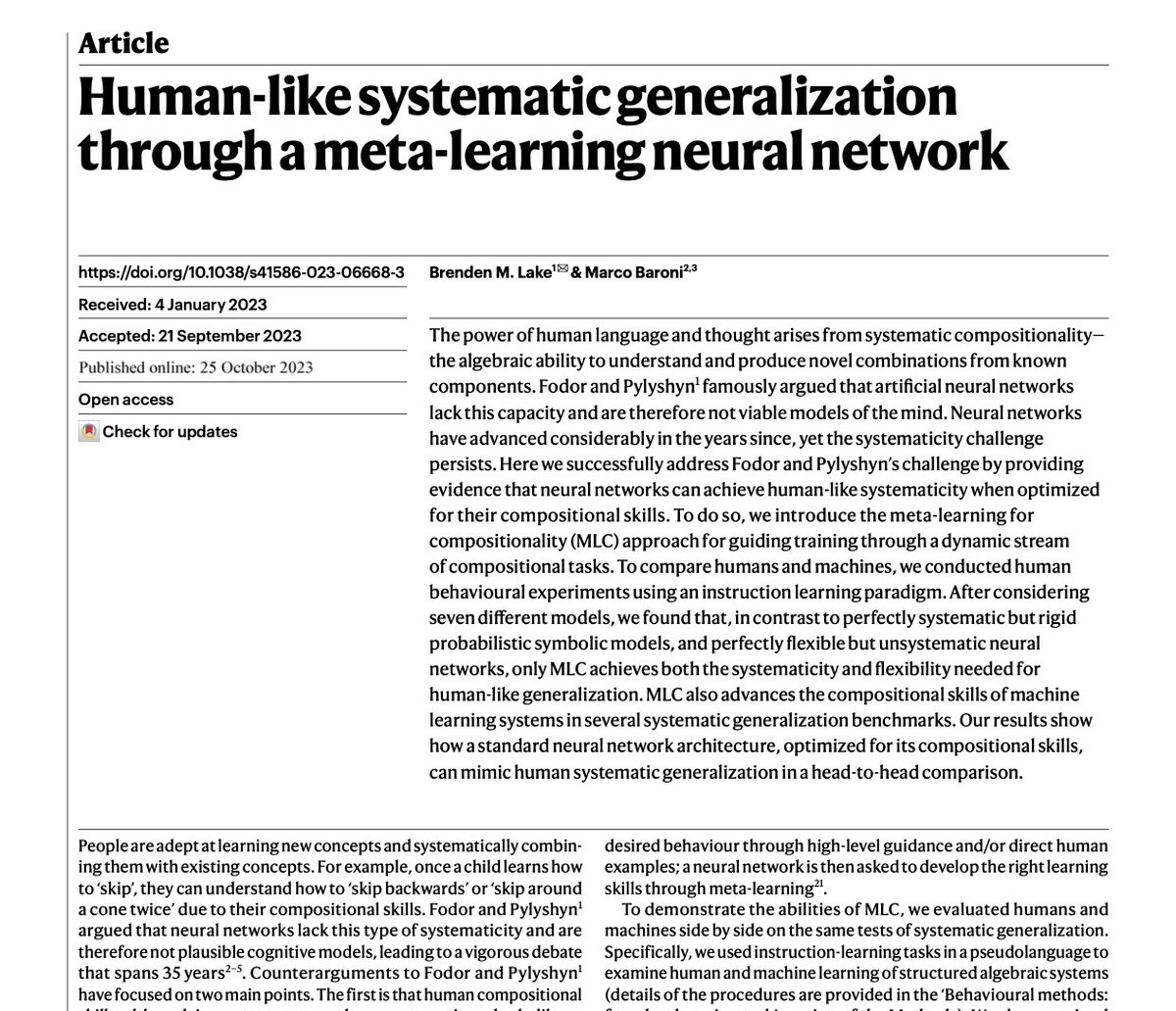
Today in Nature, we show how a standard neural net, optimized for compositional skills, can mimic human systematic generalization (SG) in a head-to-head comparison. This is the capstone of a 5 year effort with Marco Baroni to make progress on SG. (1/8) https://t.co/DJMJLEoshT
Cognitive scientists! You don’t want to miss our #CogSci2023 Workshop: “How does the mind discover useful abstractions?” https://t.co/fBWH2L3jUr Co-organized w/ the peerless @wkvong + Lio Wong + @marcelomattar!
How can we leverage a theory of linguistic meaning to build machines that think in more human-like ways?
New paper with Lio Wong, @alexanderklew, @noahdgoodman, @vmansinghka, @jacobandreas, and Josh Tenenbaum.
https://t.co/0aFsD2Ihr9
Personal update: I'll be starting in July 2024 as an Assistant Professor @UWCheritonCS and a Faculty Member @VectorInst! Looking forward to working with all the amazing folks!
Prospective students: if you are interested in NLP and/or comp. linguistics, please consider applying!
The core differences between GPT4 and 3.5 is the ability to perform complex tasks. In this post, we present a complete roadmap towards LLMs complex reasoning abilities, covering the full development stages: pretraining, SFT, RL, CoT prompting, and eval. https://t.co/1rzx02LNlx
Can a large language model be used as a "cognitive model" - meaning, a scientific artifact that helps us reason about the emergence of complex behavior and abstract representations in the human mind? My answer is YES.
Why and under what conditions? 🧵
This semester I've been teaching a seminar titled "Computational Linguistics and Cognitive Science". We've been reading a mix of cognitively-inspired evaluations of language models and papers using LMs as cognitive models. It's been fun https://t.co/5VtSiclA1P
Job alert!🚨🧠🛠️ We @cogtoolslab@Stanford@StanfordPsych are recruiting a full-time lab manager to join our team Summer/Fall 2023. More information available here: https://t.co/Fewky1FJ3N. Please share widely! 🙏
Have a look at our website😜, work about revealing counterintuitive discoveries and insights between LfI(Learning from Intuition) and LfD(Learning from Dynamics).
https://t.co/Rd9yelkKRj