Our new study of inborn error of TLR3 or MDA5 in two children with enterovirus encephalitis suggests that TLR3 and MDA5 may spatially and sequentially control anti-enterovirus immunity in CNS cells, via the maintenance of basal or virus-induced IFN-a/β or -λ levels, respectively.
Our new study of inborn error of TLR3 or MDA5 in two children with enterovirus encephalitis suggests that TLR3 and MDA5 may spatially and sequentially control anti-enterovirus immunity in CNS cells, via the maintenance of basal or virus-induced IFN-a/β or -λ levels, respectively.
Dr. Jean-Laurent Casanova (@casanova_lab) and President Rick Lifton share the latest #COVID19 findings: how misguided antibodies and specific genetic mutations may explain a significant percentage of severe and life-threatening responses to SARS-CoV-2: https://t.co/mVNfF1jAeb
We have been silent for a while because our lab and the CHGE were entirely focused on finishing 'twin papers' in @ScienceMagazine about inborn errors of type I IFN or auto-antibodies to type I IFN in nearly 15% of patients with life-threatening #COVID19 😀 https://t.co/E85pF1Kg88
We have been silent for a while because our lab and the CHGE were entirely focused on finishing 'twin papers' in @ScienceMagazine about inborn errors of type I IFN or auto-antibodies to type I IFN in nearly 15% of patients with life-threatening #COVID19 😀 https://t.co/E85pF1Kg88
Type I IFN immunoprofiling in COVID-19 patients https://t.co/Y2jdwxLZYv
Our findings highlight defect of IFN-I in COVID-19 patients and suggest recombinant IFN could be beneficial in patients especially within the first week of SARS-CoV2 infection.
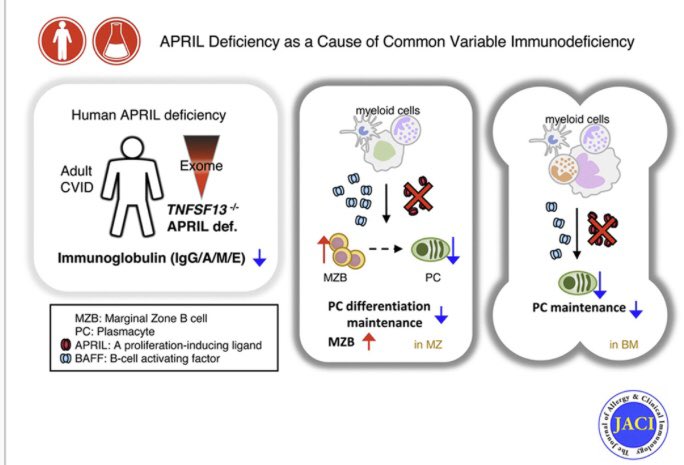
Non Covid-19 note: together with colleagues at TMDU, we identified the very first APRIL deficient patient. Our study suggests a role of APRIL in life-long plasmacyte maintenance and Ig production in humans. https://t.co/X3toRZzidq