@canvrno Feels like prompt caching is the other missing piece.
Lower token prices compared to closed model providers can be completely meaningless if caching is not reliable, transparent, and standardized.
@_bgwoodruff@drht_@timneutkens Not sure if you use this trick, but write the PID of the lock owner to the lock file. If the PID is not for a running process, it's a stale lock that can be acquired.
Makes me think we need LLM benchmarks where the models don't get to pick their best next token.
Think LLMs that are virtually tired, unconcentrated, drunk even. Can they still complete the task reliably 😁
There is still such a weird uncanny valley with even the best coding models.
Gpt-5-codex rips through changes all day for five hours. Great.
Then...
Instead of updating the various task docs with progress (like it did fine all day) it decides it needs to delete the doc and recreate it with updates (losing 90% of the doc.)
No human would ever make this mistake.
I had to restore it from git and tell it to edit the damn doc properly.
@Dan_Jeffries1 I call this LLM behavior "unreliably awesome".
Maybe the next token probability difference between an awesome token and an unreliable one is so tiny that models are on a knife edge that can flip at any time due to context nuances.
We need a benchmark with 2nd best tokens only.
@bernhardsson Will be looking at your sandbox offering in the near future.
Any plans on doing a blog post about how your infra scales with (I assume) longer startup times instead of errors if you need to provision metal to meet spiky memory demands?
Small but mighty update: Henosia AI now has tools to read the browser and server logs for the preview. This helps it debug and fix issues even faster 🚀
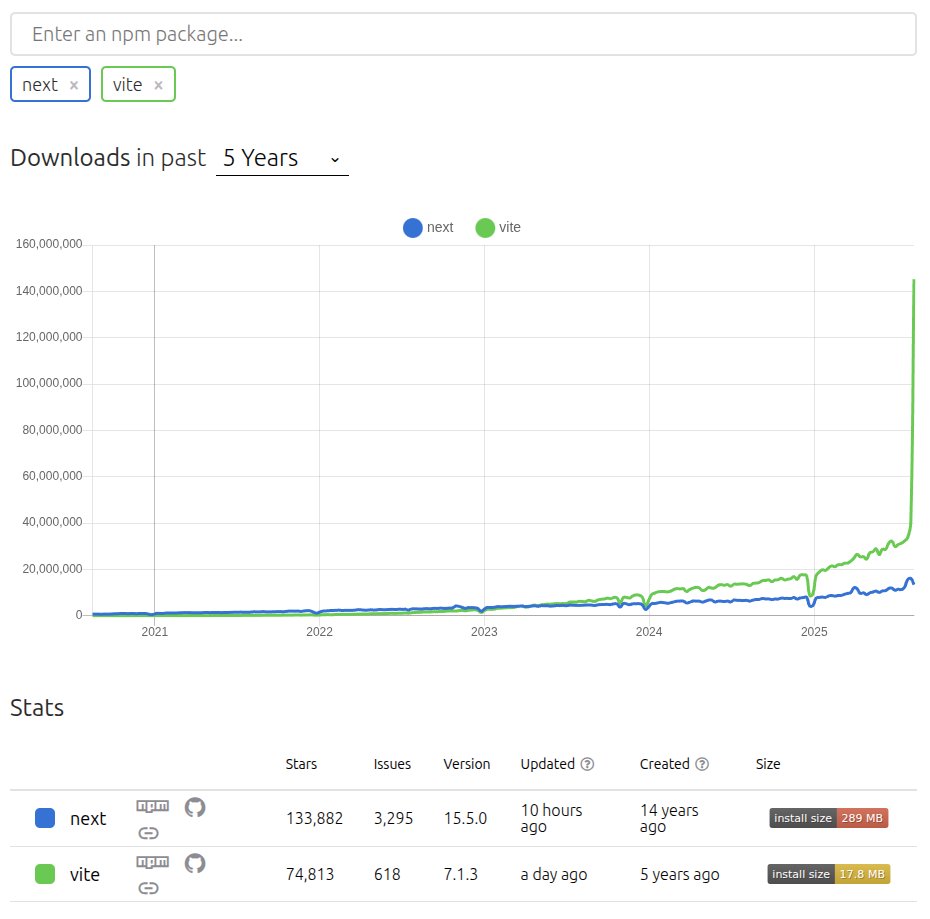
People are vibe coding websites and apps like crazy here in '25, empowered by AI.
Vite has taken most of the uptake compared to Next.js, likely due to being less resource intensive to host for the vibe coding platforms.
For now we're sticking with Next.js as our default. We've got the infrastructure to run it, and most pro teams prefer it over Vite. It's much easier to translate between prototype and production within the same web framework.
Next.js also allows our AI to quickly make back-end edits, whereas Vite projects typically involve managing Supabase edge functions remotely, outside the regular git versioning flow.
I did a survey on the most popular AI app builders, asking each to "build a simple app with their default stack". Here's what I found what they default to:
Bolt -> Vite
Replit -> Vite
Lovable -> Vite
Convex Chef -> Vite
Windsurf -> Vite
Tempo Labs -> UI requires explicit selection but defaults to Vite
v0 -> defaults to Next and supports Next only
Firebase Studio -> defaults to Next even when the prompt contains "use Vite", but can use Vite if forced to. Buggy though.
@CanadaHonk This kind of perf would be amazing for infrastructure tools instead of having to add Go to projects. I'd happily take a small subset of Node.js for IO and thread/process management if it offered these startup and memory characteristics!
@elevenlabs My main problem is knowing what instruments are called, sub genres to steer towards. Huge opportunity to make the output space explorative through UI and visualizations.
Seriously impressed with the @elevenlabs text to voice v3 model. It's incredible for voice over in marketing videos.
Also tried their music app. It made a hilarious 80s aerobics track. Still struggling with steering the music outputs. Really needs UI to edit instruments etc.
Introducing v2 of Henosia's Supabase integration:
We show the UI to connect Supabase in the chat, plus you can pick which Supabase component blocks you need for your project.
Under the hood we've also made improvements to how our agent manages the Supabase database for you.