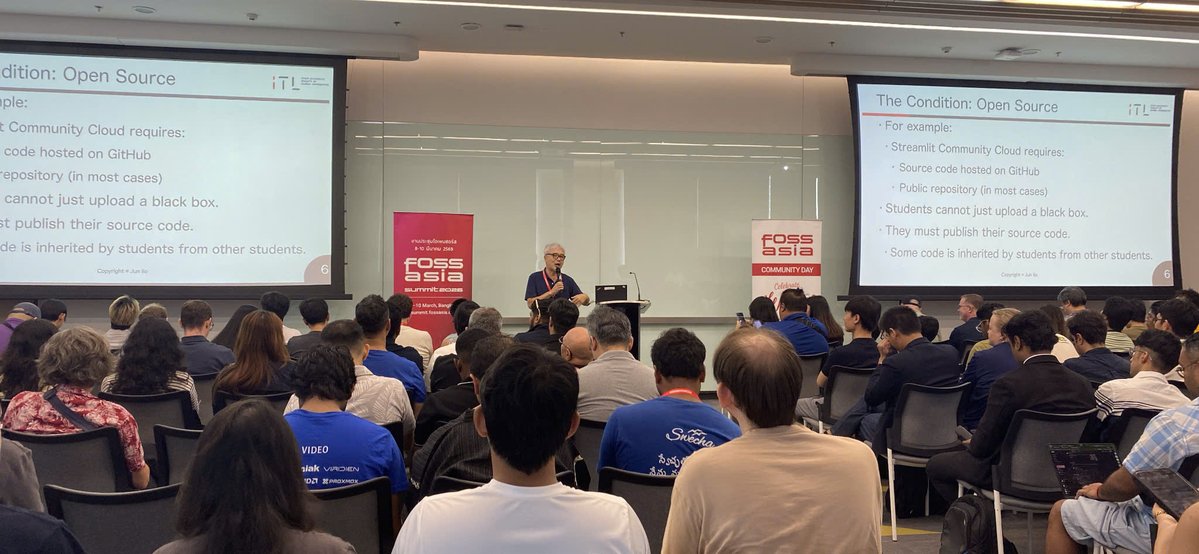
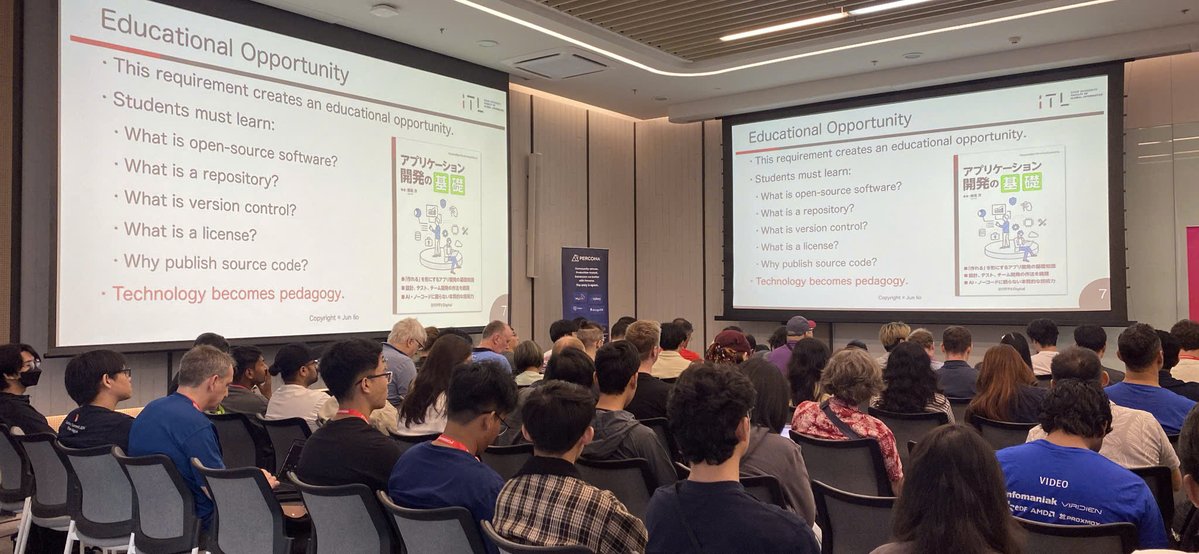
What are the first steps to reshape open-source communities with #AI?
#openEuler explores this question in this video from #OSSummit 2026 — @jimmieme_ shares our AI-powered development practices, challenges, and lessons learned.
Watch now 👇
https://t.co/ZJ3RkDgd9O
#opensource
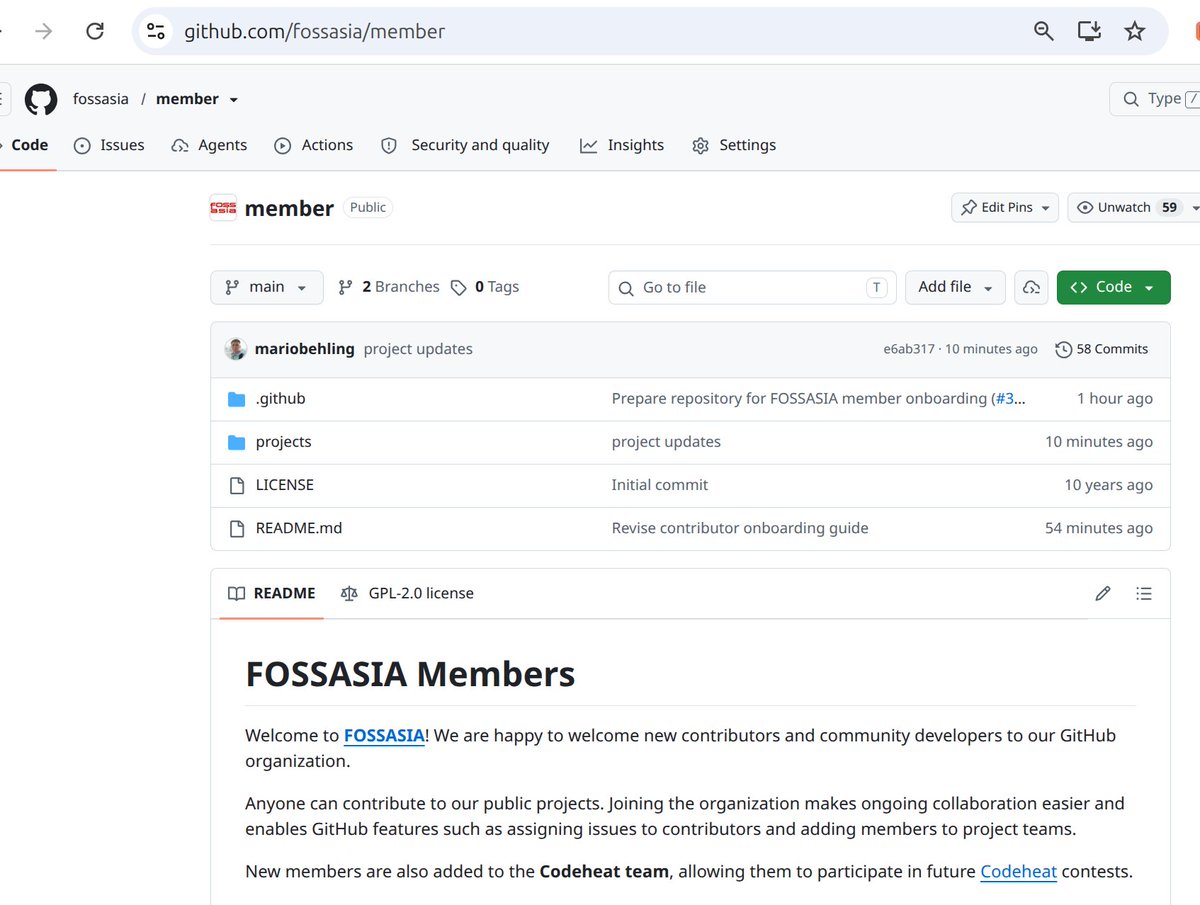
Have you contributed to #FOSSASIA before, or would you like to get involved? Join our GitHub organization and start contributing to our #opensource projects.
Follow the step-by-step onboarding guide: https://t.co/2VdZrY1M04
A bold move as TDengine evolves from an open-source time-series database into the industrial AI era. Excited to see the opportunities ahead and how far TDengine will go in this new chapter.
Without context, numbers are just numbers.
I said this earlier today during our product launch and demo on YouTube Premier. It sounds obvious until you walk into an actual plant. A sensor reads 85 degrees. Which piece of equipment? Startup mode or steady state? Which shift was running? Without answers to those questions, the reading means nothing. No AI model can fix that after the fact, no matter how good it is.
@TDengineDB was built as an AI-Native platform, not a database with AI features added afterward. The difference is that context sits with the data from day one: industrial ontology, asset-centric navigation, event frames that capture operating conditions alongside raw metrics. Because that foundation exists, the built-in agents can reason about your plant instead of just echoing dashboards.
TDengine is our commitment to bringing AI to every industrial data stream.
I walked through all of this in the demo.
Full replay: https://t.co/K9DRcUR5wv
#TDengine #IndustrialOntology
Glad to be speaking at Open Source Summit again—this time in Korea. I’m looking forward to sharing new lessons from community. #OSSummit
AI is moving fast. How should communities steer AI while preserving openness, trust, and collaboration?
https://t.co/OlsUq31p99 @sched
This is Libra’s first official public talk 🚀. I’ll be speaking at Build Better with Open Source & AI in Singapore: Git for the Agent Era: Tracking More Than the Final Commit
How do we make AI agent work reviewable and trustworthy — not just another commit?
📅 Details: https://t.co/ky1SbaxPOC
Excited to announce our next Open Source Singapore Meetup: Building Better with Open Source & AI!
We'll be joined by Lucas Eduardo Rainett, @genedna, and myself to share different perspectives on building with open source and AI.
📅 Aug 27, Singapore
🔗 https://t.co/NxVG5XD8ag
@jimmie_@codesonpaper 1️⃣ Jimmie Wang @Jimmie_ - Founder of Myfield, system engineer and open source advocate, presents "Myfield: Building Identity and Sync for Local-First Apps" - Turn Field lessons, device-owned MFID, encrypted sync and building local-first apps on Myfield.
It's amazing to see how Summer-OSPP has grown over the years, creating opportunities for students and helping so many of them grow. I'm truly grateful to have co-founded the program with @genedna in 2020, and I'm proud of what the community has built together.
This reminds me about the keynote of @maltman23 in FOSSASIA 2026 Summit. @fossasia
Call to Action: Be the Architect, Not the User
https://t.co/1rG5KywO8S
Anthropic Engineer Andrej Karpathy:
"The biggest mistake in AI right now: people are forcing agents to work instead of mastering the model first.
We made that mistake in 2016 at OpenAI. It cost us 5 years."
What Karpathy actually means:
step 1 → stop forcing your agent to do everything. Understand the model underneath first.
step 2 → demos are easy; products take a decade. Self-driving proved it. If you skip the foundation, everything breaks.
step 3 → the agent is not the product. The foundation is. Build that—and agents emerge on their own.
"You're building agents right now. You're at the forefront. Not OpenAI. Not DeepMind. You."
watch - bookmark
Can personal data have a digital home that truly belongs to its owner?
That’s the question I’m trying to answer.
I believe https://t.co/cHMeuWYCrH has a chance to make it possible.
Let’s start from here.
Turn Field: a local-first reading library with encrypted sync.
https://t.co/o2gWAllBa0
This is our first blog post explaining the vision behind Myfield.
Feedback is always welcome.
Turn Field: a local-first reading library with encrypted sync.
https://t.co/o2gWAllBa0
This is our first blog post explaining the vision behind Myfield.
Feedback is always welcome.
#BrewFS is an independent distributed filesystem for container, AI, and object-storage-heavy workloads. It combines a POSIX-like FUSE interface with pluggable transactional metadata and S3-compatible data storage.
1. Fast data path: chunked I/O, memory and SSD caches, read-ahead, writeback, and large-write coalescing.
2. Rust throughout: one modern, memory-safe implementation from FUSE and VFS to metadata and object storage.
3. Storage freedom: Redis, TiKV, etcd, PostgreSQL, or SQLite metadata with S3-compatible or local object data.
4. Operationally testable: xfstests, pjdfstest, LTP, stress-ng, fio, metadata benchmarks, fuzzing, and Docker Compose runners live in the repository.
https://t.co/SjasANJkay
#Rust #RustFS #Filesystem #FUSE
A year ago, chDB had ~60K weekly PyPI downloads.
This week: 1,013,986.
That's 17× growth in 12 months — and our first ever 1M week 🎉
chDB brings the power of ClickHouse directly into Python, with zero server setup. Clearly, that resonates.
To everyone who downloaded, starred, or contributed — this one's for you 🙏#chDB #ClickHouse #Python
Here we go!
ClickMem, a pure Local 3-layer Agent Memory system for agents like: @openclaw , Claude Code
Local Database: @chdb_io
Local Embedding model: Qwen3-Embedding-0.6B @Alibaba_Qwen
no API keys, no cloud calls, no data leaving your laptop.
https://t.co/TsczR6HMKs