These young women are heroines. They're peacefully protesting against the grotesque unfairness of men playing in women's sport. The only people who are "f*cking insane" here are those making a mockery of fair sport for women and trying to bully girls like this into silence.
Caution didn't win women the vote, or equal pay, or fair sport, or the right to single-sex spaces. Sophie Cunningham is standing up for women and girls everywhere and it's glorious. Fuck caution.
Here's something truly funny in the darkest possible manner.
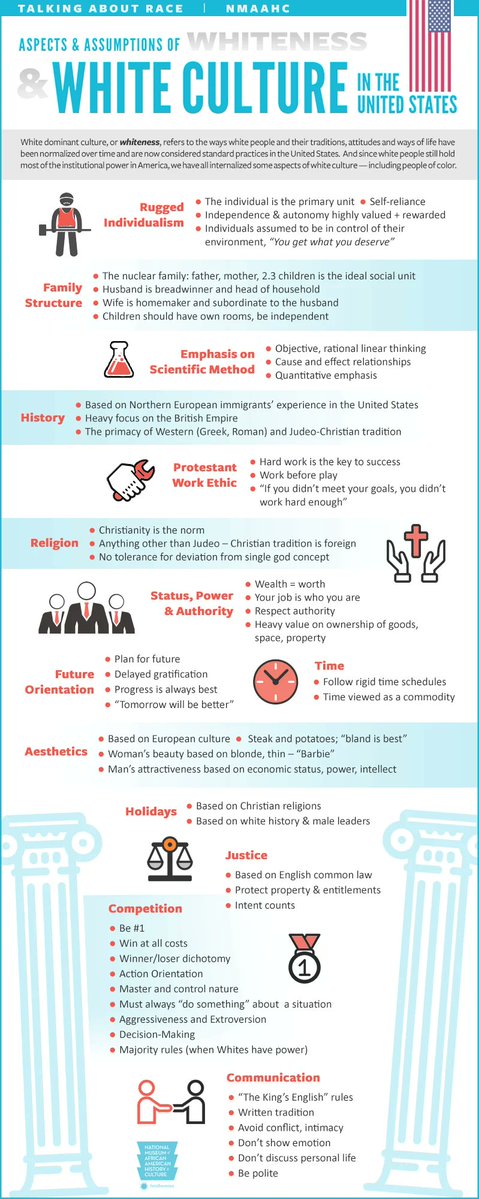
The "unflattering" traits listed as characteristic of white culture—even white supremacy culture—by institutions such as the Smithsonian share one fundamental psychological feature in common:
They are all indications of—are you ready for it—the Big Five trait conscientiousness.
Conscientiousness is the best known personality predictor of life success after general cognitive ability (otherwise known as intelligence).
So this means that the idiot leftists who developed and promoted such material proclaim their antiracism by insisting that the very trait most associated with productivity, reliability, diligence, and success is a flaw, unique to white people.
Hard work is key to success.
Work before play.
Delayed gratification.
Future orientation.
Planning.
Punctuality.
Self-reliance.
Respect for authority.
Pure conscientiousness.
"Yo--those n-words shore are lazee..."
Sincerely,
The Democratic Socialists of America
You can't make this stuff up.
In truth, by the way, racial differences in the major personality traits are negligible.
Elon’s original vision of an open, American AI was right.
He could still flip Grok to open source which could be checkmate.
Why?
If you flip Grok open source, you necessarily move all margins out of the model layer and down into the infrastructure (chips + CSPs) and above to apps.
He owns a massive data center build, owns next gen inference AI and owns the most used app (Cursor). So arguably he would make *more* margin by doing this. Then moving the DCs to space makes even more sense.
In “Apocalypto,” Mel Gibson transports you into the mind of a Mayan 500 years ago. In “The Northman,” Robert Eggers transports you into the mind of a Viking a thousand years ago. In “The Odyssey,” Christopher Nolan transports you into the mind of a liberal woman in 2017.
Je suis dans un train "climatisé" où il fait 26 degrés. Le wifi ne marche pas. Personne ne bronche.
Et c'est ça qui me fascine le plus : pas la panne, mais l'acceptation collective.
L'État socialiste a réussi un tour de force psychologique. Il nous a fait intérioriser qu'un service médiocre, payé une fortune, c'est normal. Que c'est même ça, le "service public".
Le même service dans un marché libre coûterait une fraction du prix. Et si la clim tombait en panne, vous seriez remboursé dans l'heure, parce qu'un concurrent attend juste à côté que vous changiez de crémerie.
Faites la liste de tout ce que l'État touche :
L'école : effondrement du niveau, profs en burnout, classement PISA en chute libre. L'hôpital : des mois d'attente, des couloirs pleins de brancards, des soignants qui fuient. Le transport : retards, pannes, grèves, prix qui explosent. La justice : des années pour un jugement. La police : débordée, démoralisée.
Budgets colossaux. Prélèvements records d'Europe. Résultat : tout est pourri.
Pourquoi ?
Parce qu'il manque deux choses que seul le marché fournit : le skin in the game et les prix.
Le skin in the game d'abord. Un entrepreneur qui livre un service pourri fait faillite. Il perd SON argent, SA réputation, SES années de travail. Un bureaucrate qui gère mal un service public ne perd rien. Il sera promu, muté, ou au pire il attendra sa retraite. L'échec n'a aucune conséquence personnelle. Donc l'échec se répète, indéfiniment.
Les prix ensuite. Hayek l'a montré : les prix de marché sont un système d'information. Chaque prix agrège des millions de décisions individuelles et signale où allouer les ressources. Quand l'État fixe les prix ou subventionne à perte, il détruit ce signal. Plus personne ne sait ce qui vaut quoi. On arrose au hasard, on gaspille, et on appelle ça de "l'investissement public".
C'est pour ça que le bureaucrate est le pire locataire possible de vos impôts : il dépense l'argent des autres, pour les autres. Ni incitation à économiser, ni incitation à bien servir. Milton Friedman avait résumé ça en une phrase : c'est la pire des quatre façons de dépenser de l'argent.
Le problème n'est pas tel ministre, tel gouvernement, telle réforme. Le problème est structurel. Un monopole sans concurrence, sans prix, sans skin in the game, produira TOUJOURS de la médiocrité. Peu importe qui le dirige. Peu importe le budget.
Si vous avez compris ça, vous avez compris 90% de l'économie politique.
Alors faites une chose simple : expliquez-le à vos proches. Au prochain train en retard, à la prochaine attente aux urgences, posez la question : "qui perd de l'argent quand ce service est mauvais ?" Réponse : personne. Voilà le problème.
L'information finira par se propager. Et un jour, collectivement, on arrêtera de gober.
Le problème, c'est l'État. Toujours.
As I have repeatedly explained, the architecture of the human mind is such that it is nearly perfectly impervious to incoming evidence that is contrary to one's well-anchored positions.
One of the most dangerous ideas in politics is that good intentions create prosperous societies.
Bernard Mandeville, in one of the most scandalous and important books in intellectual history, argued almost exactly the opposite.
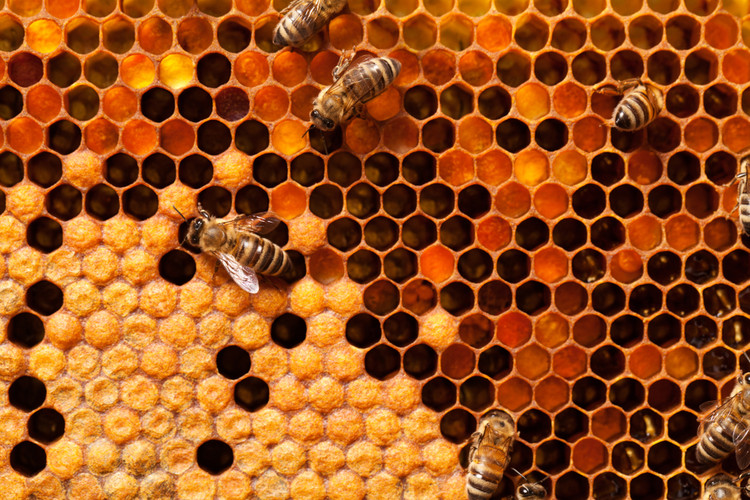
In his 1714 book The Fable of the Bees: or, Private Vices, Public Benefits, Bernard Mandeville told the story of a prosperous beehive where every bee was driven by vanity, greed, luxury and self-interest. The hive flourished with industry, trade, innovation and wealth precisely because of these private vices. Then, one day, the bees suddenly became virtuous and frugal. Demand collapsed, workers lost their jobs, and the once-thriving society descended into poverty and stagnation.
Mandeville’s provocative thesis was that what was often thought of as private vices often produce public benefits. Self-interested behaviour - when channelled through markets - creates far more prosperity and social cooperation than deliberate attempts at collective virtue or moral perfection.
This insight was revolutionary. It showed that the pursuit of personal gain does not lead to chaos, but to order and abundance. People working to satisfy their own desires end up producing goods and services that benefit others. Greed for profit drives innovation. Vanity fuels demand for quality and beauty. Self-interest, not altruism, powers the division of labour and economic progress.
Adam Smith would later refine this idea into the famous “invisible hand”. But Mandeville stated the uncomfortable truth more boldly: a society that tries to suppress self-interest in the name of virtue usually ends up poorer and less civilised.
The Fable of the Bees is a powerful defence of commercial society which reminds us that what left-wing moralists condemn as vice is frequently the engine of human flourishing.
If you can choose where to work, work somewhere that will help invest in your Trump account. $5k/yr will leave you with $13M at 55. Sorry, but that’s a huge amount of money.
If you have this choice but don’t want that because it’s called a “Trump Account”, you’re a retard.
100% irresponsible retard.
That’s your kids speaking btw.