Electric vehicles produce enormous negative externalities, which makes it odd that so many people want to (further) subsidize them. New post from me:
https://t.co/AWaah0pyf3
Here's a wealthy Dallas suburb blocking the conversion of a big box store into 800 apartments. The window for Texas to adopt the land-use reforms needed to avoid a California-style housing crisis is quickly closing. https://t.co/qLrSadEXCV
There seems to be robust research evidence from @jenniferdoleac, @benconomics, and many others of the detrimental unintended consequences of Ban the Box policies in the labor market. I fear #a2council might be making the same mistake in the housing market. https://t.co/rR1oMSGTg1
This paper is one of the big factors that drove me into urban economics. Even if you can influence policy in that area to be a mere 1% better, you could improve social welfare by literally *trillions* of dollars. https://t.co/tMNXWy75tz
Remember that paper from Moretti and Hsieh saying that if NYC, SF and SJ loosened their zoning laws to a normal level, US GDP would be 3-9% higher?
@bryan_caplan found an arithmetic error - the actual number should be that GDP would be **14-36%** higher!
https://t.co/58BtFXOUb4
@jdcmedlock I'm guessing the implied claim is that workers that take up a lot of space or make noise in a crowded public space generate a tragedy of the commons negative externality, while these externalities are not generated by those working in private space like hair braiders or florists.
@fvigeland Had an amusing moment yesterday among a crew of cyclists on Jefferson Drive. Ran into a total logjam of clogged car sewer of [parking | stand-still | parking]. We all looked at each other and smirked / rolled eyes and just diverted up the curb to the gravel Mall path.
Can't help but have mixed feelings about ADUs in urban areas steps from public transit. The (marginally) increased housing supply is of course better than the status quo, but it locks in land-use that should really be for 10-story buildings of 300+ units. https://t.co/o5WNCmW5jY
54% of San Francisco homes are in buildings that would be illegal to build today. This is not due to safety concerns - the only purpose of these laws is to make housing more scarce and less affordable. Read more:
https://t.co/tzIRcoHso7
I know it’s the year 2021, but there is still nothing on the Internet that provides more of an adrenaline rush than sniping someone on eBay to win an auction with 3 seconds left 😈
I wish these types of reports would be more upfront with how they define "profitable", the term that does all the argumentative work. It sounds a lot less scandalous when you realize $0 tax bills come from reinvesting earnings into physical assets and R&D https://t.co/RnEiEY1jzl
@haweav I think you're confusing population and household. Even if you assume zero non-HEB grocery stores, San Antonio has 1,500,000 pop / 2.77 avg household ≈ 542k households. And so about 11k households per HEB.
I think this 24,000 figure is way too high, but it's still no surprise that extreme housing supply restrictions on downtown Ann Arbor (7670 population / 1.9 avg household size ≈ 4,000 households) result in downtown not having a grocery store. https://t.co/jHTfEKnJin
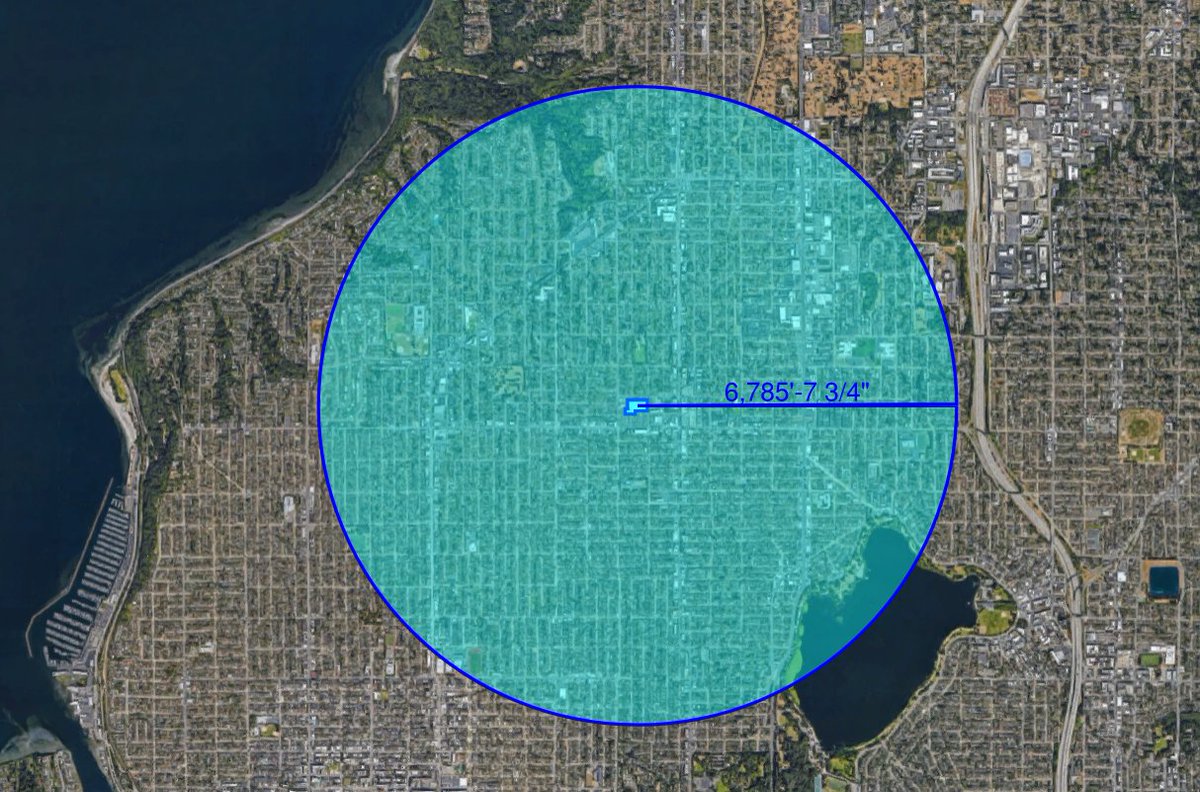
A supermarket in single family Seattle needs about 24,000 households to support them. With this low density zoning, that's about a 25 minute walk. No wonder it has a huge parking lot. Supermarkets aren't struggling because of hazard pay, they're struggling because of zoning.
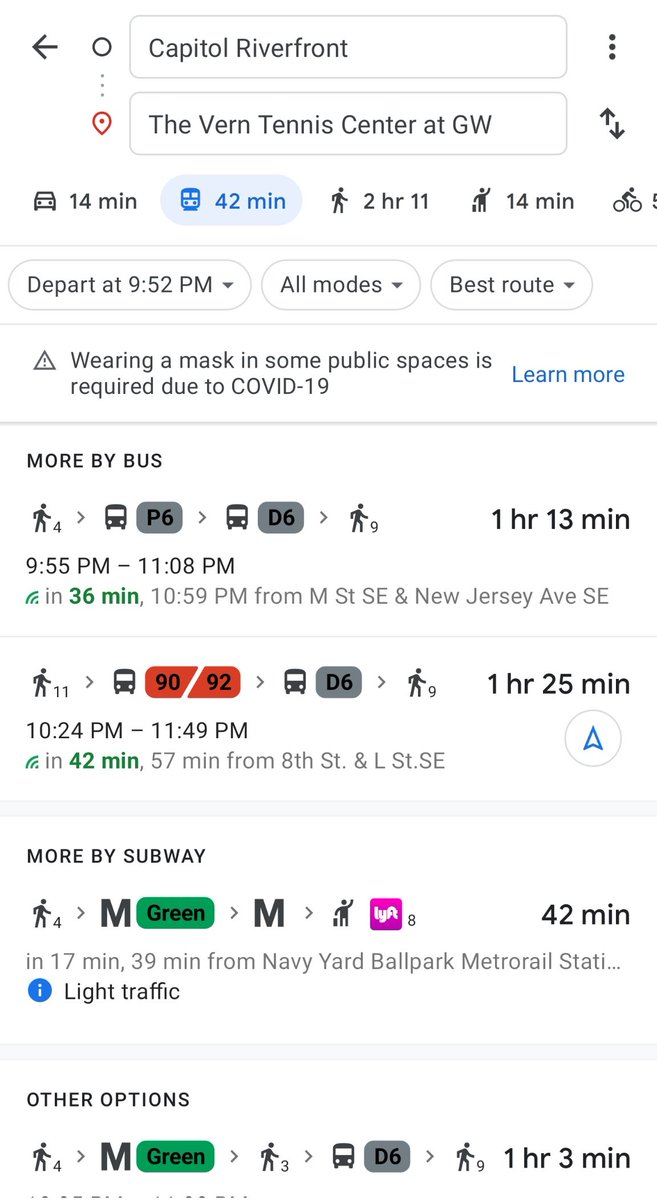
@LeahLibresco I was wondering that too. I rarely take Uber/Lyft, but I doubt there's a huge cost savings to reduce your trip six minutes by taking the Metro for a portion of it.
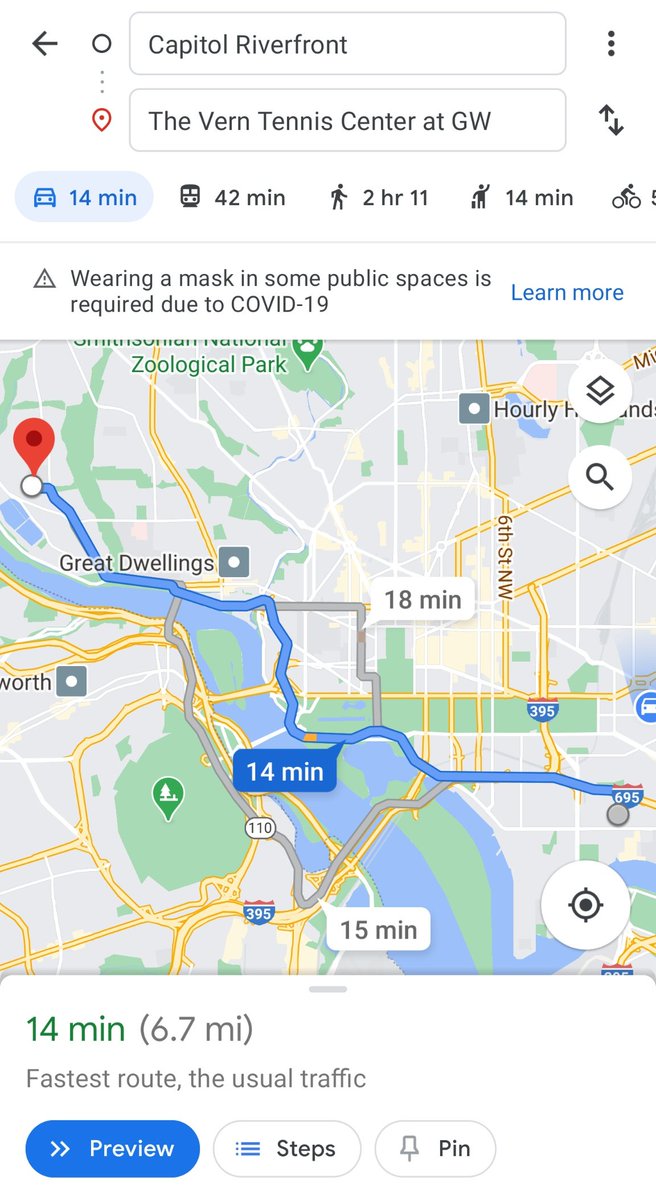
I think you'd have to make public transit fares roughly negative $30 before a majority of DC residents would wait at a bus stop to take a convoluted 73-min multi-transfer infrequent bus trek over an on-demand 14-minute private car ride.
William Nordhaus, 2018's Econ Nobel Prize winner, estimated that innovators only capture 2.2% of the total social value they create ( https://t.co/6GAU8ebxRl).