@pmcweeney2@wereontheditch You obviously know nothing about the middle east to understand that every last nation is muslim supremacist. Doesnt matter because it doesnt concern jews, right?
@AbubakerAbedW@EO_Halloran Learn a thing or two about your neighbors boy, 60% of jewish israelis originate from middle eastern countries. Iraq, egypt, morocco, syria, yemen and so forth. Did you skip that history lesson where nearly 1M fled or expelled to israel due to persecution by arabs? Double standard
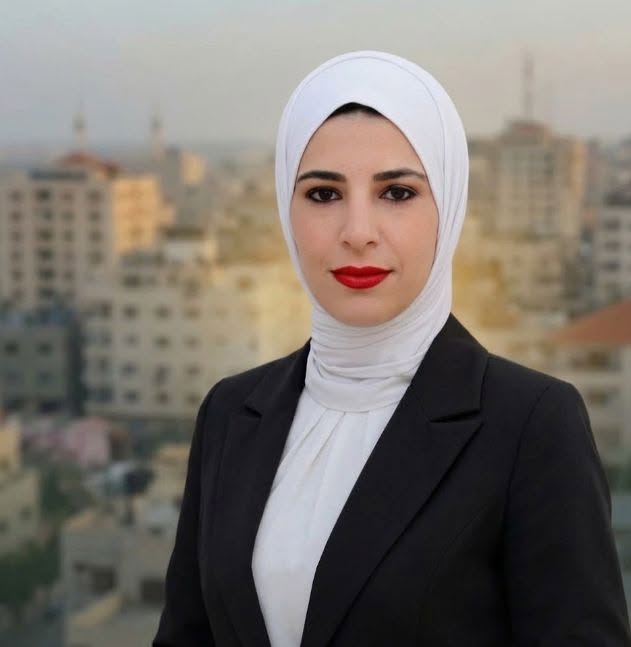
Shaimaa Rabah is a newly elected councilwoman in Deir al-Balah, central Gaza Strip, and a member of Fatah, who was part of a limited set of local municipal elections inside Gaza back in April. After Al Jazeera aired a documentary featuring exclusive footage from Hamas’s al-Qassam Brigades about the life of slain military leader Mohammed al-Deif, Shaimaa Rabah shared a Facebook post condemning what she viewed as the glorification of Hamas, which she blamed for Gaza’s devastation. She described the program as “a rich meal of animal feed for the Muslim Brotherhood” and criticized Al Jazeera’s efforts to portray Hamas as heroic despite the destruction and suffering that followed its rule and the 10/7 terror attack.
In response, Hamas and its supporters pressured members of Shaimaa Rabah’s clan with a wave of threats and harassment to compel her to delete the post and issue a public apology, which she did. Even that has not satisfied her critics, who are now demanding her resignation from the Deir al-Balah municipal council, arguing that her status as the council’s first elected woman does not entitle her to disparage the memory of those they regard as “martyrs.”
This episode is a reminder to those who believe elections can produce meaningful political change while Hamas retains effective control over Gaza. Democracy is not the foundation of a free society but the product of one. It depends on the prior existence of independent civil institutions, a free press, freedom of expression, and mechanisms for holding power accountable.
I have shared this concern with Dahlan-affiliated Fatah reformists, EU officials, Arab ministers, and others who advocate elections as a solution to the Palestinian Authority’s legitimacy crisis and the search for an alternative to Hamas. In today’s Gaza, any non-Hamas voice can be rapidly silenced, making meaningful reform, let alone a challenge to the entrenched “resistance” narrative, nearly impossible.
Before any credible democratic process can take place, Hamas’s system of control must be dismantled. Until then, the most realistic path forward is a transitional administration focused on restoring basic services and rebuilding a truly free civil society while removing the coercive structures Hamas and its patrons have spent decades creating.