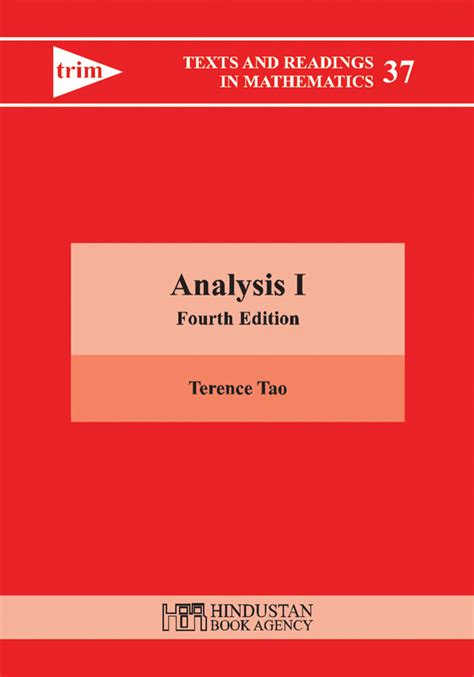
Since I started building Algebrica in 2023, I have collected, read, and consulted hundreds of mathematics books, university lecture notes, papers, and many other resources, both in print and digital form. My goal has always been to build a knowledge base that brings together what I consider the best explanations available for each mathematical topic.
The bibliography on this page is my attempt to reconstruct the books, lecture notes, and other references that I have consulted while writing Algebrica. It is also a living bibliography that continues to grow as I discover new resources and revisit existing ones.
I hope it can become a useful reference for anyone looking for reliable mathematical resources to study a topic in greater depth.
https://t.co/Z9dEWkME7I
Beauty & The Math: Quantum Number Theory (Test Run)
https://t.co/RJRVFuElk5
Slides are preliminary.
Comments and suggestions are more than welcome.
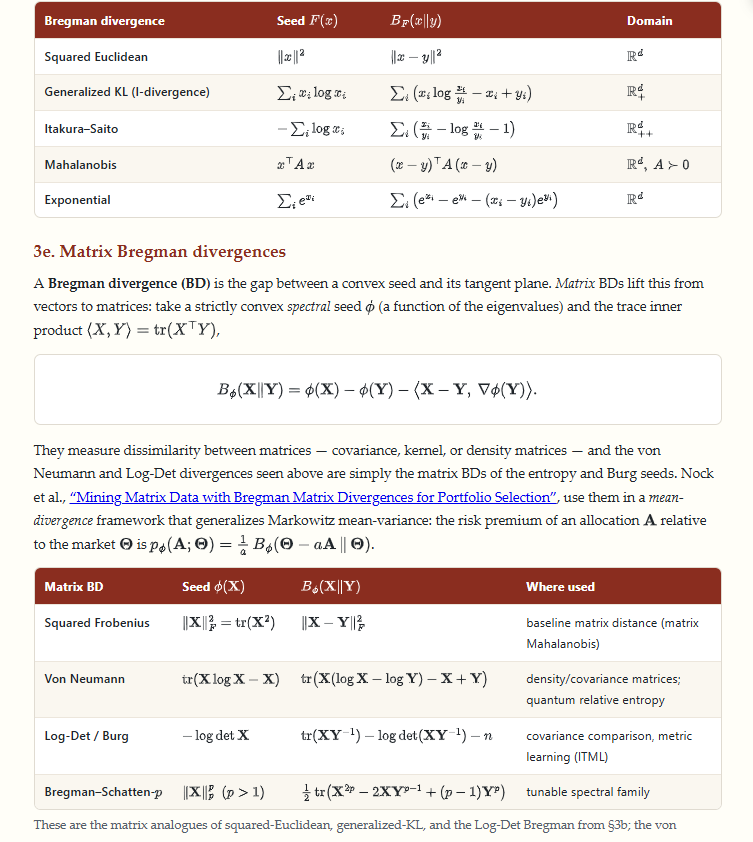
Great blog post on "Taxonomy of Principal Distances & Divergences" by Hamidreza Hashempoor from Institute for AI, University of Stuttgart.
Worth checking out!
https://t.co/ExabfkR2H1
My prediction from last summer was that the number of frontier AI models getting a gold medal at this summer’s IMO will be… zero! The reason is that they won’t bother to compete, it’ll simply be beneath them. If anyone can now push a button on Codex / Claude Code and get a perfect score, what’s the point? No, they’ll just leave the 17 year olds to take the test on their own. (The open source models will still compete for another year or so. That’s my guess!)
Similarly, I think the labs pushing “research math” is also a fad that will expire soon enough. Think about it. GPT solved a major problem (Erdos unit distance); what they’re not reporting is the 1000 other problems they attacked and failed to make progress. [That’s not exactly deception; I also don’t report the dozens of things I tried to prove and failed…] They’re also not reporting the millions of dollars all of this cost them, and for what? Right now the “for what” is advertising: they’re signaling that they’re the best model for math, so you should use them for whatever your reasoning task is. Math departments also spend millions of dollars and produce theorems, but that is their actual end goal. A tech company is happy with a million-dollar theorem only if it predicts a billion-dollar application somewhere else. Once the bubble bursts, investors will want “real” applications from AI, new drugs, self driving / flying cars, etc etc. Nobody will care that the systems are also useful at proving theorems. Nobody but us mathematicians. So like the IMO, I think the frontier labs will get bored of theorems, and will leave us humans alone to keep doing math (and they’ll give us an amazing tool with which to do it!).
Does that make sense? What do you think?
My talk at MIT, on "Agentic AI systems: from scruffy to neat", is now available. I cover 3 examples of agentic systems - Bayesian linguistic forecaster, autoharness, and code world models - which combine LLMs, code and planners in different ways. Links below.
.@BernieSanders , it is a time to celebrate. @elonmusk has created enormous value for society by building @SpaceX, driving down the cost of rocket launches and creating a global satellite communication network that has brought high speed, low-cost internet and communication access to hundreds of millions and eventually billions of people along with critical advantages for our military and our nation’s defense.
SpaceX and its technologies will cause an acceleration in the growth of wages and wealth creation globally, including in some of the poorest communities in the U.S. and around the world.
Access to low-cost, high speed communications everywhere will allow children around the world to be educated, families to build businesses, and life-saving medical knowledge and care to be available everywhere.
SpaceX will materially bring down the cost of compute, advancing AI and humanity.
Meanwhile, 4,000 SpaceX employees yesterday became millionaires, including hourly wage employees who you claim you are trying to help.
The Elon Musks of the world drive growth, global GDP, and provide access to goods and services at lower cost that would otherwise not exist.
Elon’s nominal trillionaire status is due to his ownership of SpaceX, Tesla, Neuralink, the Boring Company and his other initiatives that have brought new technologies that improve our everyday lives.
Elon is not sitting on a trillion dollar pile of cash, jewelry and gold. He is using his controlling stakes in his companies to advance mankind. Elon’s companies don’t pay dividends. They reinvest all of their capital to accelerate innovation and value creation.
Elon is working 24/7 for all of us. He deserves respect and appreciation, not smears.
Bernie, your socialism would never allow a SpaceX to be built. Socialism has only proven to impoverish mankind and lead to death and destruction.
We need to create the conditions for more SpaceXs to be built, not attack the great entrepreneurs who are helping to advance our country.
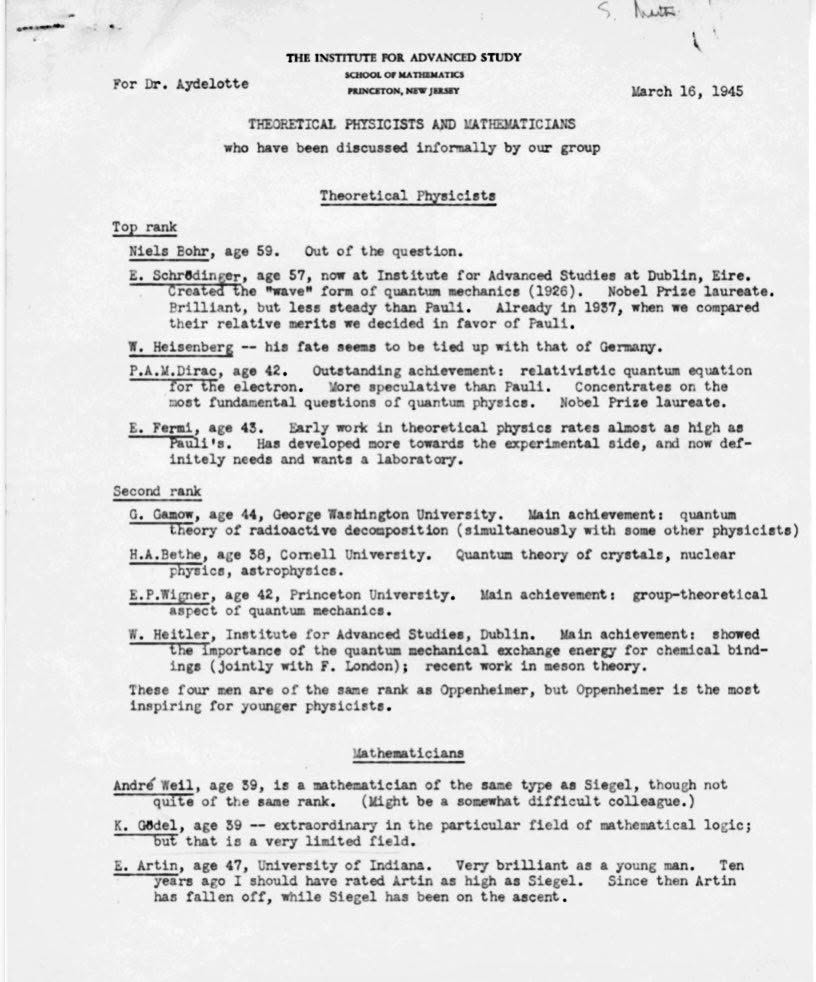
The ultimate faculty recruitment list: Hermann Weyl recommending physicists and mathematicians for the IAS in 1945. The competition is so stiff that Eugene Wigner and Hans Bethe are considered second-tier.
I have started a collection of essays, blog posts, etc discussing AI in mathematics.
I do not agree with everything written, but all are valuable to read - the more different views the better!
Please reply with your own suggestions.
https://t.co/Pqk4WnkSis