Helping your team Make Legacy Code More Testable™️ with Refactoring and Testable Architecture. Java, Spring, & TDD. he/him. mastodon: @[email protected]
Learn about the benefits of #TDD, and the way I do it: leveraging "prediction", by playing JitterTed's TDD Game: https://t.co/dEiGpmSri2
Soon to be an online game! Buyers of the physical version (below) will get early access to the online version.
@profholden AI is not “inspired” by “reading”.
It should be treated differently because (i) its speed and scale mean it can replace entire markets for creative work, and (ii) it is a different process from human learning anyway.
The US Copyright Office agrees:
It’s hard to imagine animation over the past 45 years without Don Bluth. He remade the industry. Now 89, he’s a living legend — and still teaching.
A new doc reflects on Bluth’s career and legacy, and its creators talked to us about this great artist:
─➤https://t.co/5AAeIThGV0
America decided to design our cities around fire trucks, instead of designing fire trucks around our cities.
At no point since has anyone adequately asked and answered two questions:
1. What benefits did we get?
2. What were the costs?
I’m early into researching both but the current cost-benefit I’m seeing is deeply negative. And I’ve yet to see a single city that puts both sides of the trade on paper.
We see no greater fire safety than peer countries. Worse than many, actually. As trucks got bigger and they demanded wider, faster streets for them home fire deaths per fire actually increased from 7 per 1,000 to 9 - up 28%. Yet speed of response is effectively the sole metric of the modern fire department.
Meanwhile aspects of fire code and expanded demands for large apparatus make attached housing especially expensive vs peer countries, effecting a tax where housing is most needed.
All while creating net negative outcomes to overall public safety on our streets, significant cost impacts to our cities from equipment procurement to added infrastructure costs, and lost city revenue by turning precious urban land into asphalt instead of housing or usable space for people.
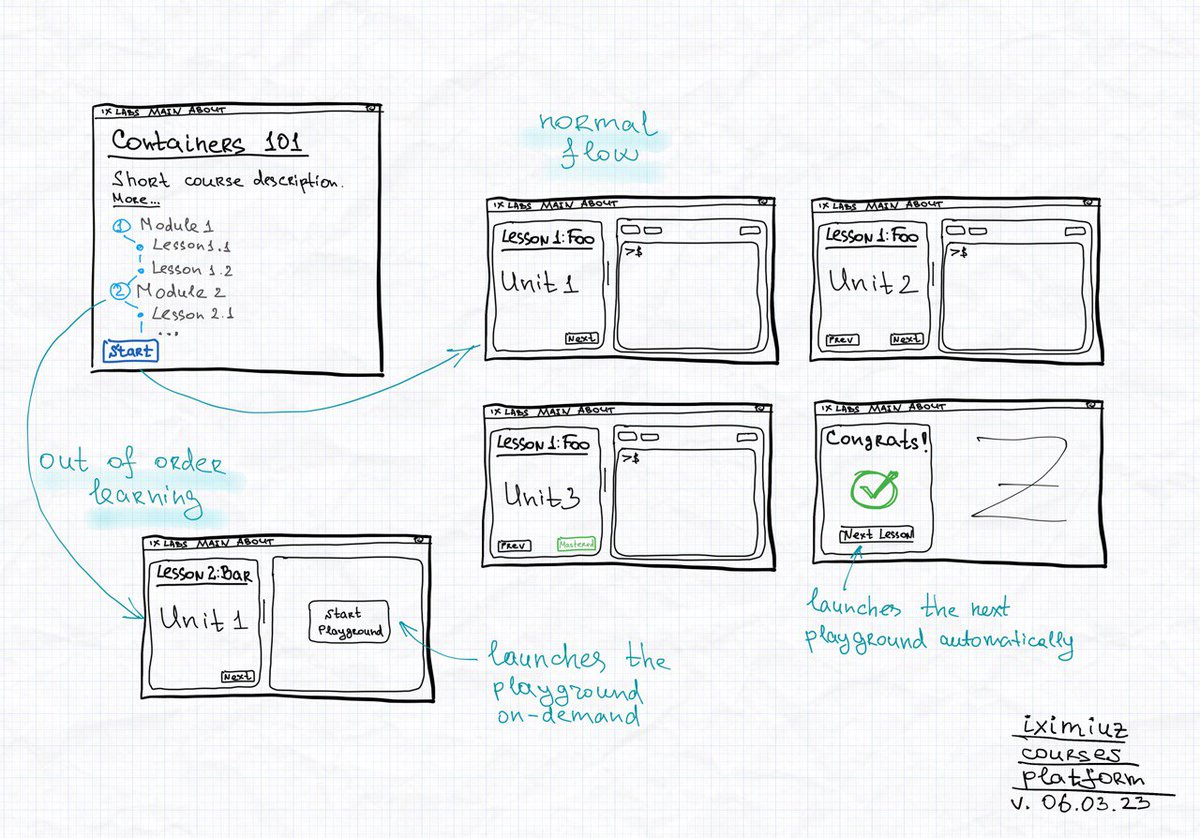
iximiuz Labs was started in January 2023. I had this idea that learning Linux, containers, and Kubernetes should happen by doing, not just reading blogs or watching videos. And for that, you need real Linux VMs to practice, lots of them.
A few months later, I released a prototype of my learning platform for a small group of early adopters. And by summer 2023, iximiuz Labs was already in public beta.
Four years in, the platform has attracted over 70,000 students, who launched over half a million virtual machines and logged countless practice hours. And our collection of learning materials grew from literally nothing to almost 90 tutorials and over 360 hands-on problems, with 25 active authors.
From the very beginning, iximiuz Labs has been bootstrapped. For the first three years, I funded development and covered infrastructure costs from my personal savings while the platform's revenue slowly grew.
Last year, just when I was about to run out of savings, the platform finally made the leap and covered its own costs. However, most of last year's revenue came in during November's sales season, and after that the revenue returned to a level below sustainability:
2023: $7,000
2024: $47,000
2025: $178,000
2026: $148,000 (so far)
This year, revenue kept growing steadily, but so did usage and infrastructure costs, and right now, the platform is net negative again.
The importance of Black Friday for an indie learning platform like iximiuz Labs is hard to overstate. Last year's successful sale allowed the platform to keep growing for all of 2026.
So if you've been a happy iximiuz Labs user and thinking of upgrading your membership, now is the right time. The price is at its lowest, and the positive impact of your support will be at its highest. And if you already have, telling your friends and colleagues about iximiuz Labs is another great way to help.
Thank you!
Below are some early-day videos. And here is what the platform looks like today: https://t.co/9b6sZ2UVQj
Join me tonight in Mannheim for my final 2026 Ted Talk on #EventSourcing in Germany at the Mannheim #Java User Group (#JUG)! (Tomorrow I fly home...)
https://t.co/4xKT7sQVDy
Reminder that tonight I'm talking about #EventSourcing at the Darmstadt #Java User Group (#JUG), and tomorrow I'm in Mannheim. Join us!
Details and RSVP links:
Tue 24 Nov - Darmstadt JUG: https://t.co/ruEPQDBSnE
Wed 25 Nov - Mannheim JUG: https://t.co/dCrkqozPJU
Sometimes saying no is the right answer. Withdrawing Primitive Types in Patterns gives Java time to align with Valhalla’s evolving numerics. Previews exist to test ideas—not guarantee permanence. Responsible stewardship means knowing when to step back. https://t.co/sfUUGKPCJR
a Big Deal buried in Postgres 19 release post
WAIT FOR LSN
clients can now performantly guarantee that the results of a query (run against a replica) reflect all of its previous writes (run against a primary) — this has been the biggest consistency problem with read replicas for years
Modern American building regulation is funny. At the same time that we impose onerous mandates to deal with extremely unlikely events (second stairwells, sprinklers) we have extremely minimal regulation of noise, arguably the defining quality of life issue in an apartment.
"Me and the Clay: The Kent Melton Story", a documentary about the late sculptor who worked for Disney, Laika, Hanna-Barbera, Warner.
Featuring interviews with Glen Keane, Brad Bird, Henry Selick, John Musker & Ron Clements, Eric Goldberg...
https://t.co/IxQPks6B5K
As many others have noted, they persecuted Aaron Schwartz to death for making scholarly articles public. Then they stole everyone's work, the collective arts and scholarship and writing of all kinds, of everyone, and are selling it to investors.
Intercity buses are such low hanging fruit. We are seeing incredible ridership when transit agencies can actually put these links together. But they usually cross agency boundaries so states must lead. Colorado's Bustang is the best practice.
In 2024, I wrote a 200-page report with 1,000+ endnotes showing that monopolization is one of the primary reasons the price of a burger and fries is no longer $10. But it doesn’t jive with Jerusalem’s preferred theory of political economy, so she’s (apparently) never read it.
Given the salience of anti-monopoly arguments among all factions of the Democratic Party, it's time to bake into *all* policymaking the key principles of (1) reducing concentrations of corporate power and (2) ending conflicts of interest. That will cut costs dramatically, among other things.
For example, if Dems are going to expand Medicare to dental, vision, and hearing, then they have to get rid of private equity control and monopolistic power of the the providers in those spaces.
So for instance, let's take hearing aids. The hearing aid cartel lobbied to expand Medicare access during the Build Back Better, knowing they could bake into the law barriers to entry. But vertical integration and concentration across that space has limited innovation and kept price high.
Expanding Medicare to hearing should also be paired with breaking the power of the hearing aid cartel. That's similar for dental implants, a concentrated market, and eyeglasses, where Luxottica is a monster.
There are many ways to get rid of this concentrated power, and when you're putting in government dollars, a bunch of new tools appear. The government is all of a sudden the key customer, so we can easily restructure markets. You could, for instance, not allow hearing aid money to be spent in vertically owned audiologist clinics. Et al.
Anyway, antitrust is useful but limited. The key is to take the principles animating that body of law and apply it across all sectors of policymaking.
https://t.co/9Sg8YfoP3I
Thanks to everyone who played JitterTed's #TDD Game today at #AgileTD!
Hope you enjoyed it _and_ learned something. Always happy to answer questions and discuss anything related to TDD, team work (ensembling), and how I could help your team work better together.
Anyone in Berlin, Darmstadt, or Mannheim who is willing to be a mini-warehouse and hold on to 3 copies of my TDD Game so I can have you ship them to folks within Germany, instead of me taking them all the way back home to the US? Email me ted at tedmyoung dot com. Thanks!
"All [read] models are wrong, but some are useful."
In other words, while no read model is comprehensive (by definition, it's a point of view, a perspective, or a slice of the overall "truth" of the system), their simplicity and disposability make them valuable.
#EventSourcing
You’ve also heard again and again that artists & writers don’t want to pour all their valuable IP, data and tacit knowledge into someone else’s model, but that hasn’t stopped you taking it.