Yes, the gold is there all (approximately) 147 million ounces. It is impressive, but the real point is what it still teaches in 2026.
In 1971 we severed the dollar from gold. Since then the currency has lost roughly 85% of its value. Prices are higher because the money itself is weaker.
A family making $50,000 with two kids that has not received a 25% raise in the last five years is falling behind.
This is now often called “affordability,” but the the accurate word is inflation.
We run annual deficits of two trillion dollars. The Federal Reserve buys about a third of that debt by creating new money. Every new dollar dilutes the value of the dollars already in people’s pockets. Gold does not expand when Congress spends. Paper does.
That is the difference.
JUST IN 🚨: More than 72% of S&P 500 stocks are now trading above their 200-day moving average, the strongest market breadth since December 2024 📈 🥳
What’s really going to bake your noodle later on, is realizing that rate hikes are not nearly as effective at dealing with deficit-driven inflation as they are at dealing with lending-driven inflation.
A few common macro posts that come up over and over on this platform that you can mostly ignore.
1) “The Fed injected [X billion]…”
That’s usually the Fed recycling their maturing securities back into more of the same securities. Or the Fed doing some repo activity, adding a tiny bit of liquidity that comes back out the next day. This year, the Fed is growing their balance sheet very slowly.
2) “The Treasury bought back [X0 billion] of government bonds…”
The Treasury performing buybacks on its own debt is interesting because the deepest, most liquid capital market in the world shouldn’t need the issuer assisting with liquidity. And they could potentially shorten duration over time by issuing t-bills to buy back T-bonds, so that’s worth monitoring. But for the most part, these announcements are nothingburgers. The Treasury issues fresh liquid bonds to buy back aging less-liquid bonds. No appreciable impact on your money or investments.
3) The Treasury has [X trillion] in debt to refinance over the next 12 months, how are they possibly gonna find so many buyers?”
The vast majority of the Treasury’s debt that will be refinanced over a given year will be bought by the same entities holding it now. They’re holding t-bills, those t-bills mature into cash, and they buy the next t-bill. Money market funds, insurance companies, pensions, individuals, corporations, etc. Posting about gross refinance numbers is popular because the number is big and sensationalist, but it doesn’t mean much, which is why you hear about it for years and it’s fine. Net new issuance (about $2 trillion per year) is mostly what matters, and nothing stops that train.
4) “Banks have [X00 billion] in unrealized losses…”
Yeah that was a problem for about one quarter in spring 2023. It’s mostly a non-issue since then but whenever the quarterly number comes out, people love to report it like it’s devastating new information. The number is trending flat-to-down, and it’s a small portion of bank assets and equity capital.
Anyway, good morning. Carry on.
Everyone’s talking about the “breakout” in US yields.
But yields aren’t rising because of inflation. They’re rising because Japan and other countries are selling USTs to defend their currencies.
If countries start selling Euro bonds instead, that would take pressure off US yields.
Yields are up because countries are selling their USTs to defend their currency/buy expensive oil.
Inflation continues to trend lower and it would be unwise for a Fed funds hike into an oil supply shock.
The inflation so many harp on is a longer term issue around fiscal dominance and high public debt spiral. However in the short term, the economy is weakening and signs for deflation into 2027 keep piling up.
Major breakouts in S&P 500, DJIA and Russell.
The LAST of this cycle, followed by a MAJOR top this fall.
Crypto will be the last risk asset to rally in a major way.
I've been saying this for weeks while bond bears claim we're on our way to a 7% 10yr.
Yields aren't rising because inflation is a problem.
Despite what people who try to sound smart say... inflation is not rising.
This unfolded the exact same way in 2000 and 2007.
Yields at first started rising as the worst affected countries of the Iran conflict needed USD to buy oil. Now yields are rising because of forced UST selling to defend local currencies.
Yields rising are a major problem for the Treasury. Regardless of inflation, that will be a major problem for years to come.
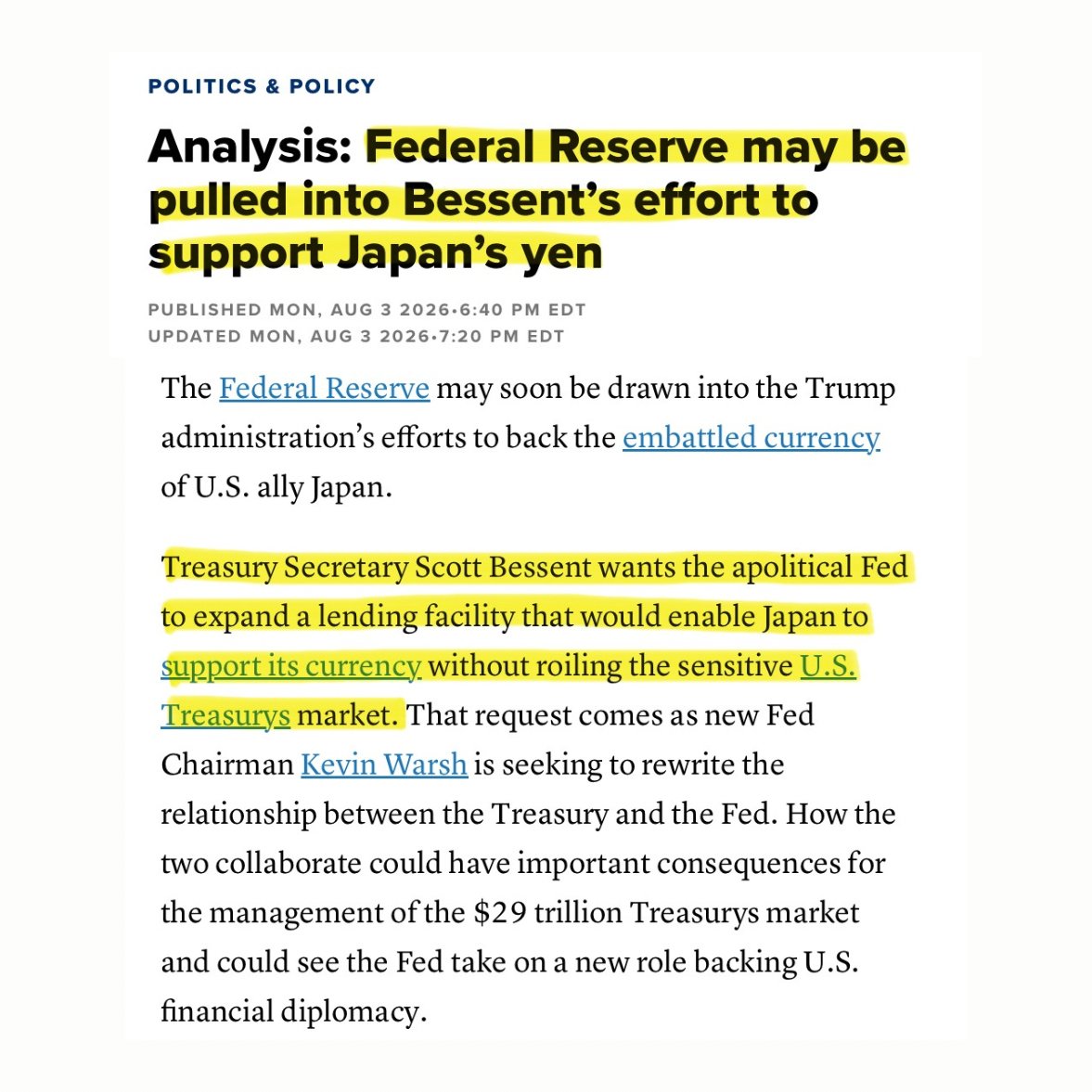
BREAKING: US Treasury Secretary Bessent is asking the Fed to help Japan raise dollars without selling US Treasuries.
Japan holds around $1.1 trillion in US Treasuries.
When it defends the yen, it needs dollars, and most of its reserves are sitting in those bonds rather than in cash.
Once the cash runs out, the only way to keep intervening is to start selling Treasuries.
That selling would push US bond prices down and yields up. The 10-year already went above 4.7% last week, and Bessent has said he watches that number closely.
The FIMA Repo Facility avoids it.
Japan pledges its Treasuries to the Fed, borrows dollars against them, then returns the dollars later and gets the bonds back.
The bonds never reach the open market, so yields are not affected.
The problem is size.
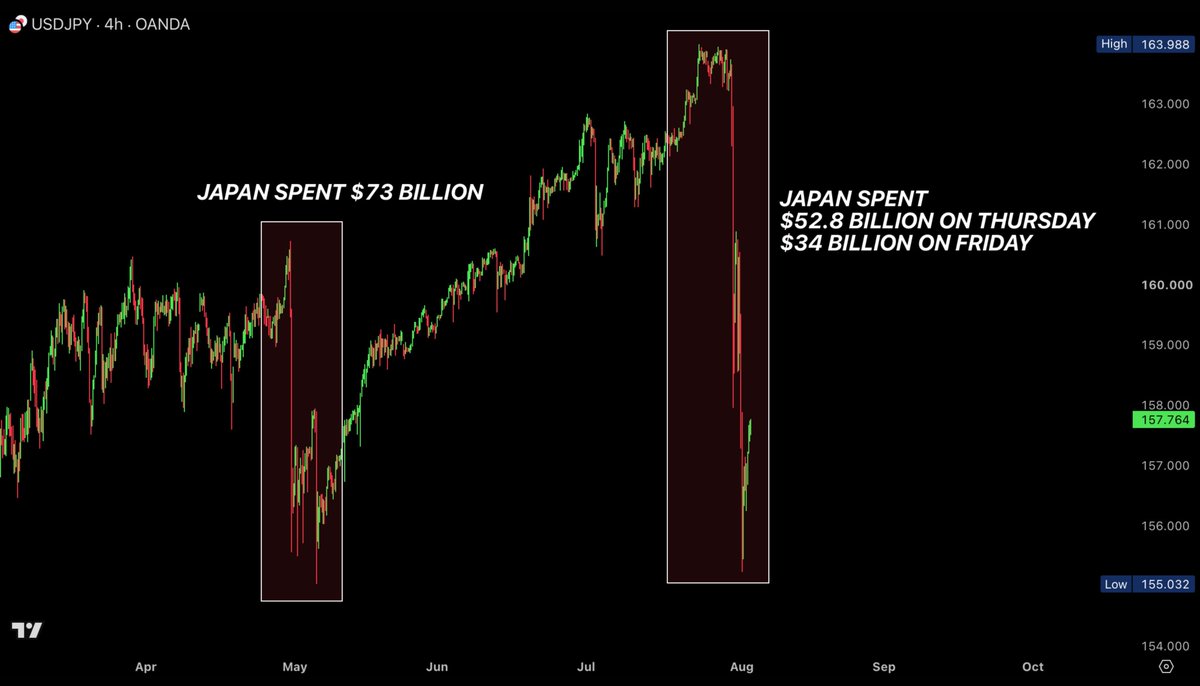
The facility is capped at $60 billion a day, and Japan spent an estimated $60 to $80 billion in a single week.
That is why Bessent wants it expanded.
This is also why he sold euros instead of dollars on Friday.
But it is not his decision. Expanding FIMA needs a vote from the Federal Open Market Committee, and the Fed has declined to comment.
As predicted, markets at new ATHs.
Risk assets will do fabulously into the top.
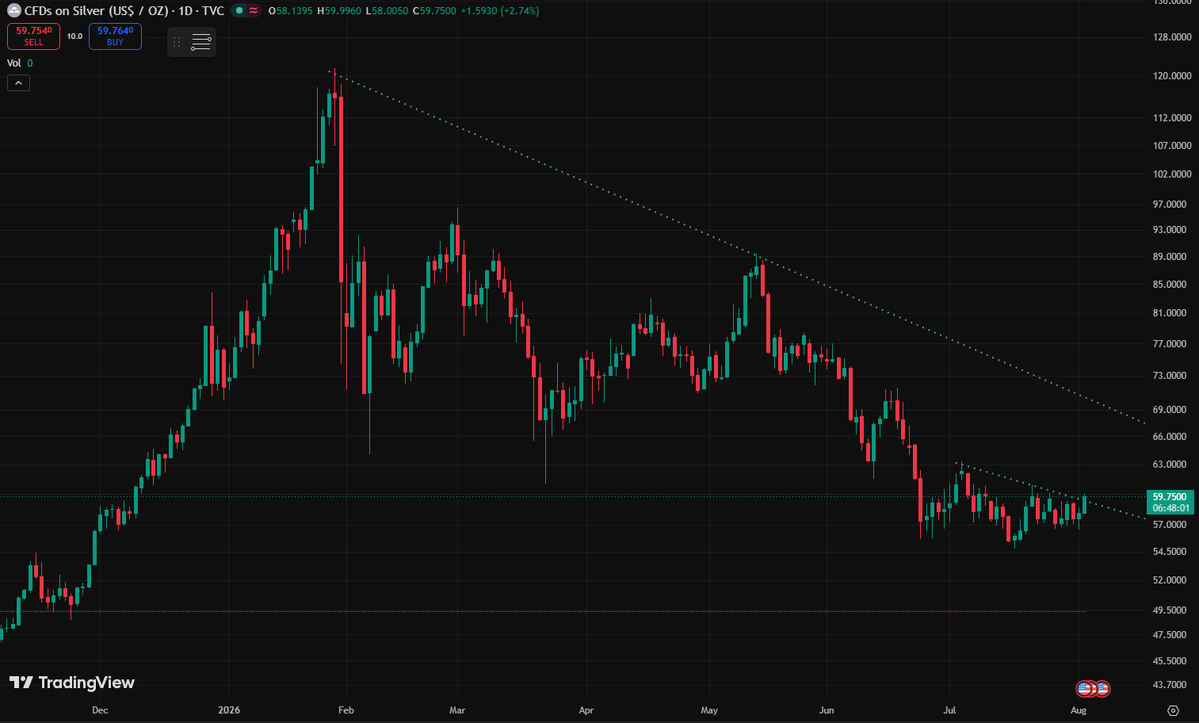
So why not Silver? Short-term breakout today that should lead to a larger rally to at least $90.
Miners are following suit.
Major breakouts in S&P 500, DJIA and Russell.
The LAST of this cycle, followed by a MAJOR top this fall.
Crypto will be the last risk asset to rally in a major way.
Yields are up because countries are selling their USTs to defend their currency/buy expensive oil.
Inflation continues to trend lower and it would be unwise for a Fed funds hike into an oil supply shock.
The inflation so many harp on is a longer term issue around fiscal dominance and high public debt spiral. However in the short term, the economy is weakening and signs for deflation into 2027 keep piling up.
I get the idea that there might be some version of Yield Curve Control (YCC**) or other government intervention to hold down interest rates.
But remember, what's freaking the market is inflation.
If the Fed and/or Treasury does anything to suppress interest rates that is perceived as inflationary, such as expanding the balance sheet, not cutting interest rates when it is expected, shortening duration, or outright bond buying, which is perceived as stimulative. The market will take this as potentially creating more inflation, and the result will be even higher interest rates.
What the market wants to bring yields down is a commitment to getting inflation under control. You want mortgage rates down; HIKE(!) the funds rate.
--
** A number of people are arguing for YCC.
They should know it has a perfect track record... of never working!
This is the ultimate definition of insanity: doing the same thing over and over and expecting a different result.