Jefe de Servicio de Nefrología. Prof. Contratado Doctor Medicina. Investigador. Ex-Presidente de la Soc Valenciana de Nefrologia. Aficionado a la musica y arte.
Kidney disease (CKD) and heart failure (HFrEF, HFpEF): recent advances and current challenges: conclusions from @goKDIGO Controversies Conference ca. 2026 from @Kidney_Int#Nephpearls#Cardiorenal
👉 https://t.co/VPlVfQLLxj
🔄 ACTUALIZADO en #Nefroaldía@nefroaldia
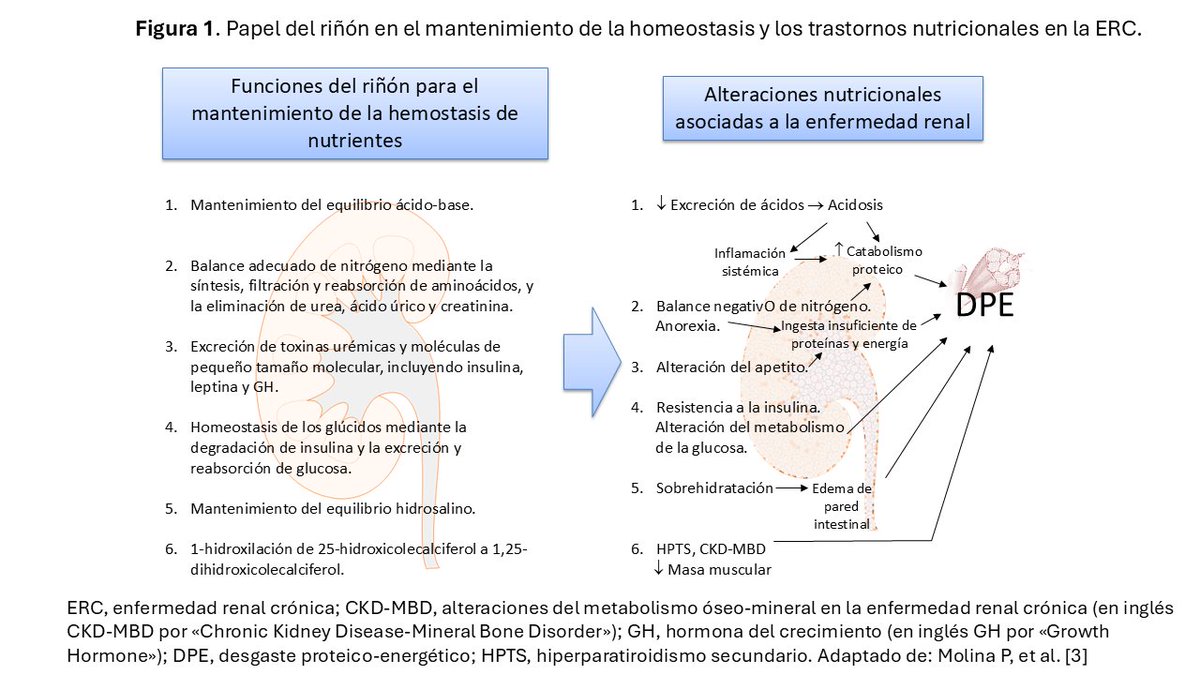
🥗 "Nutrición en Nefrología. Conceptos generales y estimación de los requerimientos nutricionales"
✍️ Por Pablo Molina @MolinaPab, Emma Huarte @emma_huarte y Macarena Arancibia
🔗 https://t.co/0HHR556aoT
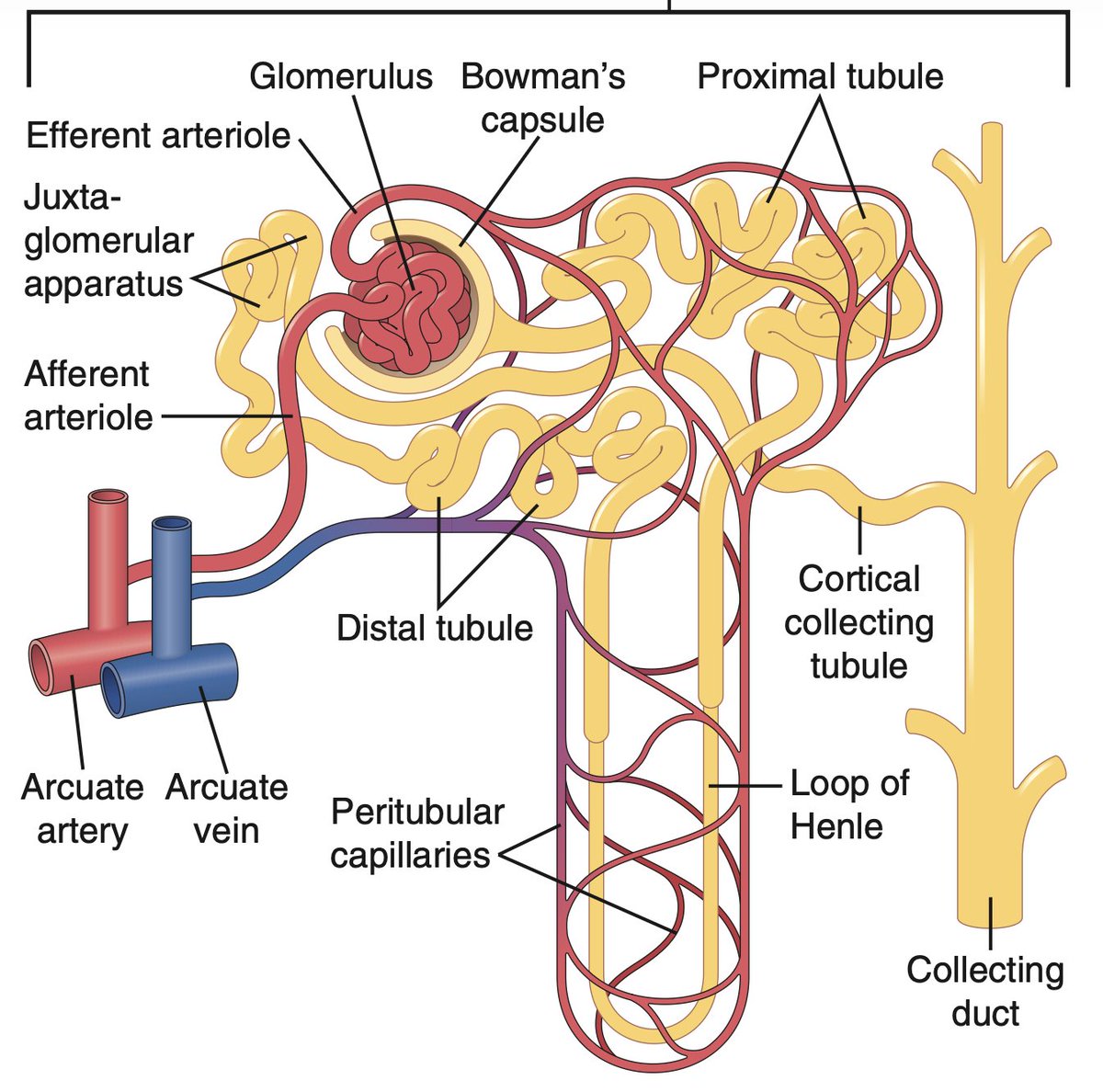
This is the most sophisticated machine in the human body.
The nephron is not a passive filter, but an energy-intensive microfluidic processing system: less a simple tube than a miniaturised biological machine that spends blood flow and ATP to transform a crude filtrate into the precise internal stability we call homeostasis.
At rest, the kidneys receive a strikingly disproportionate blood supply: roughly 20–25% of cardiac output, about 1–1.2 L of blood per minute in an adult, despite representing well under 1% of body mass.
That flow is not there mainly to “feed” renal tissue, but to sustain filtration and the enormous transport workload of the nephron. About 180 L of filtrate are generated per day, and almost all of it must be selectively reclaimed.
Metabolically, the kidneys account for roughly 7–10% of whole-body oxygen consumption at rest, which is remarkably high for such a small organ.
Most of that energy bill is tubular, not glomerular: two thirds or more of renal oxygen use is spent on the Na⁺/K⁺-ATPase, the engine that powers sodium reabsorption and, with it, water, glucose, amino acids, bicarbonate, and countless coupled transport processes.
In practical terms, this corresponds to a continuous ATP demand on the order of several millimoles of ATP per minute across both kidneys, overwhelmingly devoted to solute transport rather than biosynthesis or contraction. This is why the nephron is best understood not as a passive filter, but as an energy-intensive microfluidic processing system.
What makes it extraordinary is the paradox: one of the body’s best-perfused organs is also one of its most metabolically constrained, because so much of its function depends on converting blood flow into vectorial transport with exquisite spatial precision.
In that sense, each nephron is less a tube than a miniaturised biological machine: a structure that spends blood flow and ATP to turn a crude filtrate into internal homeostasis.
Los aGLP1 ↓presión arterial al actuar sobre el músculo liso de las células vasculares preglomerulares. No es como antes se pensaba, mediante natriuresis y diuresis osmótica
JCI Insight 2026
https://t.co/3Hh5A1DkHr.
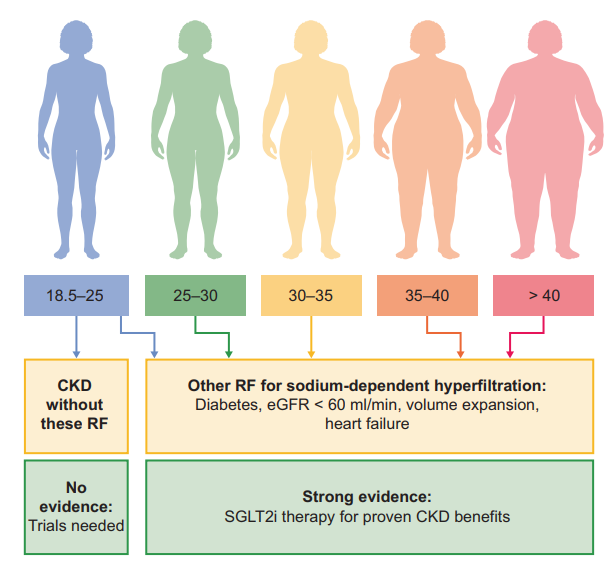
Es razonable incorporar la “hiperfiltración” al mapa de calor para estimar riesgos en la enfermedad renal crónica, así se contempla un evento fisiopatológico trascendental y modificable, que sería el verdadero punto de inicio patogénico
Kidney Int Rep 2026
https://t.co/iemtXvdCK1
Urinary Albumin-to-Creatinine Associates More Closely than Protein-to-Creatinine Ratio with Kidney Outcomes in Pediatric Chronic Kidney Disease
🔓https://t.co/LTbNPsA2tO
🔥🩺 Los médicos “plantan” su propia falla en el ICOMV.
En plena semana de Fallas y en el marco de las movilizaciones del colectivo médico, la Asociación Médicos Unidos por sus Derechos (MUD) se va a llevar a cabo la “plantà” de la Falla de los Médicos en la sede del Colegio de Médicos de Valencia.
🧨 Bajo el lema “El médico quemado: vocación no es condena”, el monumento simboliza la situación que vive parte de la profesión y visibiliza algunas de sus principales reivindicaciones: la sobrecarga asistencial, las guardias de 24 horas, la falta de relevo generacional o la pérdida de poder adquisitivo.
Una acción que aprovecha el altavoz de las Fallas para trasladar a la sociedad una reflexión clara: cuidar a los médicos es también cuidar la calidad de la atención sanitaria.
📍 Lugar: Ilustre Colegio Oficial de Médicos de Valencia
🗓 Fecha: lunes 17 de marzo
🕚 Hora: 11:00 h
Cada paciente con enfermedad renal es diferente. Su tratamiento también debería serlo.
En el #DíaMundialDelRiñón, desde @incliva participamos en el ensayo europeo CKD bioMatch: personalización del tratamiento de la ERC. Medicina de precision🧬🩺
https://t.co/fNUxiJOLrt
Cada paciente con enfermedad renal es diferente. Su tratamiento también debería serlo.
En el #DíaMundialDelRiñón, desde @incliva participamos en el ensayo europeo CKD bioMatch: personalización del tratamiento de la ERC. Medicina de precision🧬🩺
https://t.co/fNUxiJOLrt