Datos sobre la mesa: El alcalde de Maipú recibe casi 75 mil millones de pesos de otros Municipios. Casi todo el presupuesto de Ñuñoa.
¿Qué hace la reforma? exime a los adultos mayores de pagar contribuciones sin que ningún municipio ( ni Ñuñoa, ni Maipú) reciba un peso menos.
¿Qué están haciendo los alcaldes de oposición? Aprovechando de pedir más plata usando de rehenes a los adultos mayores y su exención
Falso. L@s vecin@s de Las Condes no dejarán de pagar contribuciones.
Quienes dejarán de pagar son las personas mayores de 65, donde sea que estén. Y no son los odiados súper ricos (¿a qué hora retrocedimos tanto 🥺 después de todo el dolor que hemos vivido como país? )
¿Sabías que también en Maipú hay personas que pagan contribuciones? El alcalde lo omite (¿o no lo sabe?). (Lo sé porque lo he reporteado)
Si a ti te sobran los ingresos ¡qué bien! Y al alcalde, un hombre joven, de familia pudiente, también.
Como hay gente como tú y él es que se fue a Comisión Mixta. Para que las personas a las que le sobran los ingresos sigan pagando ad eternum.
Lo otro es aplicar Proyecto De Gregorio: ghettos para viej@s y comunas prohibidas para viej@s que no les alcanza para pagar contribuciones, aunque se hayan pasado la vida trabajando y pagando impuestos.
Primero, me alegro que se acaben las contribuciones para personas de más de 65 años. Justa retribución a su esfuerzo.
Pero, además, no entiendo por qué se confunde a la gente con datos falsos. Ninguna comuna obtendrá más recursos. El fondo común se mantiene, pero ya no pagado por las contribuciones, sino por el Estado. El resto es populismo y mentirle a los chilenos.
Hay dos tipos de argentinos. Los que se inventaron un delirio para justificar el repaso de España a Argentina o los que son honestos.
Este video de @TanoDigennaro sobre la final del Mundial es espectacular y merece tener mucha más voz que la teoría de la conspiración.
@cesifoti Extraordinario análisis. Agregaría la falta de humildad no es solo de "agrandarse" o creer ser superior, también el no internalizar el error y omitirlo. Glorificar el hacerlo fuera de norma, "nadie se dio cuenta, soy/eres vivo!".
Argentina’s behavioral crisis in the World Cup final has brought to light traits many of us in Latin America have internalized and that we need to come to terms with.
In many countries, emotional self-control and the ability to admit mistakes are seen as virtues. A behavioral problem in parts of Latin America is that there are social circles where the opposite is often celebrated.
This is the idea that someone who remains in control of their emotions is a coward or, depending on the situation, a traitor.
If someone offends you, your family, your team, the reaction that is celebrated in these circles is not restraint but flipping the table. The more berserk you go, the more you show that you care. That is a harmful value to hold, and also, one that many of us once shared. I certainly had it internalized when I left Chile 20+ years ago. In fact, I’ve spent much of my adult life trying to unlearn what I grew up believing was the socially acceptable behavior.
The second trait is an unwillingness to admit mistakes. You can always find an excuse, move the goalposts, or, once again, start a fight instead of publicly accepting that you’ve made a mistake. Admitting fault is a sign of weakness. Defending a losing position is a symbol of courage or, in sports, a test of loyalty.
Together, these two traits are behavioral dynamite. People explode because they cannot admit fault, and double down. Instead of learning from their mistakes, they become prisoners of them.
I grew up watching football with my father. When I was 10 or so, I was learning what was right and wrong from the way he interpreted the game. This included behavior both on and off the field. Only later in life did I realize that every penalty he called for, or contested, had little to do with the play itself. Whether a call was fair depended entirely on which team benefited. He was happy if his team received a nonexistent penalty or an opposing player got an undeserved red card.
These traits are among the things that pushed me away from the continent. They are certainly not exclusive to Latin America or the Southern Cone. I’ve encountered them in people all over the world. In an important sense, these are behaviors that all of us exhibit as children. What strikes me as unusual from the place I am from is having been part of social circles where these behaviors were not seen as flaws of character but as virtues to be admired, celebrated, and enforced.
These excessive forms of pride are not conducive to learning. They make it psychologically difficult to update one’s beliefs, accept responsibility, or improve. Although they become particularly visible in sports, they are by no means confined to them.
Something I am proud to have learned is to apologize quickly and often. Not because it is too difficult, but because it was like learning a new language at old age. That doesn’t mean becoming a pushover. But I’ve learned that a man who never apologizes cannot be a man of integrity, because we all make mistakes.
Argentina’s behavior on and off the field during the World Cup final was, to me, a particularly blatant expression of values that many people continue to defend. In some circles, these attitudes have become intertwined with ideas of national identity and loyalty. Yet they are shackles that ultimately limit our development, not because they make us lose a football match, but because they make it harder for us to learn from our mistakes.
The right thing to do now is the least likely: offer an honest apology. If my interpretation is even partially correct, we are more likely to see the opposite. Never back down. Never apologize. Never control your emotions. There is such a thing as having the wrong values. I hope that one day we can do better.
La cultura no puede ser rehén del odio
Hoy es Domingo
Un dia para quienes somos católicos que nos invita a reflexionar y creo que es adecuado despues de lo que vivi ayer, en el dia del Patrimonio.
Fui a ver La Pérgola de las Flores, una de las obras más queridas y representativas de nuestra identidad cultural. Una obra popular, luminosa, profundamente chilena. Pero antes de que comenzara la función, ocurrió algo que no puede normalizarse.
Durante cerca de quince minutos, un grupo de personas del público se dedicó a insultar a autoridades presentes en el teatro. Gritaron “ladrones”, “ratas”, “fachos”, “váyanse”. Lo hicieron -incluso- mientras la presentadora intentaba dar inicio a la función. No dejaron hablar. No dejaron escuchar. No dejaron que el resto del público pudiera vivir en paz el inicio de una obra que pertenece a todos.
Lo más triste es que no fue un acto de valentía. Fue un acto bajo y cobarde.
Porque la valentía democrática no consiste en gritar desde una butaca, en patota, protegidos por el anonimato del tumulto. La valentía democrática consiste en dar la cara, argumentar, debatir, sostener ideas, discrepar con respeto y hacerse responsable de las palabras. Chile necesita crítica, por supuesto. Necesita fiscalización, necesita opinión, necesita ciudadanos activos. Pero nada de eso justifica la agresión verbal ni la degradación del otro.
La democracia no se cuida solo en el Congreso, en los Tribunales o en las Elecciones. También se cuida en la forma en que nos tratamos en la vida cotidiana. En un teatro. En una plaza. En una universidad. En la calle. En cada lugar donde convivimos con personas que piensan distinto.
La pregunta relevante que debería hacerse el mundo socialista es por qué un expresidente de la DC/ex Concertación termina apoyando a JAK. Pero eso exige reflexión, autocrítica, mirarse al espejo, formular interrogantes incómodas, etc...
Me da vergüenza ver senadores, supuestamente de derecha, poniéndole precio a su voto para aprobar el proyecto de Reconstrucción Nacional. Esa es la peor cara de la política: poner los intereses personales por sobre el bienestar de Chile.
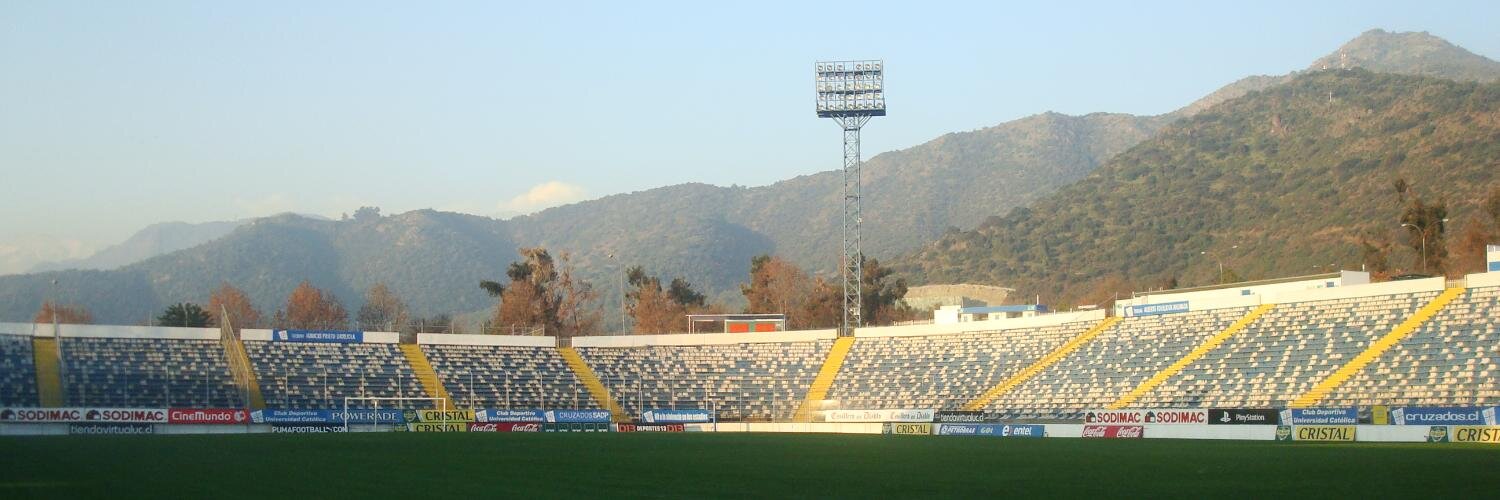
La semana pasada le rompieron la nariz, al otro día se presentó a entrenar y hoy te marca un doblete en copa libertadores jugando con máscara protectora.
Los huevos de Fernando Zampedri
Le agradezco a Jimmy muchas cosas este año, pero ahora está para cambio por Rossel. Suficiente. No parece que haya variedad de receta con los que están. #LosCruzados