Our paper published today @nature describes an ancient epidemic that occurred in central Eurasia in the years 1338-1339. We find that the epidemic was caused by plague (Y. pestis) and that it was associated with the beginnings of the Black Death. https://t.co/nWzObniTT3
Our paper on Tarim mummy genomes is finally out! Many thanks to support from all co-authors, especially from @twarinner@Choongwon Jeong @Yinqiu Cui @Johannes Krause!
The Tarim Basin mummies' surprising origins : Genomic study by an intl. team incl. Chao Ning, Yinquiu Cui & @twarinner reveals an indigenous Bronze Age population that was genetically isolated but culturally cosmopolitan. @Nature https://t.co/TGDefQRuva & https://t.co/kfrwIq0hWt
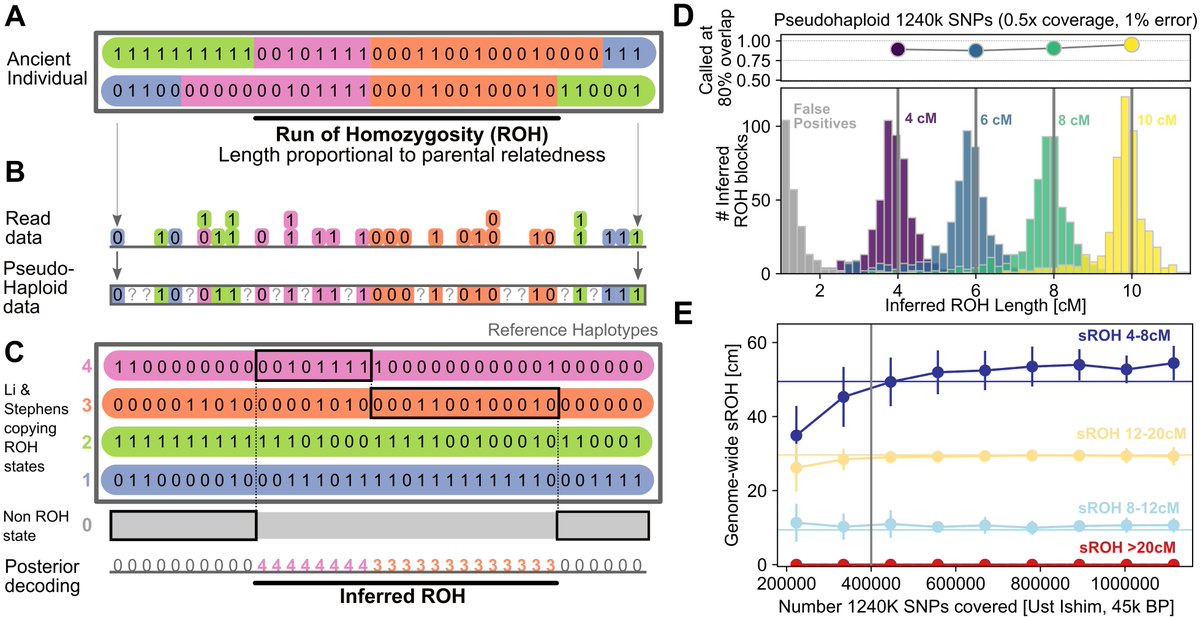
Finally out! https://t.co/ndDiaMRzBY. @jnovembre, @mattstoneback, and I created a tool to screen low coverage human ancient DNA for runs of homozygosity (ROH), the genomic signs of parental relatedness.
We analyzed 1,785 humans who lived up to 40 ky ago. Here is what we found:
As everybody now could have a break from watching the US election, here is our latest publication for you to read about population dynamics and the rise of influential nomadic empires in the eastern Eurasian Steppe! (1/7) https://t.co/KyJrs1jezG
Mummy from a Bronze Age cemetery at Xiaohe, Xinjiang(1500BC). By DNA test, archaeologists find the Xiaohe people had a mixed ancestry of South Siberians and West Europeans. Yet perhaps she should be left alone in her snug boat coffin, instead of being displayed in a glass case.