In our lastest paper in close collab with Wibhu/Dan/Mark, we have traced the genetic origin of modern Austroasiatic speakers of MSEA to ancient ones, and identified key genetic diversifications among populations associated to various AA language branches!
https://t.co/N4zEiHmzWp
Our study titled "Ancient genomes from the Yellow River Bend reveal long-distance population interactions between the Central Plains, Steppe, and southern China" has been released officially online at @CellReports on July 22! A joint work based aDNA lab at Fudan University!
We release new aDNA data of 23 individuals dating to the 4th–2nd millennia BP in the Yellow River Bend and find a significant prevalence of Yangshao-related genetic ancestry in this region and reveal an unexpected long-distance contact with the Mongolian Steppe and southern China
New @HistoGenes study from my group at @MPI_EVA_Leipzig. Led by @kwangwangk, Bendeguz Tobias and Doris Pany-Kucera: interdisciplinarity in action! Thanks to all coauthors for inspiring collaboration!
https://t.co/UQpEMPfxTF
Our latest interdisciplinary study reveals the story of East Asia meeting Europe in Lower Austria during 6th-9th centuries & their Peaceful coexistence (shared cultural feature) despite genetic difference! We reconstruct the past family pedigree inc. >450 individuals (a society!)
Ancient #genomes show integration of genetically different groups to the same early medieval #Avar society in the Vienna Basin, #Austria. New @HistoGenes study in @Nature, led by @kwangwangk, Bendeguz Tobias & Doris Pany-Kucera. https://t.co/TBJYuleYtt & https://t.co/vPykh3YqRj
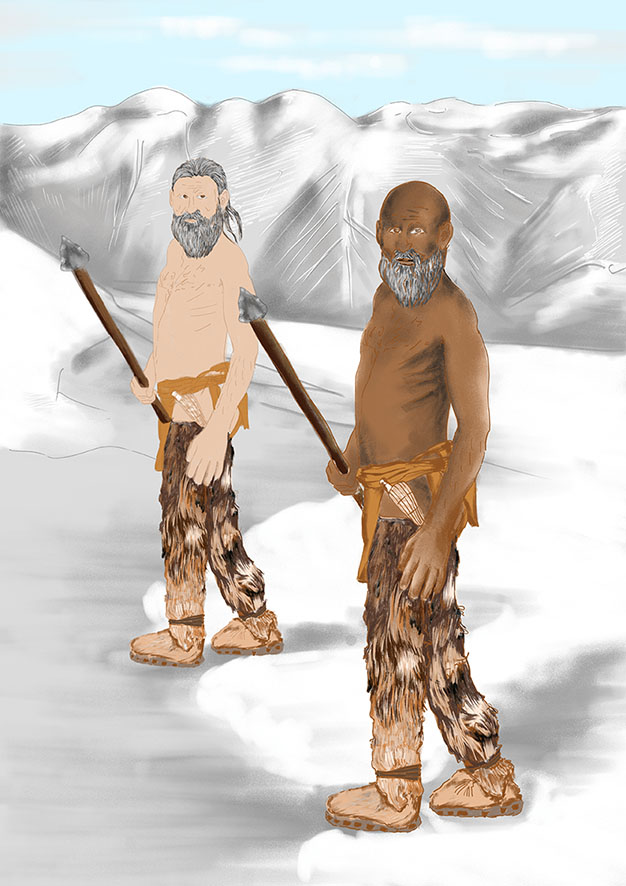
Wie hat sich das Bild von #Ötzi verändert?
Johannes Krause und sein Team @MPI_EVA_Leipzig haben neue Erkenntnisse aus den Genen der Gletschermumie gewonnen. Ein #Podcast mit dem Archäogenetiker 🎧 https://t.co/Gufx967KSQ #Forschungsquartett@detektorfm
#Ötzi: dark skin, bald head, Anatolian ancestry. High-quality sequencing of his genome gives new insights. Study in @CellGenomics by an intl. team led by Ke Wang, Johannes Krause & @AlbZink. @MPI_EVA_Leipzig@EURAC @oetzimuseum https://t.co/yBx6CEm3WB & https://t.co/NrmLfA3q9p
A new preprint by Alexis Simon "The contribution of gene flow, selection, and genetic drift to five thousand years of human allele frequency change". Alexis's thread follows 1/n
https://t.co/4UBVr79hhS
We think the mutation spectrum is evolving b/c it tends to cluster by population and species. Now in a study led by Annabel Beichman, we measure the mutation spectrum’s phylogenetic signal across 100 million years of mammalian evolution
https://t.co/kCXoXJLSER
Officially out, our work trying to delineate and understand selection happening during admixture in Neolithic Europe. We find that admixed Neolithic populations inherit more hunter-gatherer ancestry at the MHC region than expected by chance.
https://t.co/V4UnQStHvF
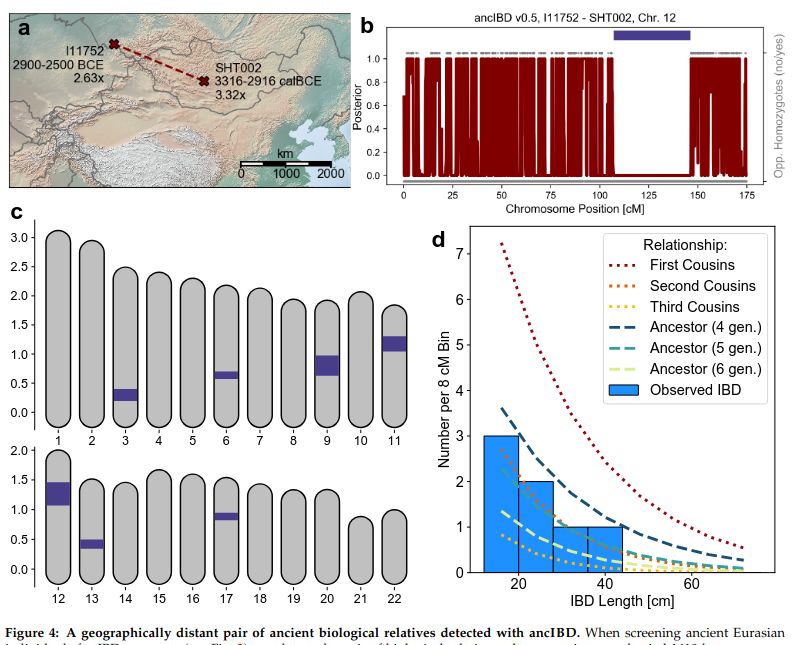
The age of IBD in ancient DNA is nigh! https://t.co/dGvvJEMDnc
In this preprint, we describe "ancIBD", a method to detect long shared haplotypes (known as IBD segments) in human ancient DNA data, and showcase applications. 🧬💀 (1/5)
We find 4000y.o. mummified hair from Sudan i) preserves ultra-short ancient DNA fragments with high interior aDNA damage, and ii) is genetically close to early eastern African pastoralists. Looking forward to seeing more hair aDNA & African aDNA.❤️Africa
https://t.co/BLxg1uFiKy
So happy that the first paper from our @HistoGenes project is up! We find striking similarity of elite Avar genomic data to Northeast Asia: the historical mystery of Avar origin may be less mysterious now. Great work of Guido from our lab and many others! https://t.co/1DjYuMcVAj
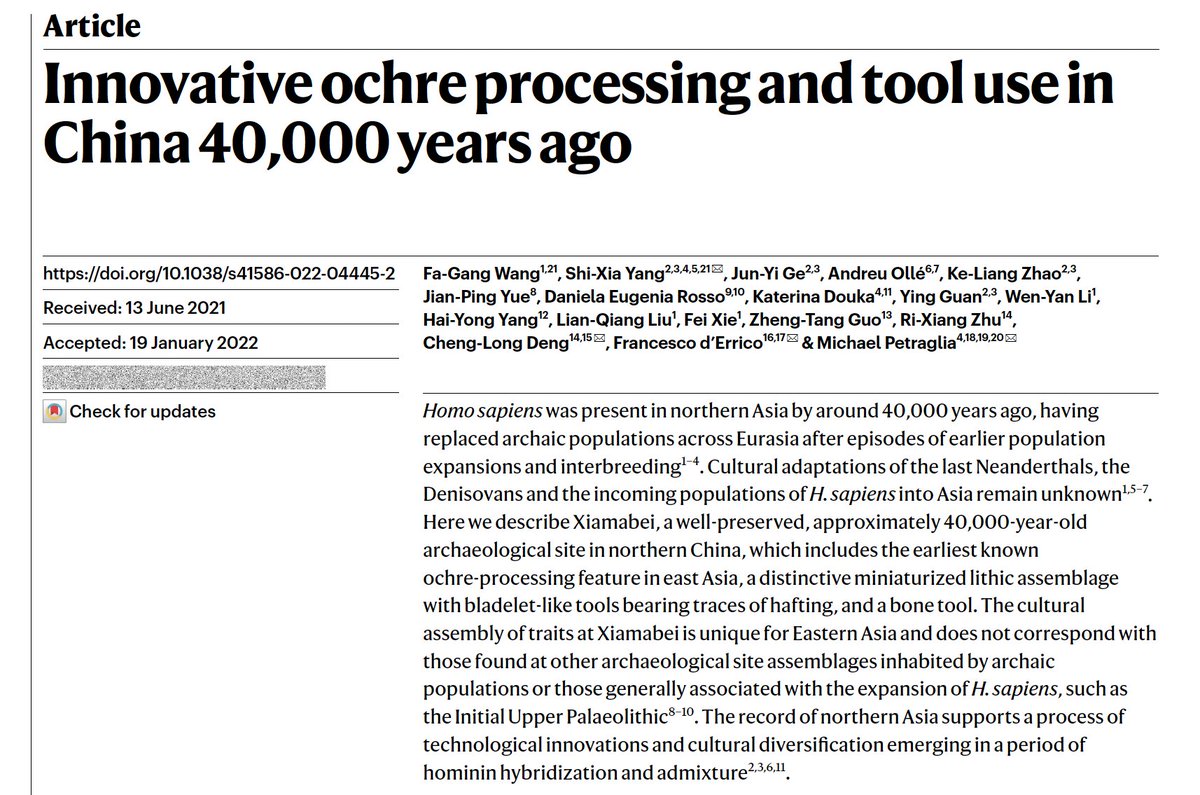
New Paper Alert! Pleased to have worked with terrific colleagues from Chinese, French and Spanish organisations to report on some new wonderful archaeological findings from Xiamabei, Nihewan Basin, #China@Nature, Thread 1/5