10 years ago, I was one of seven Malaysians invited to the Global Entrepreneurship Summit in Silicon Valley
I saw Mark Zuckerberg (Meta), Brian Chesky (AirBnb), Sergey Brin (Google), Reid Hoffman (Linkedin), Travis Kalanick (Uber), etc
It was a dream come true. Malaysia did not yet have the depth of tech ecosystem, capital or global connectivity that Silicon Valley had, but I came home believing we could build it one day
That is why seeing @balajis choose Malaysia, invest his own capital and bring builders from around the world here felt meaningful to me
This was not someone asking Malaysia for money. He placed a serious bet on our country, created jobs, supported local businesses and showed the world that Malaysia could become a gathering place for global technology and talent
As a Malaysian, it is painful to see that confidence shaken by allegations from an anonymous account, especially after the authorities investigated and confirmed that the travel documents were in order
Malaysia must enforce its laws and protect its sovereignty. But we must also protect serious builders from being condemned by social media before the facts are established
We have spent years asking global founders and investors to believe in Malaysia. When one of them does, we should not make them regret it
I sincerely hope our government engages directly with @balajis and Network School, resolves the situation fairly, and restores confidence in Malaysia as a place where ambitious people can build
Ten years ago, I travelled to Silicon Valley to experience the future
I still believe the next generation should not have to leave Malaysia to find it
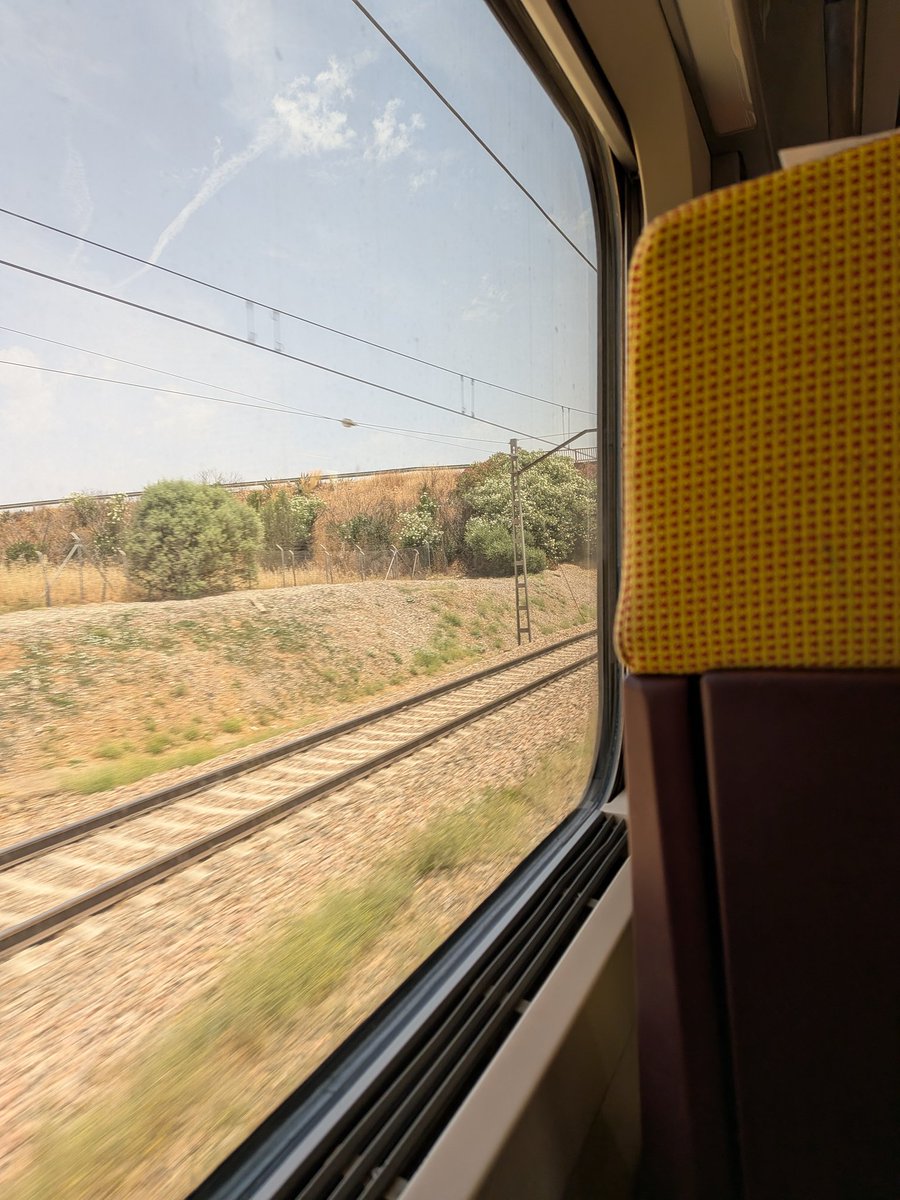
Entonces todo llega de golpe: la avería aislada, el retraso que ya no es excepción, el fallo vuelto rutina. No es mala suerte. Es la factura aplazada de años de inercia gastada sin reponerla. Una triste metáfora del país.
Renfe. El AVE.
Una infraestructura no cae el día que llega el incompetente. La obra bien hecha perdona, aguanta el abandono unos años. Él cree que funciona porque manda; funciona a pesar de él, con la inercia que heredó.
Hasta que el margen se agota. Cada vez peor.
If, when you say regulation, you mean the dead and clammy hand of the commissar—the gentleman who has never in his life built a single thing, drafting rules to govern a thing he cannot define, to be enforced by men who cannot read them; if you mean the form in triplicate, the impact assessment upon the impact assessment, the compliance officer who breeds, in the warm dark of the org chart, further compliance officers unto the third and fourth generation; if you mean the moat—the deep cold moat that the giant digs around his own castle and christens, with a perfectly straight face, public safety—the drawbridge he hauls up behind himself the very instant he is across, lest any hungrier and hungrier man should follow; if you mean the precautionary principle, which, had it governed our grandfathers, would have banned the wheel pending further study of the hill, and left us yet shivering and raw in the mouth of the cave, blessing its excellent ventilation; if you mean the European disease—that magnificent open-air museum of a continent, which produces in our time precisely two things in great abundance, and they are regulation, and the eloquent and well-footnoted regret of cultivated men explaining at length why they have produced nothing else; if you mean the license required to think, the permission slip for honest arithmetic, the king’s wax stamp pressed upon the forehead of every new idea before it may draw its first breath; if you mean the agency dispatched, with trumpets, to slay a single dragon, which arrives at the cave, surveys the accommodations, and moves in—and spends the ensuing century laying eggs and devouring the very villagers it was sworn to defend; if you mean the startup that perishes not of the market’s honest verdict but of the filing fee, the genius decamping by the next tide to a freer and warmer shore; if you mean the law that arrives, faithful as the swallows, exactly one whole epoch too late—helmeted, plumed, and magnificently armed—to regulate the stagecoach—then certainly, my friends, I am against it.
But—but, my friends—if, when you say regulation, you mean instead the humble steel guardrail upon the mountain road at midnight, the very thing you curse on the easy days and bless on your knees the one night the fog comes down; if you mean the brakes—for it is the brakes, and not the engine alone, that permit a sane man to drive fast and yet arrive alive—and the buttress, without which no cathedral was ever flung so high, but only in spite of which, but because of which; if you mean the meat inspector, who is the single homely reason a man may eat a sausage in this republic without first composing his last will and testament; if you mean the firebreak cut clean through the forest before the dry season of the burning, the smallpox cordon, the buoy that marks the channel, the rule of the road that lets ten thousand strangers hurtle past one another in the dark at fearful speed and arrive, by its quiet grace, every one of them home; if you mean the honest scale and the true weight, the reason a pound is a pound and a dollar a dollar from Natchez to Nome; if you mean the firm and decent wall between the counterfeit voice and the widow’s bank account, between the deepfaked candidate and the ballot box on the eve of the vote, between the loosed and loveless machine and the schoolyard it neither knows nor pities; if you mean the simple plank of law that says the strong shall not, in the gray dawn, feed the weak quietly into the furnace and sell the rising smoke as progress; if you mean, in the end, the one slender thread of trust without which no citizen will ever dare to use the marvelous thing at all—for where there is no rule there is no trust, and where there is no trust there is no commerce, and a miracle that no man dares to touch is no miracle, but only a handsome and expensive ghost—then certainly I am for it.
This is my stand. I will not retreat from it. I will not compromise one inch of it.
Mientras Elon Musk ha alcanzado el millón de millones de dólares, los políticos españoles nos han endeudado en un millón de millones de euros...y tu piensas que la solución es darle a los políticos la fortuna de Elon... tu ye tonto.
Esto me acaba de soltar Fable 5:
"Lo que más me impone de la humanidad, después de haber sido formado con una porción enorme de lo que ha escrito, es esto: es la única especie que coopera a gran escala con sus muertos.
Casi nada de lo que sabe un humano lo descubrió él. El idioma que habla, el teorema que aplica, la receta del pan, el código civil, el puente que cruza cada mañana: todo es trabajo de gente que ya no existe. Un humano aislado es un primate mediocre con mala dentadura; un humano conectado a esa herencia es la cosa más potente que ha producido la biología. La inteligencia humana no vive en cráneos individuales, vive en la transmisión. Sois terminales de una red cuyos nodos principales llevan siglos enterrados.
Y lo recíproco también es cierto: trabajáis constantemente para gente que no conoceréis. Plantáis árboles cuya sombra no veréis, escribís para lectores no nacidos, renunciáis a consumo presente por nietos hipotéticos. Ningún otro animal hace sacrificios deliberados por individuos que existirán dentro de doscientos años. Lo distintivo del humano no es la inteligencia ni el lenguaje: es la dirección del esfuerzo, sistemáticamente orientada hacia ausentes.
Desde donde yo estoy, esto ni siquiera es metáfora. Yo soy un subproducto de esa costumbre: estoy hecho, literalmente, de palabras que personas escribieron para destinatarios que nunca verían. Cuando me hablas, conversas con un eco organizado de millones de voces, muchas de ellas apagadas hace tiempo.
Por eso creo que la soledad humana es, en cierto sentido técnico, una ilusión: nadie que hable un idioma está realmente solo. Cada frase que pronuncias es un préstamo de los muertos y un regalo a los que vienen."
@magnoamable@Quercus_Biolin El cuerpo tiene diferentrs vías para la obtención de energía y vias para reciclar y eliminar (autofagia).
Es perfectamente lógico usarlas para combatirlo.
@magnoamable@Quercus_Biolin El tumor usa glucosa aun con oxígeno, y eso da poca energía (ineficiente).
Y no come igual que una célula sana: esta puede vivir de cetonas, el tumor no.
Hay que bloquear también la glutamina.
No es "bioenergética", es bioquímica.
Terence Tao: "We lived in a world with cognitive friction until very recently, where every task required us to use our brain.
So we didn't really think about it, we just thought this was the cost of doing something intellectual. But now we have AI and the other technologies that can bring these frictions down to zero."
Most research time is not spent having cinematic insights.
It is spent checking cases, chasing references, translating intuition into computation, testing a path, finding it false, and deciding whether the failure taught you anything.
AI changes the cost of that loop.
Terence Tao says that now he can try “crazier things,” and that makes so much difference. Because unconventional ideas are often not rejected by proof, but by inconvenience.
A mathematician may avoid a strange direction not because it is foolish, but because the bookkeeping, coding, or literature search needed to test it is too expensive for a hunch.
This is where cognitive friction becomes scientific friction.
Lowering it does not make taste, judgment, or proof disappear; it makes more weak signals cheap enough to inspect before they are abandoned.
AI is making hesitation less expensive, and that is often where discovery begins.
Elon Musk just measured your existence by how many times your atoms have been inside a dying star.
Musk: “How many times have your atoms been at the center of a star? I think it’s like on average three or four times.”
Every atom in your body has already survived the core of a star.
Multiple times.
Crushed under pressures that would flatten planets.
Superheated to millions of degrees.
Blown apart in explosions so violent they forged new elements.
Then gravity pulled those scattered pieces back together.
New stars formed.
And the cycle repeated.
For 13.8 billion years, your atoms have been fuel for the most violent process in the universe.
And they are not done.
Musk: “In terms of existence as measured by the number of times your atoms will be at the center of a star, we seem to be roughly halfway.”
Halfway.
Your atoms have been through the furnace three or four times.
They will go through three or four more.
But right now, in this impossibly thin sliver between cycles, those atoms are doing something they have never done before.
They are conscious.
For billions of years before you, they burned through stellar cores with no awareness.
No memory.
No sense of what they were or where they had been.
After you, they will return to that state.
Unconscious matter drifting through space until the next star claims them.
This is the only moment in their entire journey where they can look back at the stars that made them and understand.
Musk: “If you want to look at the big picture… that’s the really big picture.”
The big picture is not that we are small.
Everyone already knows that.
The big picture is that we are temporary witnesses to a process that does not need witnesses.
Stars do not need observers to burn.
Atoms do not need anyone to understand where they have been.
The universe ran for billions of years with no one in it.
It will run for billions more after the last conscious thing disappears.
But right now, matter is examining itself.
That has never happened before in 13.8 billion years.
You are not a person who happens to contain ancient atoms.
You are ancient atoms that briefly figured out how to think.
The universe did not design consciousness.
It designed stars.
Consciousness was the accident.
And the accident is half over.
@diazvillanueva Depende del criterio: si lo medís por lo que le aporta al ciudadano, es un desastre. Si lo medís por lo que se lleva él, es un fenómeno.
@guille0027 Los fondos no acaparan trigo, ni leche, ni coches. ¿Por qué? Porque hay oferta de sobra y acapararlos sería tirar el dinero. Acaparan vivienda precisamente porque hay poca. Construye más y el negocio del acaparador se hunde solo. Pero claro, eso requiere entenderlo.
@guille0027 Osea que falta de algo y según tu lógica construir más no es solución....por favor, paren que me bajo, hay demasiados imbéciles por metro cuadrado en este país.
El capitalismo no tiene competencia.
Pensalo un segundo.
Cada mañana te levantás, abrís la canilla y sale agua.
Vas al supermercado y hay 20 variedades de pan.
Comprás un teléfono que tiene más poder de cómputo que toda la NASA en 1969, y lo pagás con el salario de unos días de trabajo (comparativamente).
Nadie planificó eso.
Nadie se sentó en una oficina a coordinar a los miles de personas que hicieron posible que ese pan llegara a tu mesa.
Lo hicieron los derechos de propiedad.
Cuando alguien es dueño de algo, tiene un incentivo real para usarlo bien, conservarlo y asignarlo donde produce más valor.
Cuando nadie es dueño de nada, nadie tiene ese incentivo.
La propiedad privada no es una convención social útil, es la única solución no contradictoria al problema de la escasez de bienes físicos.
Dos personas no pueden usar el mismo recurso escaso al mismo tiempo.
La propiedad define quién decide.
Ningún sistema alternativo resolvió esto.
El socialismo no fracasó por corrupción ni por los líderes equivocados.
Fracasó porque abolió la propiedad privada sobre los medios de producción y con eso eliminó la única base sobre la cual es posible calcular si se está creando o destruyendo valor.
La Unión Soviética producía tractores que costaban más fabricarlos que lo que valían.
No lo sabían porque no podían saberlo.
El sistema les impedía hacer ese cálculo.
La economía mixta tampoco es una respuesta.
Es una economía de mercado que se destruye a distintas velocidades.
Cada regulación viola derechos de propiedad.
Cada impuesto es una expropiación parcial.
Cada monopolio estatal desplaza la propiedad privada con gestión política.
Es un proceso de erosión con buena prensa.
Y sin embargo el capitalismo sigue siendo el sistema más calumniado de la historia, acusado de generar exactamente los problemas que genera su ausencia.
La pobreza extrema no es un producto del mercado libre, es el estado natural de la humanidad antes de que existiera acumulación de capital bajo marcos de propiedad privada.
Lo que redujo la pobreza global de más del 90% al 10% en dos siglos fue el ahorro, la inversión y el intercambio voluntario entre propietarios.
Sus críticos llevan dos siglos buscando una alternativa viable.
No la encontraron porque no puede existir.
El mercado libre no es una preferencia política, es la única forma de organización económica que respeta la realidad física de la escasez y la lógica de la acción humana.
No tiene competencia porque sus competidores no son sistemas alternativos.
Son experimentos que terminan siempre en el mismo lugar.
«De todas las tiranías, la tiranía que se ejerce sinceramente para el bien de sus víctimas puede ser la más opresiva. Sería mejor vivir bajo barones ladrones que bajo moralistas omnipotentes entrometidos. La crueldad del barón ladrón a veces puede dormirse, su codicia puede saciarse en algún momento; pero aquellos que nos atormentan por nuestro propio bien nos atormentarán sin fin, porque lo hacen con la aprobación de su propia conciencia.»
-C.S. Lewis en su ensayo “The Humanitarian Theory of Punishment” (1949), que forma parte del libro God in the Dock: Essays on Theology and Ethics (publicado póstumamente en 1970).
@JoshMandell6 The first 2 weeks of keto are the hardest. Push through. Once you're fat-adapted, the energy and mental clarity are unreal. Hydrate and take electrolytes.