Last night, after learning of the passing of Brad Arnold, 47, the frontman and lyricist of Three Doors Down, I found myself lying in bed with the lights off, thinking about what he meant to me.
I was in my very early twenties.
I was a U.S. Marine, stationed in Okinawa, Japan.
And when Here Without You was released, I was going through one of the hardest seasons of my life.
At night, I listened to that song quietly in the barracks.
I let myself feel everything I’d been holding in.
I cried the kind of tears that actually move something through you, the kind that leave you lighter afterward.
That’s when it hit me how music really works.
We say music is universal, and it is, but not because everyone likes the same songs.
It’s universal because you don’t need explanation or permission for it to reach you.
You don’t even have to fully understand the words. Like opera, it carries emotion straight past language and into the body.
Music becomes an invisible presence in our lives.
It sits with us when things feel too heavy or too deep to explain.
Sitting alone in a car after a breakup, rain tapping against the windows.
The volume either turned all the way up or barely there at all.
Moments where life feels overwhelming, but the music understands anyway.
And the beautiful thing about music is this, it doesn’t care if you’re healthy.
It doesn’t care if you’re chronically ill, chronically pained, disabled, or exhausted.
When the body takes things from us, music doesn’t.
It lets us visit the dreams we never got to fulfill.
It carries us back to memories of who we were when we felt vibrant and strong.
It holds our milestones too, first loves, weddings, long drives, quiet nights we didn’t realize would matter so much.
Music is something we can always turn to when life comes down hard on us.
And we have an entire palette to choose from, different genres for different seasons, different wounds, different moments we’re trying to survive.
That’s why some losses hit deeper than we expect.
Because certain voices weren’t just entertainment, they lived with us.
They helped shape who we became in moments we survived quietly.
And when a voice like that is gone, we don’t only feel the loss publicly.
We feel it in the quiet place we used to turn to when nothing else could hold us.
I can't stop thinking about this question:
Are you willing to sprint when the distance is unknown?
In 2021, Georgia Tech strength coach Lewis Caralla delivered this epic speech to the football team.
If it doesn't get you motivated, you may need to check your pulse...
He opens with a few harsh truths:
• Winning isn't loyal to you
• Winning doesn't care about you
• Winning doesn't care how sore you are
• Winning doesn't care how hard you work
• Winning doesn't care how much sleep you get
But it's his question that stuck with me:
Are you willing to sprint when the distance is unknown?
The willingness to sprint with no clear view of the finish line is rare.
It requires two things:
1. A deep belief in one's self
2. A deep belief in the mission
If you have 1 but not 2, you won't be able to do it.
If you have 2 but not 1, you won't be able to do it.
You need both.
In my observation, the greatest things in life are accomplished when you're willing to sprint when the distance is unknown:
The sprint to care for your loved ones in their time of need.
The sprint to build something meaningful.
The sprint to serve others and create positive ripples in the world.
Goal: Find those rare things in life that you're willing to sprint for when the distance is unknown.
That, to me, is the definition of winning.
"And why chase winning? Because the only thing that's guaranteed in life if you don't chase it is losing."
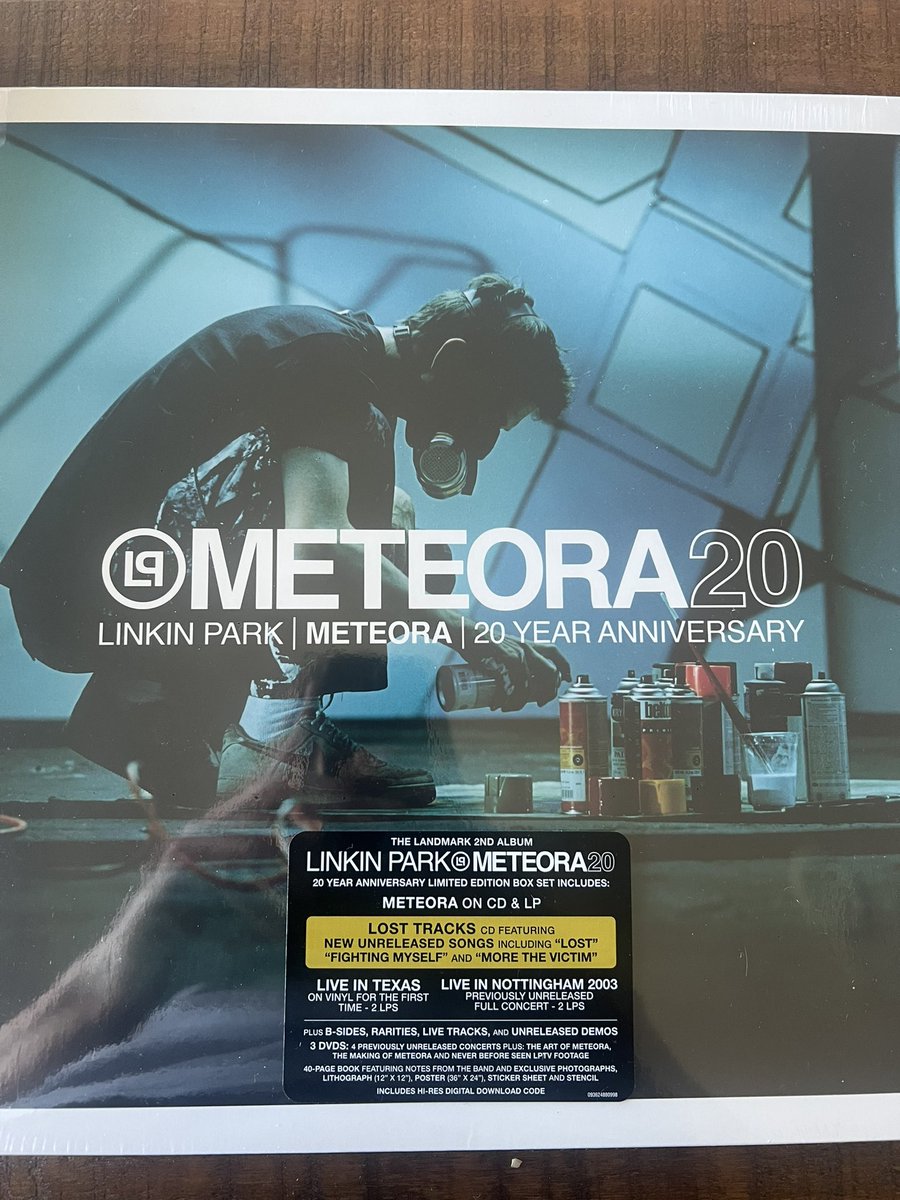
Will never forget unwrapping Meteora twenty years ago for my birthday. Blew out my cd player in a day. Can’t believe it’s been that long. Thank you @Linkinpark for this time capsule and bringing me back down memory lane. That adolescent voice will forever be in my soul.