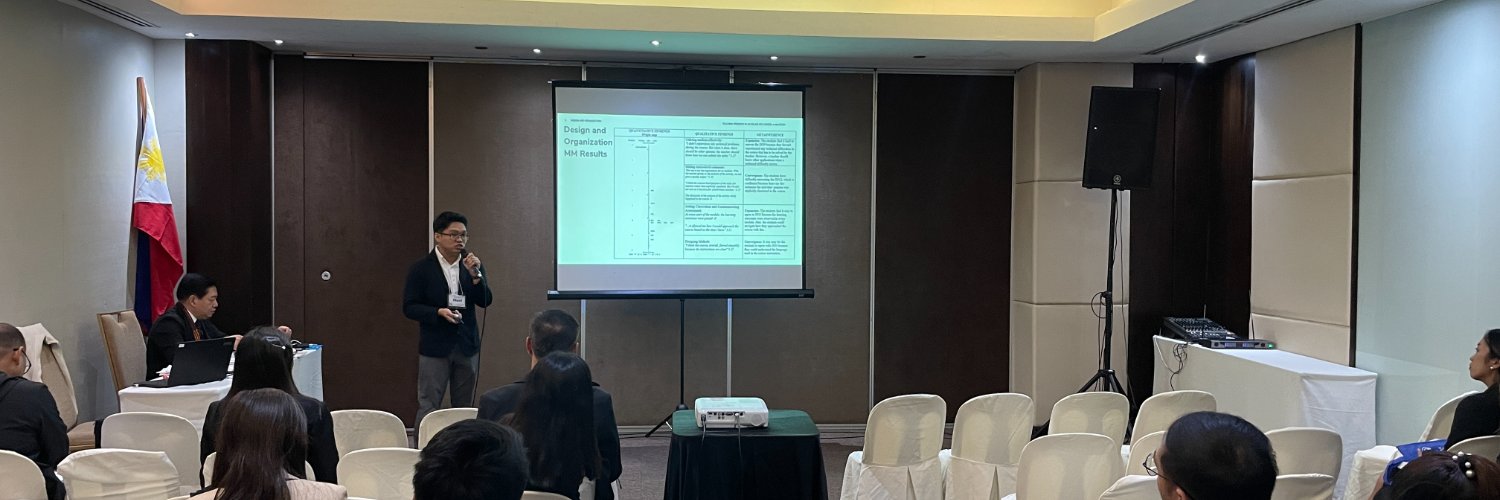
Excited to share that I have just published my first solo article, a mixed methods study! This was my first attempt at writing an MMR, and I am thrilled it was accepted and is still worthy of publication. I conducted this study during the pandemic.
https://t.co/3xv0jNySzm
Current opportunity for qualitative researchers.
Sage Research Methods Community: Using AI for Research
Call or Training
View the opportunity: https://t.co/s9YelxMmNx
TQR News & Notes
Qualitative Analysis: Questions to Stimulate Researcher Reflexivity in the Age of GenAI
Research Design Review
Read more: https://t.co/kYY4uk7PRL
Current opportunity for qualitative researchers.
Participatory Action Research
National Centre for Research Methods
View the opportunity: https://t.co/x2jLuvuVXR
JSPS Postdoctoral Fellowships for Research in Japan 2027 (Open Call) - The Japan Society for the Promotion of Science (JSPS) has opened applications for its FY2027 Postdoctoral Fellowships for Research in Japan, ... - https://t.co/BPKunBbKnn
Current opportunity for qualitative researchers.
Qualitative Data Analysis
Social Research Association / National Centre for Research Methods
View the opportunity: https://t.co/eJCxTarwyl
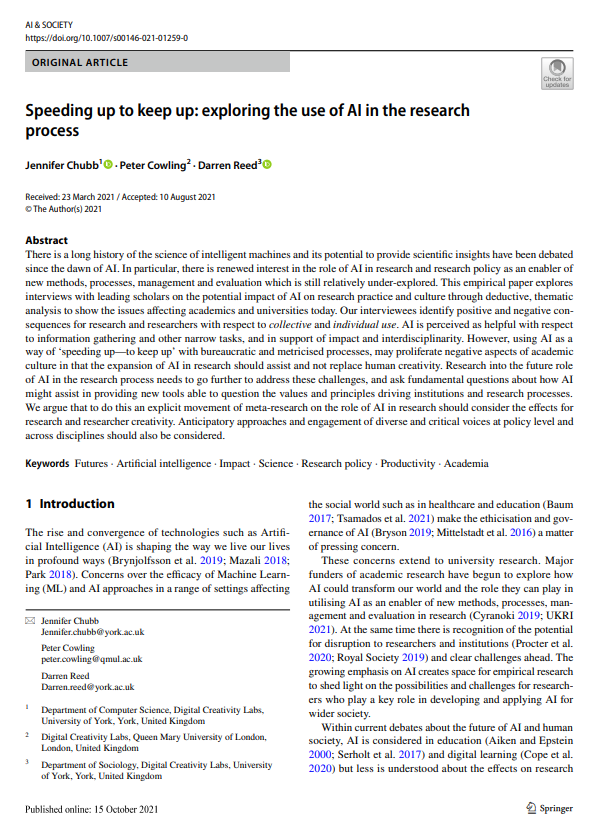
AI is not replacing researchers. It's changing how research gets done.
A study explored AI's growing role in the research process and found opportunities to improve information gathering, productivity and interdisciplinary collaboration.
The key question isn't "Will AI replace scientists?"
It's "How can AI help scientists ask better questions and make better discoveries?"
The future of research is likely human creativity + AI assistance, not one without the other.
DOI: doi. org/10.1007/s00146-021-01259-0
Beğendiğim bir makale👇🏼 nitel çalışmalarda sık görülen ve kolay adlandırılmayan bir durum: erken analitik kapanış (premature closure of analysis). Yani araştırmacının birkaç kod/kategori gördüğünde analizi tamamlanmış sayması; oysa veri henüz derinlemesine yorumlanmamış oluyor.++
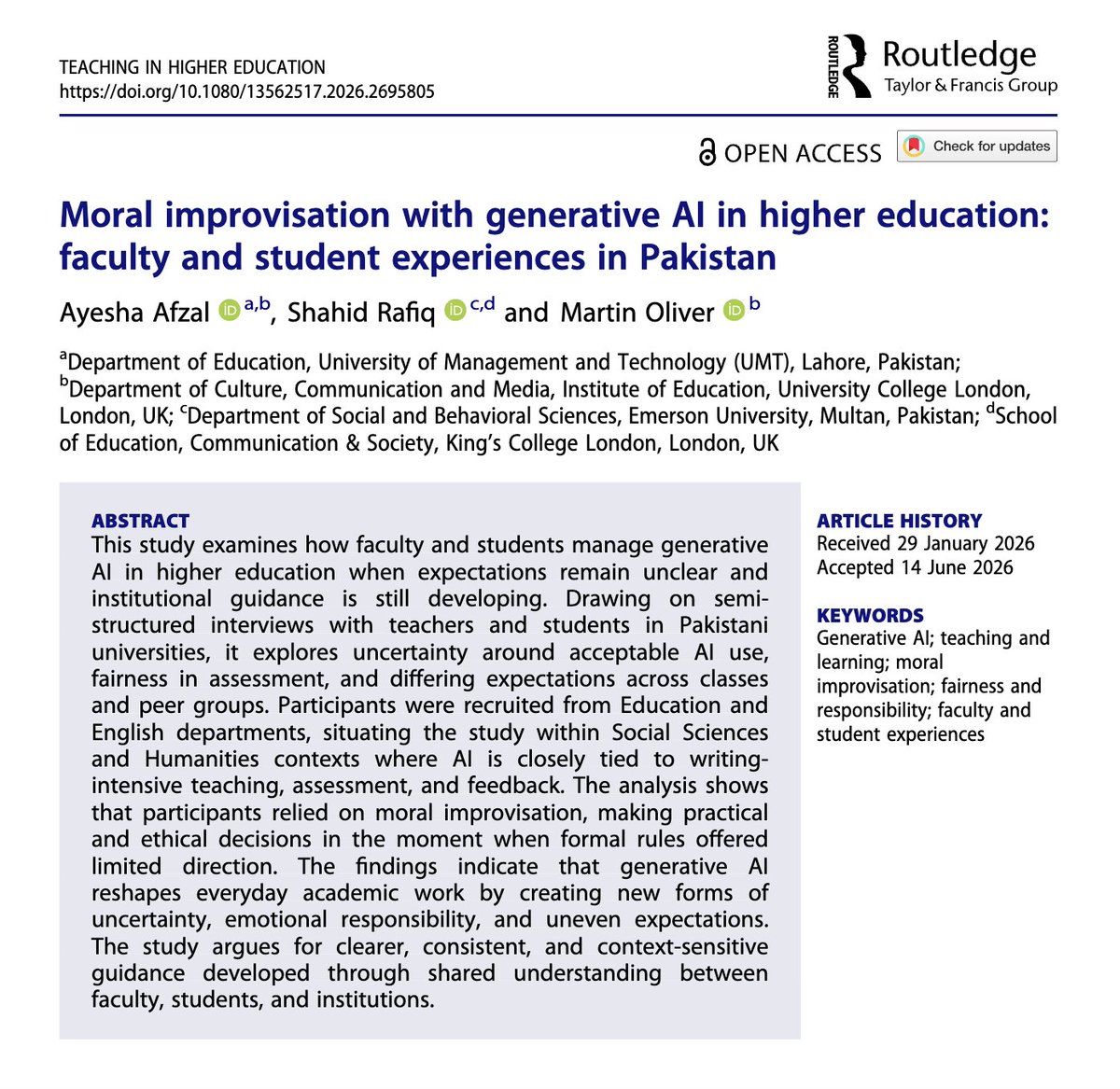
New publication alert! 🚨
Moral improvisation with generative AI in higher education: faculty and student experiences in Pakistan
By Ayesha Afzal, Shahid Rafiq and Martin Oliver
https://t.co/7cL1Ejx7Wy
#HigherEducation#GenAI
Featured “AI” Qualitative Research Publication of the Month
Anis, S., & French, J. A. (2023). Efficient, explicatory, and equitable: Why qualitative researchers should embrace AI, but cautiously. Business & Society, 62(6), 1139-1144. https://t.co/lAVBKJFpwY
#tqr#research
Applications now open for the FY2027 Invitational Fellowships (Long-term, Short-term (1st)). Please submit application forms via Japanese host institutions to the JSPS Electronic Application System.
🕔Deadline: 5 p.m. on August 28, 2026 (JST)
🔗https://t.co/mOxjdQk6JN
#JSPS #fellowship
Applications now open for the FY2027 Postdoctoral Fellowships (Standard (1st)). Please submit application forms via Japanese host institutions to the JSPS Electronic Application System.
🕔Deadline: 5 p.m. on August 28, 2026 (JST)
🔗https://t.co/oXNeGojJHs
#fellowship#postdocs
Eight reasons why your research paper got rejected and how to avoid them
Download the PDF by clicking the link below.
Follow Silvi on LinkedIn for more free resouces on academic writing.
https://t.co/KAR0fmEAP4
PhD Students – How to identify related papers for your research paper?
1. Go to https://t.co/q2nnjqxKY8
2. Paste your DOI or title of your research paper
3. @ResearchCollab_ will display the network of papers
4. Explore the network in following ways
→ Filter the network of papers based on research field
→ Filter the network based on thematic clusters
→ Filter the network based on keywords
→ and much more
As you find related papers, keep saving them.
This use case has multiple advantages.
➟ You won’t miss a related paper to cite in your paper
➟ You can identify related papers for your lit review
➟ You can explore new research directions and trends
➟ You can visualize the entire collection of papers
As a researcher, work smarter not just harder.
For this, try ResearchCollab:
https://t.co/q2nnjqxKY8
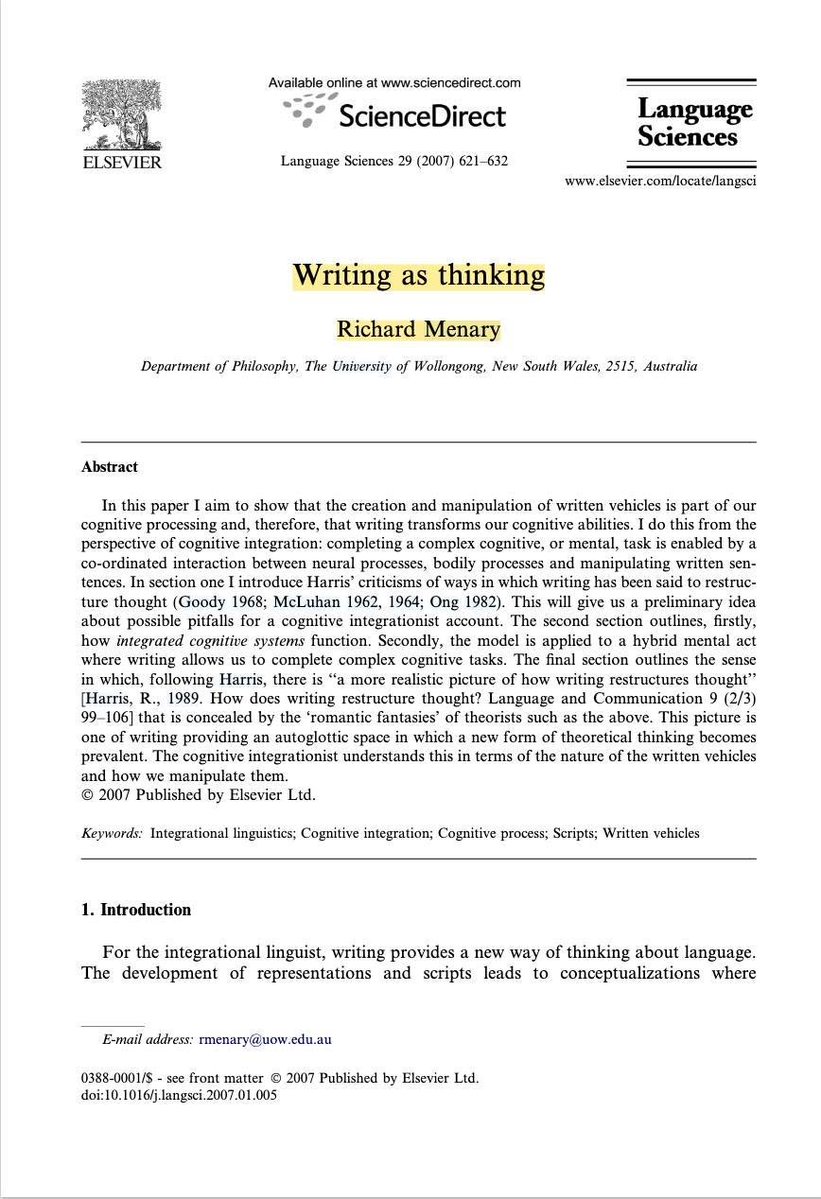
Does “writing is thinking” still hold when AI can do most of the writing?
If writing has long been one of the main vehicles of thought, what happens when AI starts carrying much of that cognitive labour?
I have been thinking about this after reading Richard Menary’s paper Writing as thinking.
His argument is powerful. Writing is part of thinking. We do not simply think first and write later. We think through the act of writing itself.
Drafting, revising, deleting, moving sentences around, rereading a paragraph, seeing a gap in an argument, finding a clearer way to say something. All of that is cognitive labour.
But generative AI changes the conditions around this argument.
Before AI, writing carried much of the heavy lifting. It was one of the main ways students externalized thought, struggled with ideas, organized meaning, and developed judgement.
Now AI can produce the paragraph, polish the sentence, restructure the argument, summarize the reading, and generate the reflection.
So the question becomes serious: what happens to the thinking that used to happen through writing?
I still believe writing matters deeply. But I also know people, including people close to me, for whom writing creates anxiety. They think better through sketching, diagramming, drawing, speaking, mapping, or building.
So maybe the old mantra “writing is thinking” belonged to an age when writing carried far too much of the burden.
This also explains part of our current assessment problem. For years, education has leaned heavily on the written product as the main evidence of learning.
Generative AI has disrupted that assumption.
A polished text can still tell us something, but it can no longer carry learning assurance by itself. We need process evidence, oral explanation, drafts, diagrams, annotations, design choices, and moments where students show how their thinking developed.
Literacy is a situated practice. Pre-AI literacy and post-AI literacy belong to different conditions. Now what we need to think about is whether our students can think across tools, modes, contexts, and constraints?
Free 108-page guide with practical tips on academic writing by the University of Hohenheim
Click the link below to download the guide
Follow Siliv on LinkedIn for more free resources on academic writing.
https://t.co/4vJbhqJxpJ