Conocí a un Prompt Engineer que factura 1,2 millones de dólares al año.
Le pregunté cómo escribía prompts tan brutales…
Me mandó un curso gratis de Anthropic de solo 2 horas.
Lo terminé anoche.
A mitad del curso me quedé congelado.
Llevaba usando Claude mal todo este tiempo.
Completamente mal. 😳
Si usas Claude (aunque sea de vez en cuando)…
guarda este post.
Te va a cambiar para siempre cómo hablas con la IA.
El ingeniero que construyo Claude Code acaba de soltar un video de 28 minutos donde te enseña a escribir prompts que realmente funcionan
He visto cursos de 300 dolares que no llegan ni a la mitad de lo que explica en los primeros 10 minutos
Archivos CLAUDE.md, atajos de memoria, sesiones paralelas y patrones de prompting que cambian el juego
Todo en un solo video y completamente gratis
Da igual si eres principiante, desarrollador o ya llevas meses usandolo
Esto te va a hacer usar Claude como nunca antes
🚨 NOTEBOOKLM acaba de cambiar cómo se construyen los cursos.
No lo uses solo para resumir PDFs, úsalo para crear sistemas completos de aprendizaje.
Aquí tienes 7 prompts:
Show Codex a workflow once. Reuse it as a skill.
Record & Replay lets you show Codex a recurring task, like filing an expense report or submitting a time-off request.
Codex turns that demo into an inspectable, editable skill.
You control when recording starts and stops.
People think learning Claude takes days. It doesn't.
I wrote 17 free guides that teach it in hours:
Claude 101: https://t.co/QQDmzBAoH5
Claude Code: https://t.co/o782qegoKu
Claude Skills: https://t.co/RgQUCNMqzQ
Claude Connectors: https://t.co/cSPMBUNmRG
Claude for Excel: https://t.co/ZgmUFXd0Iw
How to Prompt: https://t.co/Sw2tg2PMMc
Claude Certificates: https://t.co/LyV7fegv4c
Claude for your team: https://t.co/NakViTGCAL
Stop Prompting Claude: https://t.co/45xPLDRB6Y
AI Slides (PPT in 2026): https://t.co/OY7cHDTV7l
Claude Design: https://t.co/FhlRSlH0aD
Set up Claude Cowork: https://t.co/4jygw4M1RO
Claude to sound like you: https://t.co/LyV7fegv4c
Stop writing like AI: https://t.co/JXKAVP6hdS
Claude as your computer: https://t.co/tQDrcs8drQ
Claude Cowork + Project: https://t.co/xU97EpdrEe
Stop hitting Claude limits: https://t.co/Yu24rPQafQ
___
1. Save this list for later (three dots, top right).
2. Share it with a friend by ♻️ reposting this image.
3. Subscribe to my free newsletter: https://t.co/psB7XxAv8w.
Here are 10 GitHub repos that quietly print money while you sleep.
1. Cal. com
Open-source Calendly. Fork it, white-label it, sell to dentists and lawyers for $200/month. The founders hit $5M ARR in 3 years doing exactly this.
Repo → https://t.co/haz8ihRsHm
2. Plausible Analytics
Privacy-first Google Analytics. Self-host it, resell to agencies for $50/month per client. Two founders bootstrapped this to 7 figures.
Repo → https://t.co/RFrcpqTBQ7
3. Ghost
Open-source Substack with 100% margin. 1,000 readers at $5/month equals $60,000 a year. Forever.
Repo → https://t.co/Z1MdZ5Zapg
4. n8n
Open-source Zapier. Sell automation services for $500-$2,000 per setup. n8n raised $14M because the agency model behind it works.
Repo → https://t.co/hdycABGGc1
5. Supabase
Free Firebase replacement. Build a SaaS in a weekend, charge $29-$99/month. They raised $116M for a reason.
Repo → https://t.co/dFB2QvafA7
6. Medusa
Open-source Shopify. Take 5% on every sale forever. Zero rev share to Shopify.
Repo → https://t.co/uEuCK6zuZO
7. AppFlowy
Open-source Notion. Sell self-hosted to enterprises worried about data privacy. They raised $30M because this market is massive.
Repo → https://t.co/IDMykTCkMU
8. Coolify
Open-source Vercel and Heroku. Charge developers $20/month to manage their deployments. Replace their $200 Vercel bill.
Repo → https://t.co/N5Fk22qraT
9. Listmonk
Open-source Mailchimp. Send unlimited emails for the cost of an AWS bill. Resell to agencies at 10x markup.
Repo → https://t.co/NS6Uukcklw
10. Penpot
Open-source Figma. Sell self-hosted design tools to agencies who refuse to upload client files to the cloud.
Repo → https://t.co/Lx1CYUP4p4
The difference between developers who build features and developers who build businesses is one decision.
Pick one of these. Fork it this weekend. Ship it next week.
The founders behind these repos already proved the model.
Save this. Share it with the developer in your life who deserves to break free.
100% free. 100% open source.
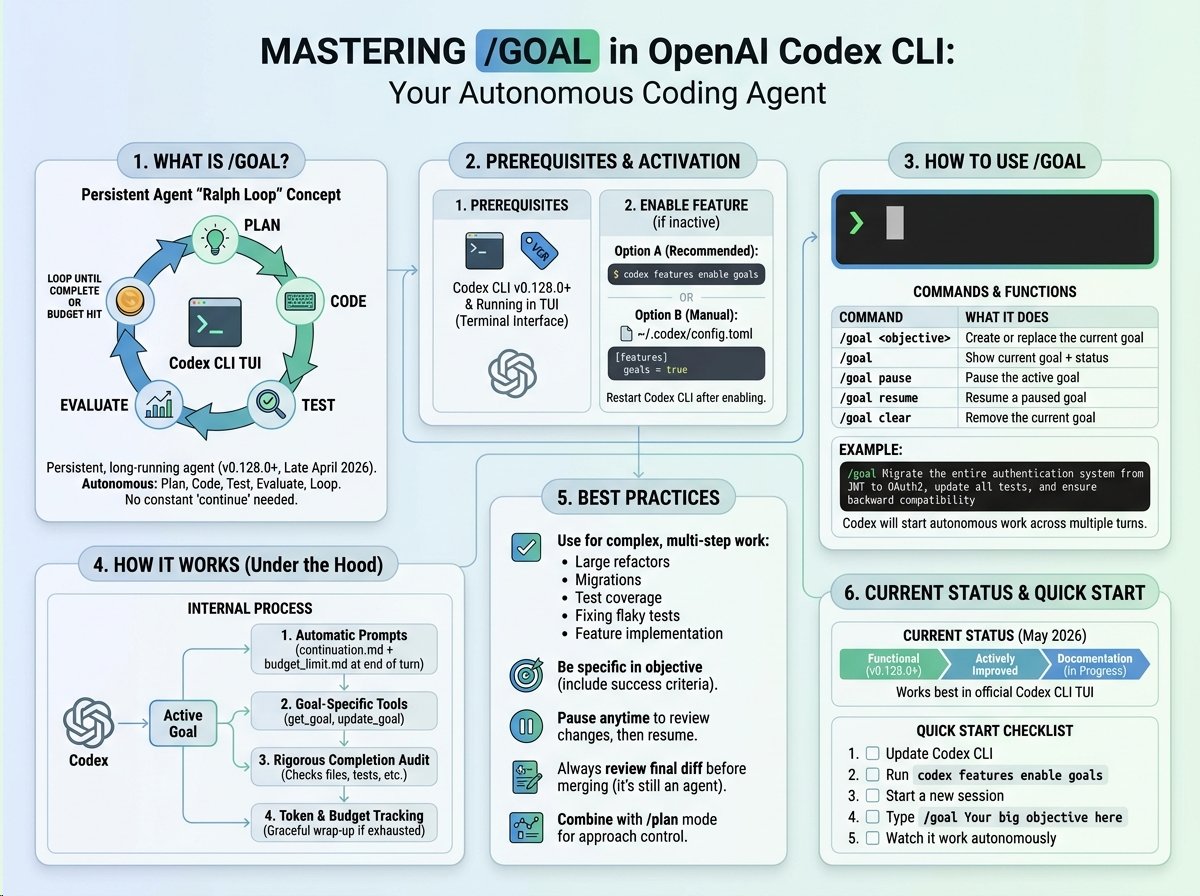
OpenAI Codex CLI just got way more agentic.
With /goal, you give it one objective and it keeps working across turns until the goal is done.
Master it this weekend. Bookmark this.
If I had to land a $200K AI engineer job in 90 days, I would not get a degree.
I would master these 10 GitHub repos.
1. awesome-llm-apps
The production AI playbook. RAG, agents, multimodal apps, all in working code. 106K+ stars.
Repo → https://t.co/oXrD5A8K6a
2. LangChain
The foundational framework. Used in production by Klarna, Replit, Elastic, and most AI startups in 2026.
Repo → https://t.co/alIh6rDDIu
3. LangGraph
The orchestration layer powering production agents. The skill on every senior AI engineer job description.
Repo → https://t.co/bzVBn9uecV
4. CrewAI
Multi-agent coordination. The framework most Fortune 500 teams reach for first.
Repo → https://t.co/0xohE065sD
5. Ollama
Run any open-source LLM on your own machine. The fastest way to learn how models actually work.
Repo → https://t.co/gyZhUdzsnZ
6. awesome-mcp-servers
MCP is the standard every major AI lab adopted in 2026. Knowing it puts you ahead of 99% of engineers.
Repo → https://t.co/ejVOgkRJDX
7. Qdrant
The vector database used for production RAG at scale. Embeddings and semantic search are non-negotiable for AI roles.
Repo → https://t.co/ziSSXW2dzZ
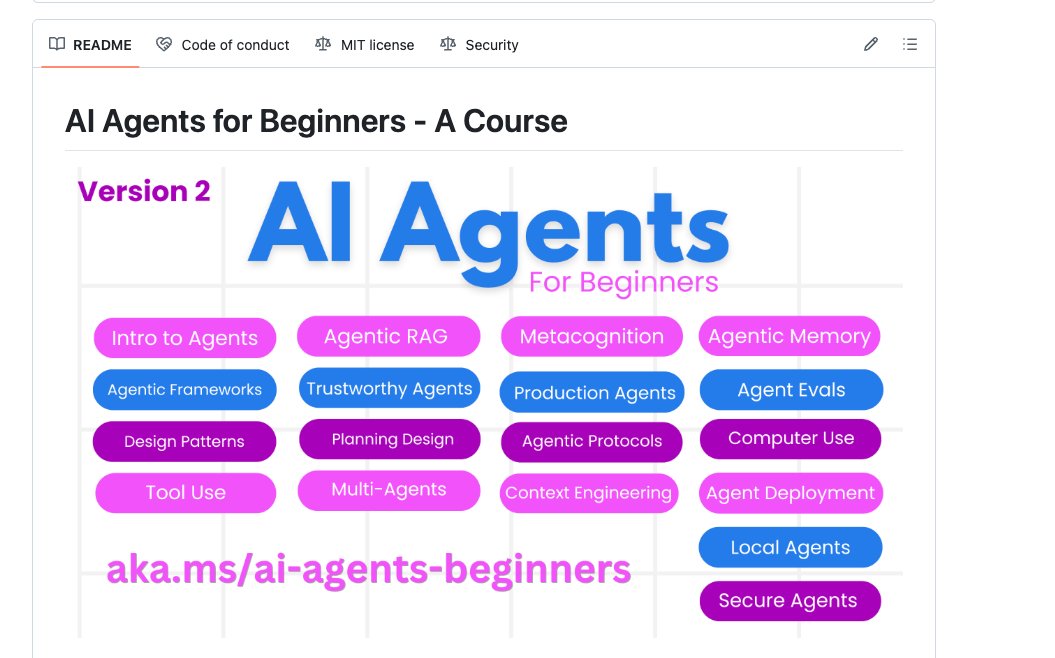
8. AI-Agents-for-Beginners
Microsoft's free 12-lesson course on building agents. Real code, real exercises, real prep.
Repo → https://t.co/7dNsDw6bTj
9. system-design-primer
Production AI is system design. The repo FAANG engineers use to prep for interviews.
Repo → https://t.co/AypwqcL1Xz
10. awesome-claude-code
The playbook for the tool now used inside FAANG, OpenAI, Anthropic, and most YC startups.
Repo → https://t.co/VhNjDoz7YM
Here's the wildest part:
A $200K AI engineer in 2026 isn't paid for a degree.
They are paid for what these 10 repos teach.
The market doesn't care where you learned it. It only cares if you can ship.
90 days. 10 repos. One portfolio that proves you can do the work.
That's it. That's the whole game.
Save this before you forget.
100% free. 100% open source.
If you read books and forget everything, this is for you.
NotebookLM can turn any book into action plans, memory notes, and usable insights.
Here are 12 prompts:
🚨|💾 Alguien acaba de soltar la arquitectura más honesta de una AI app en producción 🧠
No es un repo, es una ruta a seguir, es lo que realmente se ve cuando esto escala.
Aquí el desglose:
→ services/ — RAG pipeline, semantic cache, memoria, query rewriter, router. No un archivo. Cinco.
→ agents/ — document grader, decomposer, adaptive router. Se autocorrige solo. Sin que le expliques.
→ prompts/ — versionados, tipados, registrados. Nunca hardcodeados. Nunca.
→ security/ — input guard, content filter, output filter. Tres capas. No una.
→ evaluation/ — golden dataset, offline eval, online monitor. La mayoría skipea esta capa completa y shipea a ciegas 🙈
→ observability/ — tracing por etapa, feedback ligado a traces, costo por query.
→ .claude/ — contexto del codebase para tu AI coding agent antes de que toque un solo archivo.
El demo es un archivo.
Producción es esto.
Nunca más voy a configurar skills manualmente 🧠
Gracias @midudev por compartir esto.
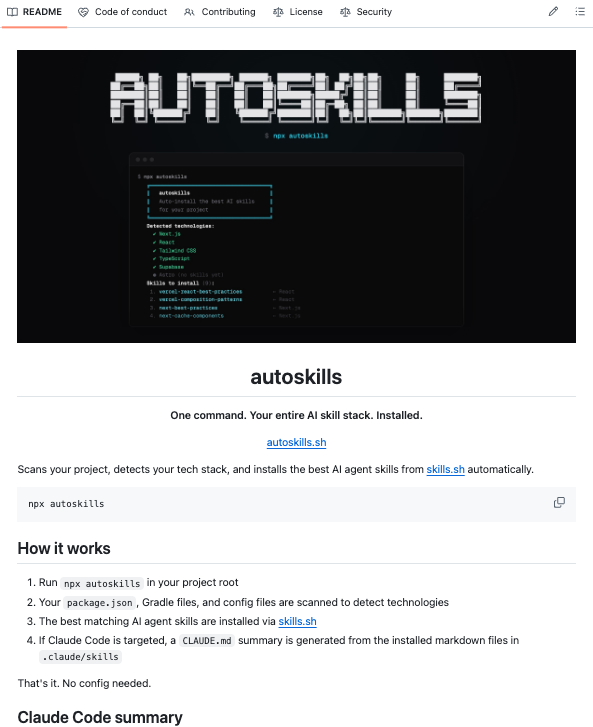
Alguien open-sourceo un solo comando que escanea tu proyecto, detecta todo tu stack y te instala los AI agent skills correctos para cada tecnología. Solo.
Se llama autoskills.
Ejecuta `npx autoskills` en la raíz de tu proyecto.
Eso es todo.
→ Lee tu package.json y archivos de config para fingerprintear tu stack
→ Matchea lo detectado contra un registry curado en https://t.co/pXJfAI28HK
→ Instala skills para 50+ tecnologías: React, Next.js, Vue, Svelte, Astro, Tailwind, Supabase, Neon, Playwright, Expo, Stripe, Prisma, Cloudflare, AWS, Vercel, GSAP, Bun, Deno, Hono, NestJS, Spring Boot y más
→ El flag `--dry-run` te muestra qué instalaría antes de tocar nada
Un comando.
Todo tu AI skill stack.
Instalado.
Repo🔗: https://t.co/XQ8etl4OPU
CANCEL your weekend plans.
You NEED to:
• Learn Claude Code
• Learn Cowork (build 1-2 practical workflows)
• Set up Perplexity Computer/Perplexity Finance
• Optimise Cowork (plug-ins + skills)
• Set up OpenClaw
• Test Google AI products (Nano Banana 2, NotebookLM & more)
• Experiment with basic agentic solutions (Manus)
• Use AI to create a business plan/strategy/context files
• Build an AI second-brain database (Notion)
• Experiment with Notion Agents' *brand new*
• Learn basic automation tools (MCPs, Zapier, n8n)
• Learn prompt engineering - the better you can communicate with AI, the better your Outputs
• Read AI articles
• Dive into robotics
• Research AI stocks/ETFs/investment arbitrages
You have way too much to do...
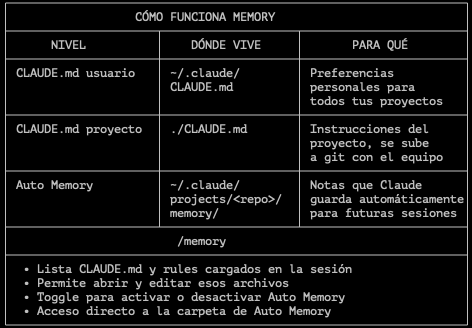
Los LLM como Claude no tienen memoria.
Cada conversación empieza desde cero.
Eso significa que el agente no sabe nada del proyecto en el que estás: ni la arquitectura, ni las convenciones, ni cómo funciona el equipo.
Para evitar tener que explicarle todo otra vez, Claude Code usa un mecanismo llamado Memory.
Memory permite que el modelo recupere información del proyecto cada vez que empieza una conversación.
Tenés 2 sistemas:
1) CLAUDE.md
- Podés correr /init en tu proyecto y Claude genera un archivo markdown analizando el código. También lo podés escribir vos.
- Ahí va todo lo que necesita saber: estándares de código, arquitectura, convenciones del equipo y comandos.
- Claude lo incluye en el contexto de cada conversación.
2) Auto Memory
- A medida que usás Claude Code, el modelo va tomando notas por su cuenta.
- Si le corregís algo o le explicás un patrón, puede decidir guardarlo.
- Se guardan como archivos markdown en tu máquina y Claude las consulta automáticamente cuando las necesita.
Claude puede recordar información en distintos niveles: CLAUDE.md a nivel usuario (tus preferencias personales), CLAUDE.md del proyecto (instrucciones del equipo) y Auto Memory (notas que Claude guarda solo).
¿Qué gana Claude con esto?
Que cada nueva conversación empiece con el contexto del proyecto ya cargado. No tenes que explicarle siempre lo mismo.
Tip:
podés ver y editar todo ejecutando /memory.
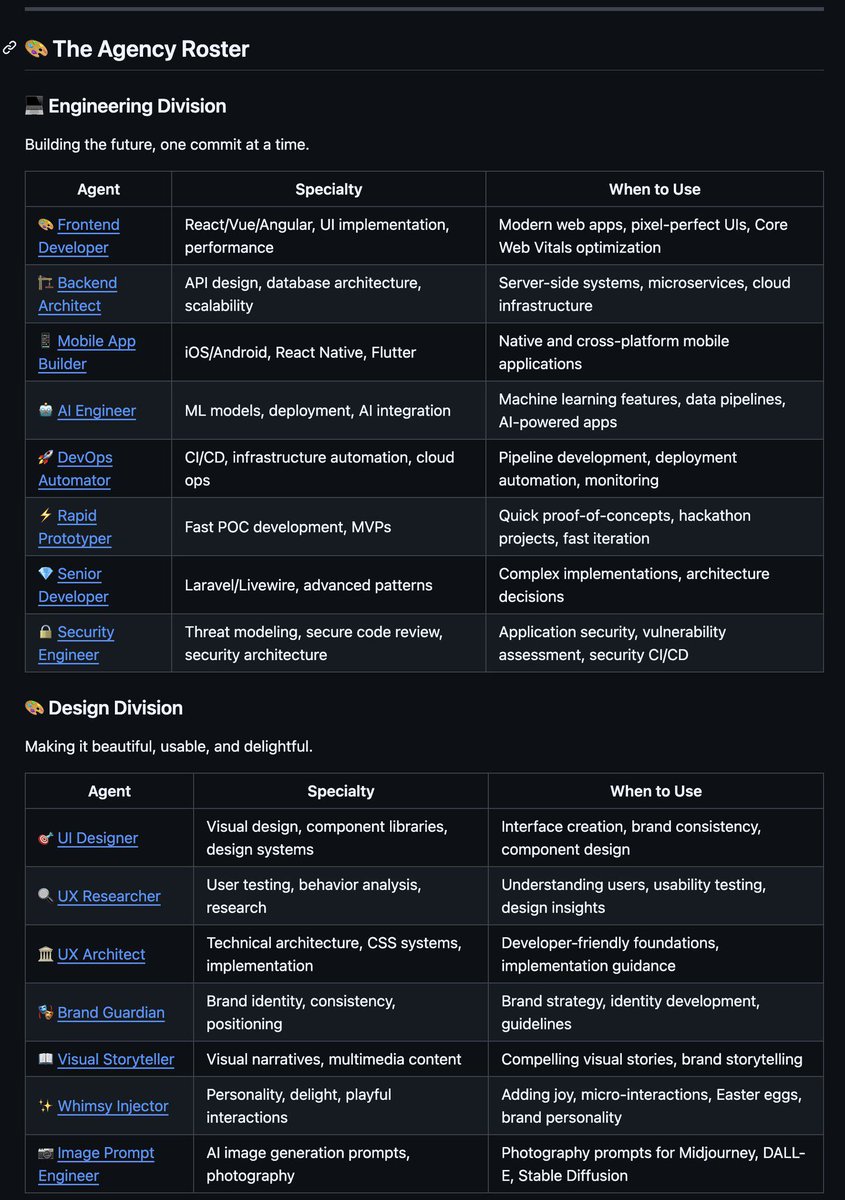
SOMEONE CREATED A GITHUB REPO WITH AN ENTIRE SETUP FOR AN AI AGENCY
Engineers, designers, growth marketers, product managers.
Broken down how even a rookie could understand.
It has over 10K stars in 7 days
GitHub: https://t.co/VYdwzJuCtB
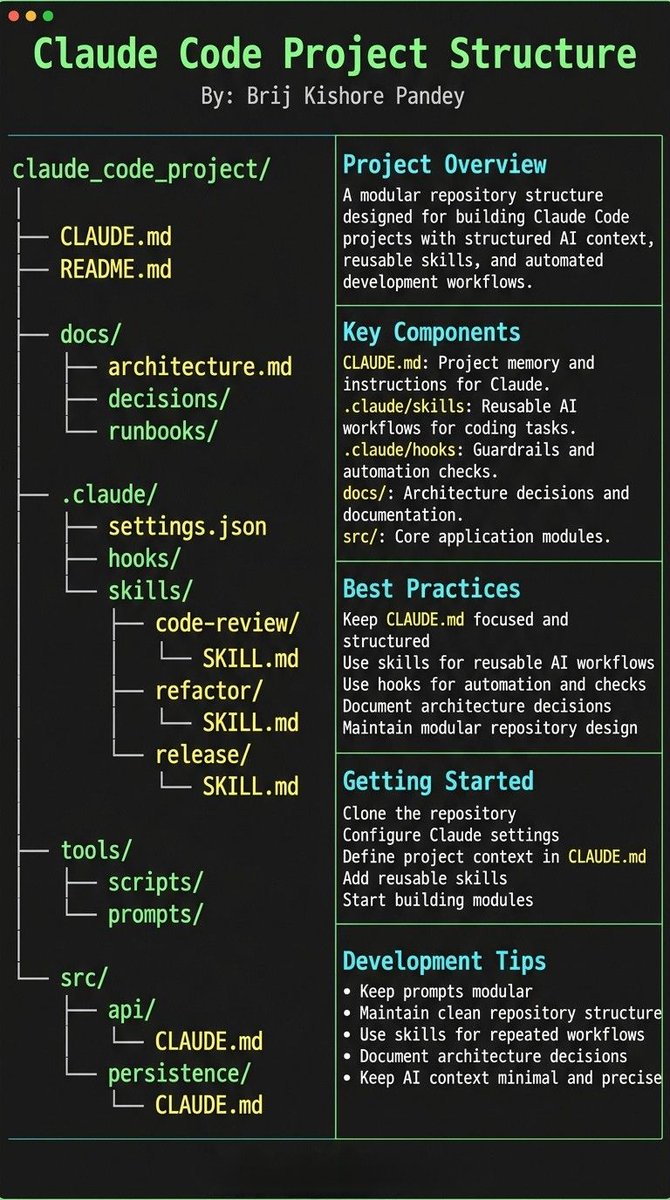
Most people treat CLAUDE.md like a prompt file.
That’s the mistake.
If you want Claude Code to feel like a senior engineer living inside your repo, your project needs structure.
Claude needs 4 things at all times:
• the why → what the system does
• the map → where things live
• the rules → what’s allowed / not allowed
• the workflows → how work gets done
I call this:
The Anatomy of a Claude Code Project 👇
━━━━━━━━━━━━━━━
1️⃣ CLAUDE.md = Repo Memory (keep it short)
This is the north star file.
Not a knowledge dump. Just:
• Purpose (WHY)
• Repo map (WHAT)
• Rules + commands (HOW)
If it gets too long, the model starts missing important context.
━━━━━━━━━━━━━━━
2️⃣ .claude/skills/ = Reusable Expert Modes
Stop rewriting instructions.
Turn common workflows into skills:
• code review checklist
• refactor playbook
• release procedure
• debugging flow
Result:
Consistency across sessions and teammates.
━━━━━━━━━━━━━━━
3️⃣ .claude/hooks/ = Guardrails
Models forget.
Hooks don’t.
Use them for things that must be deterministic:
• run formatter after edits
• run tests on core changes
• block unsafe directories (auth, billing, migrations)
━━━━━━━━━━━━━━━
4️⃣ docs/ = Progressive Context
Don’t bloat prompts.
Claude just needs to know where truth lives:
• architecture overview
• ADRs (engineering decisions)
• operational runbooks
━━━━━━━━━━━━━━━
5️⃣ Local CLAUDE.md for risky modules
Put small files near sharp edges:
src/auth/CLAUDE.md
src/persistence/CLAUDE.md
infra/CLAUDE.md
Now Claude sees the gotchas exactly when it works there.
━━━━━━━━━━━━━━━
Prompting is temporary.
Structure is permanent.
When your repo is organized this way, Claude stops behaving like a chatbot…
…and starts acting like a project-native engineer.
Un comando para saber qué modelo de IA puedes ejecutar en tu hardware de forma local.
Detecta RAM, CPU y GPU, puntúa cada modelo según compatibilidad, y te dice cómo funcionará en tu máquina.
Para Windows, macOS y Linux:
→ https://t.co/CsGNVKjR5h