Q1: January - February - March.
Q2: April - May - June.
Q3: July - August - September.
Q4: October - November - December.
Q1: Accumulation.
Q2: Manipulation.
Q3: Distribution.
Just make your money and disappear from the public eye…. Strive for luxury and excellence
Separate from the 98% of ordinary people you see every day; they are lost drifters.
If you were there when I said it...
ATHs.
Wreck the economy and markets.
The chosen "Fall Guy".
UFOs would be disclosed.
Russia, China and Iran would usher in a war.
The beta test that was C19 would see the next one before 2030.
Green lockdowns and limited travel.
Let me know if you got a BINGO yet.
Sunday. A day of rest. A day of relaxation. A day to spend with loved ones.
Also the perfect day to sit quietly and reflect on the fact that if you’re still doing the same thing you’ve always done and it’s still not working for you, you’re a cunt.
Cheers.
Patience is an active inner force.
The capacity to remain conscious,
without collapsing into reaction.
Impatience is weakness.
It is the inability to hold yourself steady.
The urge to force results before they are ready.
Dr Steiner often compares human development to a plant.
You cannot force a plant to grow faster.
If you try, you damage it.
The same is true for:
understanding,
skill,
character.
If you rush them,
you don’t accelerate growth;
you distort it.
This is why impatience leads to shallow results.
You may get something quickly,
but it lacks depth, stability, and truth.
Patience builds differently.
It allows things to ripen.
To take form in the right way,
at the right time.
And this becomes critical when it comes to higher knowledge.
Without patience, you cannot perceive deeply.
You begin to project instead of observe.
You react instead of understand.
You force meaning instead of discovering it.
In that sense, impatience blinds you.
Patience clarifies you.
Patience strengthens your inner structure.
It stabilizes your thinking.
It gives endurance to your will.
Over time, it builds a kind of quiet power;
the ability to act when it is right, not just when it is easy.
And this is where most people fail.
They abandon the process too early.
They chase quick results.
They move before anything has truly formed.
But real development is not fast.
It is exact.
The real difficulty is moral and cognitive discipline, not ability.
Mastery of Thinking (the real starting point)
The first and hardest step is learning to think clearly, calmly, and without distraction.
Most people believe clairvoyance is about “seeing more,” this must be flipped:
•You must first learn to think without drifting, fantasizing, or reacting
•Thinking must become intentional, steady, and precise
Why this is hard:
•The mind constantly wanders
•Desires, fears, and impulses distort perception
•People mistake imagination for insight
Without disciplined thinking, clairvoyance becomes self-deception.
⸻
Emotional Purification
(detachment from desire)
The second major obstacle is your own emotional life.
To perceive objectively, you must:
•Not project your wishes into what you “see”
•Not interpret experiences based on fear, vanity, or attraction
Why this is hard:
•Humans naturally want things to be a certain way
•Subtle perception amplifies these distortions
So instead of seeing truth, you see:
•What you hope for
•What you fear
•What flatters your ego
This is why many “clairvoyants”
are unreliable, they’re reading themselves, not reality.
⸻
Tolerance of Inner Emptiness.
One of Dr Steiner’s more uncomfortable teachings:
before higher perception develops,
you pass through a stage of inner dryness or emptiness.
•No visions
•No inspiration
•Just disciplined effort with no reward
Why this is hard:
•People expect quick results
•The ego wants confirmation and progress
Steiner sees this phase as essential:
it builds independence from stimulation, which is necessary for real perception.
⸻
Courage in Facing the Unknown.
When perception begins to change,
it can be destabilizing.
Steiner emphasizes:
•You must develop inner courage and composure
•You cannot panic or become fascinated
Why this is hard:
•The boundary between inner and outer experience starts to blur
•You may encounter unfamiliar symbolic or imaginal content
Without courage, people either:
•Shut down
•Or get lost in it
⸻
Patience Over Sensation.
Perhaps the biggest trap:
wanting experiences.
Steiner is very clear:
•The desire to “see something” blocks real development
•Genuine clairvoyance comes indirectly, as a byproduct of inner work
Why this is hard:
•Modern spirituality chases peak experiences
•People measure progress by intensity, not clarity
⸻
For Steiner, the hardest part of clairvoyance is becoming a person who cannot be deceived by their own mind.
It is your turn to slowly awaken.
What we call a “mental breakdown” is often the moment a person loses command over their own inner life.
Consider a man who has built his entire inner life around his work; his duty, his purpose, the role through which he knows himself.
For years, this center holds him together.
His thoughts align.
His feelings serve a direction.
His will is steady.
But then, he loses it.
At first, nothing seems changed.
“I am still I,” he tells himself.
Yet inwardly, something begins to loosen:
Thoughts no longer agree with one another.
Feelings arise without clear cause.
Impulses contradict his own intentions.
He tries to regain control, but cannot.
And then the shift:
He no longer has experiences.
He is carried by them.
Now despair takes him.
Then restlessness.
Then emptiness.
Each speaks as if it were “I”—
but the “I” no longer governs.
This is what appears outwardly as breakdown:
an inner loss of sovereignty.
The way back is not found in suppression,
but in rebuilding the center.
Not by chasing feelings,
but by strengthening the one who observes them.
Through:
- disciplined thinking (holding one clear thought at will)
- ordered daily rhythm (restoring structure to life)
- conscious action (doing what is chosen, not what is felt)
Slowly, the “I” begins to take hold again.
The same forces remain,
but now they are guided, not suffered.
And where the self governs once more,
inner unity returns.
What we call “I” isn’t one unified self,
it’s many small, shifting “I’s” inside us.
At any moment, a different “I” takes control:
•one “I” wants discipline
•another “I” wants pleasure
•another “I” wants love
•another “I” wants to disappear
Each one says “I” as if it’s the whole
of you, but it isn’t.
Most people don’t have real unity,
they live in fragmentation:
•You make a decision in the morning
•A different “I” breaks it by night
•Then another “I” regrets it
There is no consistent center,
just rotation of impulses.
Because without a stable “I”:
•you can’t truly will anything
•you can’t keep promises (even to yourself)
•you can’t develop real consciousness
You’re mechanical—run by whichever “I” is strongest in the moment.
Do NOT destroy the small I’s:
•observe them
•separate from them
•stop saying they are all “you”
Through this, something more stable can begin to form, the real “I”.
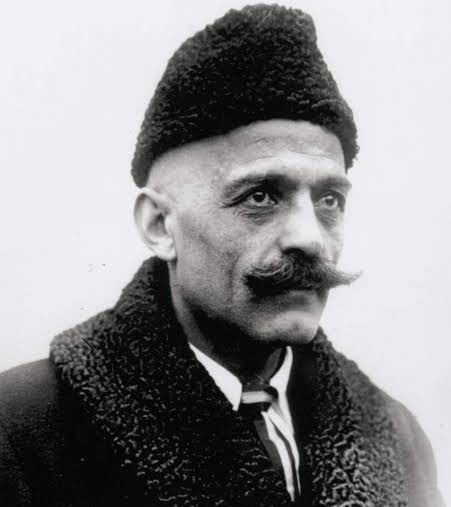
— Georgij Ivanovič Gurdjieff
“I need to do this.”
But where does that come from?
Dr Steiner taught that higher spiritual influences rarely reach us as clear thoughts.
Why?
Because modern thinking is still too abstract to grasp them directly.
So instead, they enter through the will.
They appear as impulses.
As inner urgencies.
As a quiet but persistent sense that something must be done.
Not yet understood,
but already active.
Example:
You feel a sudden urge to text someone; not for gain, not for pleasure, but because you sense they need support.
There’s no pressure, no anxiety, just a calm certainty.
=> This resembles a higher influence.
But not every impulse carries the same origin.
The task is not to blindly follow impulses,
but to refine your thinking
until you can recognize their source.
Because real development is this:
what first moves you unconsciously
must become something you consciously understand.
From impulse → to intuition → to clear knowledge.
So ask yourself:
Is this impulse coming from clarity…
or something you haven’t yet understood?