Japanese fans are once again earning international respect.
Even after Ao Tanaka’s mistake contributed to Japan’s elimination against Brazil, Japanese supporters flooded his Instagram with messages of encouragement rather than criticism.
Posts highlighting this have been widely shared overseas, with many praising the maturity and sportsmanship of Japanese fans.
In a time when players are often heavily criticized after mistakes, this kind of support stands out.
#FIFAWorldCup | 🇯🇵 Blunder Saat Melawan Brazil, Instagram Ao Tanaka di Banjiri Ucapan Support dari Warga Jepang
Warga Jepang tetap kasih support kepada pemainnya walau melakukan blunder dan sampai tersingkir dari Piala Dunia.
Layak disebut jadi negara maju, Respect!👏🏻🇯🇵
#FeelEveryGoal | @toshibatv_id
Hajime Moriyasu, técnico do Japão, enche Ancelotti de elogios: "Acho que nunca serei como ele".
“Admiro muito o Ancelotti como treinador. Ele foi muito bem na Champions League, com 5 títulos e conquistados em times diferentes. É um maravilhoso treinador, acho que nunca serei como ele. O Brasil é um país top do futebol, e liderar a Seleção não é fácil. Eles estão mostrando resultados, isso é uma prova da sua capacidade.”
🗞️ @ESPNBrasil
📸 Reprodução/FIFA | Rafael Ribeiro/CBF
How Brazil adjusted their attacking approach after half-time to break down Japan's compact defensive block. 🇧🇷🇯🇵
Brazil struggled to create clear chances before the break, but Ancelotti's adjustments completely changed the game.
Here's how. 👇
First half:
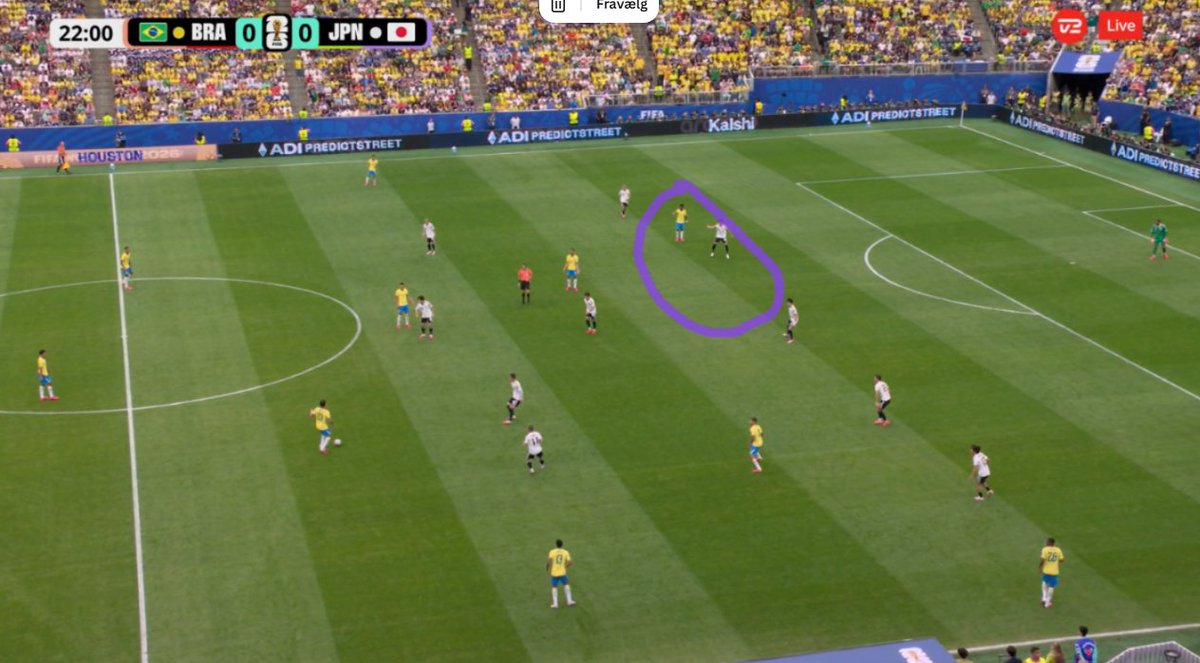
Brazil were far too narrow in possession on the final third, making it comfortable for Japan to defend with a compact and narrow defending midfield block. (First picture showing Brazil on the ball from first half)
Too many players occupied from central spaces, meaning Japan rarely had to leave their defensive structure. Brazil struggled to create attacking overloads or move Japan's block enough to open central spaces.
Japan's compact defensive structure and narrow midfield block out of possession proved to be a very difficult matchup for Brazil and Ancelotti's typical narrow attacking principles. Brazil struggled to create overloads between the lines, while Japan were perfectly set up to exploit transitions whenever they regained possession. (Picture 2 illustrates an example of Japan off the ball, where the midfield is narrow off the ball)
Brazil also lacked width in key moments.
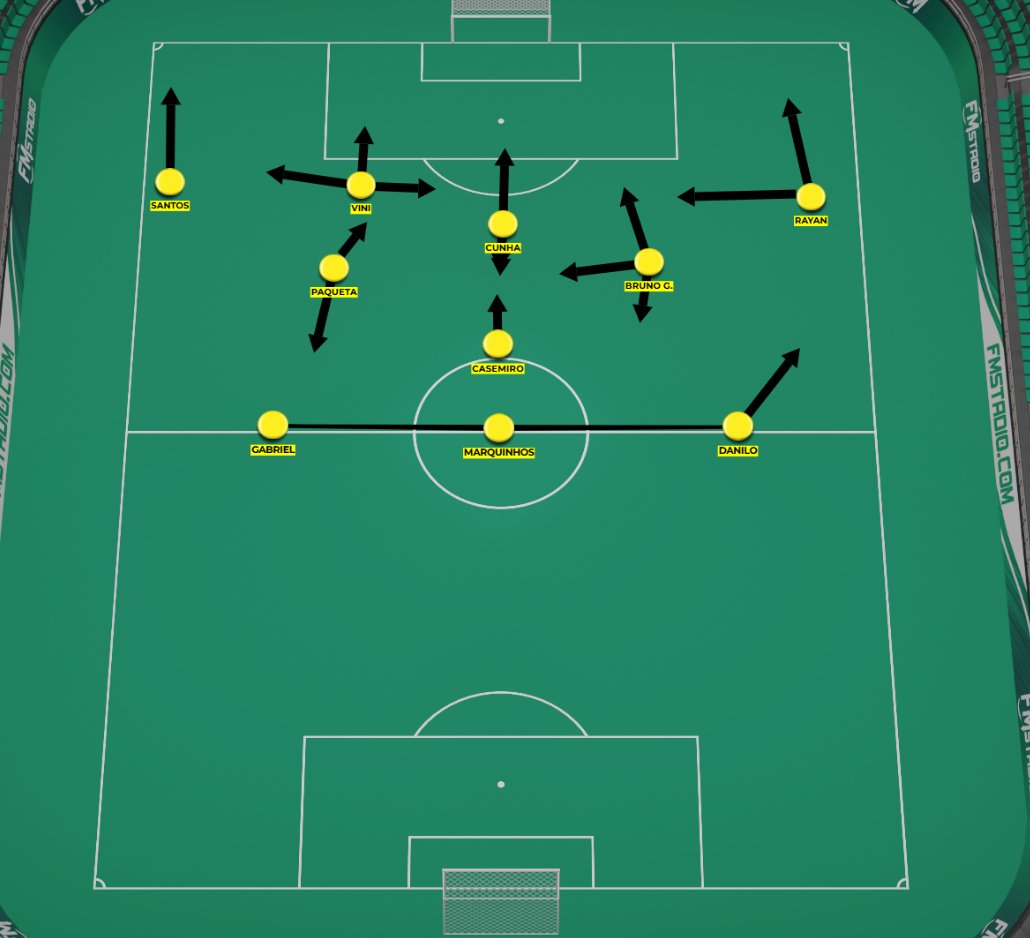
Vinicius had a very hard time of getting into one-on-one situations and create overload for Brazil, when starting the game from a narrow inside forward position.
With Japan remaining compact, there were very few situations where Brazil could isolate Vinícius or create numerical advantages out wide. The attacks became predictable, allowing Japan to defend without being stretched. (Picture 3 illustrates Vinicius having positions as an inside forward, and not attacking from width in first half)
Second half:
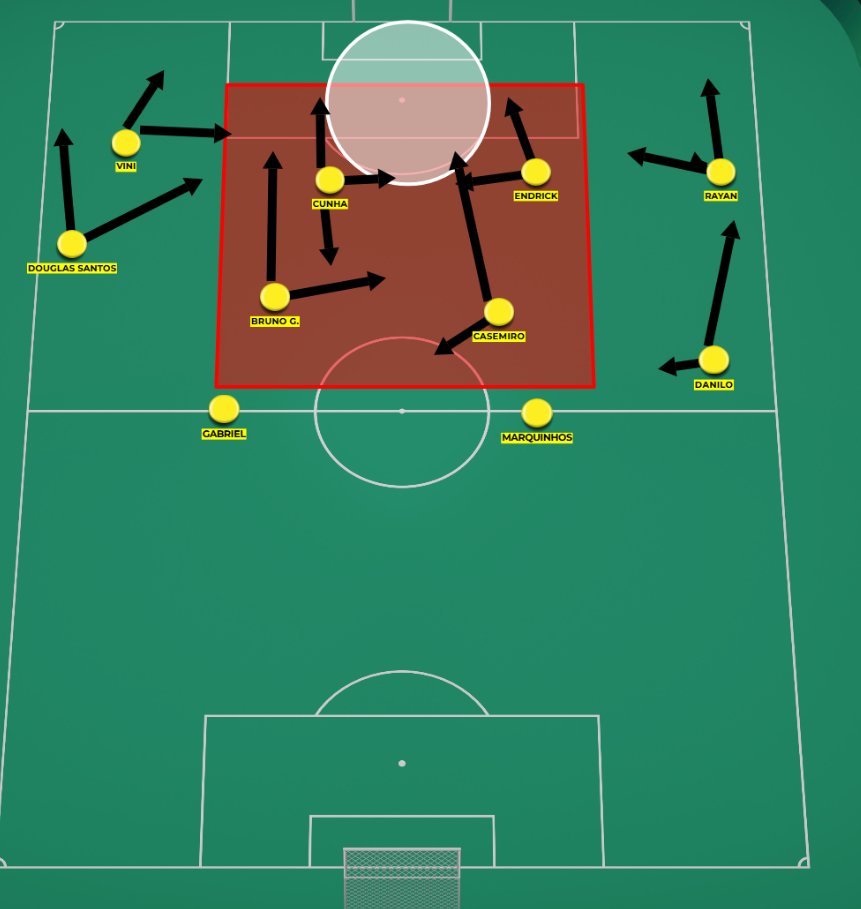
The biggest adjustment of dynamics was Brazil's use of width. (4th. Picture illustrates Brazil change of positions on the ball in second half. Red zone marks players filling the box from central positions.)
Endrick also came on from a injured Paqueta, which added more presence in the box.
One of the keys was Vinícius stayed constanly wide. Brazil finally managed to stretch Japan's defensive block horizontally instead of constantly attacking through Japan's midfield block from narrow attacks. (Picture shown below)
Another big change in dynamics was how Brazil started filling the danger zone up with players, and play a lot of crosses into the box, where players like Casemiro has great qualities. (Brazil had two crosses first half, 7 crosses into the box 2nd. half. A picture of how they was filling the box is also shown below.)
One more key was that Brazil starting being a lot more aggresive in the high press from second half to win possesion high up the pitch.
In generel a really effective half time adjustment from Carlo Ancelotti.
Rather than forcing attacks from narrow positions through Japan's compact central block, Brazil stretched the pitch first and attacked the spaces that appeared afterwards.
A great example of how positional changes can completely change a game.
(Second half pictures below, max 4 in one tweet...)