ICYMI, we @reverb_cast released an ep this week with @joddo1, @world_on_a_wire, and Alex Kirsch about how the language of news reporting affects the "closeness" of war and conflict to US audiences--a helpful framework for critiquing many recent issues.
https://t.co/aKnXpj361g
🚨New re:verb out today!🚨
Check out our latest episode: "Distance and Suffering in News Reporting (w/ @joddo1 , @world_on_a_wire , & Alex Kirsch)" at the link below, and read on for our 🧵breaking down the episode👇https://t.co/8Df17vgDT6
I had an awesome time working on this project with @joddo1 and Alex Kirsch. We need to pay more attention to how reports of drone strikes fail to bridge the cognitive and emotive gaps necessary to understand what it means to be a drone strikes victim. https://t.co/mBN7QuiQOA
So proud to publish this article with @DrCMozafari and Alex Kirsch. We compare how media construe the victims of U.S. drone strikes--either as close to "us" and emotionally significant, or (more often) as distant, anonymous, and unimportant. Please read: https://t.co/tS6YVMjFZx
Agreeing not to expand NATO to include Ukraine--the concession that might have kept Putin from invading--got almost no discussion in mainstream media. Why? I give a two-part answer in the latest @NonzeroNews. https://t.co/U2pyzzbruM
@CoreyRobin I teach a class at Carnegie Mellon University in Pittsburgh on Banned Books. I’ve been teaching it every few years for 25 years. Here is what I have learned.
@ajhelberg I think this phrase was popularized in the 1980s when the US was “helping out” in Central America. (I don’t know when it was first coined). Anyway, good to see it back in vogue with the press
The @nytimes reports the US military's gruesome record as “incompetence.” But what if it's all part of the plan?
It wasn’t some systematic failure or “flawed intelligence,” the killings resulted from policies that gave very low priority to the prevention of civilian deaths.
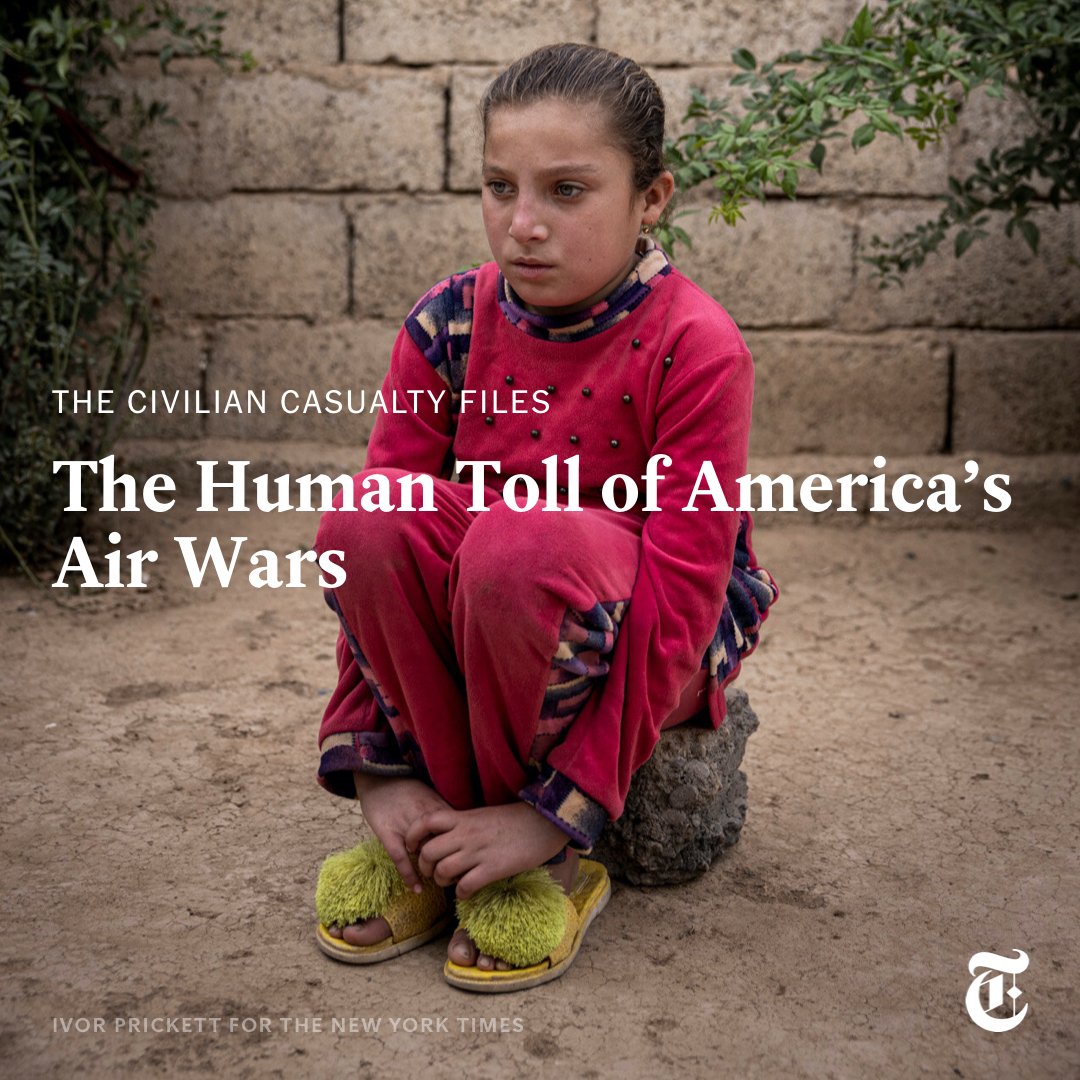
Airstrikes allowed America to wage war with minimal risk to its troops. But for civilians on the ground, they brought terror and tragedy. Read Part 2 of the Civilian Casualty Files in @NYTMag.
https://t.co/fzB6h3TqwQ
A 5-year New York Times investigation into hidden Pentagon records shows that a pattern of failures in U.S. airstrikes in the Middle East has killed thousands of civilians, many of them children. None of these records show findings of wrongdoing. https://t.co/6VCYUtSZXf
Years in the research and writing, part one of @AzmatZahra's astonishing followup to 'The Uncounted' is out - dissecting 1,300 hidden Pentagon assessments of reported civilian harm events in Iraq and Syria. https://t.co/pRa7NufVJx
It's been 20 years since 9/11, which incited the US war in Afghanistan. Mere weeks ago, President Biden withdrew U.S. troops from the country. But is the war, and the rhetoric that justified it, really over?
Today, @joddo1 joins us to discuss.
https://t.co/5W4h1KQBEM
Hear @joddo1 talk on our latest episode about the propaganda trope of "winding down the war," which in the case of Afghanistan translates to a reduction of ground troops while the US air war and its drone strike program continues and expands:
While I am glad that the New York Times used my research to show that the “War on Terror grinds on” in 85 countries, the argument that drives this article is misleading and is not based on evidence. Here’s why. [THREAD] 1/
https://t.co/3bxlUvDqxf