I’ve been joking with friends that my main job this year has been interviewing 🫠
Now I’m finally excited to share what’s next: I’ll be joining NYU as an Assistant Professor next fall, and before that, I’ll be spending a year at @physical_int !
I feel incredibly fortunate to have spent the past two years at UCSD working on control-hardware co-design.
When I was looking for a postdoc, I told people I wanted to work on robot learning for hardware design. I’m deeply grateful that @xiaolonw and Mike trusted me enough to start something none of us quite knew how to do.
Whenever I mentioned working with both of them, people either knew only one of them (they come from very different communities), or found the combination surprising. I find it to be really fun and I learnt so much more than I would anywhere else.
Although I think jointly optimizing policies and hardware at scale is still somewhat early, I strongly believe in optimizing (or at least iterating) hardware alongside policy training.
Over the past few decades, we’ve developed a lot of depth in individual hardware components: sensors, actuators, mechanisms, materials, etc. But we still haven’t explored enough of their combinations as integrated systems, or understood their actual usefulness for policy.
As coding agents get more and more powerful, learning where and how hardware is bottlenecking robots is really valuable. And the only way to understand this is to scale up and try things :)
I’m getting ready to join the bay area robotics community, but it’s still a bit sad to leave the beautiful San Diego.
I had a lot of fun sampling taco shops on Tuesdays (although I eventually converged to two places on my way home...). I will definitely miss the on campus climbing gym, and the forever-sunny-and-warm outdoor swimming pool next to it 🥺
Very excited to share that I'll be joining UIUC ECE and CS (affiliate) as an Assistant Professor @UofIllinois
I'm recruiting PhD students, interns, and postdocs to build trustworthy AI agents and robots that reason, learn, and grow alongside humans. If you're interested in joining my lab at UIUC, reach out at [email protected]
Many thanks to my advisors and collaborators for all their help and support! @haroldsoh @ Katia_Sycara @RamananDeva @ Alexander_Gray @ David_Hsu @ksmeel @ Mohan_Kankanhalli @joecampb@SimonStepputtis @ Woojun_Kim @yswhynot
Think you're good at social deduction games? 🚀 Try your hand against our newest game-playing agent, GRAIL, tomorrow at #ACL2026 🌴
@RRShahab will be presenting our work, Bayesian Social Deduction with Graph-Informed Language Models, at the poster session at 11am! 🧵👇
Our hybrid agent combines an LLM with a factor graph, enabling accurate Bayesian theory of mind to infer hidden player roles and beliefs in the presence of deceptive behavior.
🤖GRAIL wiped the floor with human players in Avalon, so come try our playable demo on Sunday!
Excited to share our latest work at COLM 2025: "Model-Agnostic Policy Explanations with Large Language Models", with @SophieYueGuo, Shufei Chen, @SimonStepputtis, @MatthewGombolay, Katia Sycara, and @joecampb.
🤖 What if we could explain a robot's behavior to anyone, in natural language, without needing access to the underlying policy weights?
We propose a model-agnostic method which distills an agent's observed behavior into a structured, interpretable surrogate model, amenable for reasoning. This representation then guides an LLM to generate accurate and comprehensible natural language explanations. We demonstrate that our approach:
✅ Significantly reduces hallucination
✅ Outperforms baselines in explanation quality and action prediction
✅ Nearly matches human experts in user studies
❗ And shows that people can’t reliably detect hallucinated explanations, making faithful explanation methods more urgent than ever.
📄 Paper: https://t.co/GhD5hk6RfB
Always happy to chat if this intersects with your interests in AI safety, interpretability, or human-AI interaction!
If you are attending COLM 🦙 this year, make sure to check out @ponyzhang219's great work on generating explanations of black box agent policies using LLMs!
No access to weights or activations? No problem! We can reason about agent behavior purely from observations.
#COLM2025
Excited to share our latest work at COLM 2025: "Model-Agnostic Policy Explanations with Large Language Models", with @SophieYueGuo, Shufei Chen, @SimonStepputtis, @MatthewGombolay, Katia Sycara, and @joecampb.
🤖 What if we could explain a robot's behavior to anyone, in natural language, without needing access to the underlying policy weights?
We propose a model-agnostic method which distills an agent's observed behavior into a structured, interpretable surrogate model, amenable for reasoning. This representation then guides an LLM to generate accurate and comprehensible natural language explanations. We demonstrate that our approach:
✅ Significantly reduces hallucination
✅ Outperforms baselines in explanation quality and action prediction
✅ Nearly matches human experts in user studies
❗ And shows that people can’t reliably detect hallucinated explanations, making faithful explanation methods more urgent than ever.
📄 Paper: https://t.co/GhD5hk6RfB
Always happy to chat if this intersects with your interests in AI safety, interpretability, or human-AI interaction!
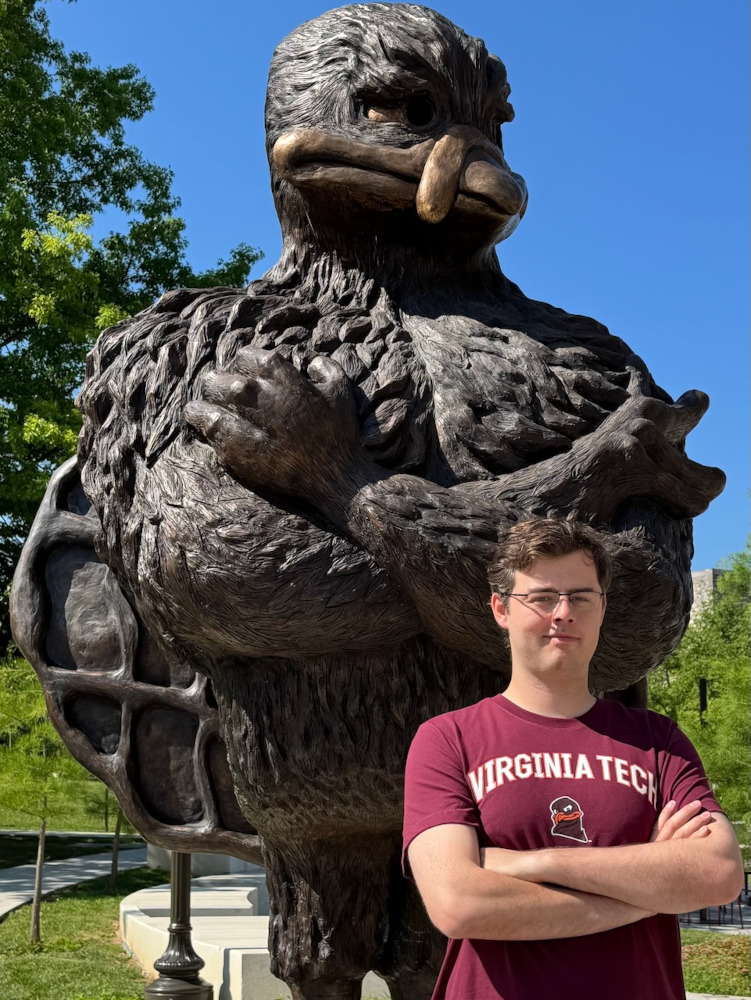
Thrilled to join @virginia_tech as an assistant professor in @VirginiaTech_ME this fall!
At the TEA lab (https://t.co/VH4anRDWRI), we’ll explore hybrid AI systems for efficient and adaptive agents and robots 🤖
Thank you to everyone who has supported me along the way!
Excited to be selected as a Pathways@RSS.
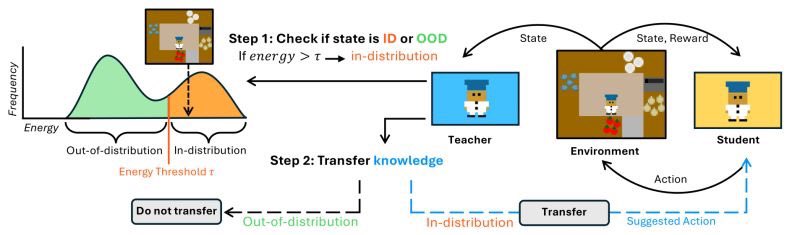
I'll also be presenting our latest work, "Energy-Based Transfer for Reinforcement Learning," at the OOD Workshop during the poster session with ID 62 (3:10–4:00 PM today).
Read the full paper here: https://t.co/AiaDfadqEB.
I will be attending NeurIPS next week 🇨🇦
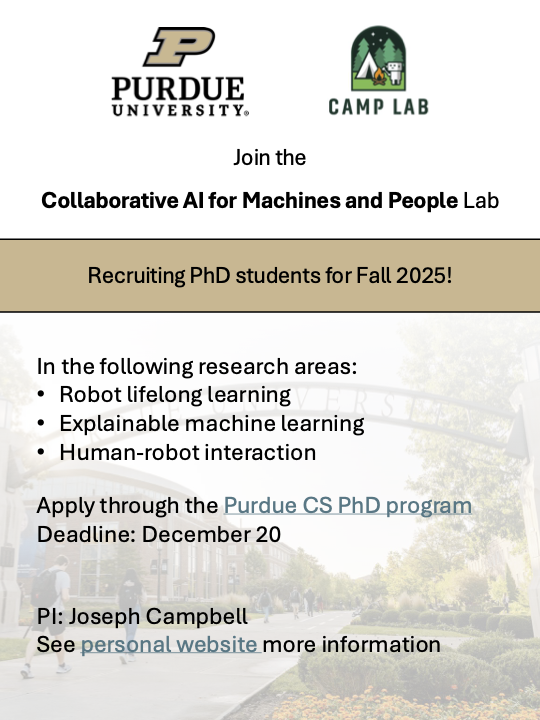
If you are interested in joining my research lab at Purdue and would like to have an in-person ☕️ chat, please reach out!
I am looking to recruit PhD students for next fall in the areas of robot lifelong learning and explainable ML.
🚨 Recruiting PhD students for Fall 2025 🚨
The Collaborative AI for Machines and People (CAMP) Lab is recruiting at Purdue University in the areas of machine learning and robotics.
Come join our amazing group of students!
My group works in the area of robot lifelong learning, explainable and interpretable machine learning, and human-robot interaction.
I am particularly interested in the usage of explanations by robots to self-improve through introspection.
Having worked with @SimonStepputtis for more than 7 years, I can say that he is an incredible colleague. He is exceptionally talented and collegial and, importantly, is a great mentor for students.
If your department is looking to hire in ML + Robotics, don't miss this chance!
📣 Thrilled to announce that I'm on the job market for Fall 2025 faculty positions! I am currently a postdoc @CarnegieMellon@CMU_Robotics.
🔍 My research is dedicated to developing robots that can intelligently reason about their environments and the humans within them. By considering the affordances, attributes, and relationships of objects in the environment, my work enables robots to efficiently learn behaviors and generalize them to novel settings 🚀
⭐️ My focus is on developing neurosymbolic models that combine the expressivity of deep neural networks with the reasoning abilities of symbolic AI.
🤖 I have previously applied my work to applications such as in-home assistance, manufacturing, and beyond.
🌐 Learn more about my work at https://t.co/nxt2vKcGRz
🔭 If you think I might be a good fit for a position at your institution, please don't hesitate to reach out!
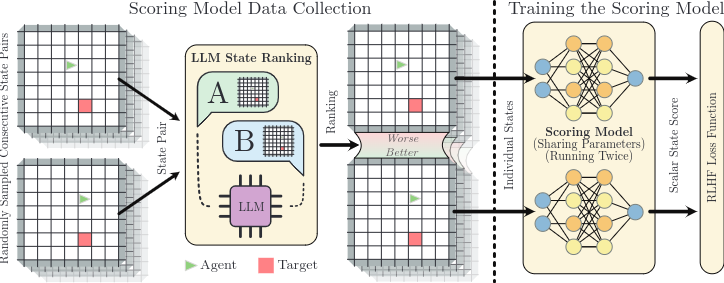
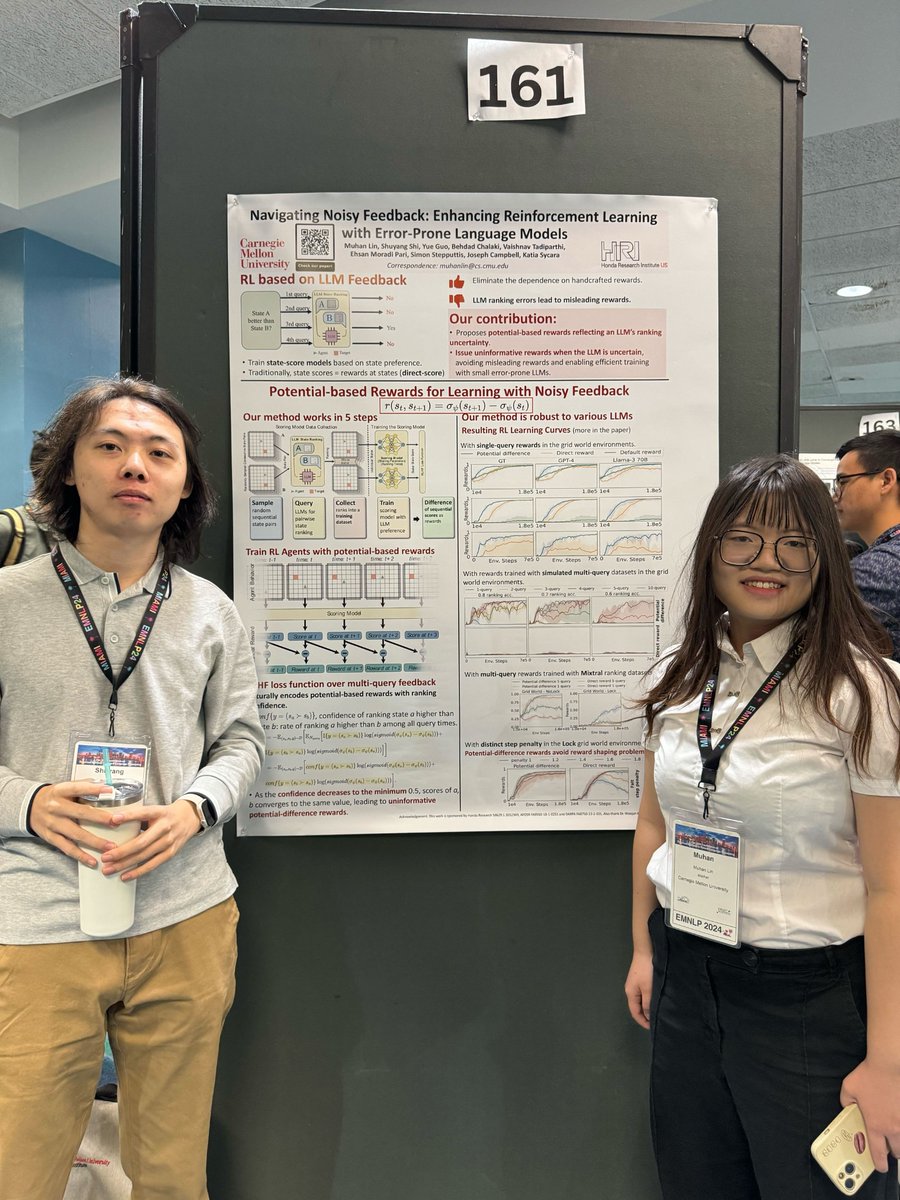
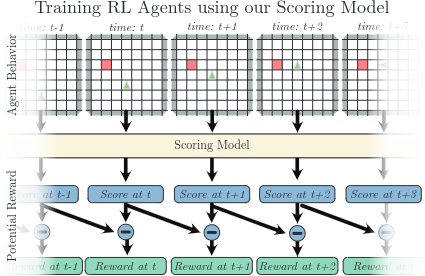
Great work looking at how to leverage LLM-generated rankings to build dense rewards for RL, even when those rankings may be incorrect. 🚀
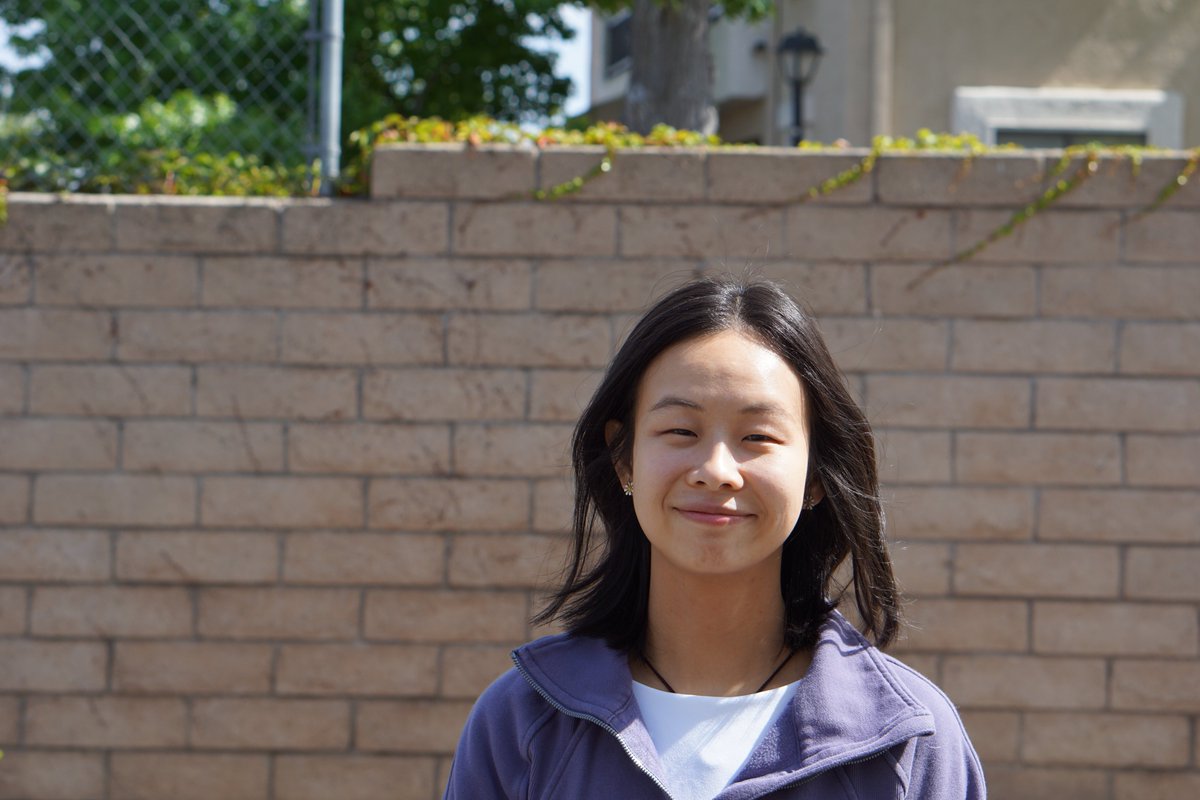
@MuhanLin424433 is applying for PhD positions this cycle, so if you're looking for an amazing student please chat with her at #EMNLP2024 !
🚀 Excited to share our latest work: extending RLAIF to work well with small language models which may produce incorrect rankings! 🚀 Catch our poster session at #EMNLP in Miami next Thursday!
📄 Paper: https://t.co/eGXXKfVE3p
🎥 Presentation: https://t.co/6amDzfvRFb
🚀 Excited to share our paper ShapeGrasp: Zero-Shot Object Manipulation with LLMs through Geometric Decomposition at #IROS2024 (Session ThCT3.3)!
🎉 Amazing work by @SamuelLi826114 on leveraging geometric decomposition and LLMs for zero-shot task-oriented grasping. The LLM dynamically generates hypotheses on what each geometry is for and selects the best one for the task! 🦾🤖
Explore more at: https://t.co/uV61G0AHOz