Family History Researcher. Italian-American Genealogist.
Descendant of Immigrants.
FamilySearch, RootsTech, BYU Pathway experience. Author: From Tree to Roots.
Introducing my first book: "From Tree to Roots: A Heritage Travel Guide to Italy" Discover your Italian ancestors and explore the homeland. An all-inclusive book combining a passion for genealogy and travel. Start your Italian family history journey today! https://t.co/S5eKPUajpj
Today at noon thousands of red rose petals will flutter down through the oculus of the Pantheon in Rome. This spectacular tradition is held each year on the feast of Pentecost.
A man spends 50 years teaching at MIT.
He knows his time is running out.
So he records one last lecture — everything he knows, distilled into a single hour.
He died 5 months later.
This is that lecture.
The most important hour you'll watch this week. 👇
Bookmark it for later
Before the small village of Rome became “Rome” with a capital R (to paraphrase the author D. H. Lawrence), a brilliant civilization once controlled almost the entire peninsula we now call Italy. This was the Etruscan civilization, a vanished culture whose achievements set the stage not only for the development of ancient Roman art and culture but for the Italian Renaissance as well.
Though you may not have heard of them, the Etruscans were the first “superpower” of the Western Mediterranean who, alongside the Greeks, developed the earliest true cities in Europe. They were so successful, in fact, that the most important cities in modern Tuscany (Florence, Pisa, and Siena, to name a few) were first established by the Etruscans and have been continuously inhabited since then. Yet the labels “mysterious” or “enigmatic” are often attached to the Etruscans since none of their own histories or literature survives. This is particularly ironic as it was the Etruscans who were responsible for teaching the Romans the alphabet and for spreading literacy throughout the Italian peninsula.
Etruscan influence on ancient Roman culture was profound. It was from the Etruscans that the Romans inherited many of their own cultural and artistic traditions, from the spectacle of gladiatorial combat, to hydraulic engineering, temple design, and religious ritual, among many other things. In fact, hundreds of years after the Etruscans had been conquered by the Romans and absorbed into their empire, the Romans still maintained an Etruscan priesthood in Rome (which they thought necessary to consult when under attack from invading “barbarians”).
We even derive our very common word “person’” from the Etruscan mythological figure Phersu—the frightful, masked figure you see in this Early Etruscan tomb painting who would engage his victims in a dreadful “game” of blood letting in order to appease the soul of the deceased (the original gladiatorial games, according to the Romans!).
Early on the Etruscans developed a vibrant artistic and architectural culture, one that was often in dialogue with other Mediterranean civilizations. Trading of the many natural mineral resources found in Tuscany, the center of ancient Etruria, caused them to bump up against Greeks, Phoenicians, and Egyptians in the Mediterranean. With these other Mediterranean cultures, they exchanged goods, ideas, and, often, a shared artistic vocabulary.
Unlike the Greeks, however, the majority of our knowledge about Etruscan art comes largely from their burials. (Since most Etruscan cities are still inhabited, they hide their Etruscan art and architecture under Roman, Medieval, and Renaissance layers.) Fortunately, though, the Etruscans cared very much about equipping their dead with everything necessary for the afterlife—from lively tomb paintings to sculpture to pottery that they could use in the next world.
From their extensive cemeteries, we can look at the “world of the dead” and begin to understand some about the “world of the living.” During the early phases of the Etruscan civilization, they conceived of the afterlife in terms of life as they knew it. When someone died, he or she would be cremated and provided with another “home” for the afterlife. This type of hut urn, made of an unrefined clay known as impasto, would be used to house the cremated remains of the deceased. Not coincidentally, it shows us in miniature form what a typical Etruscan house would have looked like in Iron Age Etruria—oval with a timber roof and a smoke hole for an internal hearth.
Later on, houses for the dead became much more elaborate. During the Orientalizing period, when the Etruscans began to trade their natural resources with other Mediterranean cultures and became staggeringly wealthy as a result, their tombs became more and more opulent.
#archaeohistories
"Jam" was the opening track and the first single from the album Dangerous (1991). The video (directed by David Kellogg) is legendary: Michael Jackson and Michael Jordan play real basketball in a gym and MJ teaches MJ to dance. Jordan later confessed that he was impressed by Michael Jackson's tireless energy on the shoot. It was one of the most hyped collaborations of the 90s.
You may have noticed that the word for ‘night’ in many languages appears to be that language’s word for ‘eight’ with an ‘N' in front of it.
English: N + eight = Night
German: N + acht = Nacht
French: N + huit = Nuit
Spanish: N + ocho = Noche
Italian: N + otto = Notte
Portuguese: N + oito = Noite
⬇️
That time when Michael Jordan taught Michael Jackson how to play basketball in a 1v1, and Michael Jackson couldn’t beat him. Then Michael Jackson taught Michael Jordan how to dance and moonwalk afterwards.
I saw @MichaelMovie🕴🎬📽 👍 While we wait for Part II, my wish is for @Lionsgate and @FuquaFilms_ to recreate @MichaelJackson's iconic short films & music videos with @JaafarJackson and expand the cast. The MTV Generation wants to relive our glory days. It would heal our souls.
We will never see anything like this again in our lifetimes.
If you have a few minutes, watch it. Probably the greatest music video ever made.
Michael Jackson - Thriller (1983)
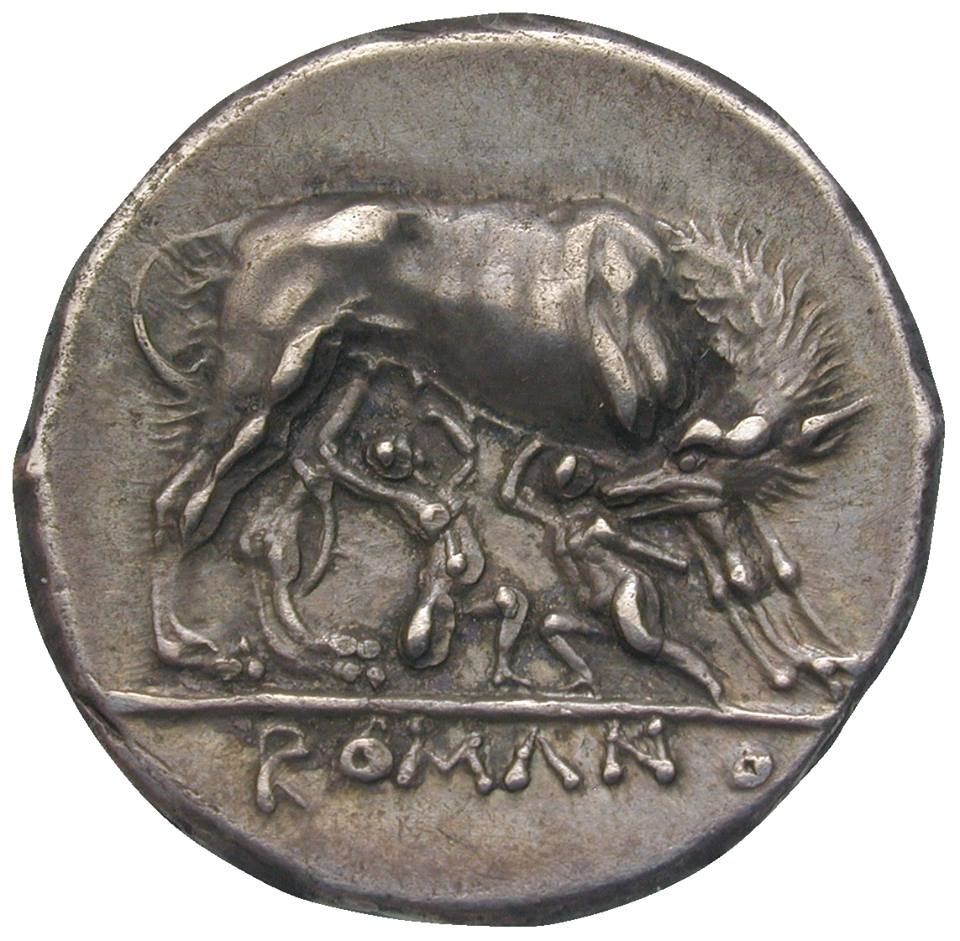
Il Natale di Roma, in ancient times known as Dies Romana, is the traditional celebration of Rome's foundation on April 21st every year.
According to the legend, Romulus founded the city on April 21st, 753 BCE.
We are now in 2778 Ab Urbe Condita.
Il #21aprile è il giorno in cui Roma celebra la propria nascita, una storia millenaria che continua ancora oggi a parlare al mondo attraverso la forza della sua identità.
Roma è stata la culla della civiltà occidentale, è un museo a cielo aperto, è cultura e memoria, un patrimonio che continua ispirare il presente. È la Capitale della nostra meravigliosa Italia.
Buon Natale di Roma, Città Eterna.