Another day, another bad set of CIS recommendations
Here are the items you do not want to do in this list:
5.1.5.6 - Ensure maximum certificate lifetime for applications does not exceed 180 days
⚠️ This will silently break cert renewal for all of your SAML based SSO apps...
Best cars in the Coke 600 based on median lap time:
1. Reddick: 30.888 sec
2. Gibbs +0.10%
3. Hamlin +0.23%
4. Larson +0.40%
5. Bell +0.51%
6. SVG +0.52%
@TacoThunder5@CWGoalie@jeff_gluck 100% this! This angle hasn't been talked about enough. Those teams crew chiefs and war rooms chose that outcome. They had 5 sets of tires. They knew they were 3 laps short on fuel and chose to save rather than take a risk like the 97,71,45,16 and be in the fight at the end.
If you've been wondering what makes Edge for Business different from other secure enterprise browsers your team could be using, this video has answers.
Spoiler: It's purpose-built for how enterprises actually work with AI (and the threats they actually face).
Full video: https://t.co/qj0iG2Z5U3
Microservices is the software industry’s most successful confidence scam. It convinces small teams that they are “thinking big” while systematically destroying their ability to move at all. It flatters ambition by weaponizing insecurity: if you’re not running a constellation of services, are you even a real company? Never mind that this architecture was invented to cope with organizational dysfunction at planetary scale. Now it’s being prescribed to teams that still share a Slack channel and a lunch table.
Small teams run on shared context. That is their superpower. Everyone can reason end-to-end. Everyone can change anything. Microservices vaporize that advantage on contact. They replace shared understanding with distributed ignorance. No one owns the whole anymore. Everyone owns a shard. The system becomes something that merely happens to the team, rather than something the team actively understands. This isn’t sophistication. It’s abdication.
Then comes the operational farce. Each service demands its own pipeline, secrets, alerts, metrics, dashboards, permissions, backups, and rituals of appeasement. You don’t “deploy” anymore—you synchronize a fleet. One bug now requires a multi-service autopsy. A feature release becomes a coordination exercise across artificial borders you invented for no reason. You didn’t simplify your system. You shattered it and called the debris “architecture.”
Microservices also lock incompetence in amber. You are forced to define APIs before you understand your own business. Guesses become contracts. Bad ideas become permanent dependencies. Every early mistake metastasizes through the network. In a monolith, wrong thinking is corrected with a refactor. In microservices, wrong thinking becomes infrastructure. You don’t just regret it—you host it, version it, and monitor it.
The claim that monoliths don’t scale is one of the dumbest lies in modern engineering folklore. What doesn’t scale is chaos. What doesn’t scale is process cosplay. What doesn’t scale is pretending you’re Netflix while shipping a glorified CRUD app. Monoliths scale just fine when teams have discipline, tests, and restraint. But restraint isn’t fashionable, and boring doesn’t make conference talks.
Microservices for small teams is not a technical mistake—it is a philosophical failure. It announces, loudly, that the team does not trust itself to understand its own system. It replaces accountability with protocol and momentum with middleware. You don’t get “future proofing.” You get permanent drag. And by the time you finally earn the scale that might justify this circus, your speed, your clarity, and your product instincts will already be gone.
Microsoft Defender now prevents threats on endpoints during an attack
Predictive shielding in Defender not only responds instantly during an attack but also jumps ahead of attackers, predicting and preventing the next move before it happens with just-in-time hardening controls that block specific attacker techniques to protect critical assets.
It acts in two steps:
1. As soon as a compromised asset is contained, Defender predicts the attack paths and tactics the adversary will use next, in many cases narrowing down tens of thousands of possible pathways to just a few with the highest likelihood.
2. Then, it jumps ahead of the attacker and shields those pathways by using just-in-time hardening methods, giving the attacker nowhere to go.
Learn more: https://t.co/5cV69jt7dZ
YouTube: https://t.co/tjI6uPjvq3
#SkilledByMTT #MicrosoftIgnite
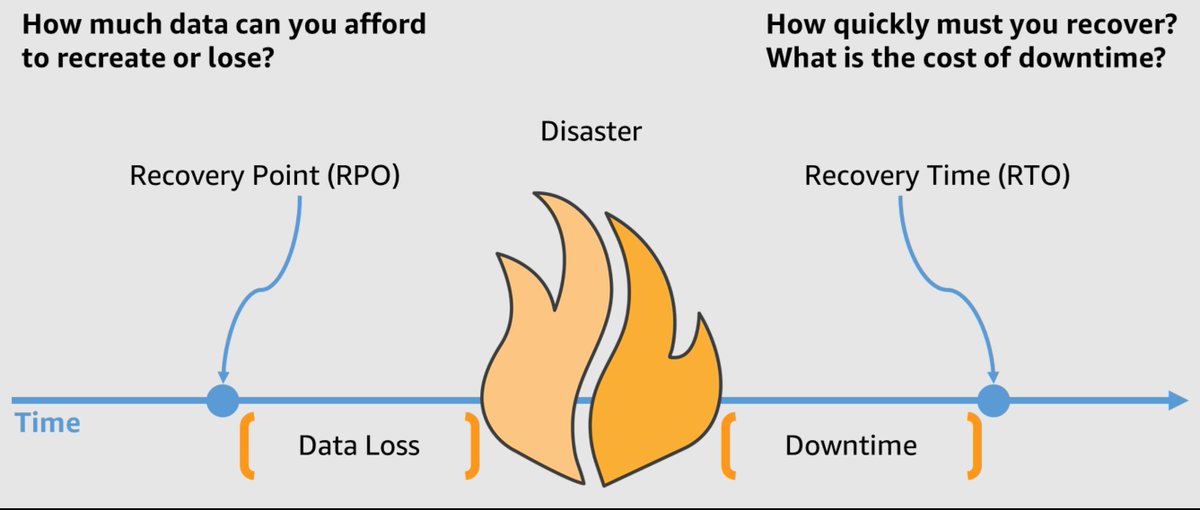
Every disaster recovery plan starts with two numbers: RTO and RPO.
They define how much disruption your system can tolerate and what your recovery strategy must look like.
RTO (Recovery Time Objective) is the maximum amount of time your service can remain down after an incident.
If your RTO is 30 minutes, your entire system, databases, apps, services, and dependencies must be back online within that timeframe. It’s a measure of tolerance for downtime.
RPO (Recovery Point Objective) is the maximum amount of data you can afford to lose. If your RPO is 10 minutes, your backups or replication must ensure you never lose more than 10 minutes of data changes. It’s a measure of data-loss tolerance.
Both numbers influence everything: backup frequency, storage strategy, replication method, failover design, monitoring, and cost.
Lower RTO/RPO means more automation, redundancy, and real-time replication.
Higher RTO/RPO means simpler setups, but slower recovery and more possible data loss.
Understanding RTO vs. RPO helps you design a recovery plan that aligns with your business expectations, not just your infrastructure.
MCKINSEY JUST DROPPED THEIR 2025 AI REPORT.
HERE’S THE TLDR:
1/ 90% of companies “use AI,” but 67% are still stuck in pilot mode. Corporate AI theater is alive and well lol.
2/ 62% of orgs are experimenting with AI agents, 23% are scaling AI agents. Most are in tech and healthcare.
3/ The impact gap is massive. 64% say AI helps innovation, but only 39% see real EBIT gains.
4/ The high performers (top 6%) think bigger. They rebuild workflows, set growth goals, and invest real budgets not just POCs.
5/ Leaders who own AI personally are 3x more likely to scale it. Makes sense.
6/ The winners use AI to transform how work gets done, not just speed it up.
7/ The average company measures efficiency. The best ones measure how fast their agents can act.
8/ Risk management is catching up with 51% have already seen AI backfire, mostly from inaccuracy.
9/ The workforce impact is foggy. 32% expect cuts, 13% expect growth, everyone else is guessing.
10/ AI adoption is mainstream, but true transformation hasn’t started. Early days.
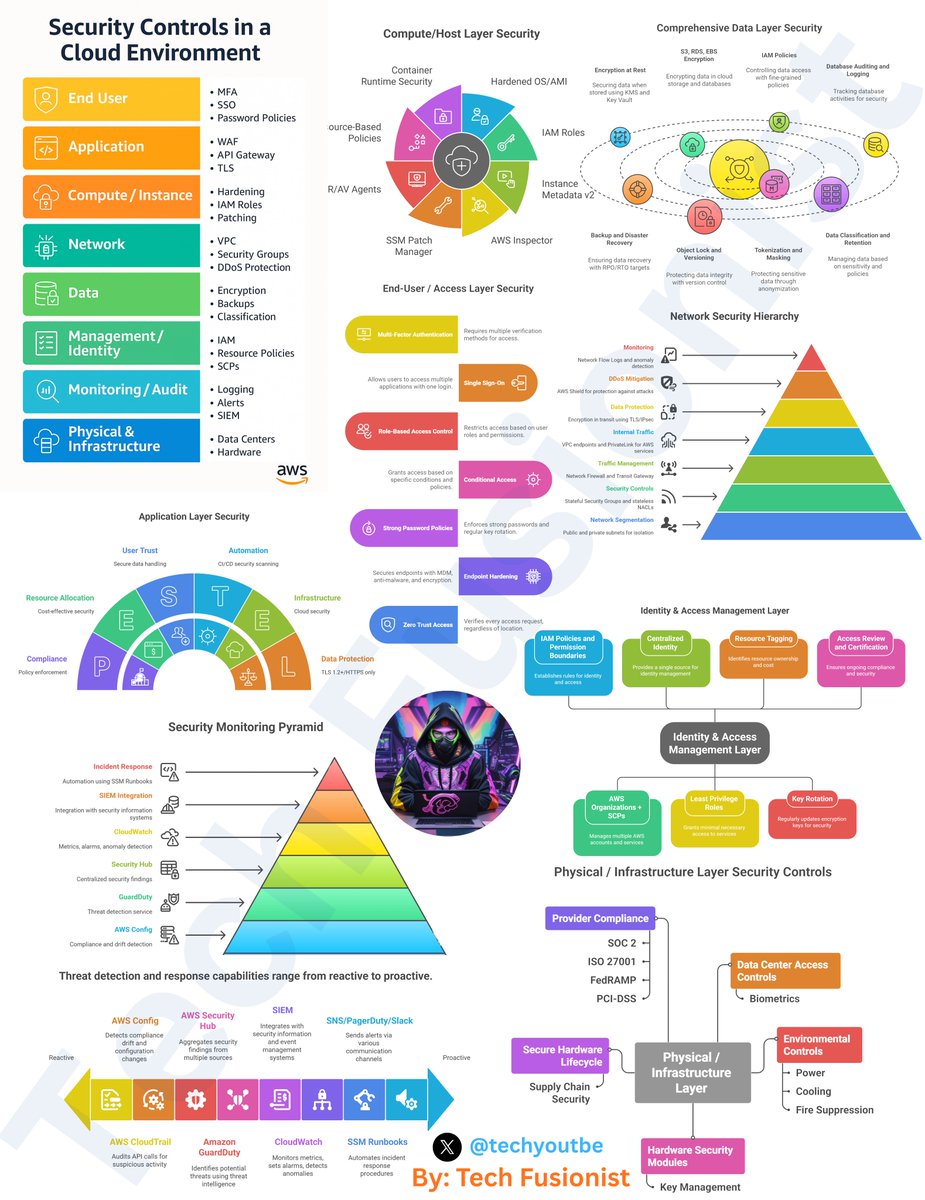
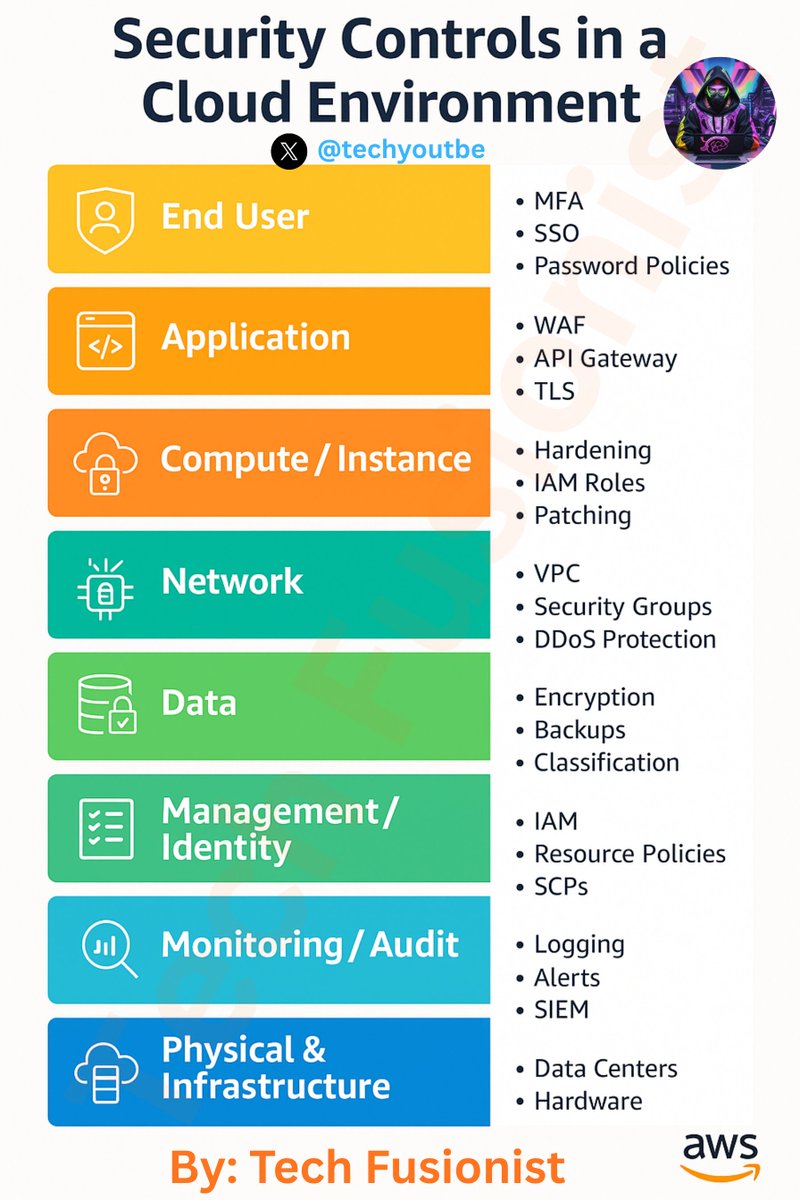
Security isn’t a feature - it’s a multi-layer strategy.
Here’s how to defend your cloud from end-user to data center 👇👇
Miss one - and attackers will find it. 🚨
🚀 BIG ANNOUNCEMENT: Toast Notification Script v3 is here!
I've completely REWRITTEN my popular Toast Notification Script from the ground up - now exclusively for Microsoft Intune!
Perfect for:
📢 Weekly reminders
🔄 Pending reboot notifications
📱 Company Portal integration
🎯 Custom organizational messages
Ready to deploy? Get it now: https://t.co/b8NDq0FuGR
#msintune #powershell #windows11 #toastnotification
Our team moved from LastPass to self-hosted Vaultwarden.
The breaking point:
- LastPass had another breach
- $6.5 per user per month
- 15-person team = $1170 annually
- Limited control over data
- Compliance team wasn't happy
Why Vaultwarden:
- Open source Bitwarden server
- Written in Rust, lightweight
- Single Docker container
- Uses 10MB of RAM
- All Bitwarden features for free
The setup:
- Deployed on t3.micro in private VPC
- Behind Application Load Balancer
- Let's Encrypt for SSL
- PostgreSQL for data storage
- Automated backups to S3 every 6 hours
- Took 3 hours total including testing
Cost breakdown:
- EC2: $8/month
- RDS: $15/month
- Total: $23/month
- Savings: $1147 annually
The surprise benefits:
- Full audit logs of who accessed what
- No user limits for free
- Emergency access configuration
- Custom password policies
- Data stays in our infrastructure
18 months later:
- Zero downtime
- Team actually uses it
- Compliance audit passed easily
Microsoft confirmed a bug in the October 2025 Update is causing BitLocker recovery on reboot.
This issue affects Windows 11 25H2, 24H2 and even Windows 10. Mostly, business users are affected.
If you don't have the BitLocker recovery key (always accessible via Microsoft account), you could be locked out of your PC.
BitLocker protects your data by encrypting drives, and recovery usually appears after hardware or TPM changes.
Microsoft says this bug mostly hits Intel PCs with Modern Standby (the feature that keeps the PC online in low power).
Recently, Microsoft also broke Windows 11 Task Manager, causing duplicate processes and performance issues in some cases.
Microsoft Intune September updates help IT admins:
Hardware recovery for offline Intel vPro® devices
Day-zero Apple OS compatibility
PowerShell installer scripts for apps
AI insights for Cloud PC optimization
New capabilities for endpoint management workflows.
Details: https://t.co/yBnA9VKdm4
@BoziTatarevic@TeamTrackhouse@shanevg97 here's one to hang on the wall! Awesome 88 team speed gaining track position as well an outstanding drive from SVG... Was awesome hearing great feedback over the radio about car balance. Great day out considering the way the day started!
@BoziTatarevic Hey Bozi, do you happen to have SVGs stats for today? The team gained him track position in a couple of the stops which is a turn around for them, not sure if it's legit speed, or just better than most of the year. Was an impressive run by the 88 team considering with SD ejected
Have you seen? Microsoft just completely restructured their fundamental security guidance, and it's awesome! ✨
This guidance serves as a perfect starting point for those aiming to better protect their M365 tenants! As well as this, I've also written some guidance for you on how you can practically benchmark your tenant against secure and practical baselines, which serve as a fundamental building block to a strong security strategy!
Check it out here > https://t.co/KgoodbPzuu
#Entra #Microsoft365 #Security
BREAKING: MIT just analyzed 300 AI deployments worth $40 billion & the results are devastating.
Turns out, 95% of enterprise AI projects deliver zero measurable business impact.
Here's what the data revealed:
(hint: the pattern matches every major technology bubble we've seen)
@timwert27@jeff_gluck Might just have to chuck in the @WeatherTech floor mats, throw on the wets and @shanevg97 can send it. I know he hates driving inthe wet, but damn he's good at it!
https://t.co/TzQA9bFiCk