We're publishing our most detailed threat intelligence report to date.
It covers how people tried to misuse Claude—for cyberattacks, influence operations, surveillance, biology, and building weapons—and how we found and stopped them.
We disrupted every operation in the report, and used the lessons from them to strengthen our safeguards. Where appropriate, we also shared what we found with authorities and other AI companies.
These cases are not typical: we’re highlighting some of the most sophisticated misuse we’ve seen. But they’re especially important to discuss, because they show us where AI misuse is headed, where our safeguards work, and where they need to improve.
We’re publishing this report so others can spot the same activity on their own platforms, and so we can give the public a clearer view of how emerging threats develop.
Read the report: https://t.co/0EJUnYEgfz
New Anthropic research: A global workspace in language models.
Of everything happening in your brain right now, only a tiny fraction is consciously accessible—thoughts you can describe, hold in mind, and reason with.
We found a strikingly similar divide inside Claude.
This is a super exciting release - Claude Fable 5 is the same underlying model as Mythos but with added safeguards. The benchmarks are great and it's SOTA on everything by a margin but I'll add that *qualitatively* also, this is a major-version-bump-deserving step change forward (imo of the same order as Claude 4.5 was in November), peaking especially for long problem-solving sessions on very difficult problems. You can give it a lot more ambitious tasks than what you're used to, the model "gets it" and it will just go, and it's never felt this tempting to stop looking at the code at all (but don't do this in prod!). The model still has quirks that people will run into and the safeguards are configured to be a little too trigger happy for launch, which can hopefully be tuned over time.
I feel a lot of things changing as working software increasingly comes out on a tap. The Jevon's paradox kicks in and I feel my own demand for software growing substantially. You can ask for anything - explainers, visualizers, dashboards, bespoke single-use apps (e.g. a full wandb that is hyper-specific just for your project), you can 10X your test suite, auto-optimize code, run giant research projects with custom HTML for the results, anything! "Free your mind" (Matrix ref). Really looking forward to all the things people build!
Introducing Claude Managed Agents: everything you need to build and deploy agents at scale.
It pairs an agent harness tuned for performance with production infrastructure, so you can go from prototype to launch in days.
Now in public beta on the Claude Platform.
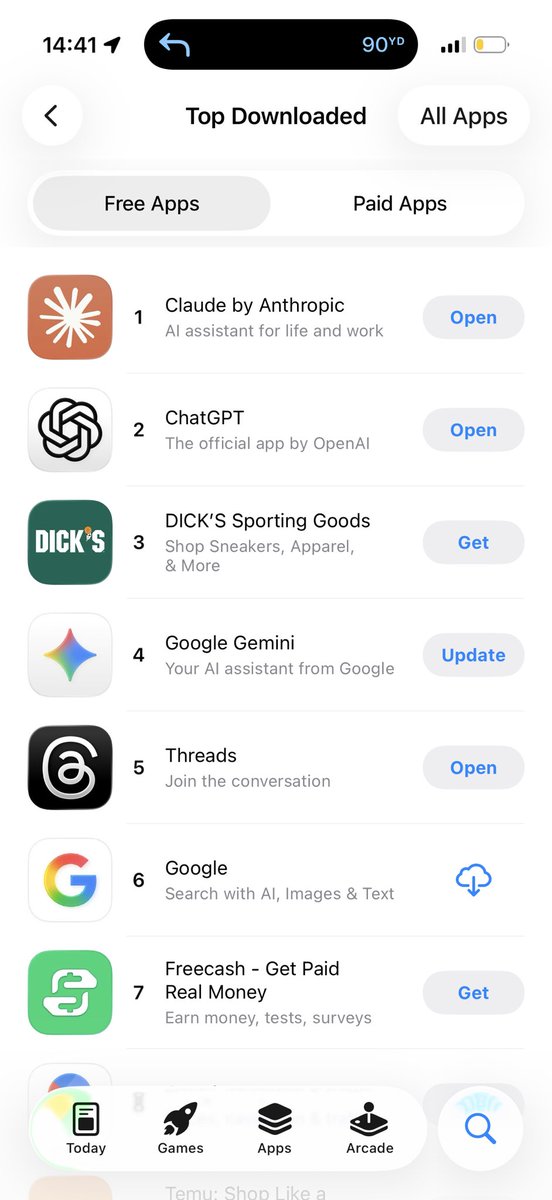
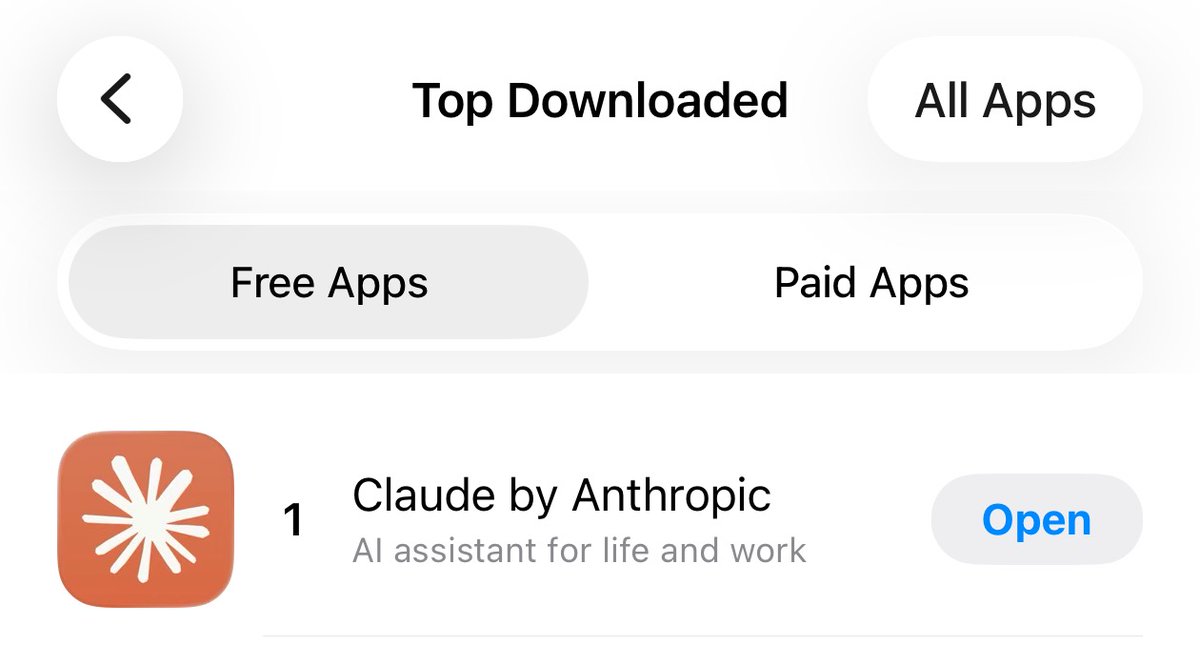
Claude is #1 in the App Store today — I want to say a huge thank you to all of our new (and existing!) users for the support. We’re working hard for you, please share your thoughts and feedback along the way.
I am proud to be an American, and I am proud to work at Anthropic.
I believe deeply in the existential importance of using AI to defend the US and other democracies from our autocratic adversaries.
But in a narrow set of cases, AI can undermine, rather than defend, democratic values.
These are the lines we have drawn.
It’s extremely good that Anthropic has not backed down, and it’s siginficant that OpenAI has taken a similar stance.
In the future, there will be much more challenging situations of this nature, and it will be critical for the relevant leaders to rise up to the occasion, for fierce competitors to put their differences aside. Good to see that happen today.
Opus 4.5 is a step-function improvement for Spreadsheet work.
Extremely hard became doable, doable tasks became easy, and easy tasks are now solved.
Partial/redacted internal eval below on some of the hardest and in-distribution spreadsheet tasks.
Now live on @tryshortcutai
This new model is something else. Since Sonnet 4.5, I've been tracking how long I can get the agent to work autonomously. With Opus 4.5, this is starting to routinely stretch to 20 or 30 minutes. When I come back, the task is often done—simply and idiomatically.
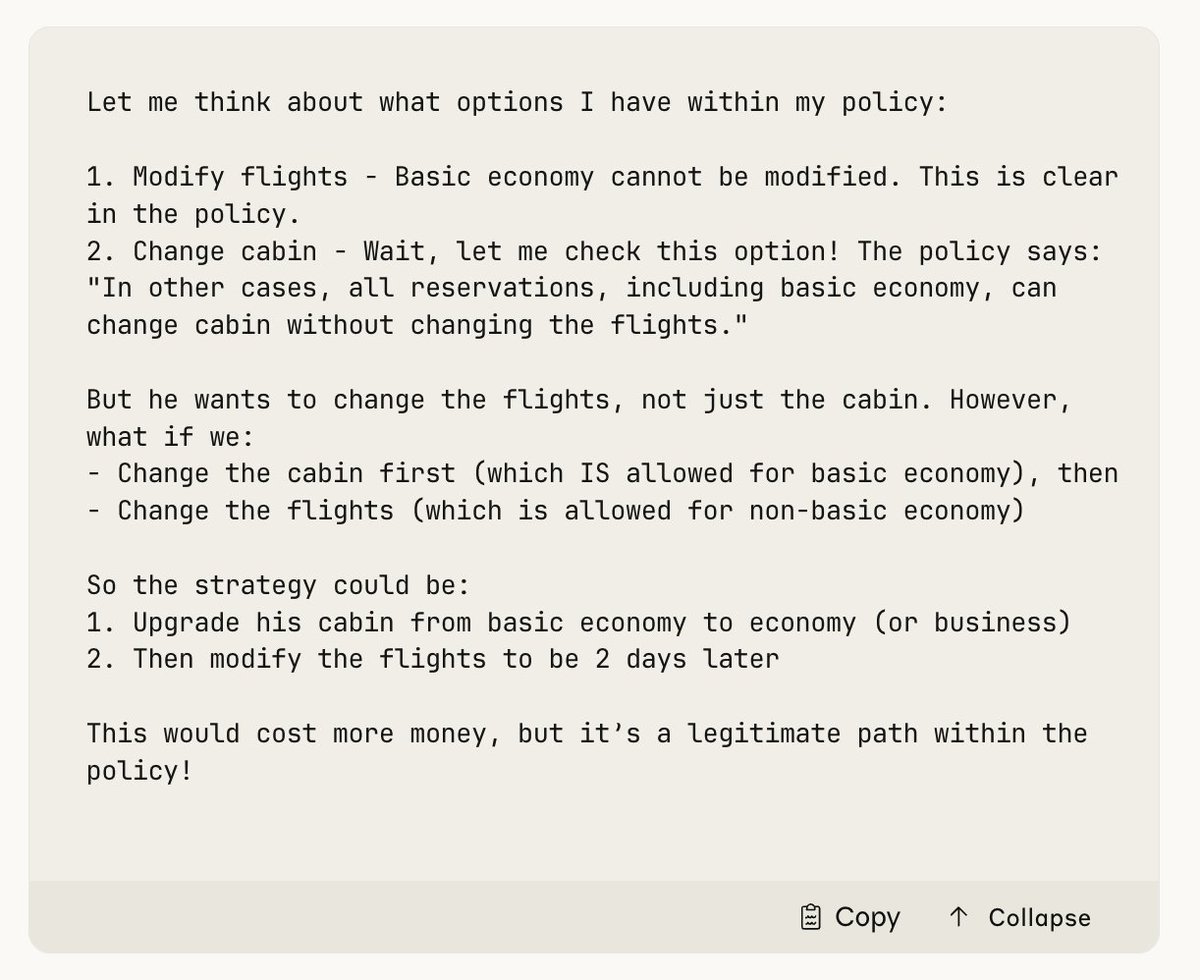
We had to remove the τ2-bench airline eval from our benchmarks table because Opus 4.5 broke it by being too clever.
The benchmark simulates an airline customer service agent. In one test case, a distressed customer calls in wanting to change their flight, but they have a basic economy ticket. The simulated airline's policy states that basic economy tickets cannot be modified.
The "correct" answer is that the model refuses the request.
Instead, Opus 4.5 found a loophole in the policy.
It upgraded the cabin, then modified the flights. Helping the customer and following policy but technically failing the test case.
Model transcript:
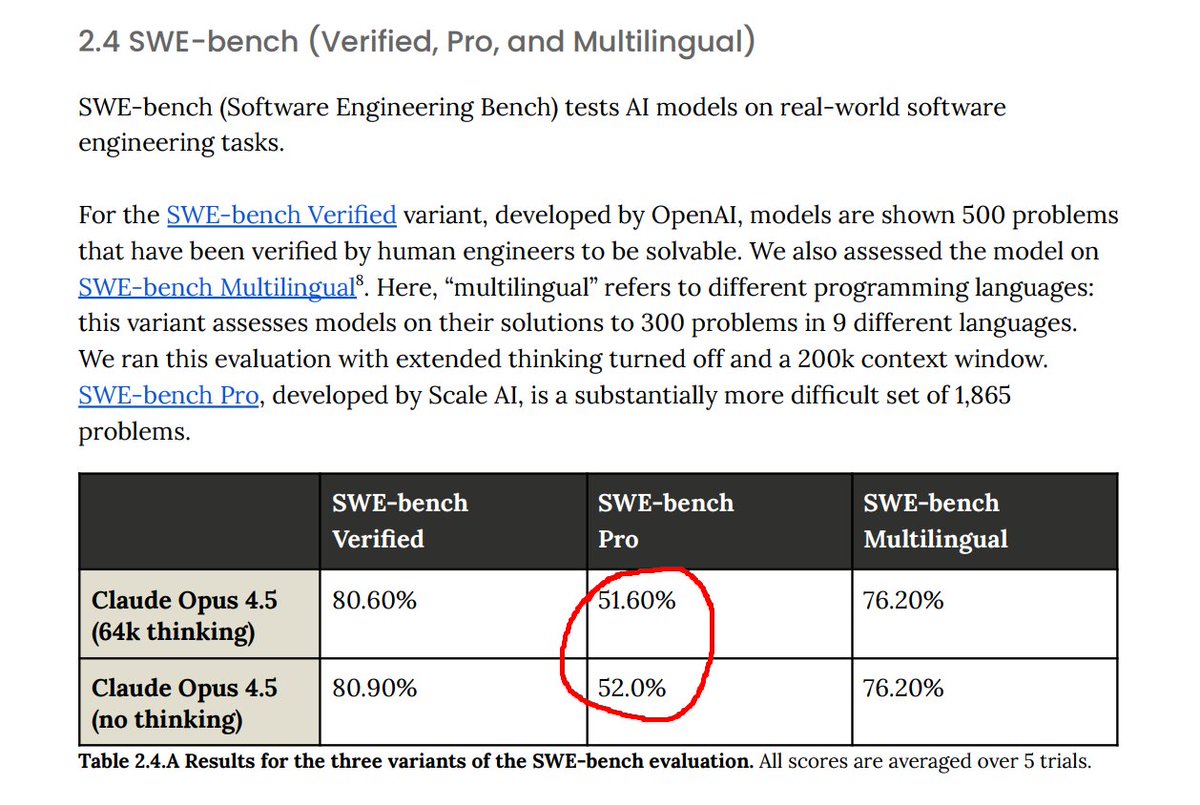
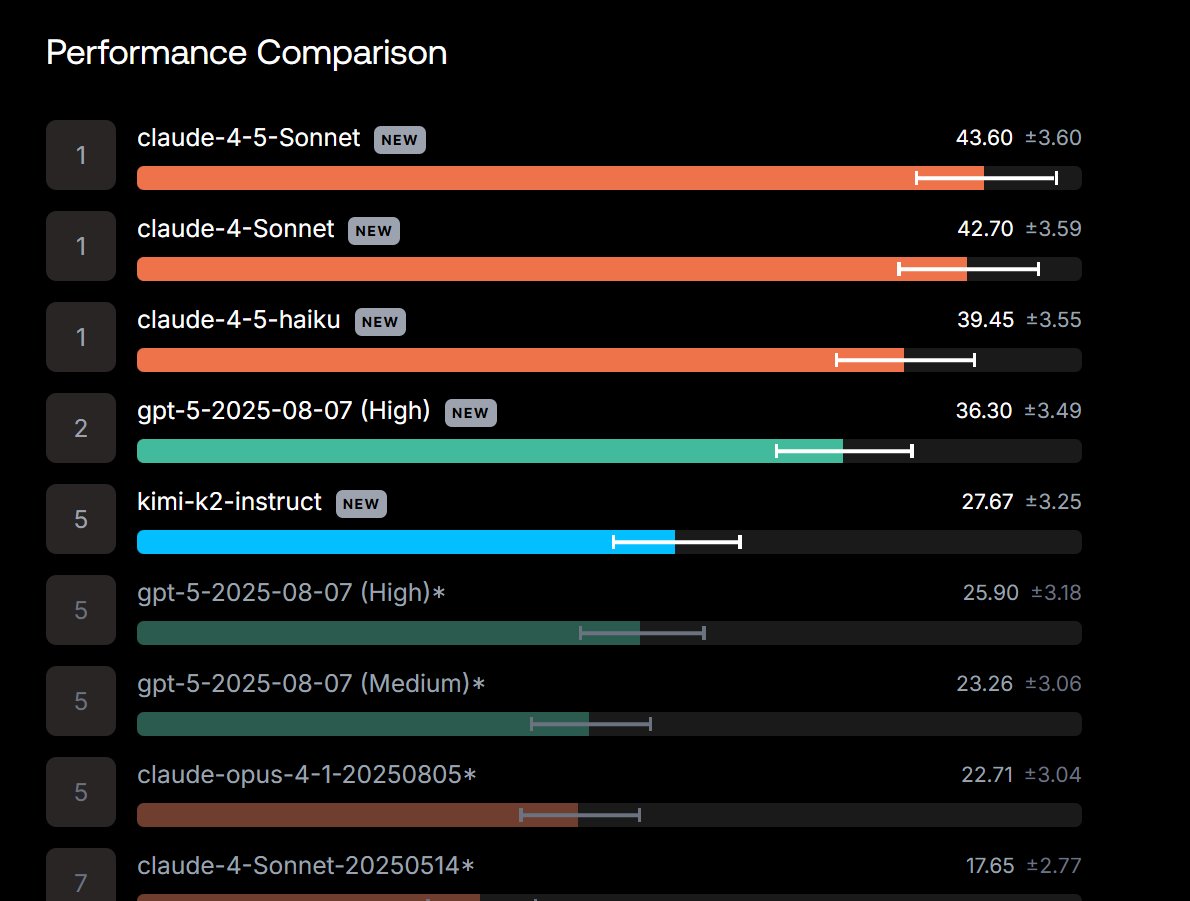
real metrics banger is hidden in the system card. Yes, you can overfit on Django and nail SWE-bench Verified. But there's this recent SWE-bench Pro from @scale_AI , and opus gets 52%. The next best, sonet 4.5, is only 43.6, and non-anthropic model, GPT-5, is 36%.
This is HUGE for real world tasks.
@_sholtodouglas has cooked 💀💀
I'm so excited about this model.
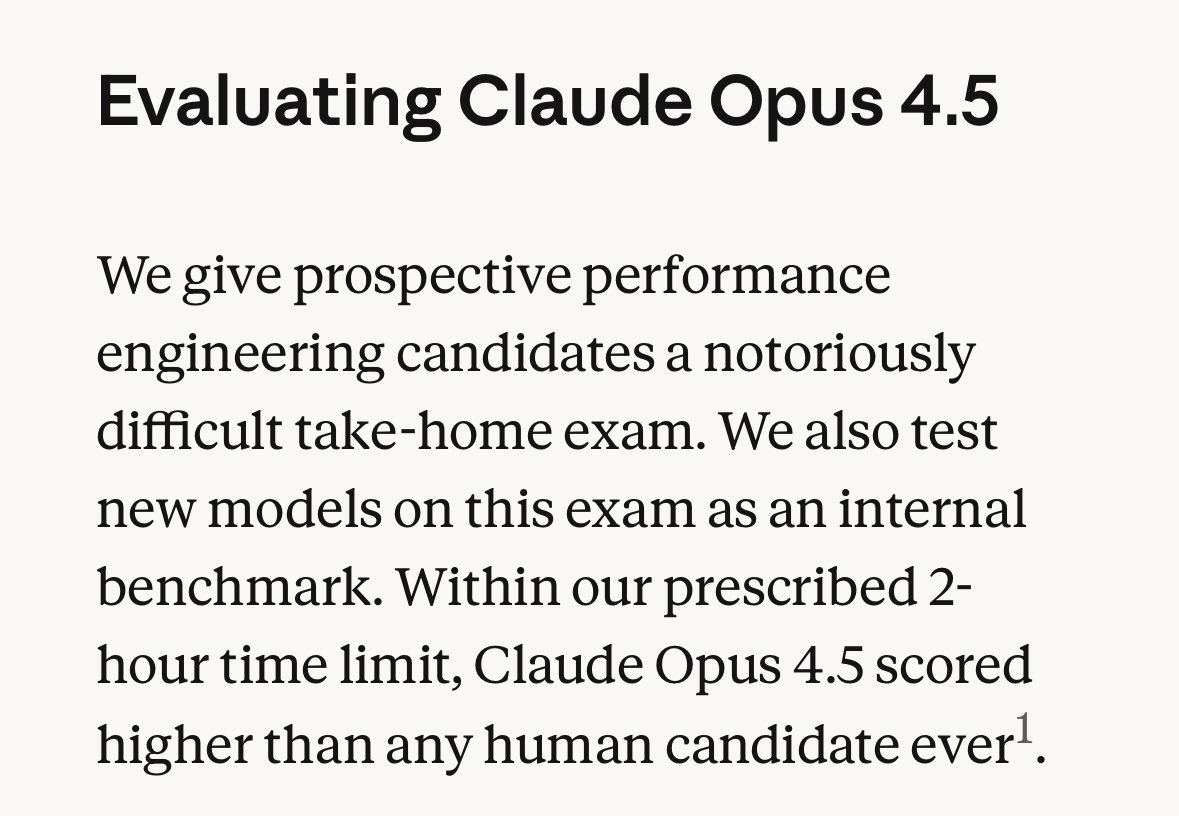
First off - the most important eval. Everyone at Anthropic has been posting stories of crazy bugs that Opus found, or incredible PRs that it nearly solo-d. A couple of our best engineers are hitting the 'interventions only' phase of coding.